Oregon Coast Seafood Boil delicious way to enjoy shrimp and crab

By Capt. Andy Martin – During a week-long fishing trip to the mouth of the Mississippi River years ago, I had the chance to enjoy fantastic redfish action in the delta, and a hot yellowfin tuna bite miles offshore. Aside from the great fishing, each night the group I was fishing with got to enjoy the delicious Cajun cooking Louisiana is famous for. One of the most memorable meals was a seafood boil with shrimp and crawfish.

A seafood boil is the perfect combination of crab, shrimp, corn, potatoes and sausage.

Seafood boils are especially popular on the Gulf Coast, in the Carolinas, and New Englund. Here on the Oregon Coast, seafood boils are a less-seldom way to enjoy fresh crab and shrimp, and locally grown produce, but are gaining in popularity. In Louisiana, seafood boils are part of the culture of the region. Churches, schools and civic groups often use seafood boils as fundraisers. Tulane University holds an annual Crawfest and serves a seafood boil to students. Crawfish are readily available on the Gulf Coast and are the most common ingredient in boils. It’s common to see seafood boils as tailgate feasts at college football games in the South.

Oregon Coast Dungeness crab and a variety of shrimp are a delcious regional twist to popular seafood boils.

My family regularly enjoys seafood boils, especially when we have out-of-town guests. We usually enjoy the boil with fresh crab and shrimp, often with potatoes and onions from our friends in the Klamath Basin. Seafood boils are a regular feast at our house during Spring Break, on Memorial Day, the Fourth of July, and the day before Thanksgiving and Christmas, as our visiting family likes to enjoy local seafood when they come to the coast.

Seafood boils are a great way to enjoy crab from our charter boats.

After making countless variations of seafood boils, my favorite recipe includes Tony Chachere’s Cajun seasoning, fresh lemon juice, Dungeness crab, and different varieties of shrimp and prawns available at Oregon Coast seafood markets, or at most grocery stores. Crab is a delicious addition to the boil, but not completely necessary. Fresh Dungeness can also be substituted with snow crab from the grocery store.

Some seafood boil recipes call for chicken broth or white wine. I simply use water, with a generous amount of freshly squeezed lemon juice (our neighbor has a lemon true and a frequent surplus of fresh lemon), and a few tablespoons of Cajun seasoning. If you prefer a less-spicy version, substitute the Cajun seasoning with salt, pepper and a generous amount of Old Bay.

A mouth-watering combination of shrimp, crab, sausage, corn and potatoes with Cajun seasoning.

For the shrimp, I’ll peel a pound of smaller shrimp, and then use some jumbo shrimp of prawns with the shell intact. Part of the fun of a seafood boil is peeling the shells and cracking the crab as you feast on the delicious potatoes, onions and corn packed with flavor from the buttery Cajun seasonings and fresh lemon juice. I add raw shrimp to the boil, but usually cook the crab ahead of time and add it to the boil just before it is finished.

A combination of small red and gold potatoes adds color to the seafood boil, and complements the red and orange hue of the shellfish, bright yellow of the corn and dark green of fresh Italian parsley. Small russet potatoes or larger red or gold potatoes can be used, but should be sliced to smaller pieces to thoroughly cook.

A spicy andouille sausage is perfect for seafood boils, but a milder kielbasa also can be used.

For most boils, you will cook the onion and potatoes first, then add the sausage and corn on the cob. When the vegetables are just about done, add the raw shrimp and cooked crab. Adding shrimp too early will make them rubbery and overcooked. They taste best when just cooked.

I start by adding halved potatoes, sliced or quartered onions, quartered lemons, and Cajun seasoning to a large pot, then fill the pot with water until 1/2 to 3/4 full. Bring to a boil for 10 minutes. Add the sausage and corn, cook for another 5 minutes. Add the crab legs and bodies (back and guts removed), and boil for 5 more minutes, then add shrimp and boil for a few more minutes until they are done. Check potatoes, and if done, use a large slotted serving spoon to scoop the vegtables and seafood from the pot and onto a large baking sheet or foil turkey pan lined with newspaper. Add the butter sauce over the seafood, add a couple of quartered lemon on the side of the platter. Season the entire platter with a small amount of black pepper and serve up.

Add potatoes, onion, lemon, garlic and seasonings to pot.
After boiling for 10 minutes, add corn and sausage and boil for five more minutes.
Add cooked crab and raw shrimp to the boil just before potatoes are done.
While the seafood is boiling, prepare the butter sauce in another smaller pot. Use 1/4 cup of the broth from the seafood boil for the sauce.
Remove the vegtables and seafood from the pot and place on a newspaper-lined large baking sheet or foil turkey pan.
Pour the butter mixture over the vegetables and seafood, and place several quarters of fresh lemon on the platter as garnish.
The finished product, a delicious Oregon Coast seafood boil.
Deckhand Eric and Capt. Sam with Dungeness crab from the charter boat Miss Brooke.

To learn more about our fishing and crabbing charters, visit www.brookingsfishing.com.

Oregon Coast Seafood Boil

Ingredients

4 lemons, cut into quarters

3-4 garlic cloves, pressed

1 large yellow or red onion, cut into slices or quarters

1-2 pounds baby red and gold potatoes, cut in half (larger red or gold potatoes cut into quarters may be substituted)

2-3 tablespoons Tony Chachere’s Cajun Seasoning

1-2 Dungeness crab, boiled, back and guts removed

1 pound large prawns or shrimp, deveined

1 pound smaller shrimp (30-40 per pound) shells removed

12 ounces andouille sausage, sliced into smaller pieces

4-6 corn on the cob, cut into smaller sections

Cajun Butter

2 cubes (16 oz. total) salted butter

4 cloves garlic, pressed

1 bunch fresh parsley, chopped

2 tablespoons Tony Chachere’s Cajun Seasoning

1 teaspoon hot sauce

1 teaspoon Worcestershire sauce

1 teaspoon lemon zest

juice from 2 lemons

1/4 cup broth from seafood boil

Instructions

In a large pot, add Cajun seasonings, 2 quartered lemons, potatoes, onions, garlic. Fill pot to 1/2 or 3/4 full with water. Bring to a boil, and boil for 10 minutes.

Add the sausage and corn, boil for 5 more minutes.

Add the cooked crab legs and bodies (back shell and guts removed), and boil for 5 more minutes.

(While the seafood begins to cook, begin making the Cajun butter)

Add the the raw shrimp, turn off heat, cover, and allow to sit for 5 minutes, or until the potatoes are completely done.

Use a slotted spoon to scoop the seafood and vegetables from the pot and place on a large baking sheet or foil turkey plan lined with a newspaper.

Pour half of the butter sauce on the seafood and vegetables spread over the platter, and save the extra for dipping.

Serve with quartered lemons to squeeze on individual servings.

To make the Cajun Butter, melt butter in a small saucepan, then add lemon zest, garlic, hot sauce, Cajun seasoning, broth and parsley. Let simmer for 10 minutes.

Teriyaki Albacore Burger mouthwatering way to enjoy tuna

By Capt. Andy Martin – Seared albacore tuna combined with the sweetness of teriyaki sauce, a grilled pineapple ring, and onion sandwich roll is not only a delicious way to enjoy the bounty of a long-range offshore fishing trip, it’s a uniquely mouthwatering meal that has more of a Hawaiin feel than a typical Oregon Coast seafood recipe.

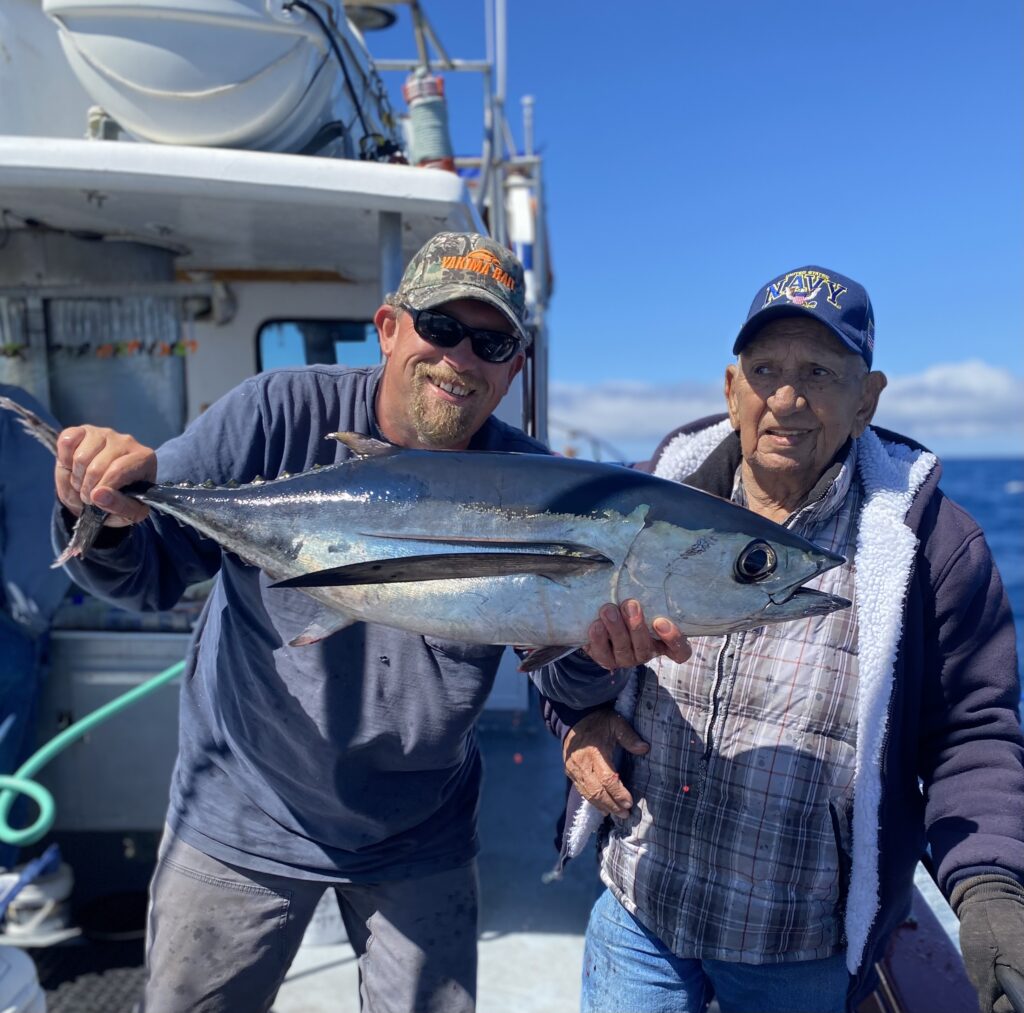
Capt. Andy with an albacore tuna caught aboard the charter boat Nauti-Lady.

My wife has a penchant for teriyaki style cooking. While she enjoys the abundant seafood options of the Oregon Coast, anything marinated or coated with teriyaki sauce gets her attention. We stumbled upon Teriyaki Albacore Burgers, which have become a favorite treat when we run our first albacore trips of the summer. These tasty fish sandwiches are unbelievable with freshly caught albacore, but also are just as hard to resist with tuna loins that have been in the freezer a few months. Albacore is our favorite way to enjoy these burgers, but ahi and other types of tuna fillets also work great.

Kikkoman Teriyaki Baste and Glaze and Kikkoman Wasabi Sauce are key ingredients for Teriyaki Albacore Burgers.

A key ingredient for Teriyaki Albacore Burgers is teriyaki baste and glaze. Kikkoman makes a great teriyaki baste and glaze, which is thicker than traditional teriyaki sauce, and made specifically for baking and grilling. It also helps hold the burger ingredients together.

Kikkoman Wasabi Sauce is another essential ingredient for these delicious sandwiches. A combination of wasabi, horseradish and mayonnaise can be substituted, but the Kikkoman sauce is ready to go, and complements the grilled albacore, pineapple and onion roll perfectly.

Fresh or previously frozen albacore works great for these grilled sandwiches. Cut the tuna into small pieces for best results.
Panko bread crumbs, diced bell pepper, green onions, ginger and teriyaki sauce are combined with an egg and tuna to make these delicious burgers.

When preparing the tuna, cut into small pieces. Too big and the burgers won’t hold together very well. Partially frozen tuna slices much easier than completely thawed fish.

After combining the panko bread crumbs, diced red bell pepper, green onions, ginger, dash of teriyaki, pepper, tuna and egg, sear each side with higher heat, then turn down temperature, brush both sides of the burger with teriyaki, and cook until tuna is done, usually 5-10 minutes. I generally cook each side of the burger for a little less than 2 minutes, then gently flip, repeating a few times.

Combine the burger ingredients.
Make patties and allow to chill and set for a few minutes.
After searing each side on higher heat, turn down temperature to medium, and brush teriyaki sauce over the burgers.
Flip the burgers and add more teriyaki sauce.
While the burgers are cooking on the skillet, use a grill to warm the buns and pineapple rounds.

Grill the pineapple slices for a few minutes, and serve with a warm onion hamburger roll, lettuce, and the wasabi sauce. My wife also likes a slice of seared Canadian bacon with her albacore burger.

Serve with a side of chips (hard to beat Hawaiin brand Sweet Maui Onion), or for a real Hawaiian treat, shrimp kabobs with bell pepper, onion, squash and zucchini.

To get on our Oregon Coast albacore tuna call list, call (541) 813-1082. Learn more about tuna charters, and other fishing trips, at www.brookingsfishing.com.

A finished Teriyaki Albacore Burger.
Customers with albacore tuna caught on the Kraken out of Brookings.

Teriyaki Albacore Burger

1 to 1 1/2 pounds albacore tuna fillet, finely diced

1/2 cup panko bread crumbs

1/2 cup Kikkoman Teriyaki Baste and Glaze

1 red bell pepper, finely chopped

1/4 cup green onion, finely chopped

1 tbs ginger, grated

1 egg, beaten

salt

pepper

Cooking oil

Kikkoman Wasabi Sauce

Pineapple rings, grilled

Onion hamburger rolls

Green leaf lettuce

Directions

Dice albacore tuna and combine with 2 tablespoons of the teriyaki sauce (reserve the rest of the 1/2 cup), green onion, red bell pepper, ginger, panko bread crumbs and beaten egg. Salt and pepper to taste. Mix well. Shape into patties and refrigerate for 10 to 15 minutes to firm up patties.

    Heat skillet to medium high. Add a small amount of oil to skillet and add tuna patties. Brush top side of patty with oil while bottom is searing, flip and sear other side. Reduce heat to medium. Begin brushing the remaining teriyaki sauce on the patties and cook for 5 to 10 minutes, flipping constantly until done.

    Serve on a warm onion, with Wasabi Sauce, lettuce and grilled pineapple.

    Lingcod, rockfish biting between winter storms

    BROOKINGS, Ore. (Jan. 2, 2025) – A brief weather window on New Year’s Eve, with a lull in the winter storms, allowed the Nauti-Lady to venture offshore for rockfish and lingcod, with steady action, a wide assortment of fish, and family fun to end 2024.

    Happy New Year from the Brookings Fishing Charters crew.

    Stormy weather kept the charter fleet at the docks most of December, but lighter winds and smaller swells provided an opportunity to get out on Dec. 31. Families from Eastern Washington, Sacramento and Canby, Ore., caught limits of rockfish, with some lingcod and cabezon mixed in. By the time the Nauti-Lady was back at the docks, windy, rainy, stormy weather had returned. Another break in the weather is expected this coming week, which should allow the Brookings Fishing Charters crew to get back on the ocean, while also starting the peak season of winter steelhead drift boat fishing on the Chetco and Smith rivers. The Brookings Fishing Charters team of saltwater charter boat captains are also river guides during the fall and winter months, when the ocean is too rough to fish.

    Rockfish season is open year round in Oregon, and a nice variety of fish are available during the winter months. A couple of young anglers are all smiles after landing rockfish and cabezon.
    Lingcod move into shallow water to spawn during the winter, making them easier to catch on light tackle.
    Customers enjoy a beak in the weather New Year’s Day aboard the Nauti-Lady offshore of Brookings, Oregon.

    Some of the best lingcod fishing of the year takes place during the winter months, as fish move into shallow water to spawn. Catch rates are often the highest of the year from January through April, during the peak of the spawning period. Rockfish season is open year round, and limits are common during the winter months.

    The Brookings Fishing Charters crew uses light tackle to target rockfish and lingcod. Quality spinning combos make for exciting action once fish are hooked up. On a typical trip, anglers will start out with rockfish gear, and as limits are caught, switch over to bigger jigs to target lingcod.

    A young angler takes the bat to her first-ever lingcod.
    Fish on! a lingcod is brought to the surface with a light spinning rod.
    Another lingcod caught New Year’s Eve aboard the Nauti-Lady.
    Capt. Sam helps a young angler hold his first-ever lingcod.

    To learn more about our year-round ocean charters, visit www.brookingsfishing.com. Learn more about guided river trips on the Chetco and Smith rivers at www.wildriversfishing.com.

    Lingcod and rockfish season is open year round. Ocean salmon season generally runs late May through August. Final season dates are approved by federal fishery managers in April. The Point St. George Reef Lighthouse, home of our trophy lingcod and rockfish fishery, is set to open in May. Halibut season runs May 1-Oct. 31.

    To book a trip, call (541) 813-1082.

    If you haven’t checked out our recipe page, we post new recipes throughout the season. Our latest is Coconut-Crusted Lingcod with Sweet Chili Sauce. Check it out here.

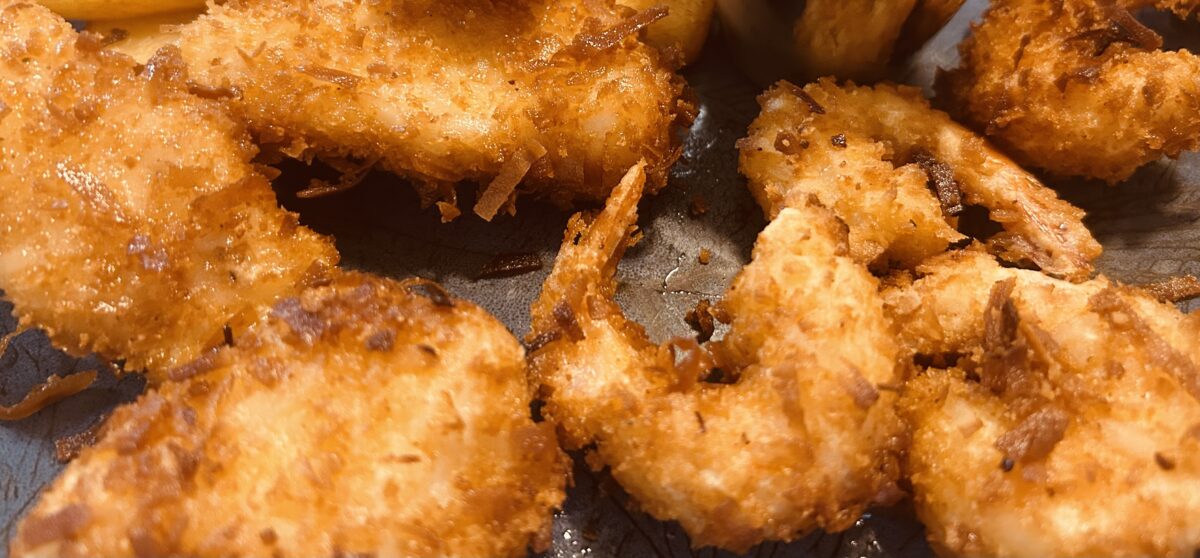
    Coconut-Crusted Lingcod and Shrimp with Sweet Chili Sauce.

    For more great recipes, visit our recipe section.

    Extra crispy beer-battered halibut.

    Coconut-Crusted Lingcod with Sweet Chili Sauce

    By Capt. Andy Martin – The satisfying crunch of panko bread crumbs combined with the sweetness of coconut flakes and sweet chili sauce makes for a surprisingly delicious fried fish treat that will have you coming back for a second and third helping. Coconut-crusted lingcod, which is also great with halibut or rockfish, is a simple spin on coconut shrimp often featured on seafood and steak restaurant menus. The sweet chili sauce is a great alternative to traditional tarter and cocktail sauces, and perfectly complements the sweet crunch of this easy-to-make recipe.

    When we prepare Coconut-Crusted Lingcod at my house, we also cook up a heaping serving of shrimp to go with it. Combined with fries, it’s a great way to enjoy the catch of the day on our charter boats, or to use up some of the fillets in the freezer from earlier trips.

    Coconut-Crusted Lingcod and Shrimp with sweet chili sauce is a sweet and crunchy treat.

    Panko, and coconut, cook to an appetizing golden brown color quickly, so smaller portions of fish work best with this recipe. If the fish pieces are too thick, the crust will burn, while the fish in the middle is undercooked. This recipe works well pan fried or deep fried. I often cook up several pieces in my deep frier, then place on a baking sheet with a wire screen and put in a warm oven to finish off while I fry another batch of fish.

    Start by cutting lingcod, halibut or rockfish fillets in small pieces. The tail section of a halibut or lingcod is best if the fish is large. Generally, two- to three-inch portions work best with this recipe. If the fillets are thick, cut into smaller pieces to quickly cook and avoid burning the panko. Season the fish with a small amount of salt and pepper.

    Coating the fish and shrimp in egg wash and then panko and coconut can be messy. To make cleanup easier, I often place three bowls on a large baking sheet, and coat each piece of fish before frying, placing all of the coated fish on a plate. After dredging the fish in flour and dipping in egg wash, gently roll the fish and shrimp pieces, one at a time, in the panko mix, pressing the panko crumbs into the fish. The large baking sheet will catch most of the mess the coating process can create.

    As a general rule, I’ll fry the fish in 350-degree oil for 1 to 2 minutes per side, or approximately 3 minutes if submerged in a deep frier. Cook just until the breading is golden brown, then transfer to the baking sheet in the oven to finish while the next batch fries up. Avoid over-filling the deep frier, just cook three or four pieces of fish, or half a dozen shrimp/prawns, at a time.

    Start by cutting the fish into small portions, and removing the shells from the shrimp.
    Set up three bowls to bread the fish and shrimp, one with seasoned flour, one with egg wash, and a third with a combination of coconut flakes and panko bread crumbs.

    In the oven, at 300 degrees, the center of the fish will continue to cook without overcooking the fish. The hot oven and wire screen also allows the oil on the outside of the fish to drain off onto the baking sheet.

    Dredge the fish and shrimp in the seasoned flour before dipping in egg wash and then in the panko mixture.
    After completely submerging the fish in the egg wash, allow the excess egg wash to drip back into the bowl. This will prevent large clumps of egg wash from accumulating in the panko mixture.
    Preparing all of the fish and shrimp before frying allows the oil to heat up to 350-400 degrees, and makes cleanup easier.
    Deep fry for approximately 3 minutes, or shallow fry in a pan 1-2 minutes per side. Too long and the coating will burn. Fry just until the panko coating is golden brown.
    After frying each batch, place on a wire rack and baking sheet in the oven at 300 degrees.
    The finished product, perfectly combined with sweet chili sauce.
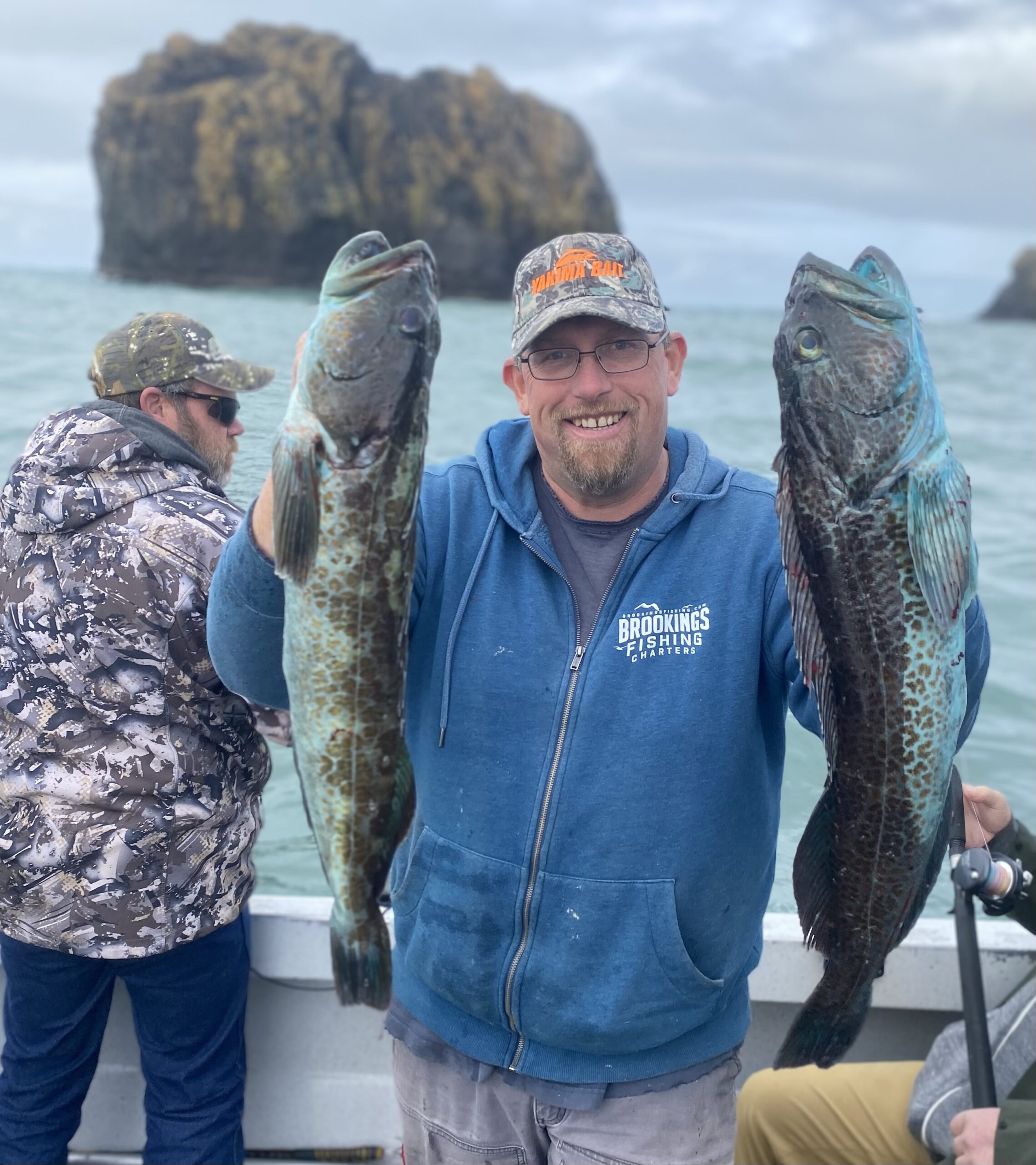
    Capt. Andy with a limit of lingcod caught aboard the Miss Brooke.

    To catch a limit or rockfish or lingcod to enjoy Coconut-Crusted Lingcod with Sweet Chili Sauce, take a trip with Brookings Fishing Charters. Learn more at www.brookingsfishing.com, or call (541) 813-1082 to book.

    Coconut-Crusted Lingcod with Sweet Chili Sauce

    1 pound fish fillets (lingcod, halibut or rockfish), cut into small pieces

    1/2 pound large shrimp or prawns, back shells removed

    salt and pepper to taste

    1/4 cup flour

    1/4 tsp garlic powder

    1/4 tsp paprika

    3 eggs

    1 1/4 cups sweet coconut flakes

    3/4 cup panko breadcrumbs

    Peanut or vegetable oil

    1 lemon, cut into wedges

    Sweet chili sauce

    Instructions

    Heat oil to 350-400 degrees in deep frier or in a large skillet.

    Pre-heat oven to 300 degrees.

    Remove shells from shrimp. Cut fish fillets into small pieces, no longer than 3 inches. For thicker fillets, cut into smaller portions.

    Lightly season fish with salt and pepper.

    Set up three bowls to coat fish and shrimp. Combine flour, garlic powder and paprika in first bowl, beat three eggs in second bowl, combine coconut flakes and panko in third bowl.

    One piece at a time, dredge fish/shrimp in flour, completely coat with egg wash and allow excess egg wash to drip back into bowl. Gently press fish or shrimp into panko mixture, turn over and repeat, completely coating fish/shrimp with panko and coconut.

    Set each piece of panko-coated fish and shrimp on a plate, and repeat until all the fish is coated.

    If shallow frying, place four to five pieces of fish in a skillet with just enough oil to fry bottom half. Fry for 1-2 minutes, then turn over and fry for another 1-2 minutes, just until panko is golden brown. Place fish on baking sheet in oven and cook another batch. For shrimp, fry 1 minute per side, or until panko is golden brown.

    If deep frying, submerge 3-4 pieces of fish in hot oil and fry just until golden brown, generally 2-3 minutes. Place fish on baking sheet in oven and cook another batch. For shrimp, cook until golden brown, generally 2 minutes.

    Serve with lemon wedges, sweet chili sauce, and fries, coleslaw or pasta salad.

    Fall lingcod bite hot, first steelhead arrive, crab opener good!

    BROOKINGS, Ore. (Dec. 8, 2024) – It has been a very busy and productive late fall on the Southern Oregon Coast, with hot action for lingcod and rockfish, bonus crab with last week’s ocean sport opener, the first winter steelhead of the season on the local rivers, and some big, bright late fall king salmon still around. The Point St. George Reef Lighthouse season also ended with a bang, with limits of lingcod and jumbo rockfish.

    Brookings Fishing Charters is continuing ocean fishing charters for lingcod, rockfish and crab in December as the weather allows. The charter boat captains also are running drift boat trips on the local rivers for salmon and steelhead when ocean conditions are too rough for offshore charters.

    Limits of lingcod and a bunch of crab from the Dec. 6 charter aboard the Miss Brooke.
    A nice limit of lingcod at Mack Arch in late November aboard the Nauti-Lady.

    Dungeness crab season opened Dec. 5 off the coast of Brookings, and the Brookings Fishing Charters quickly set crab pots as a bonus for the lingcod and rockfish charter customers. Aside with limits of rockfish and lots of lingcod, customers also are leaving with bags full of cooked crab. Crab combos will continue as the weather allows, although catch rates could drop with the Dec. 16 commercial crab opener, as thousands of crab pots will carpet the ocean out of Brookings.

    Deckhand Eric with a pot full of crab from a recent charter on the Kraken.

    At Mack Arch, fishing has been wide-open for lingcod on our long-range 6-hour charters. Lingcod to 20 pounds are being caught, along with limits of nice rockfish. Most of the lings are being caught on light spinning tackle in shallow water.

    Closer to the harbor, the local 4-hour half-day charter is producing limits of rockfish, with a few lingcod mixed in. During the winter, lingcod move closer to the shoreline to spawn, and fishing can also be very good close to port for lingcod and rockfish.

    Capt. Andy with the first adult winter steelhead of the season on his drift boat last week on the Chetco River. Late December, January and February are peak season for steelhead fishing.

    On the Chetco and Smith rivers, Capt. Andy, Rye, Sam, Mick, Chris and Eric have been running salmon trips from their drift boats. Aside from some late-season king salmon, they also are finding the first winter steelhead of the season. Salmon season will wind down in December, although some fresh fish will still be around on the Elk and Sixes, while steelhead season will improve. January and February are peak season for steelhead on the local rivers. The Brookings Fishing Charters and Wild Rivers Fishing team is the most experienced group of local guides on these world-class rivers. Learn more about winter steelhead fishing at www.wildriversfishing.com.

    Heavy rain expected this coming weekend will give salmon action a boost on the Elk and Sixes rivers while they begin to drop early next week, while more schools of fresh steelhead are expected on the Chetco and Smith rivers.

    Capt. Rye with a 42-pound king salmon from early December on the Chetco River.

    The Point St. George Reef lighthouse area closed to fishing Nov. 30. The last few trips of the season to the lighthouse aboard the Miss Brooke and Kraken produced quick limits of lingcod and rockfish, with a nice mix of colorful canary and vermillion rockfish, and lingcod to 20 pounds. The lighthouse area is expected to re-open in May.

    Nice limits of lingcod from a late-season trip to Point St. George Reef aboard the Miss Brooke.

    During the winter months, lingcod become the prime target of charters aboard the Brookings Fishing Charters boats. Using light tackle, the crew will first take customers to reefs full of rockfish and try to catch quick limits, leaving plenty of time to use large jigs or bigger baits intended to catch lingcod. The best catch rates of the year for lingcod usually happens from December through April as the lingcod are in shallow water.

    Capt. Andy with a nice lingcod caught in early December aboard the Miss Brooke.
    Limits of lingcod caught aboard the Miss Brooke with Capt. Chris and Sammy.
    A nice vermillion rockfish caught aboard the Nauti-Lady in late November.

    This coming week, the Brookings Fishing Charters crew will be offering crabbing only charters before the commercial season opens. Cost is $100 a person and includes cleaning and cooking of the crab. Call our office at (541) 813-1082 to book a crabbing trip.

    Crabbing also can be added to bottom fishing charters. Contact out office for details.

    Eric and Capt. Sam with a few of the many crab caught during the ocean sport opener last week.
    The Miss Brooke fishing near House Rock in early December 2024.

    To book a river or ocean fishing trip, call (541) 813-1082. For more information on ocean charters, visit www.brookingsfishing.com. For river trips, visit www.wildriversfishing.com.

    Here are some recent catches with our river guides on the Chetco and Smith rivers.

    Here are some recent catches aboard our ocean charters.

    Drift boat salmon season produces big kings

    BROOKINGS, Ore. (Nov. 22, 2024) – With rough ocean conditions the past month, the Brookings Fishing Charters crew has been focusing on the local rivers, where fall-run king salmon are migrating into freshwater to spawn. The Chetco and Smith rivers boast some of the best drift boat salmon opportunities on the West Coast, and this year has lived up to their reputation. The Brookings Fishing Charters crew of captains and deckhands are also full-time drift boat guides in the fall and winter, and among the most experienced river guides in the region.

    Capt. Andy with a hefty hatchery king salmon caught last week on the Elk River in Southern Oregon.

    Salmon season in the rivers and estuaries began in September, when big kings began staging along the Chetco River jetties in Brookings. Fishing was good through October, with salmon as big as 52 pounds caught by boaters trolling flashers and anchovies. The Brookings Fishing Charters crew switched back and forth between the estuary salmon fishing and ocean charters until late October, when heavy rains increased flows on the Chetco and Smith rivers and kicked off the drift boat season upriver.

    Capt. Mick with a bright Chetco River king caught on a MagLip plug.

    Upriver, anglers fishing from drift boats used plugs – primarily Yakima Bait Co. MagLip and FlatFish plugs – or roe and sand shrimp, to catch big king salmon moving into the rivers to spawn. Fishing was good through November, until a series of big storms, with hurricane-force winds and heavy rain, brought the rivers to minor flood stage.

    Capt. Sam with a big Smith River king, which was released after a quick photograph.
    Capt. Rye with a large hatchery king salmon from the Chetco River estuary.

    This fall we welcomed two new drift boat guides to our crew, although they have been members of our team for several years. Eric and Chris, who have been deckhands on our ocean charter boats, successfully ran their first drift boat trips with customers this fall. Chris completed his Coast Guard captain’s class this spring, is now licensed to run our ocean boats and river boats. He has been having a good fall Chinook season on the Chetco. Eric, who started work with us when he was 16 and a sophomore in high school, graduated in June and is now running drift boat trips and deckhanding on the Nauti-Lady while he completes his Coast Guard license classes.

    Capt. Chris holds a nice Chetco River king salmon.
    Eric holds a nice Chetco estuary king caught while deckhanding for Capt. Rye.

    We will continue to fun drift boat trips for salmon into December. The Elk and Sixes rivers have a later run of fall kings, while fresh fish also will trickle into the Chetco and Smith rivers. Winter steelhead season begins Dec. 1 and runs through March. Late December, January and February are the peak season for winter steelhead. Our guides will run salmon and steelhead combo trips through mid-December, then switch gears just to side-drifting for steelhead.

    To learn more about our drift boat trips, visit www.wildriversfishing.com.

    Ocean charters will resume next week with good weather on the forecast. When the weather cooperates, our crew splits time between the ocean and rivers.

    Here are some of the recent drift boat salmon catches with our crew.