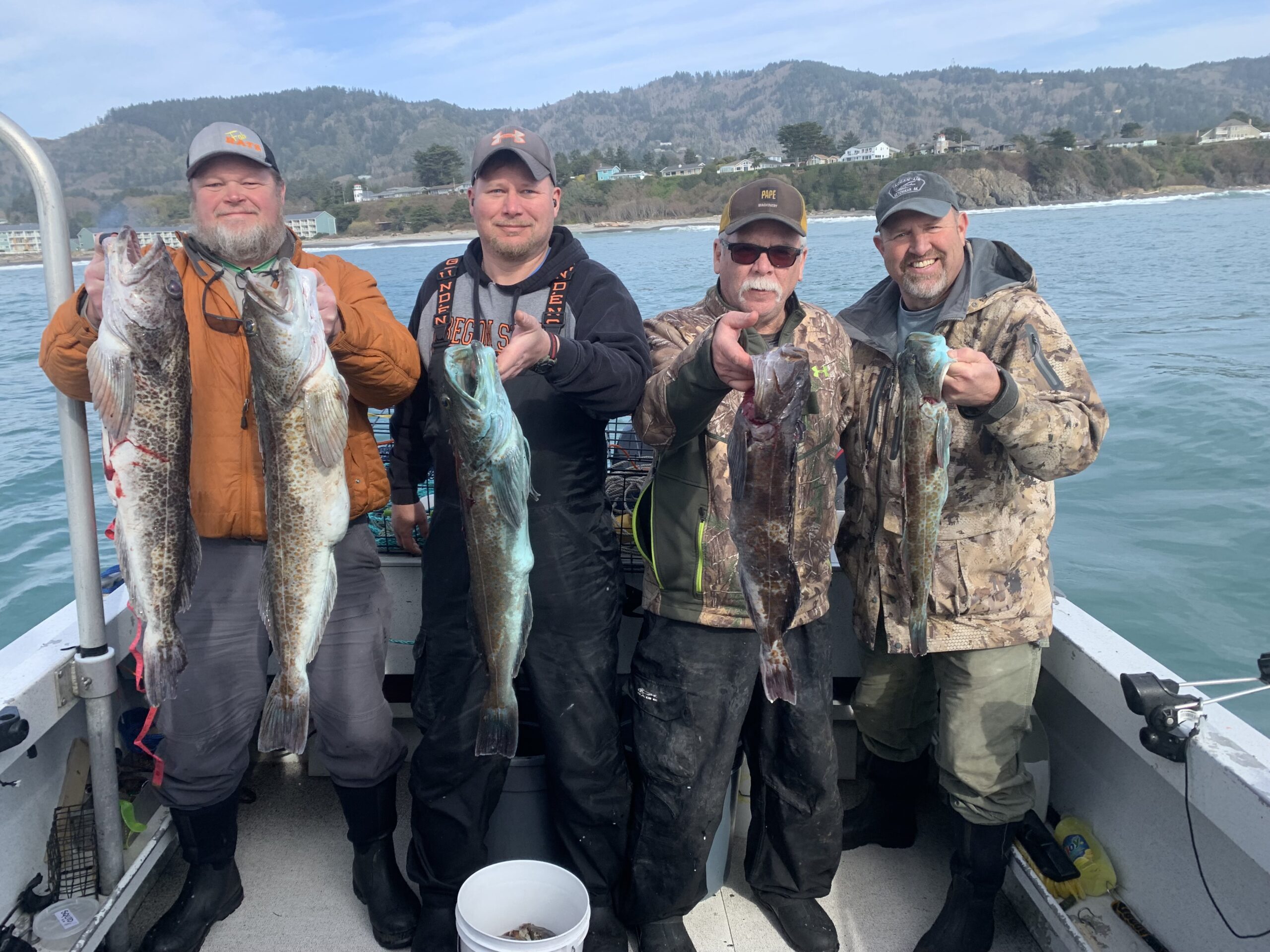
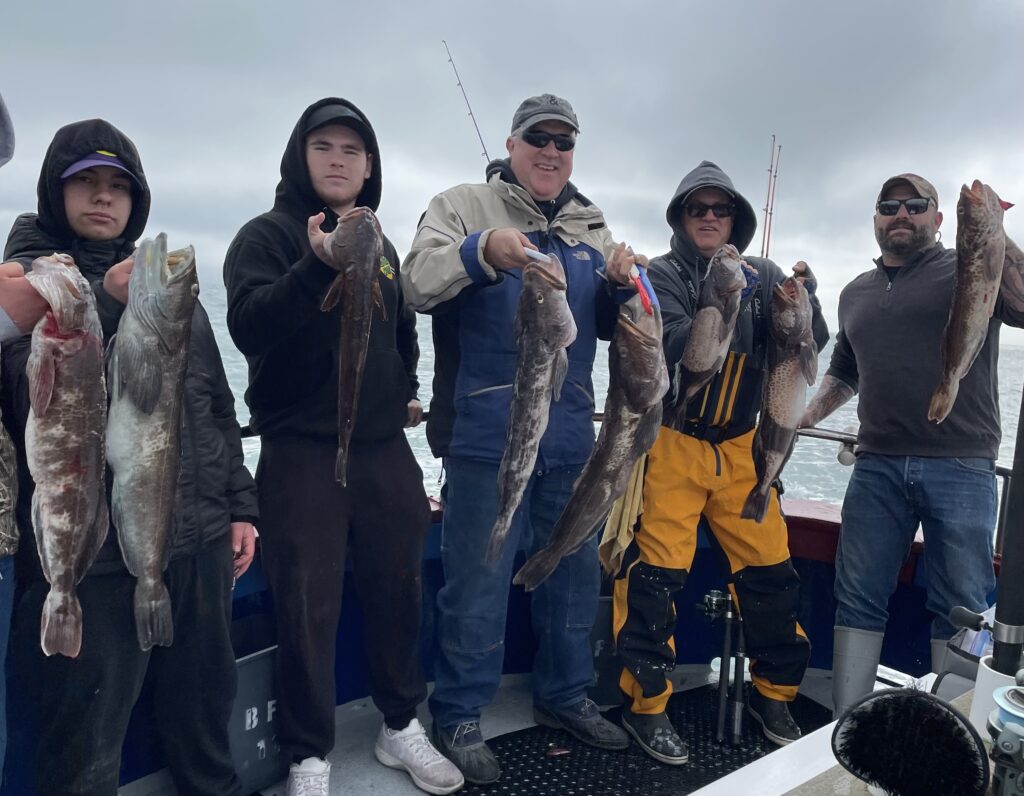
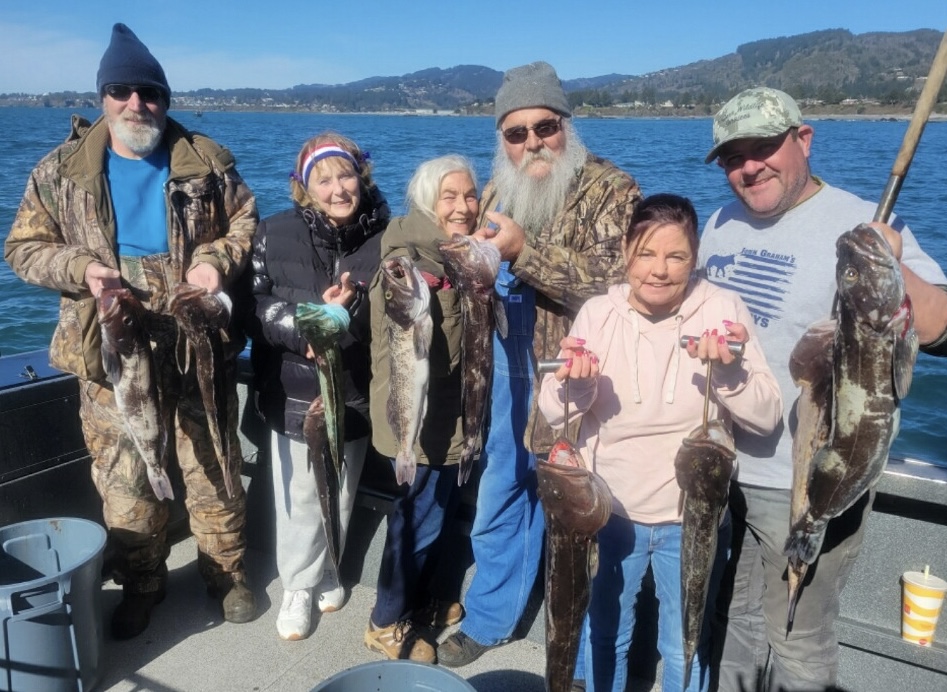
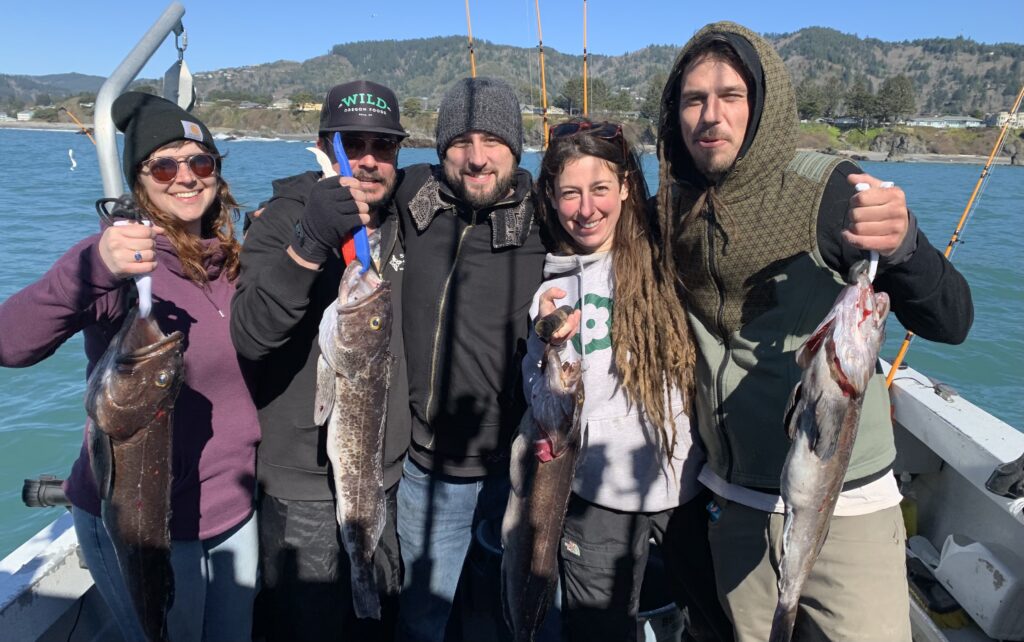
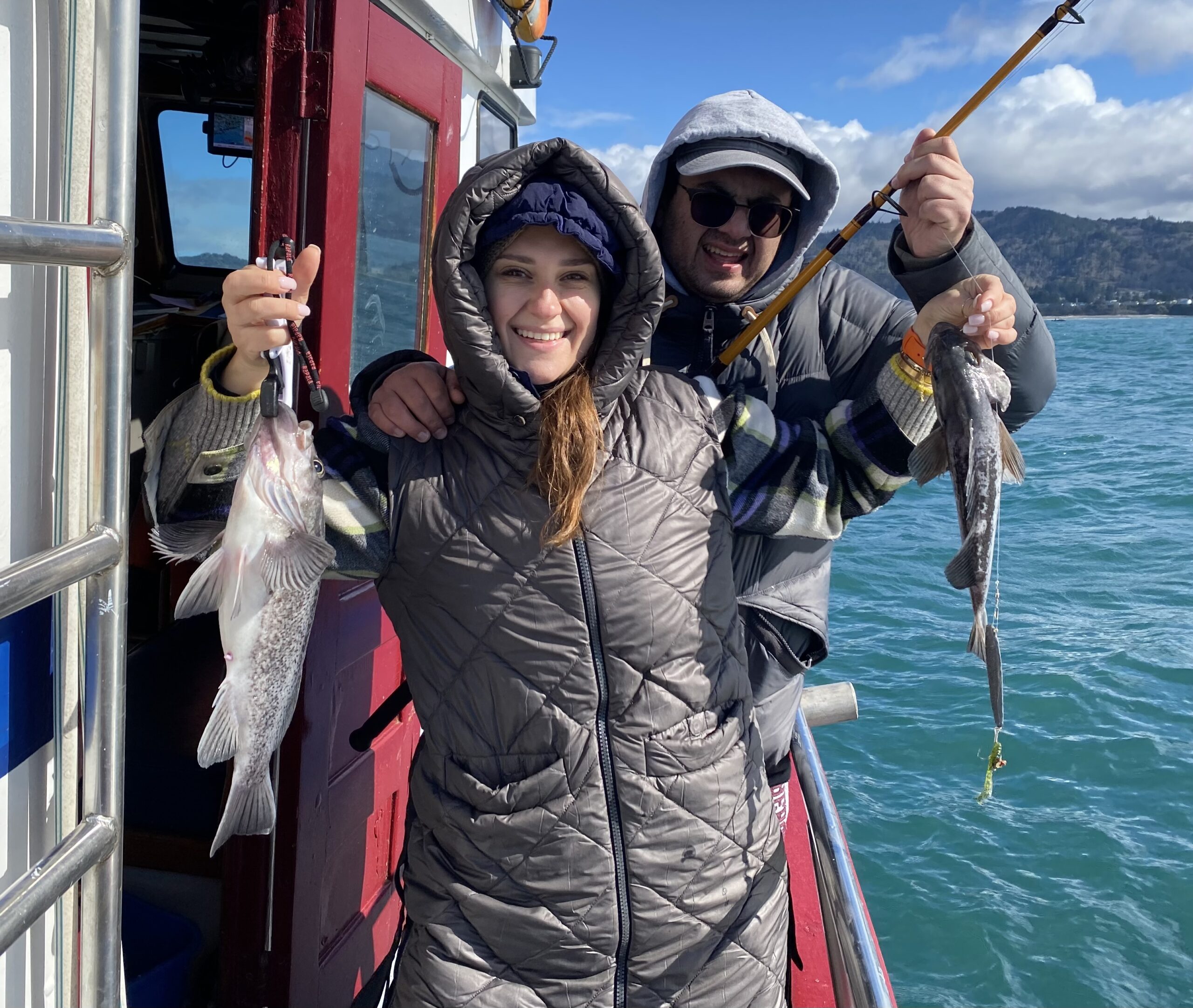
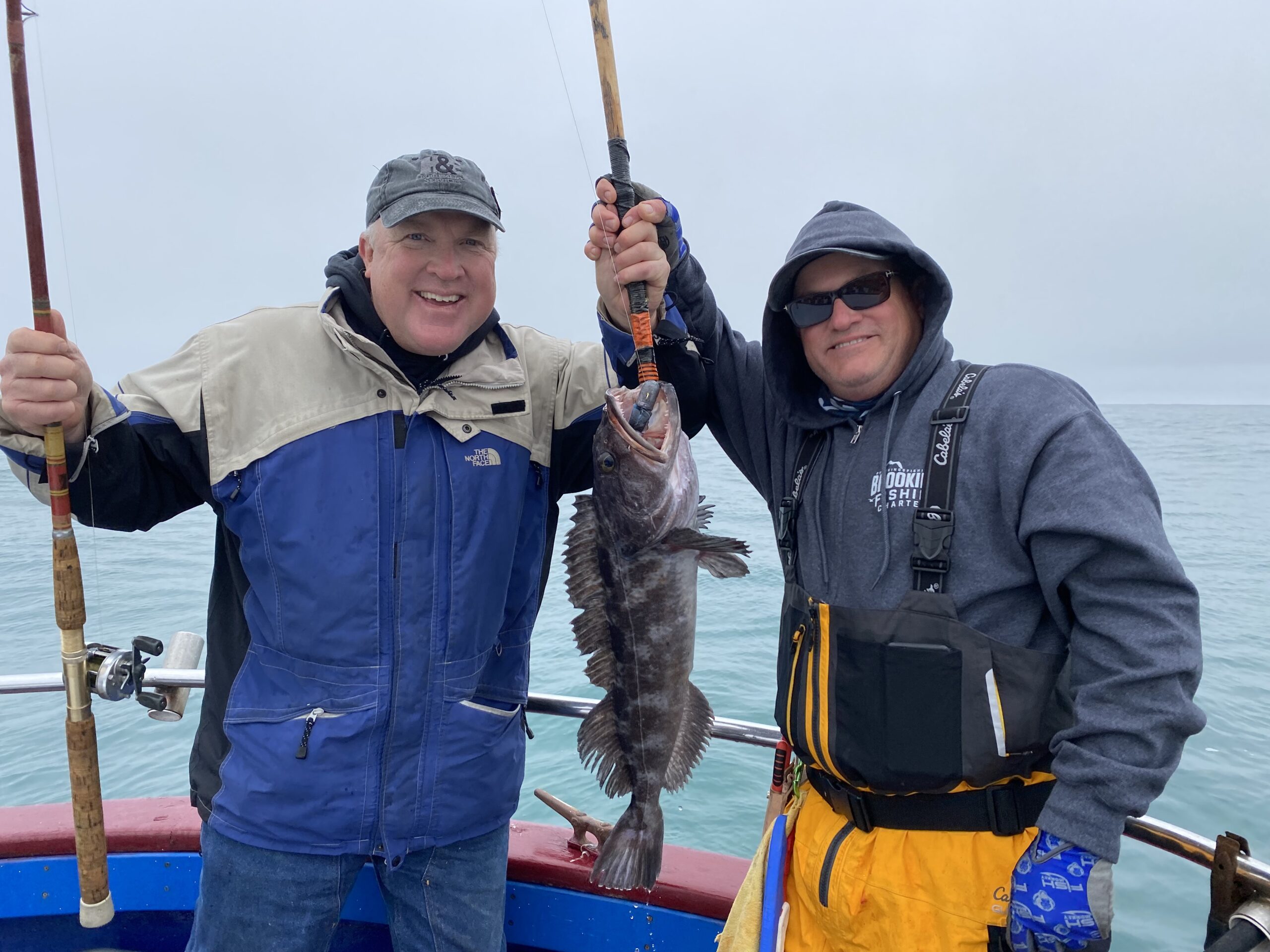
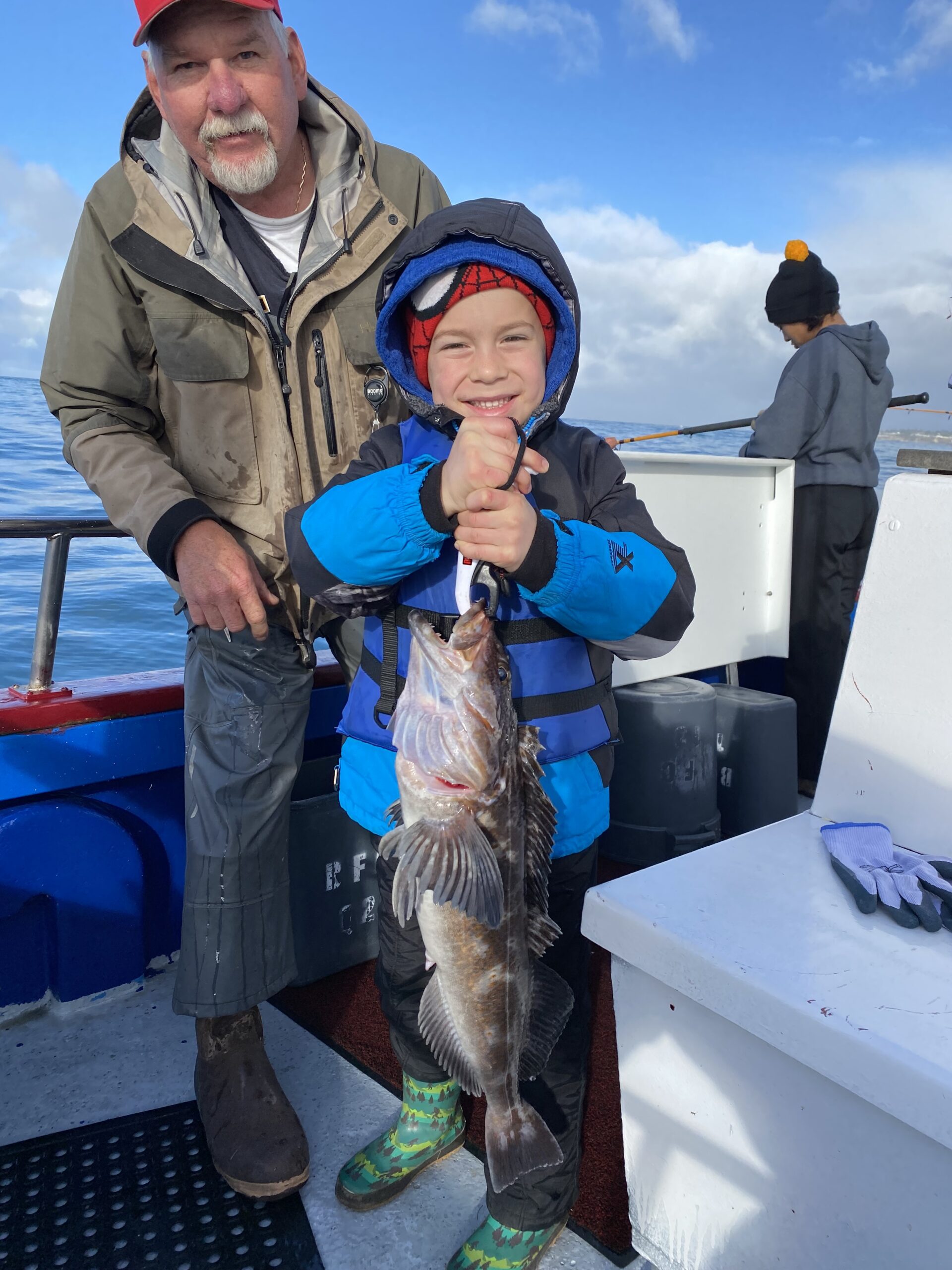
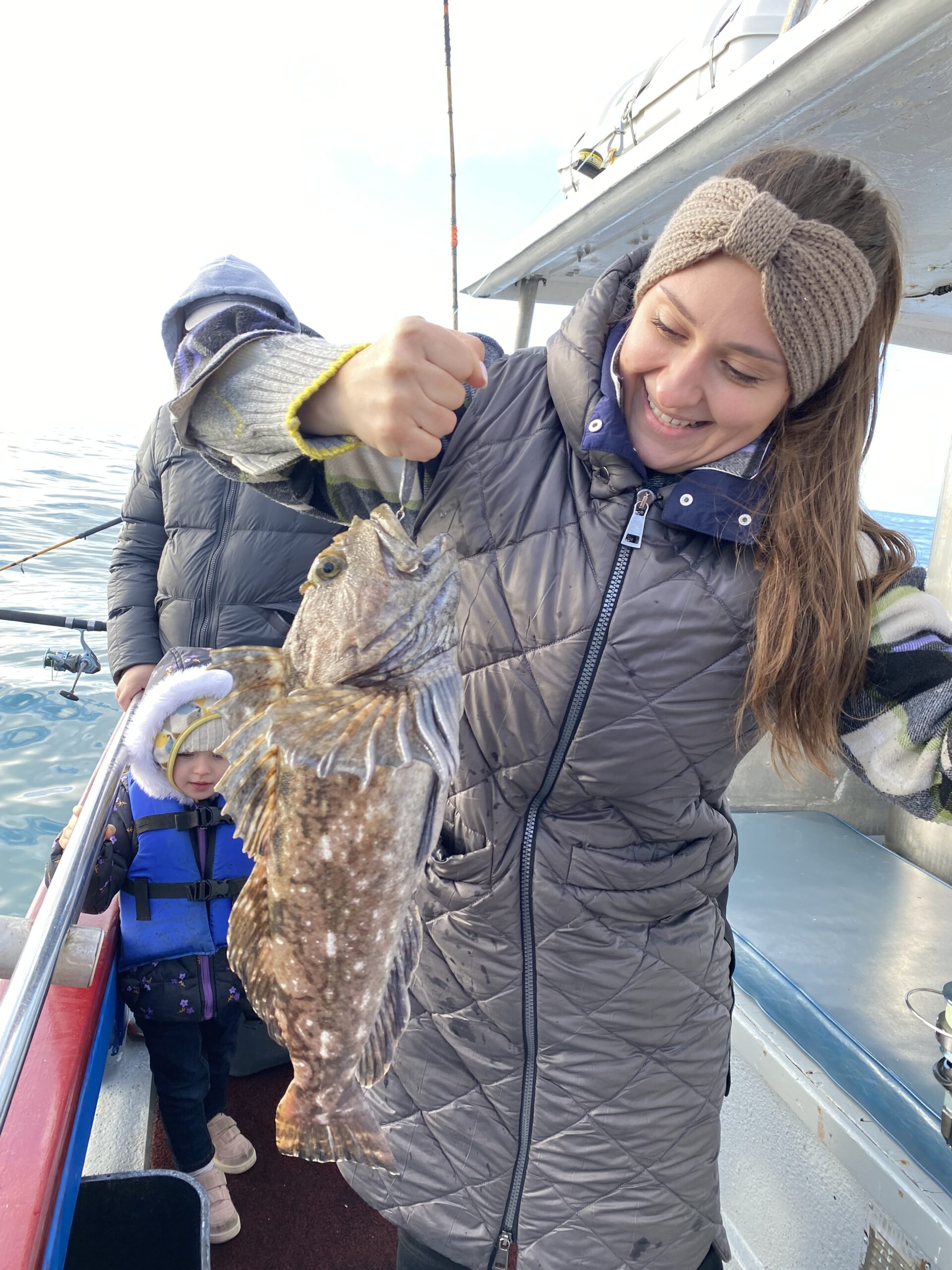
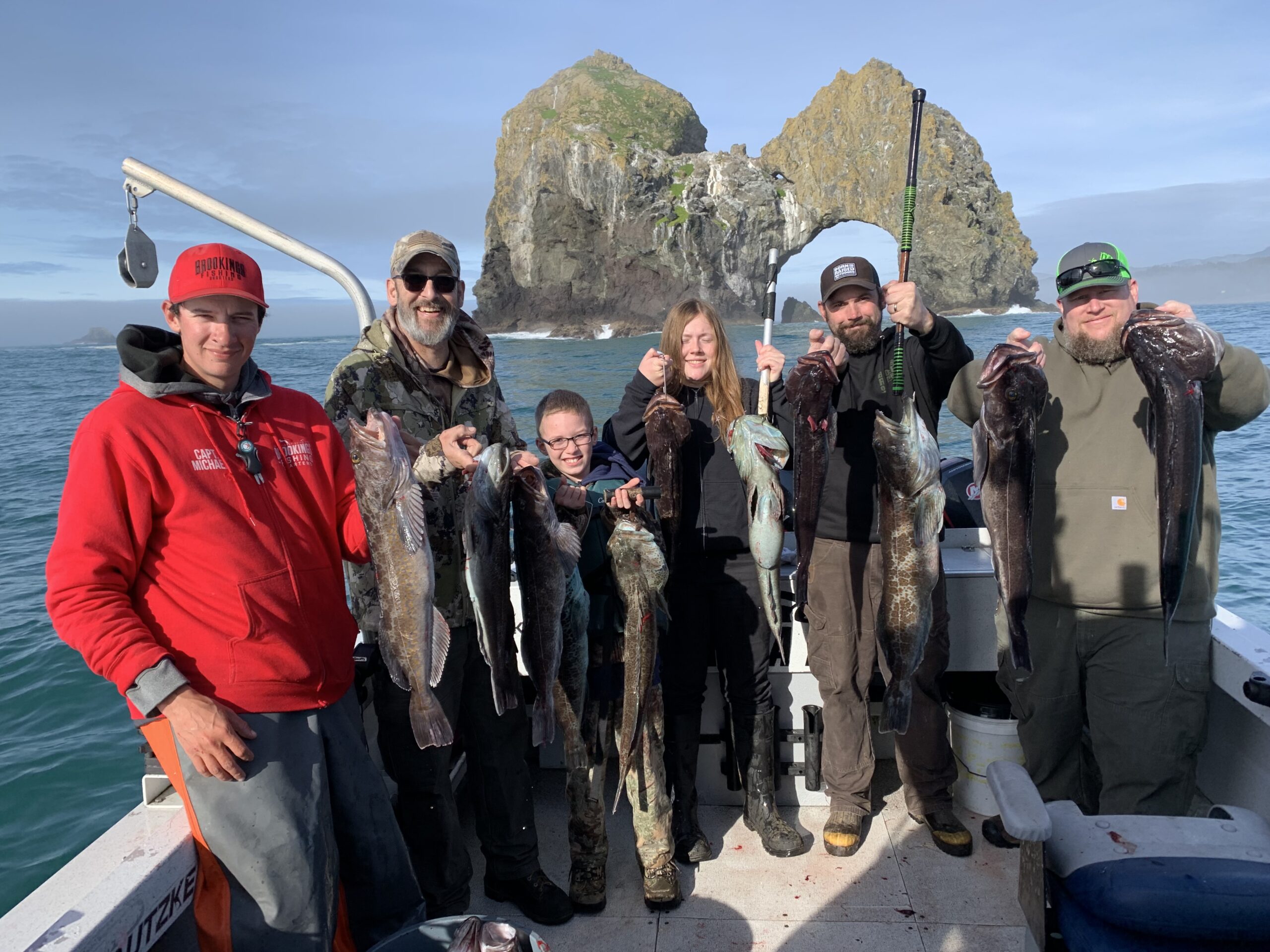
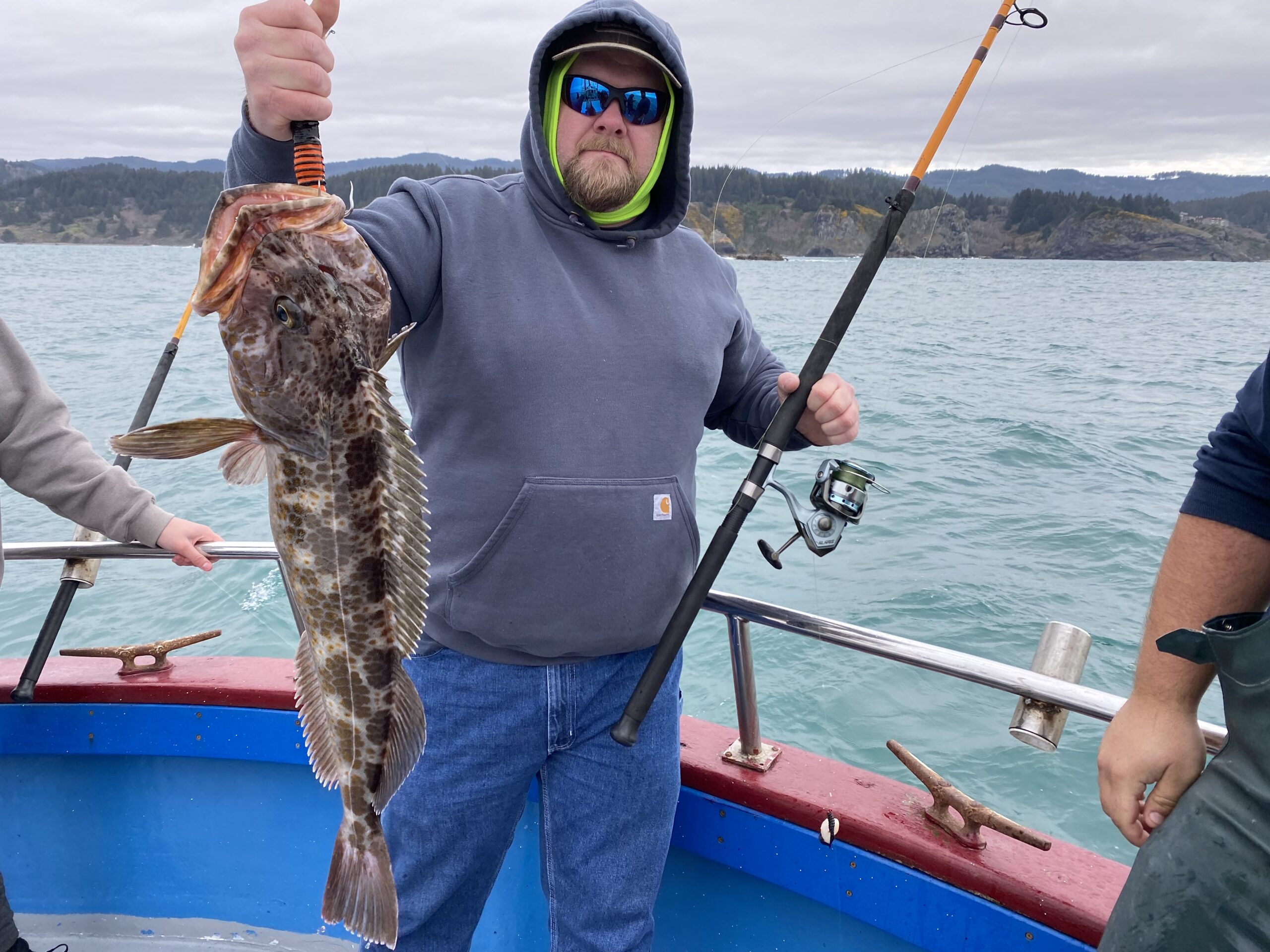
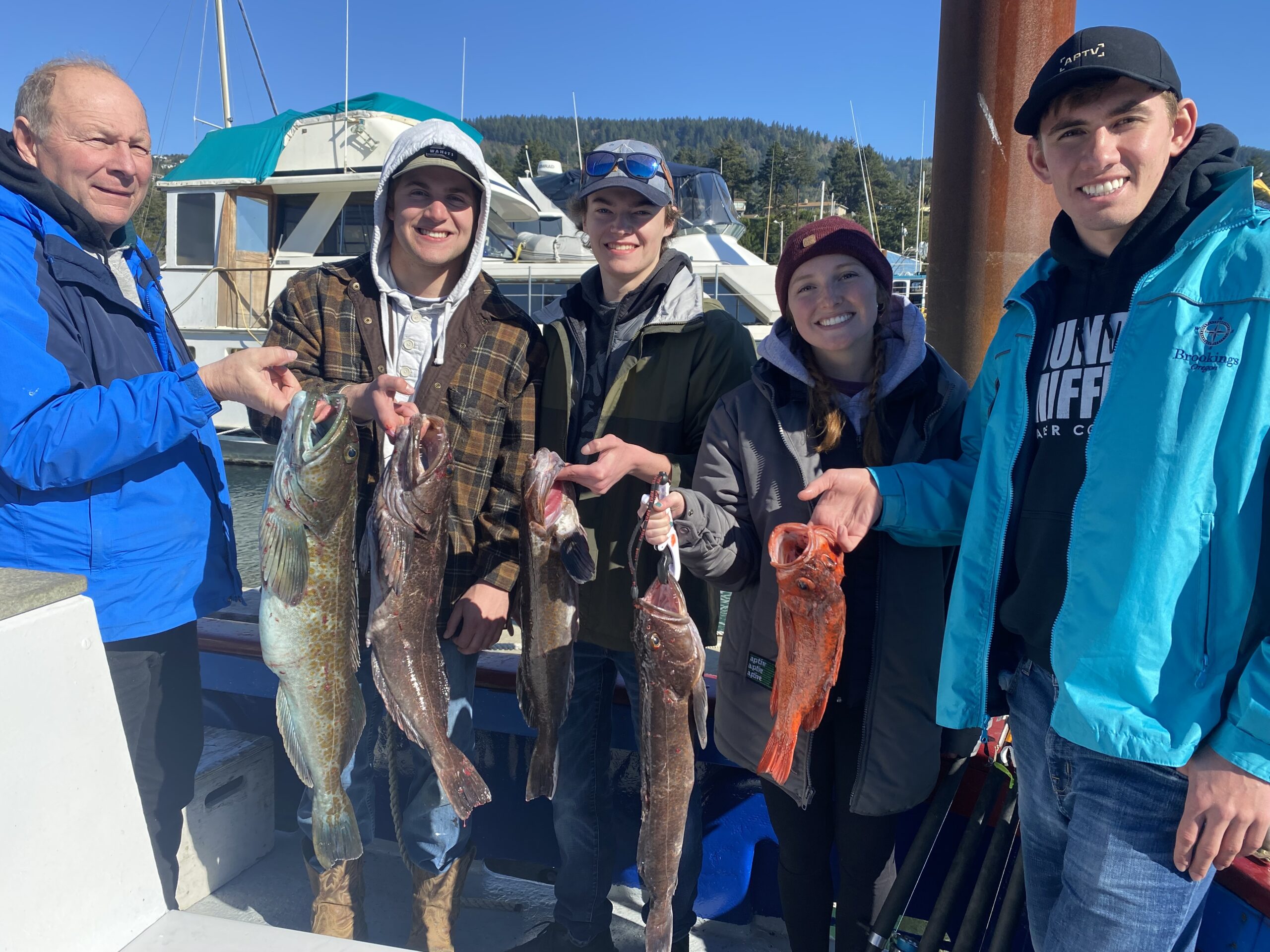
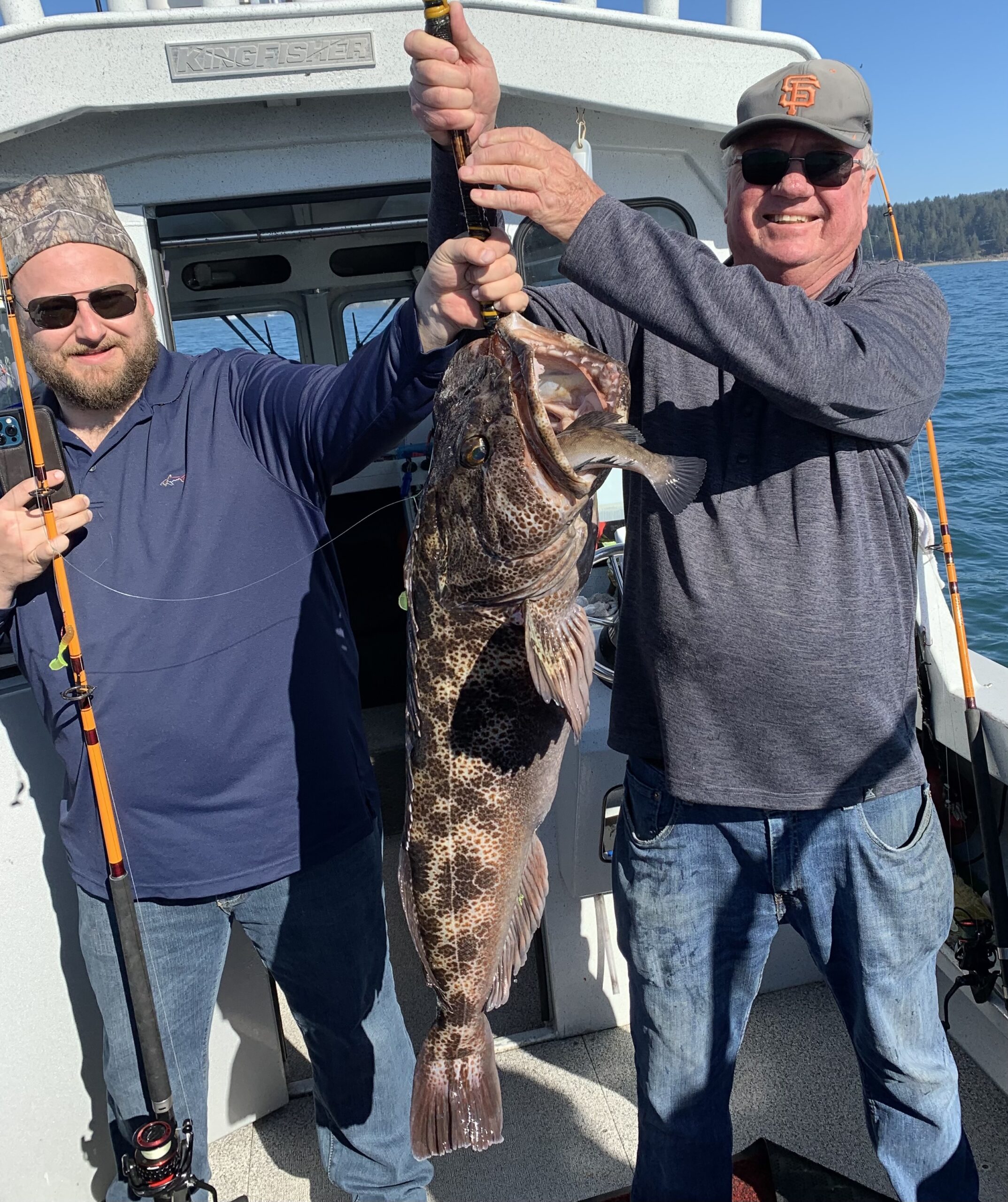
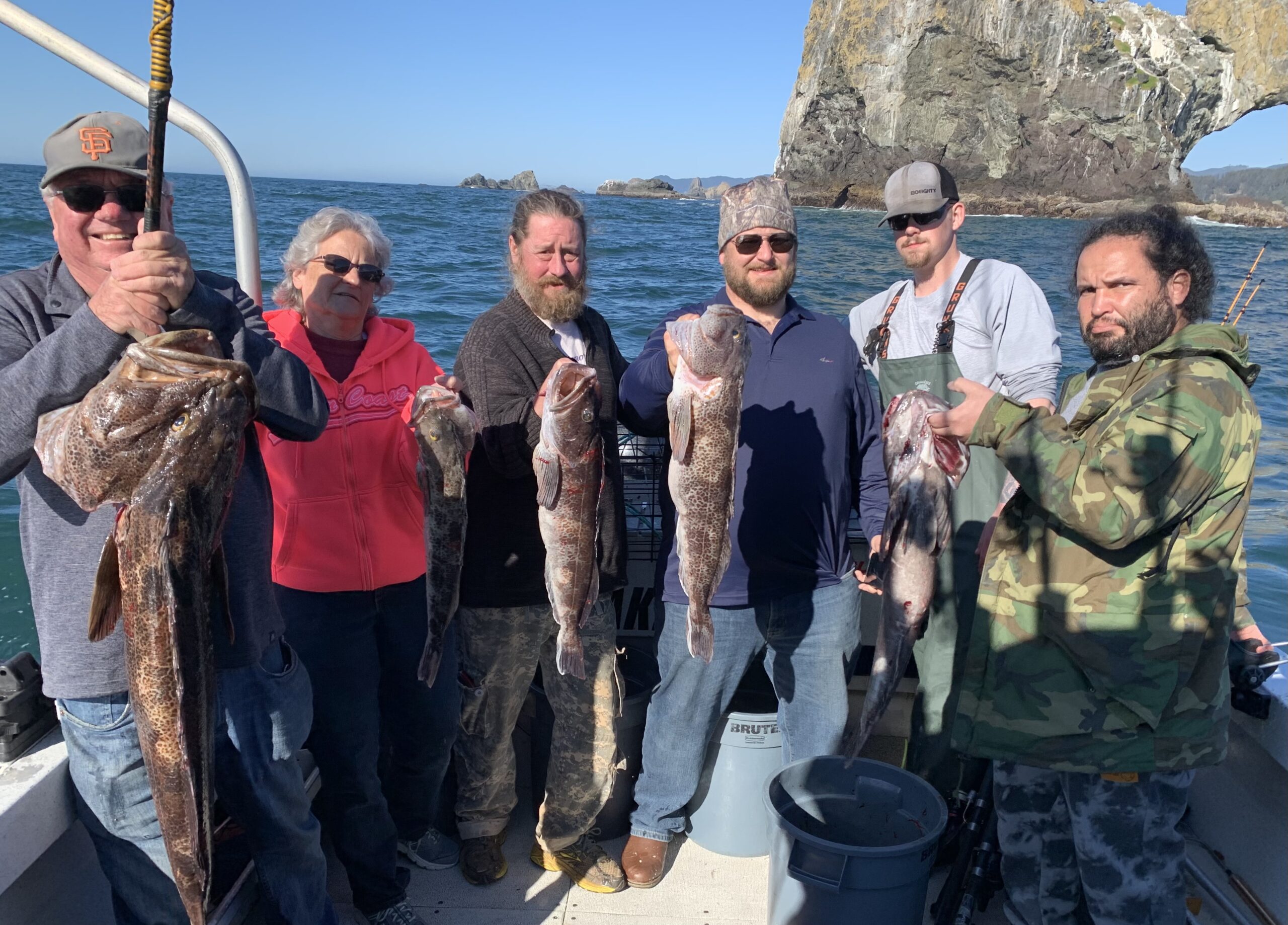
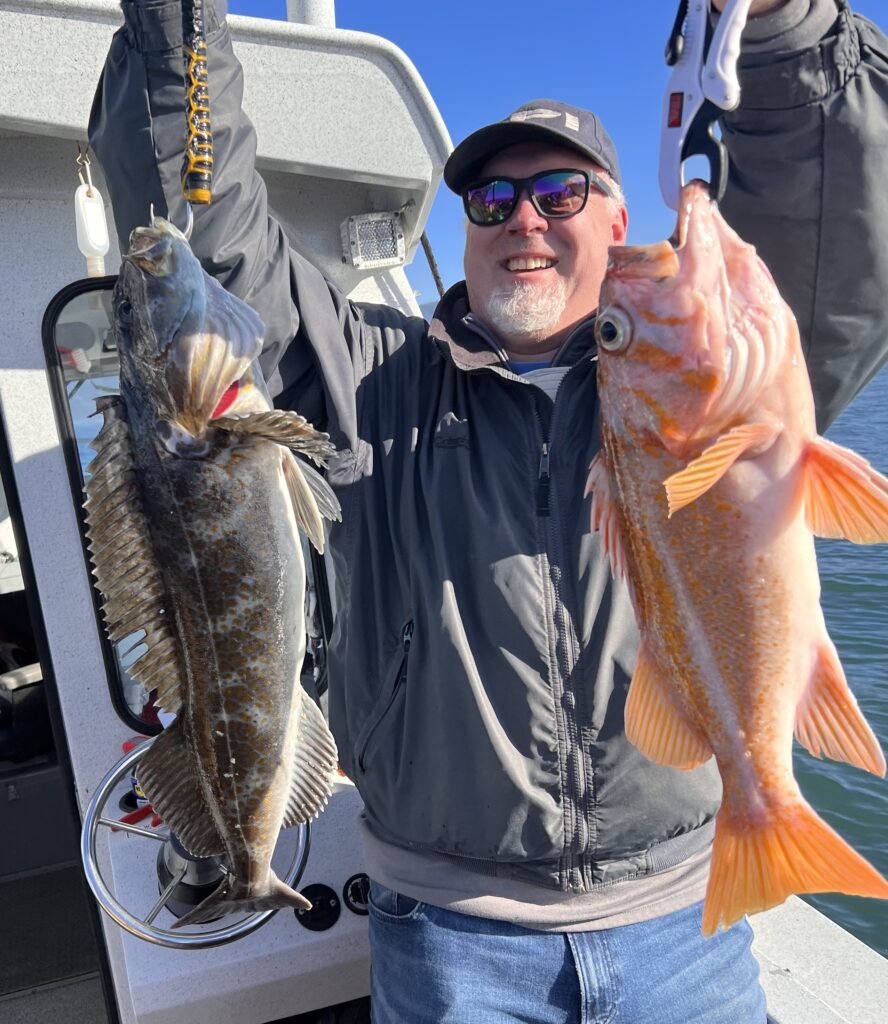
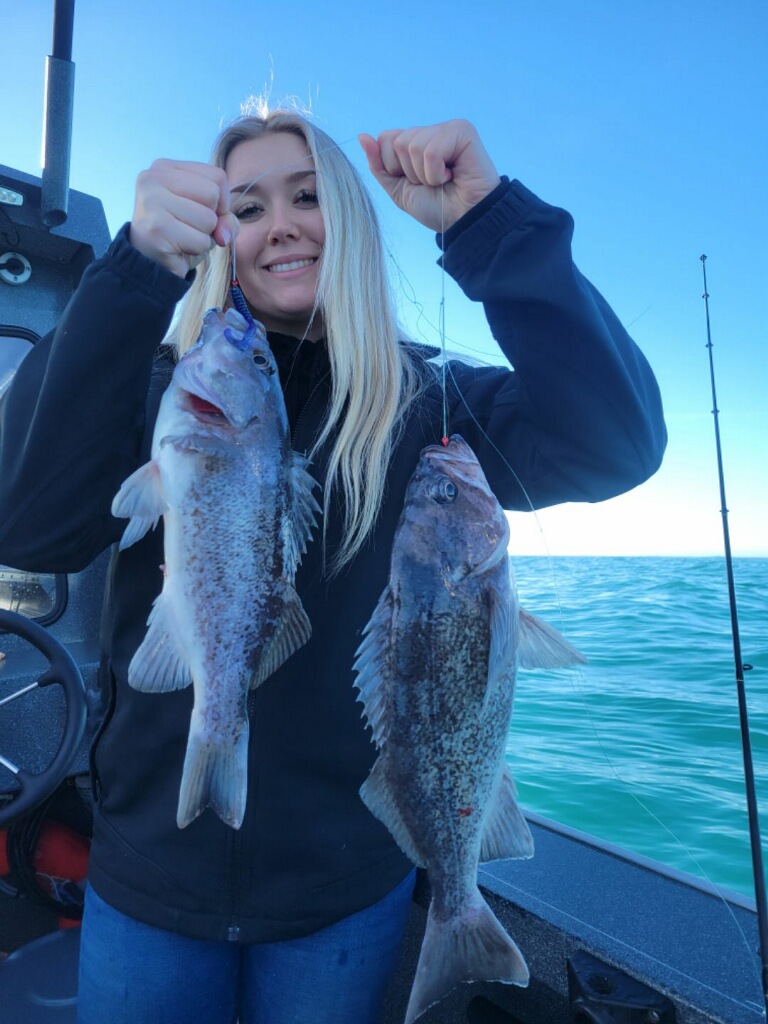
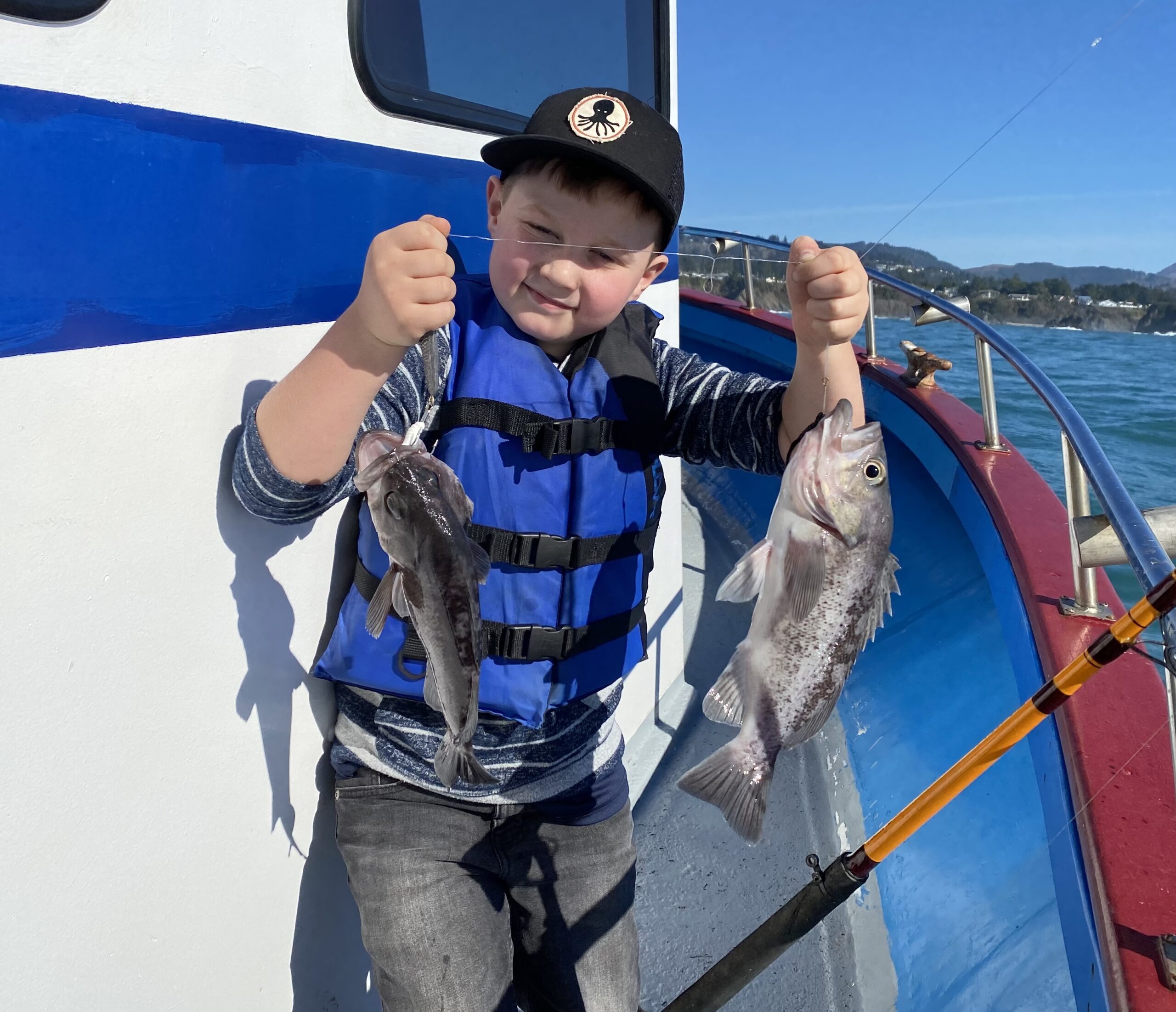
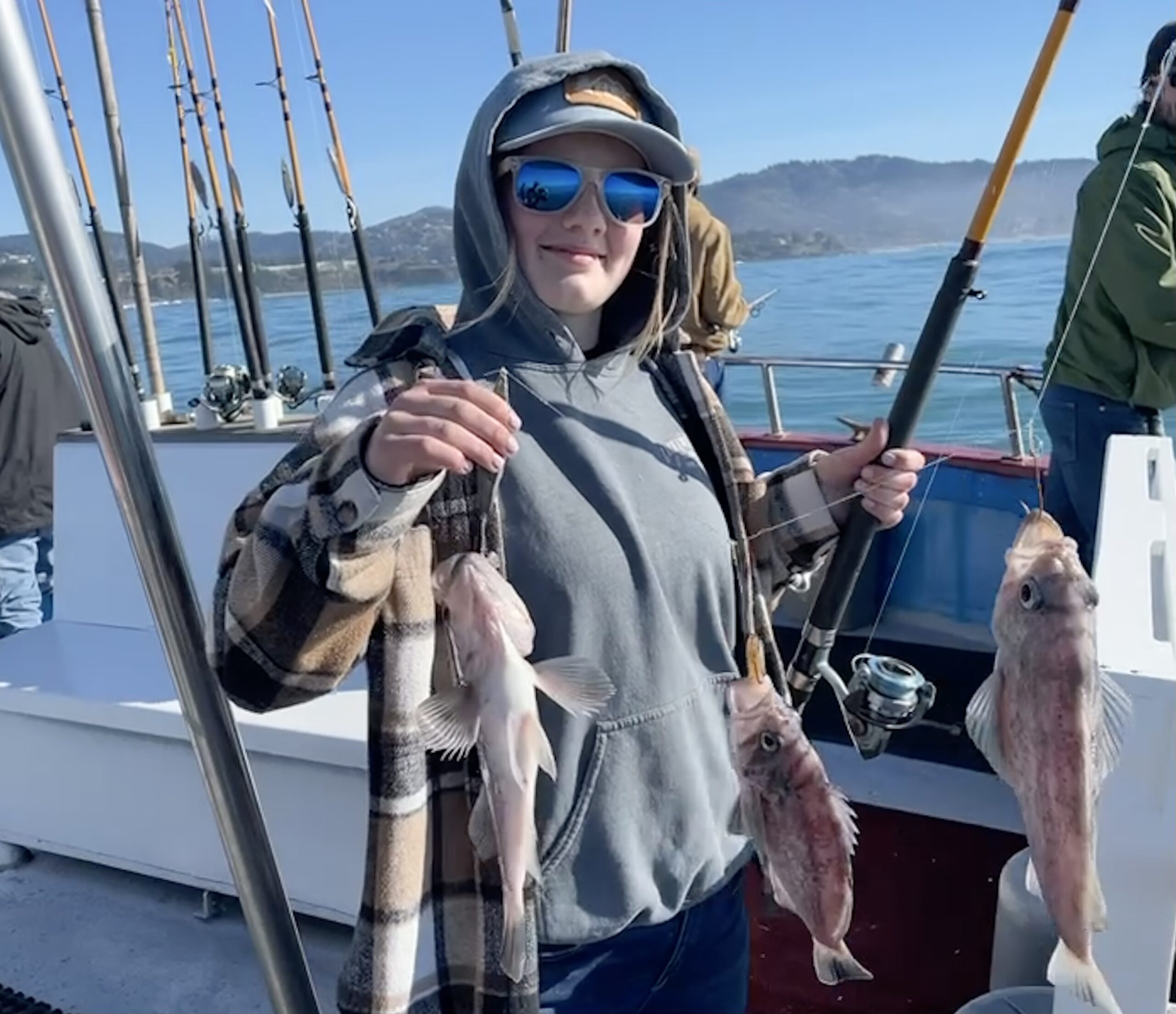
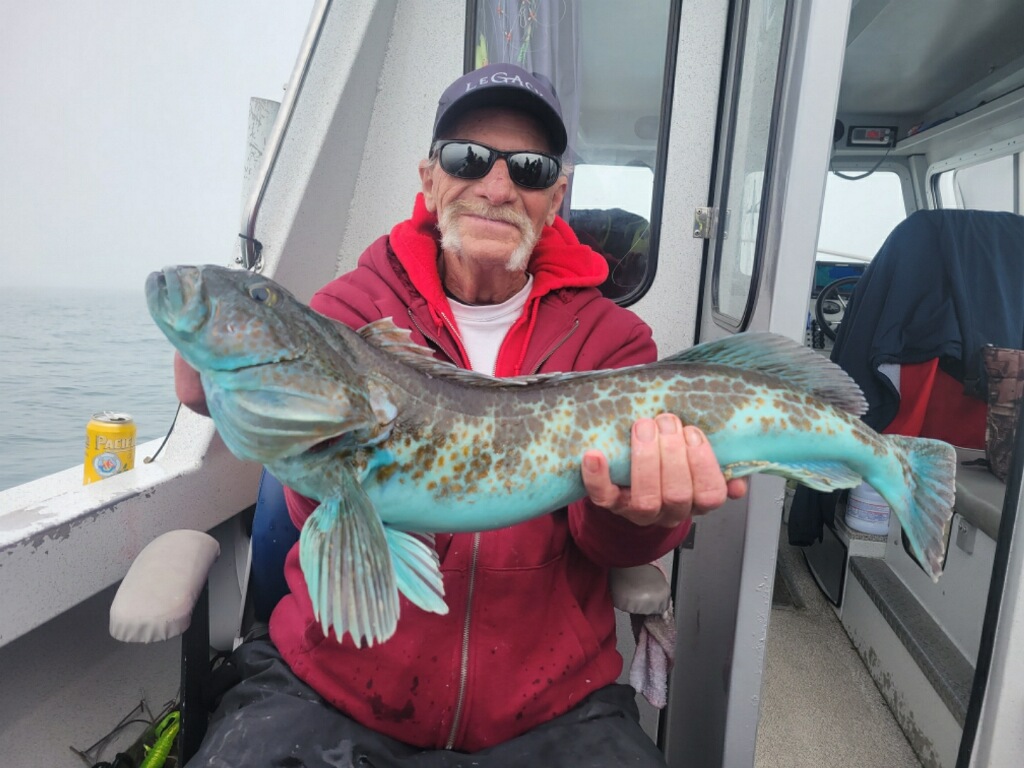
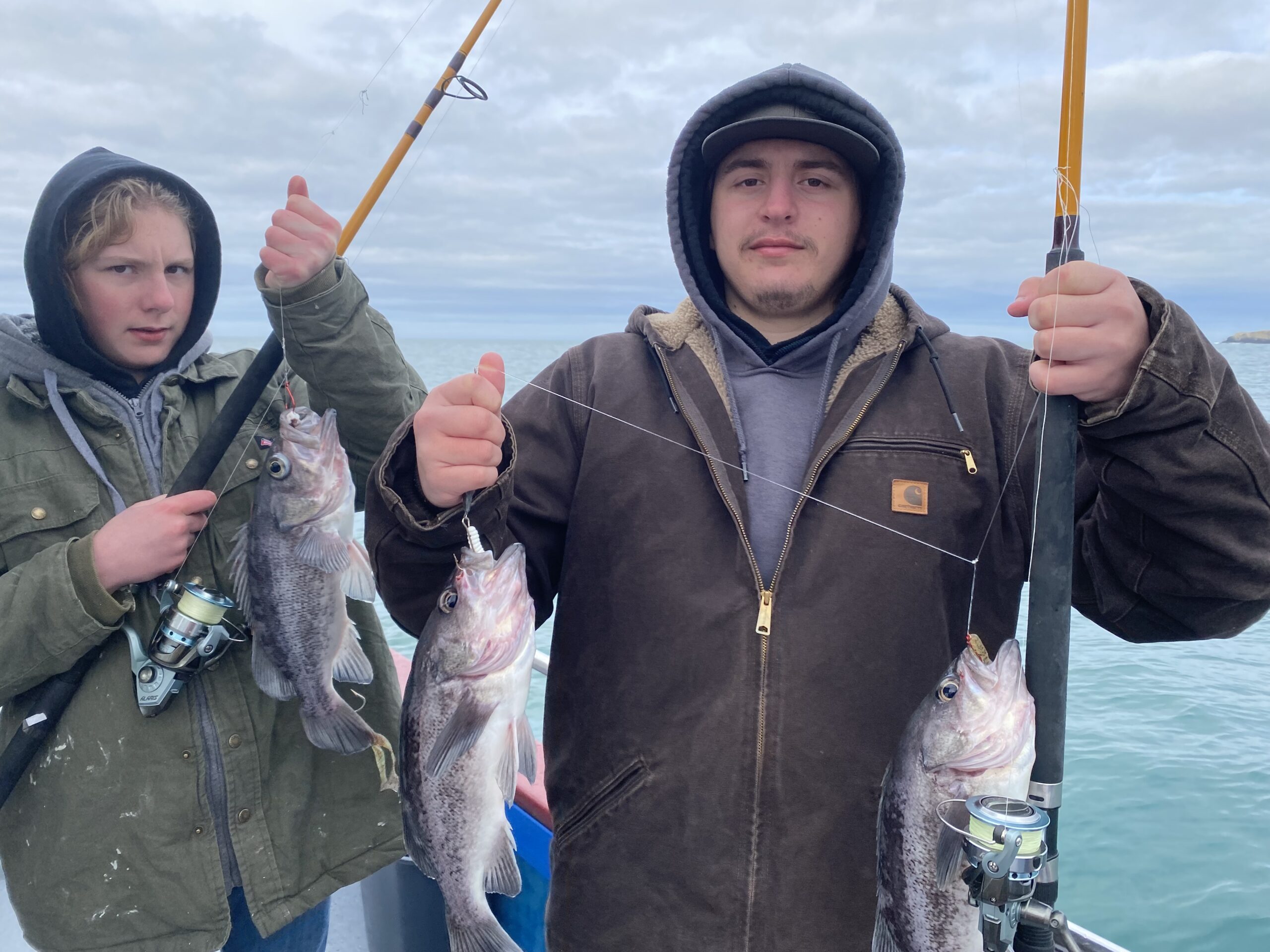
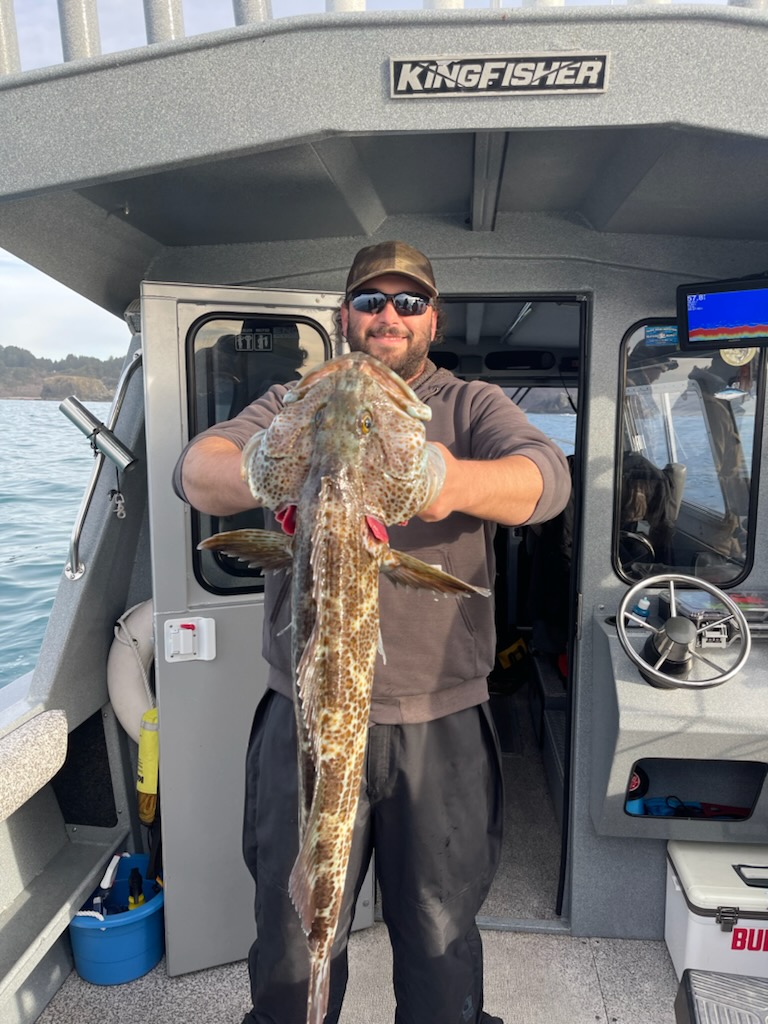
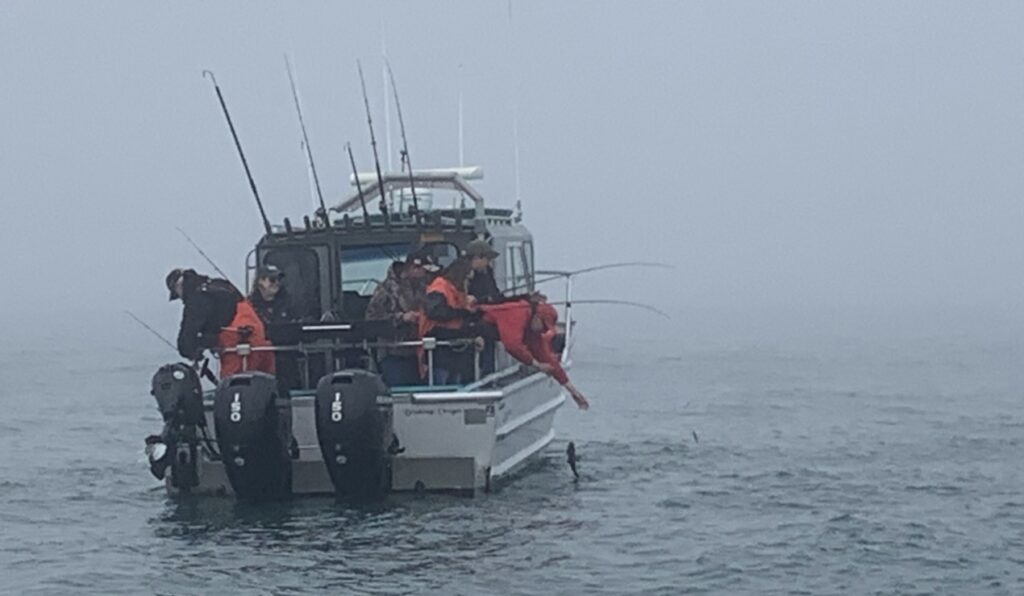
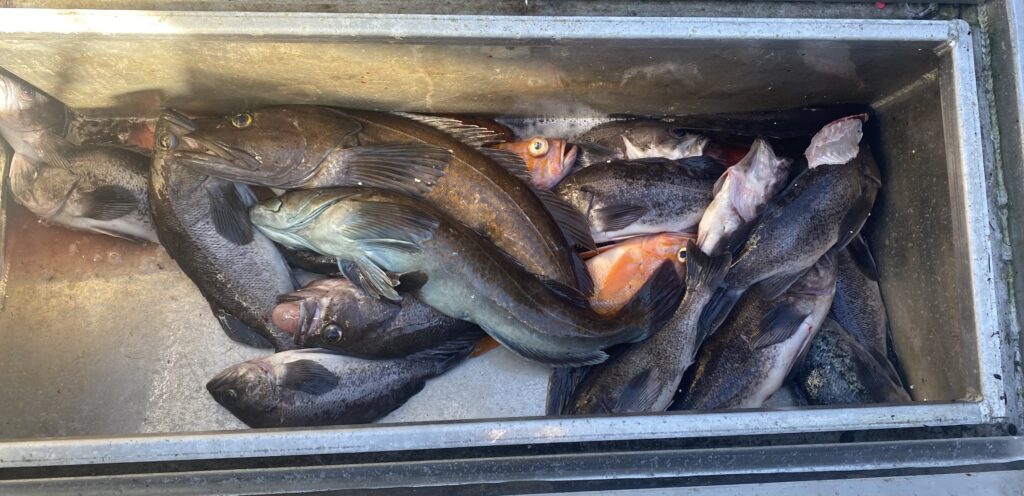
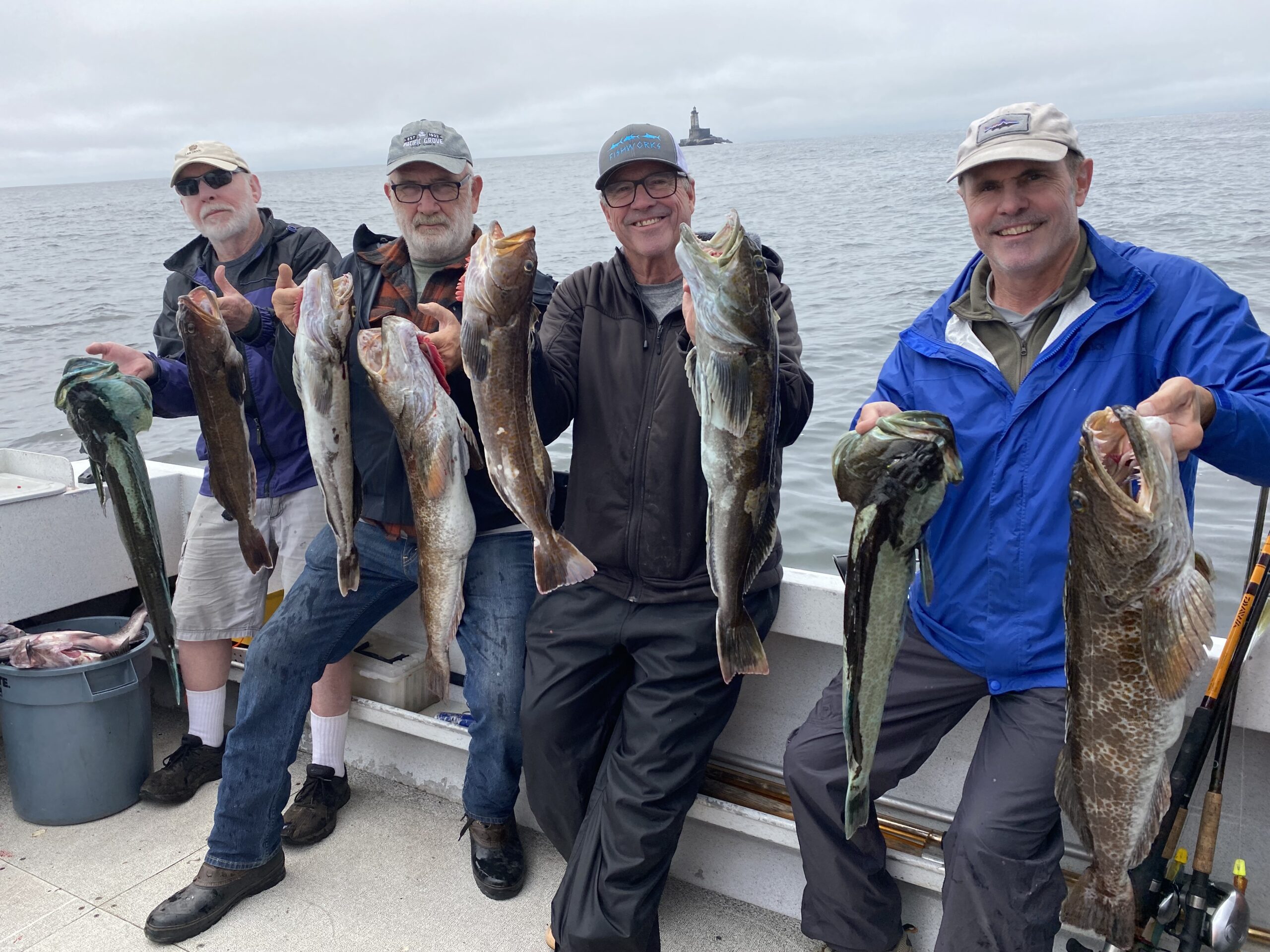
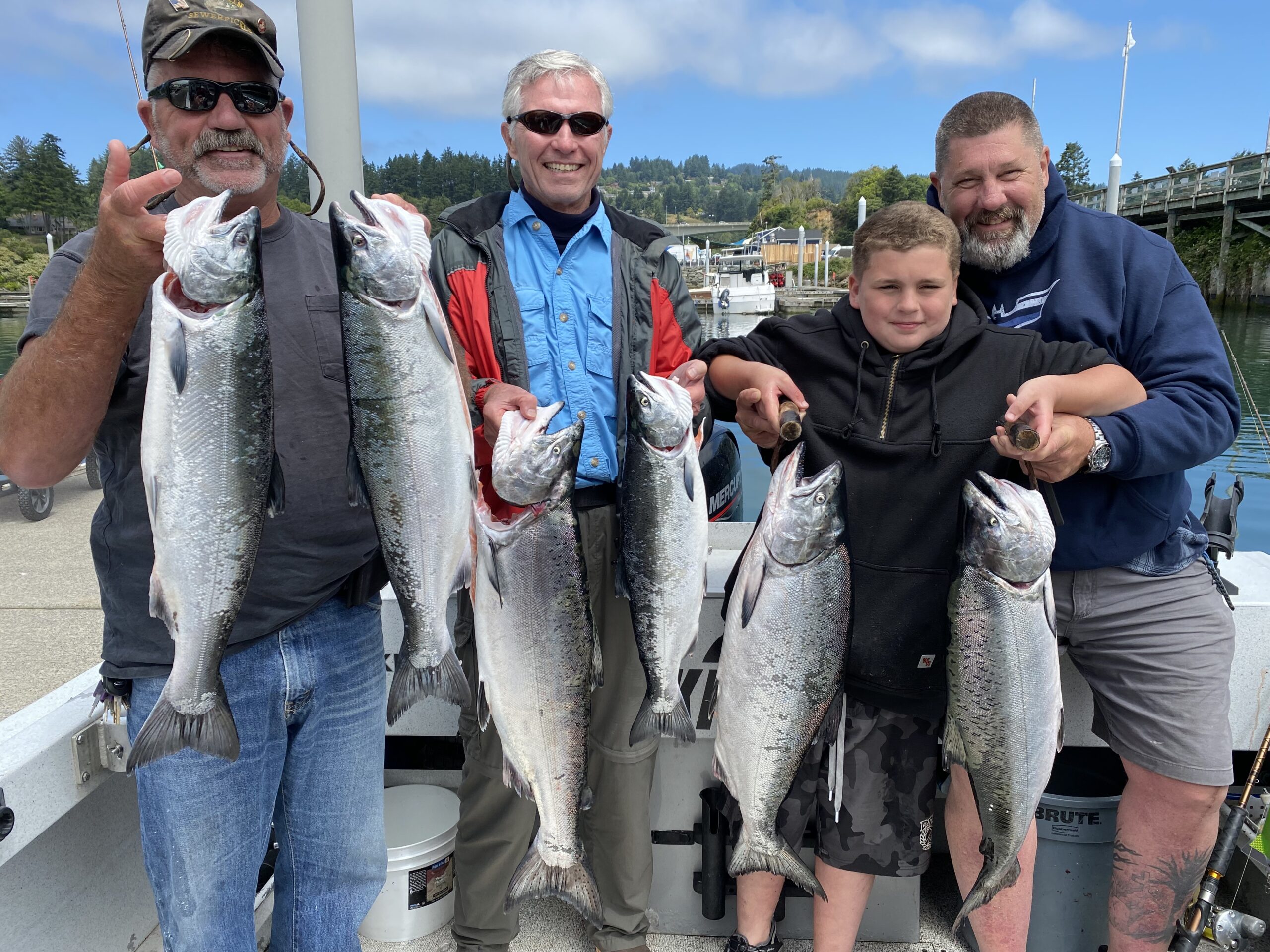
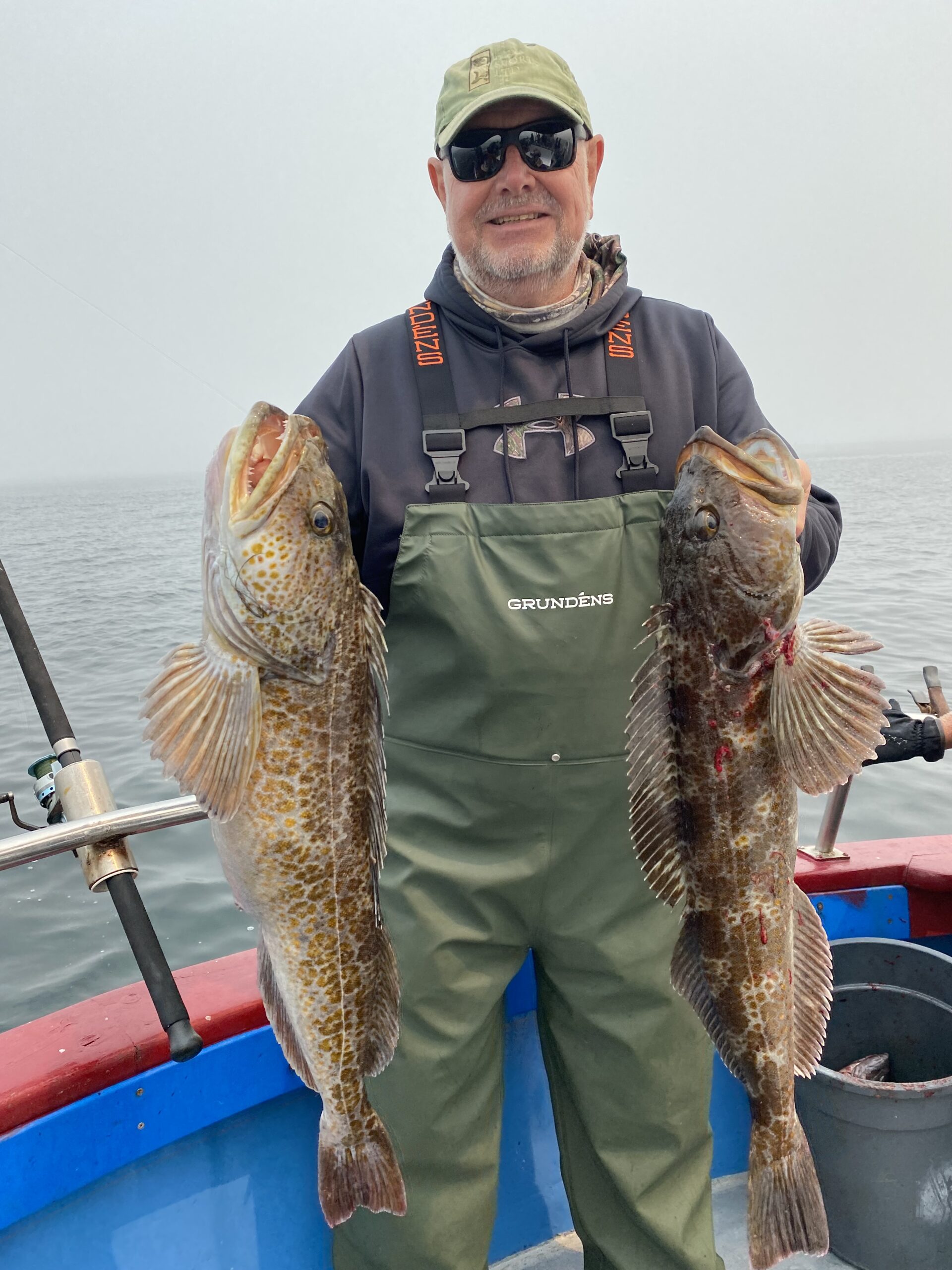
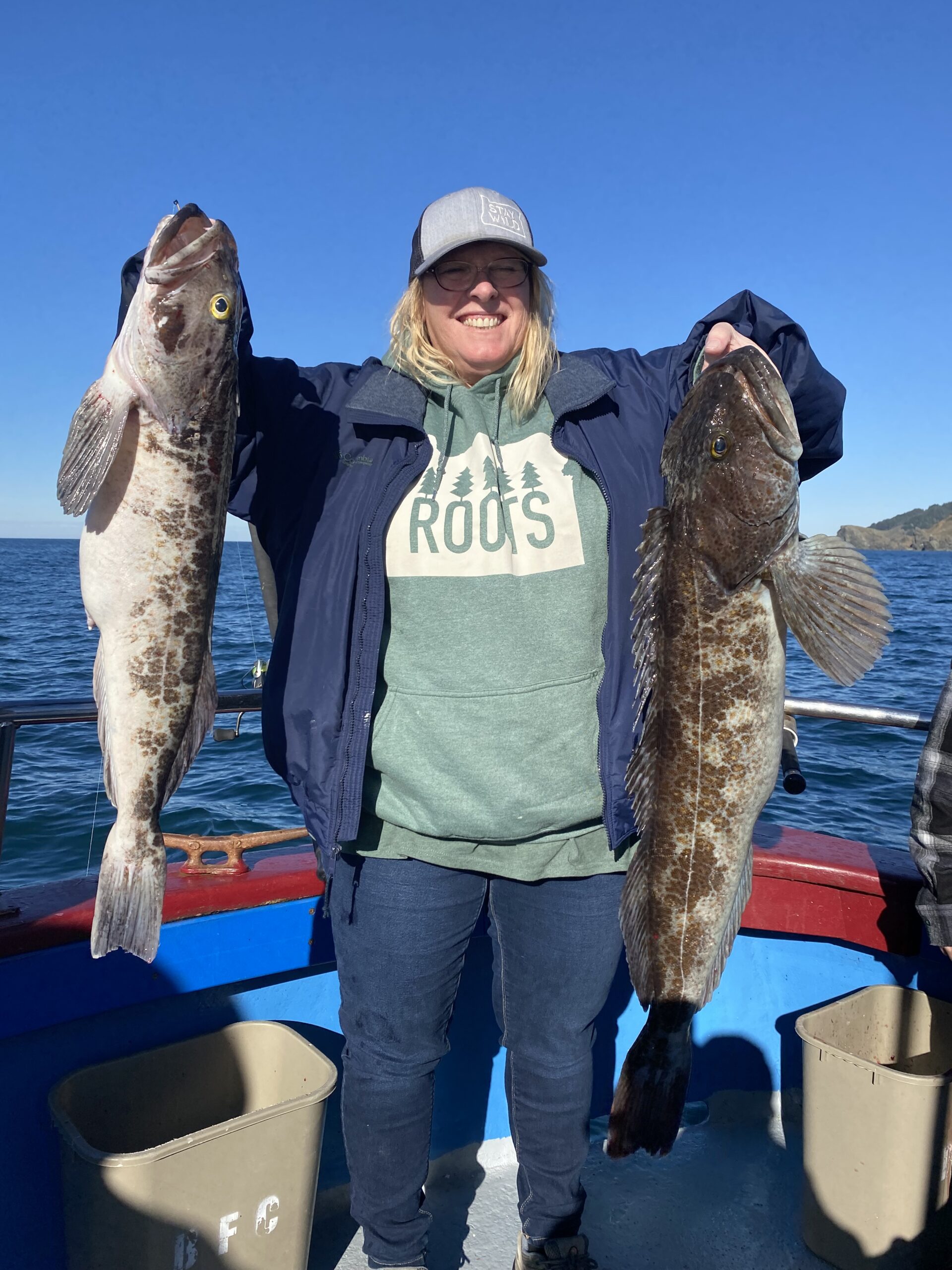
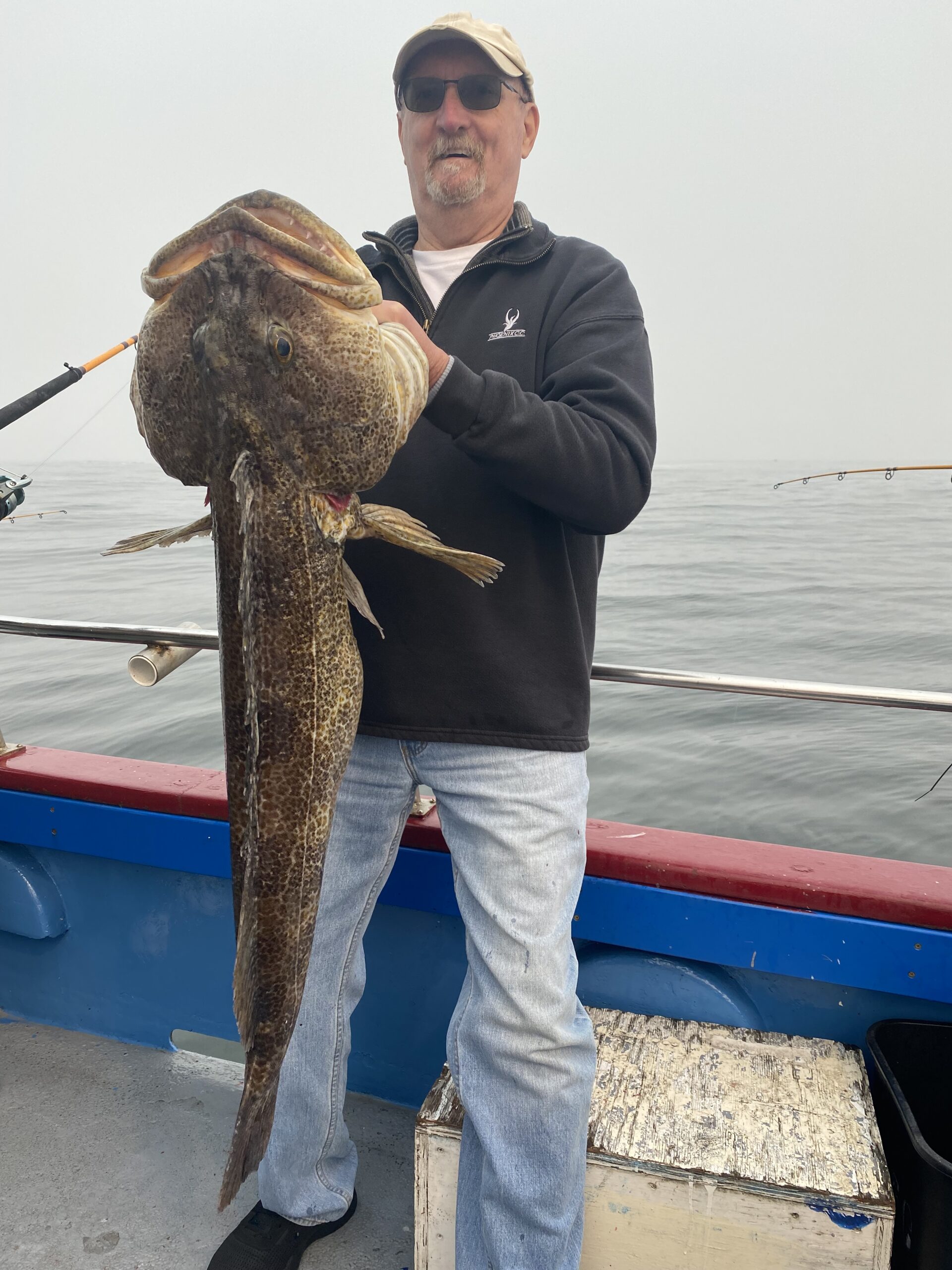
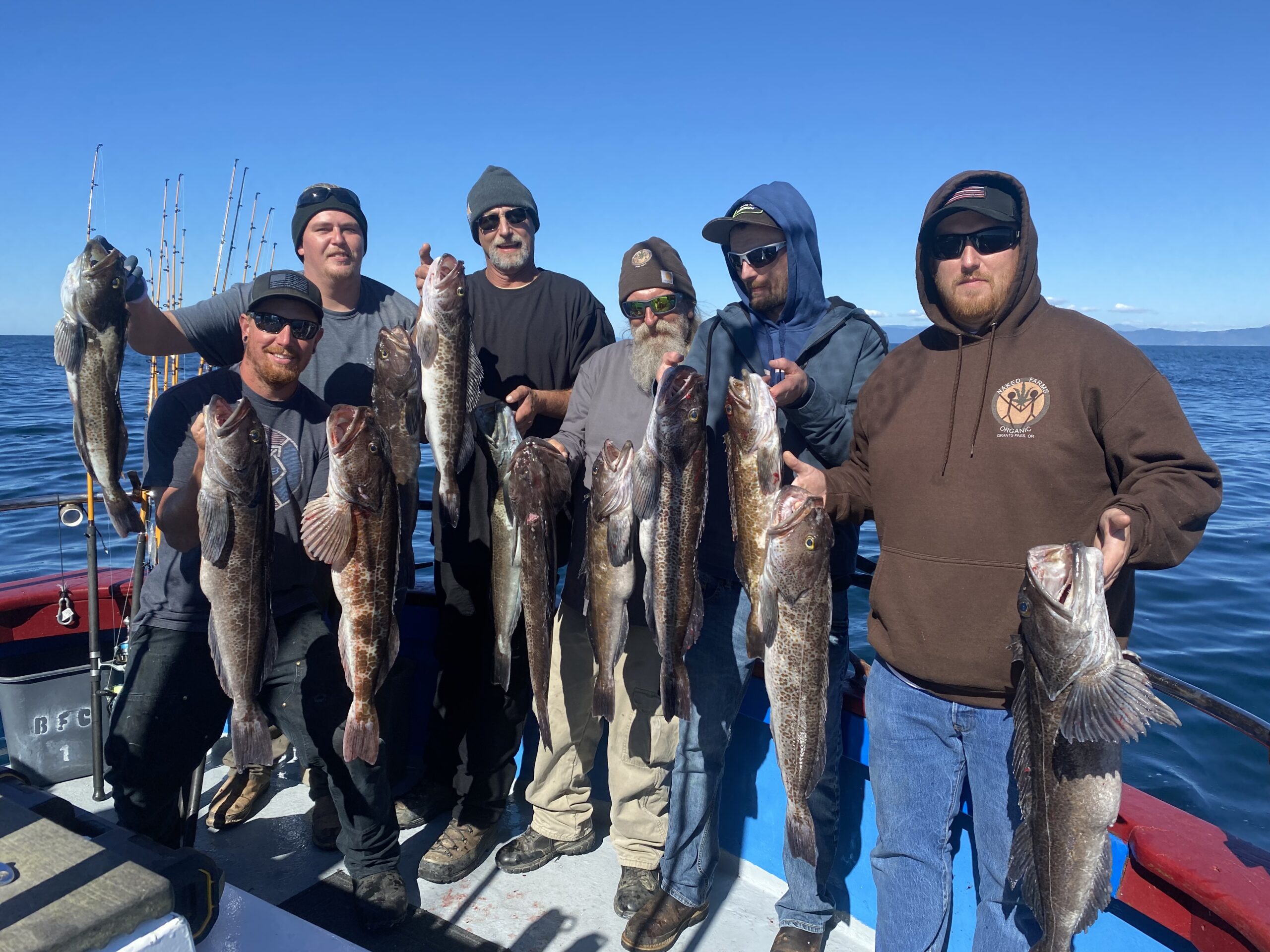
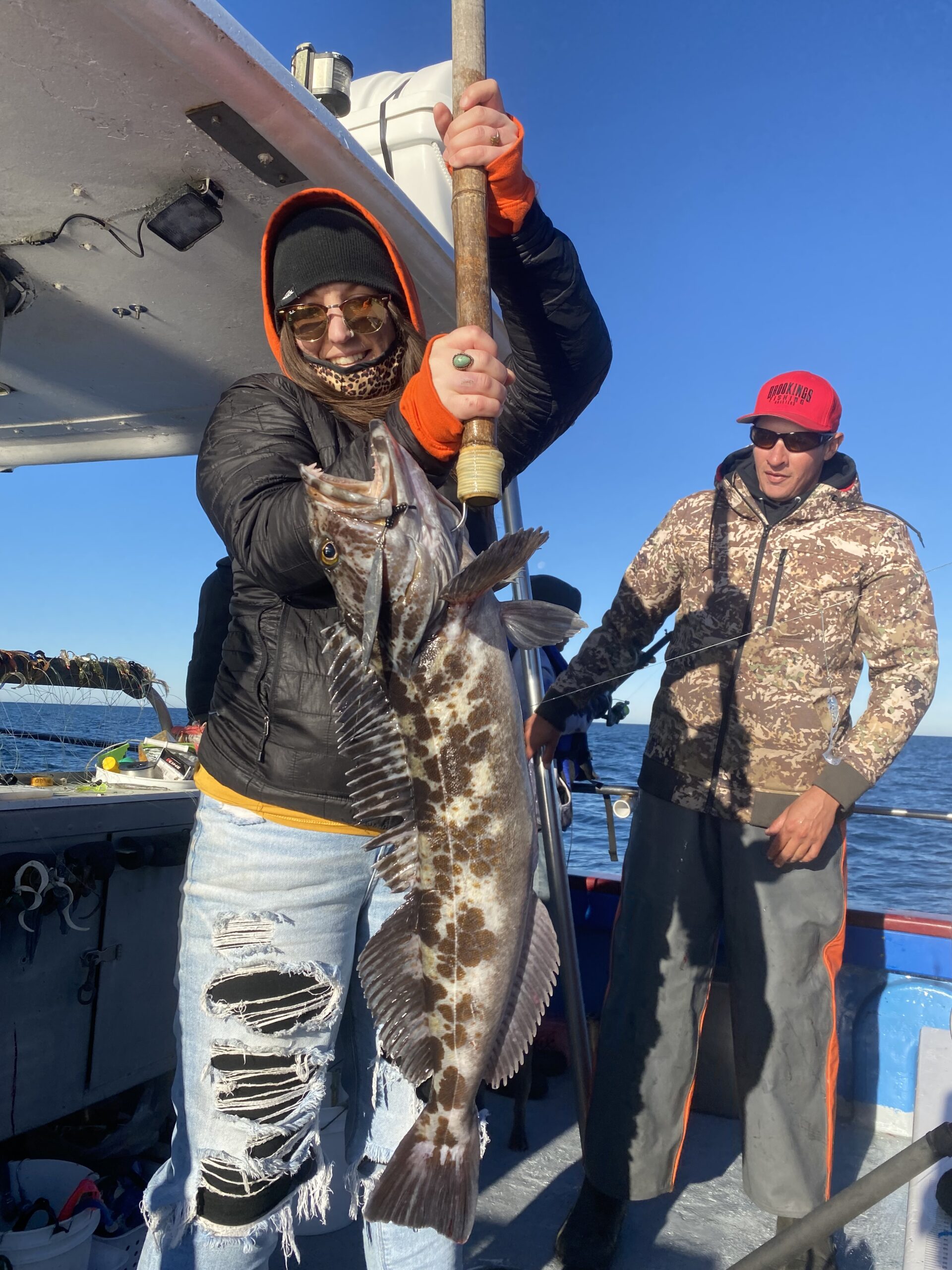
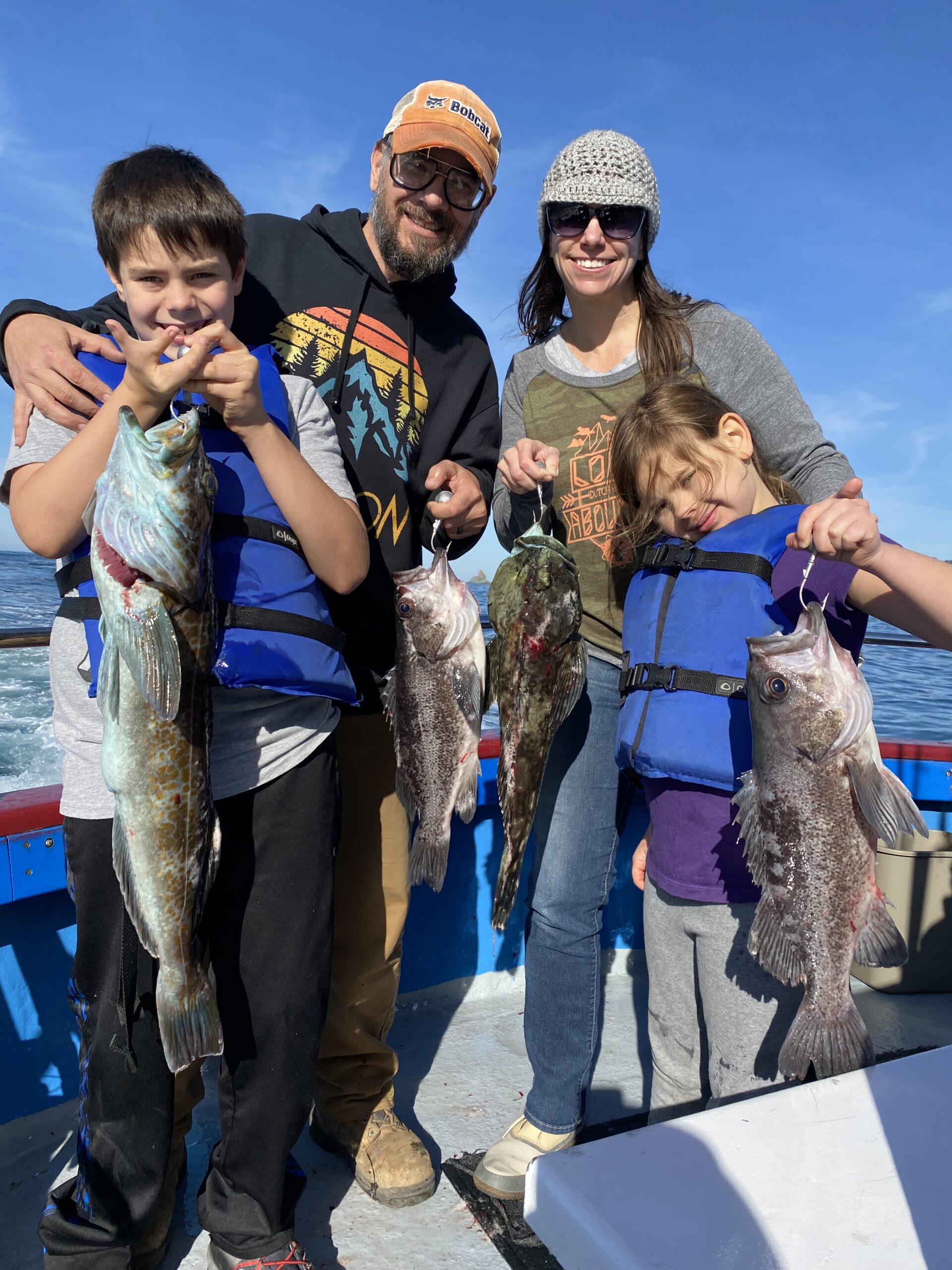
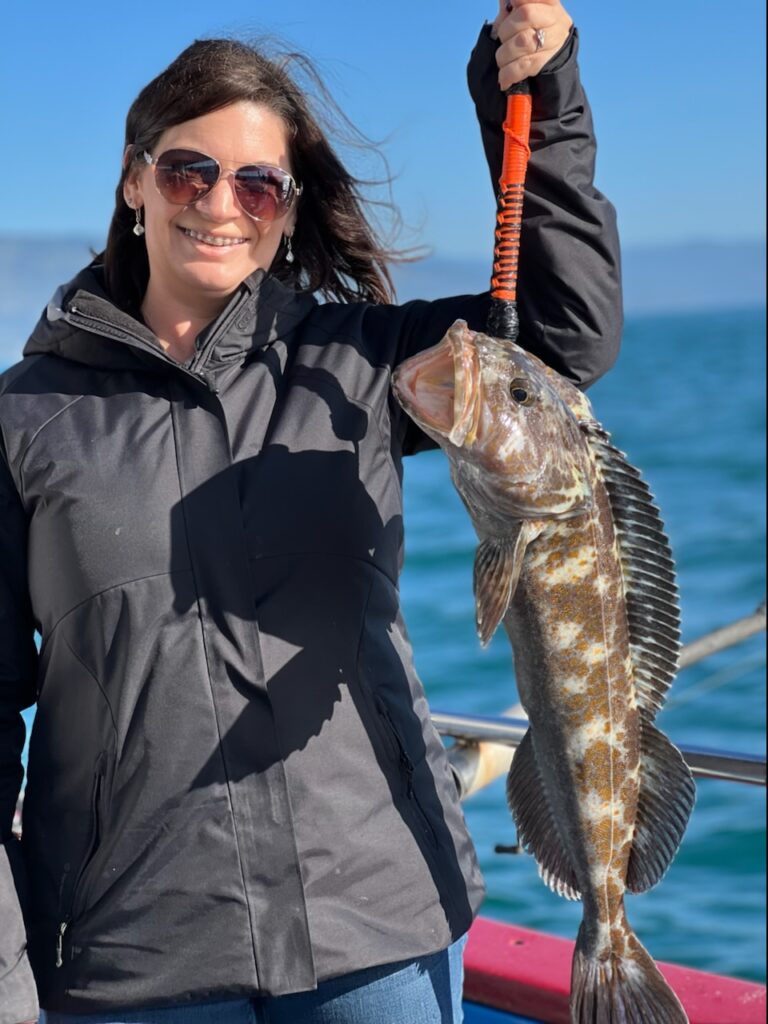
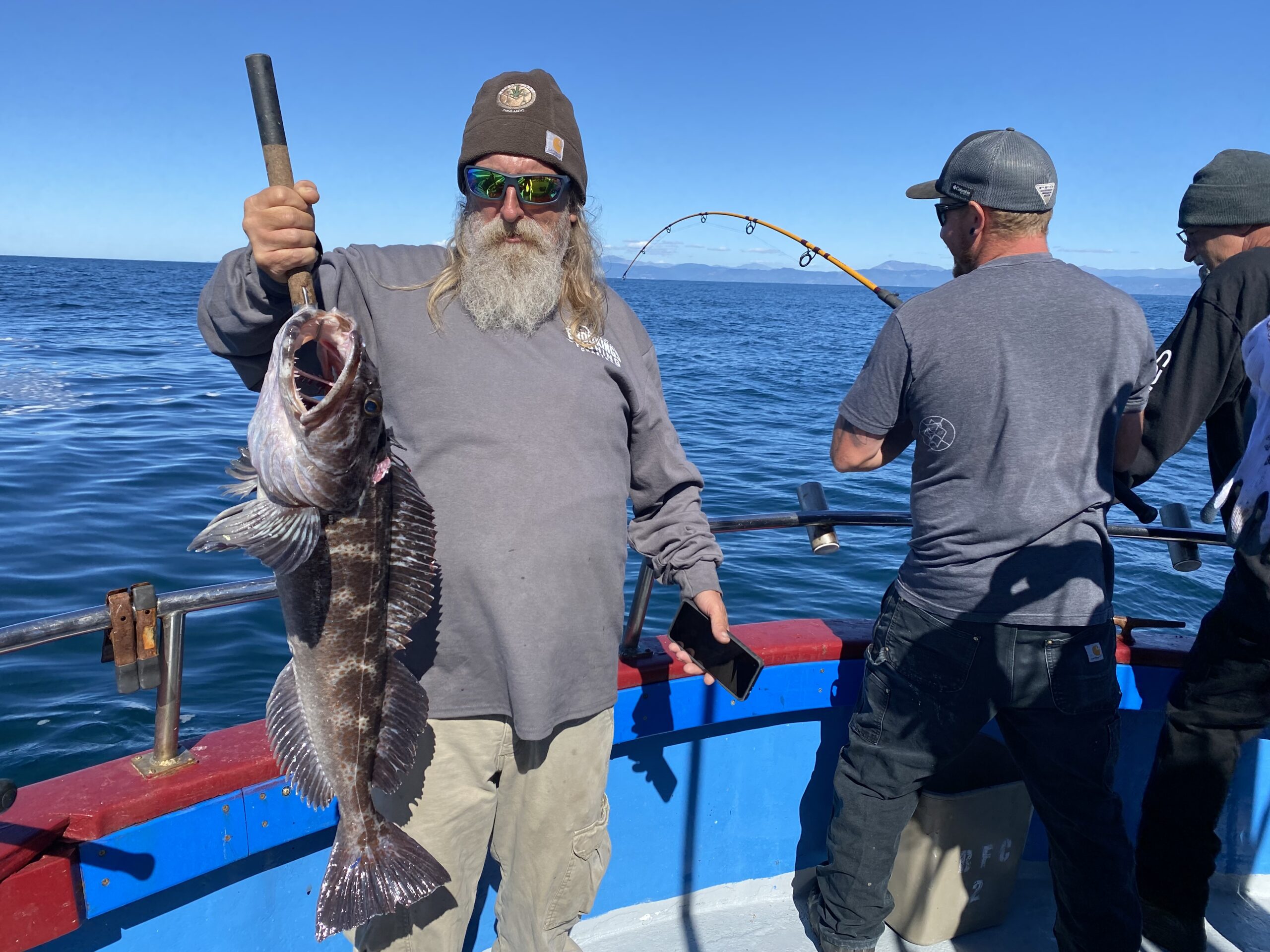
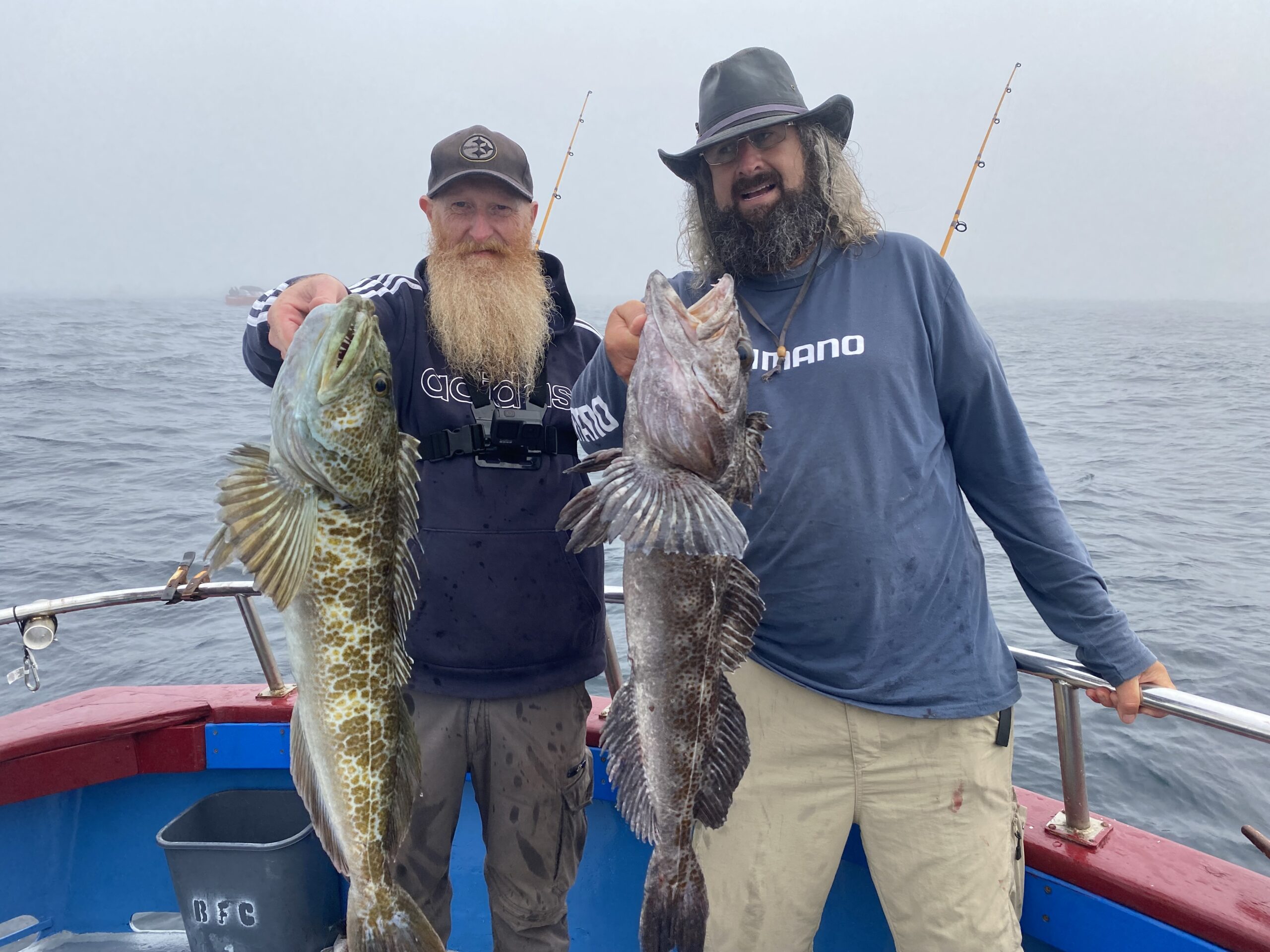
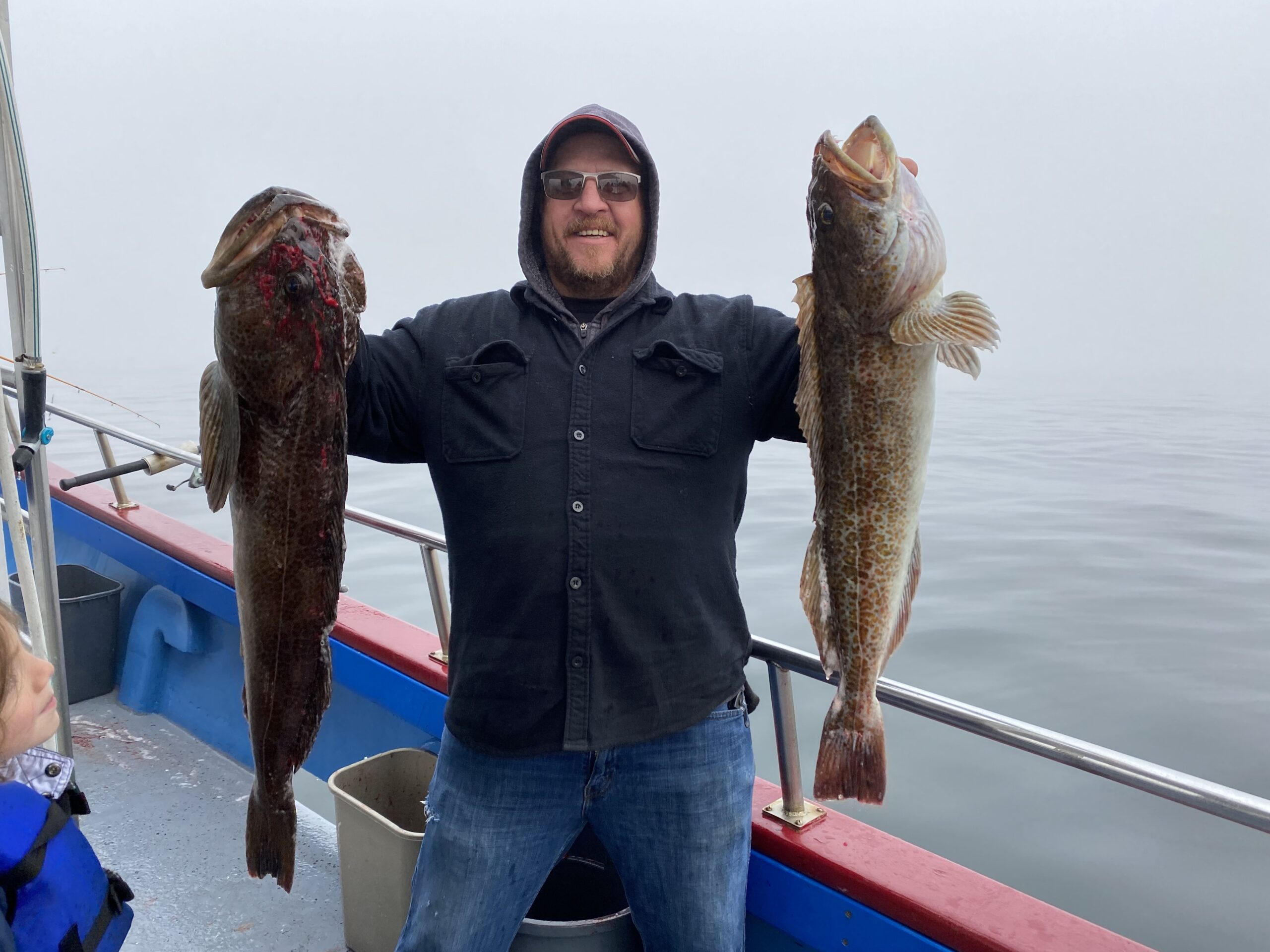
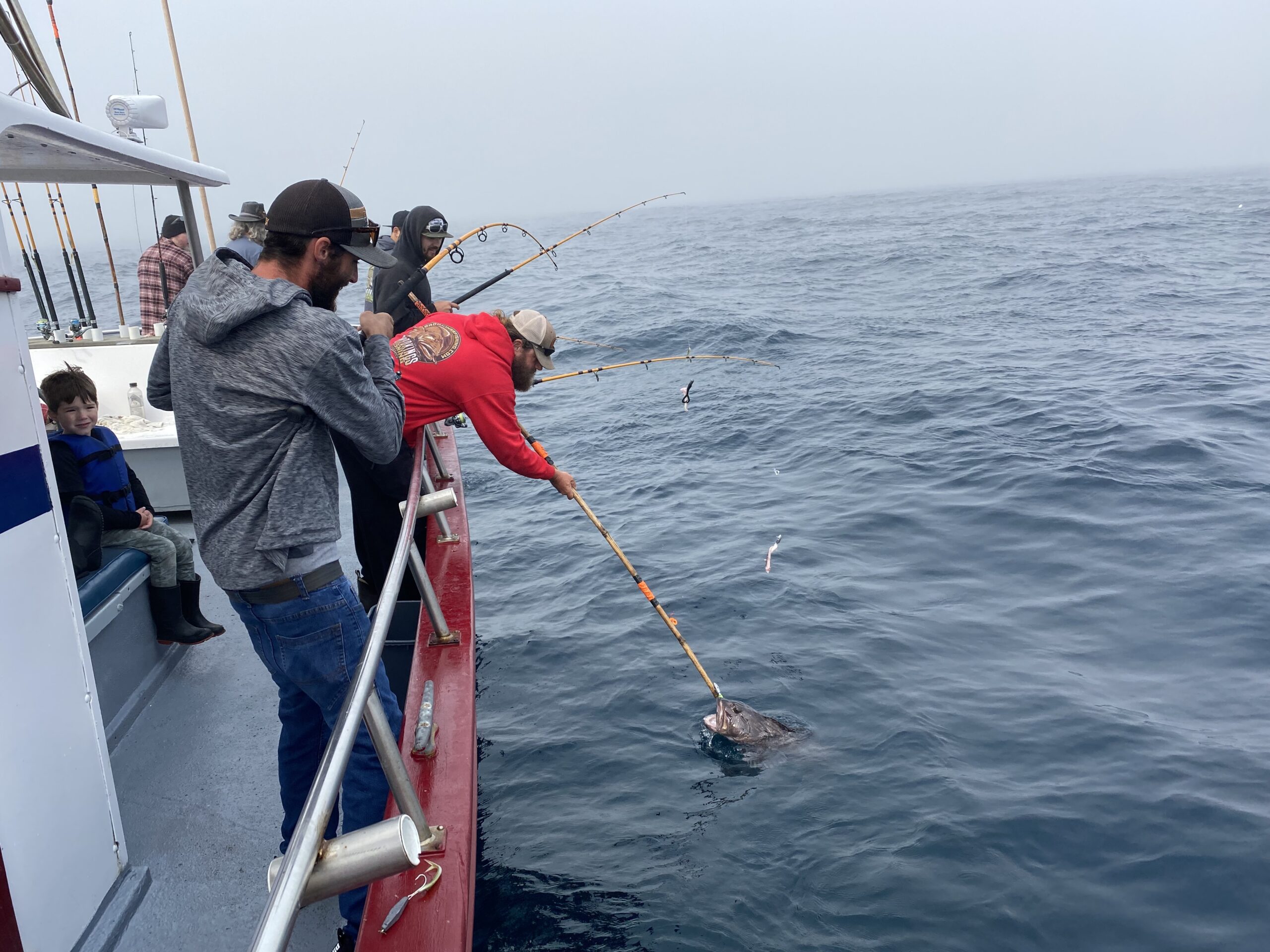
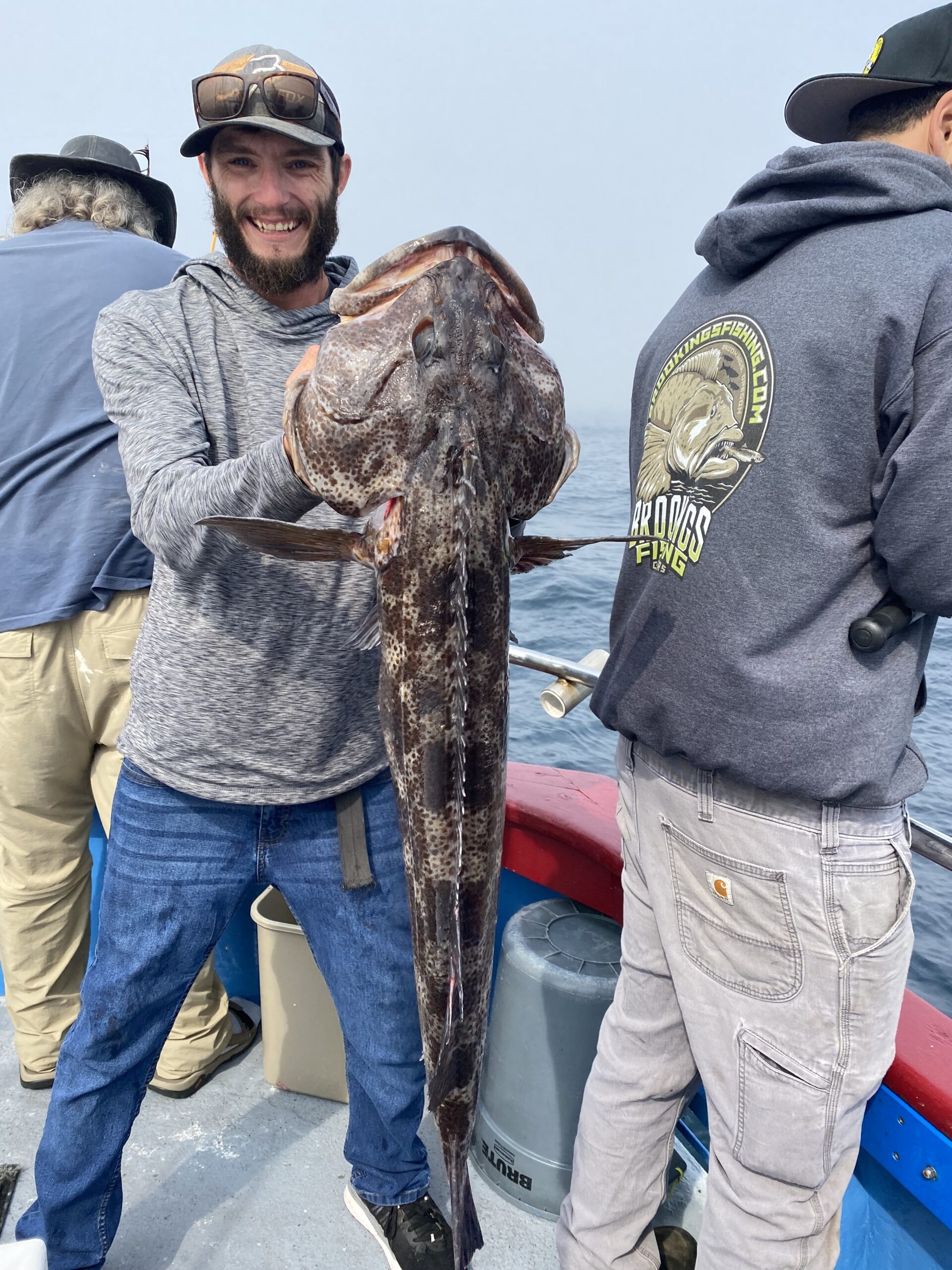
Unseasonably nice weather, with calm winds and small swells, has allowed charter boats to venture out of the Port of Brookings Harbor throughout February, resulting in great catches of rockfish and lingcod. On nice weather days, limits of rockfish, and limits or near limits of lingcod are being caught.
The Brookings Fishing Charters fleet ran several trips in February, with the Miss Brooke, Kraken, Nauti-Lady, Papa B, Dash and Bout Time getting in on the action. The local charter fleet has been running two to three trips a week.
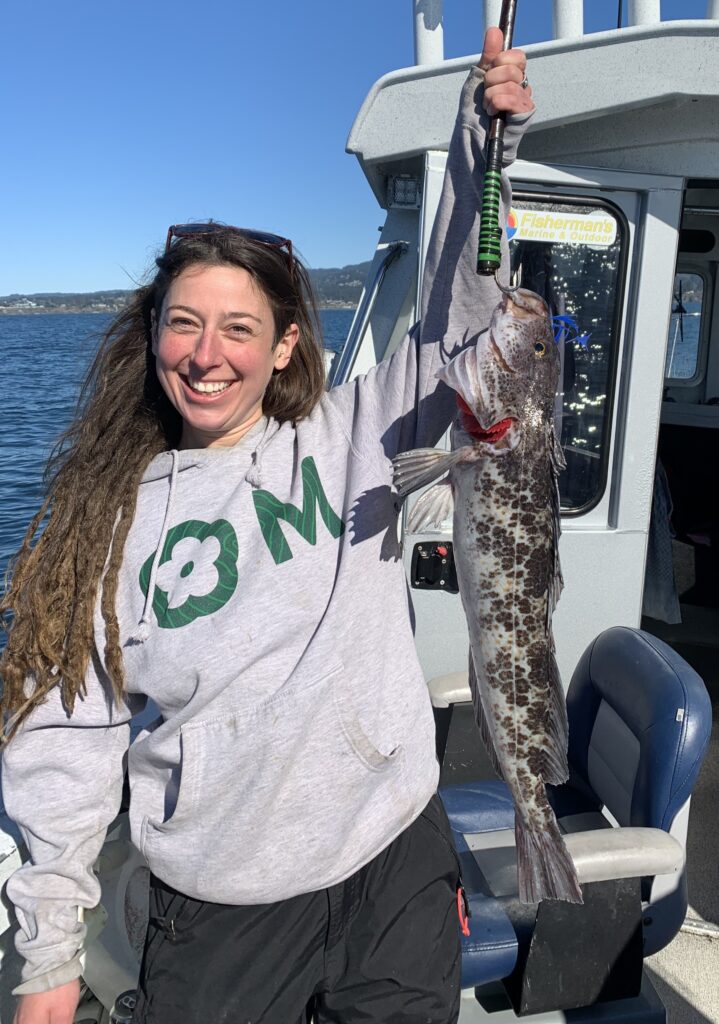
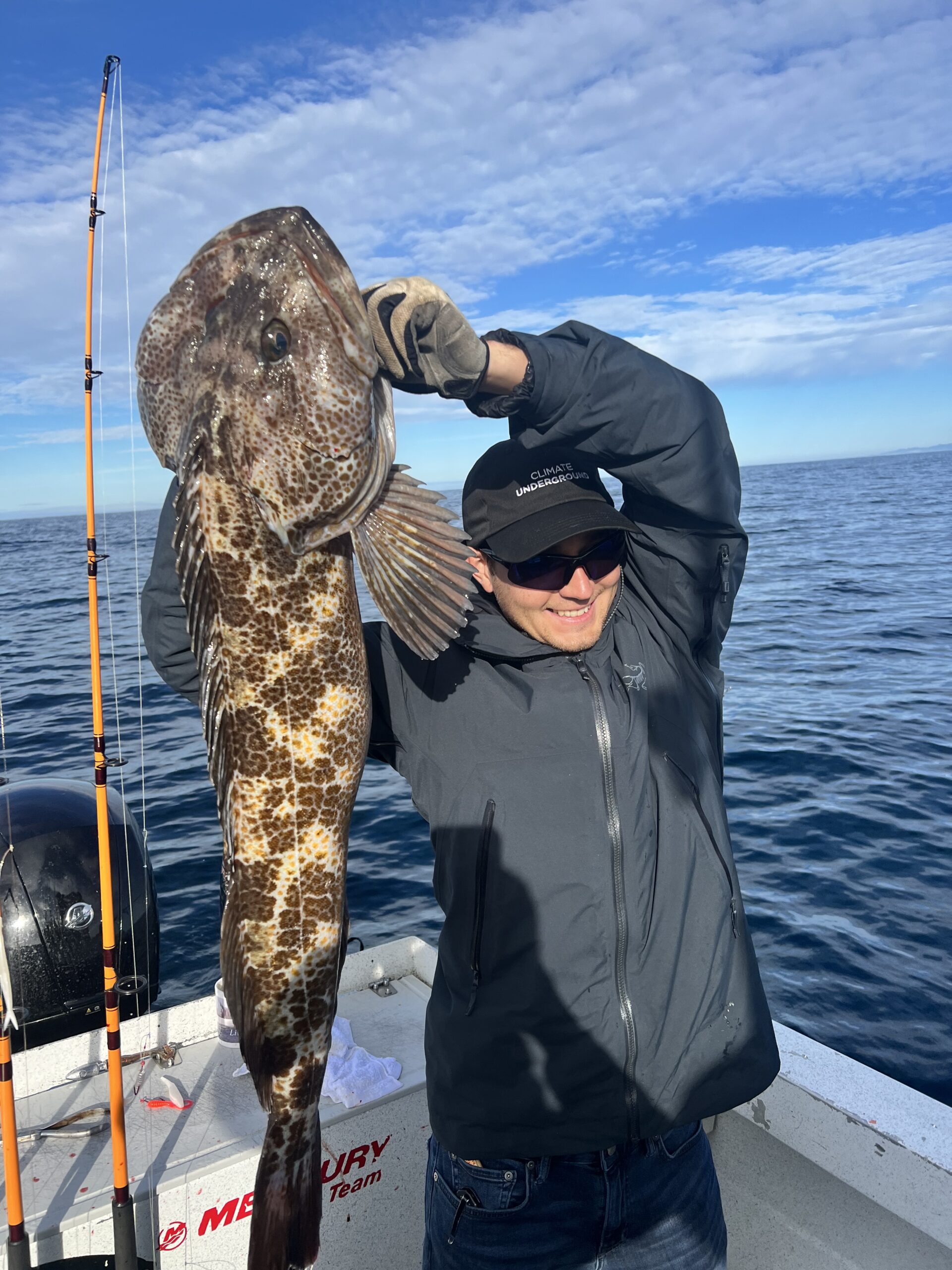
A nice catch of lingcod aboard the Miss Brooke in February 2020.
Lingcod are in shallow water spawning during the winter and early spring. With large numbers of fish staging on shallow pinnacles this time of year, they are in close range of anglers hoping to catch them with light tackle.
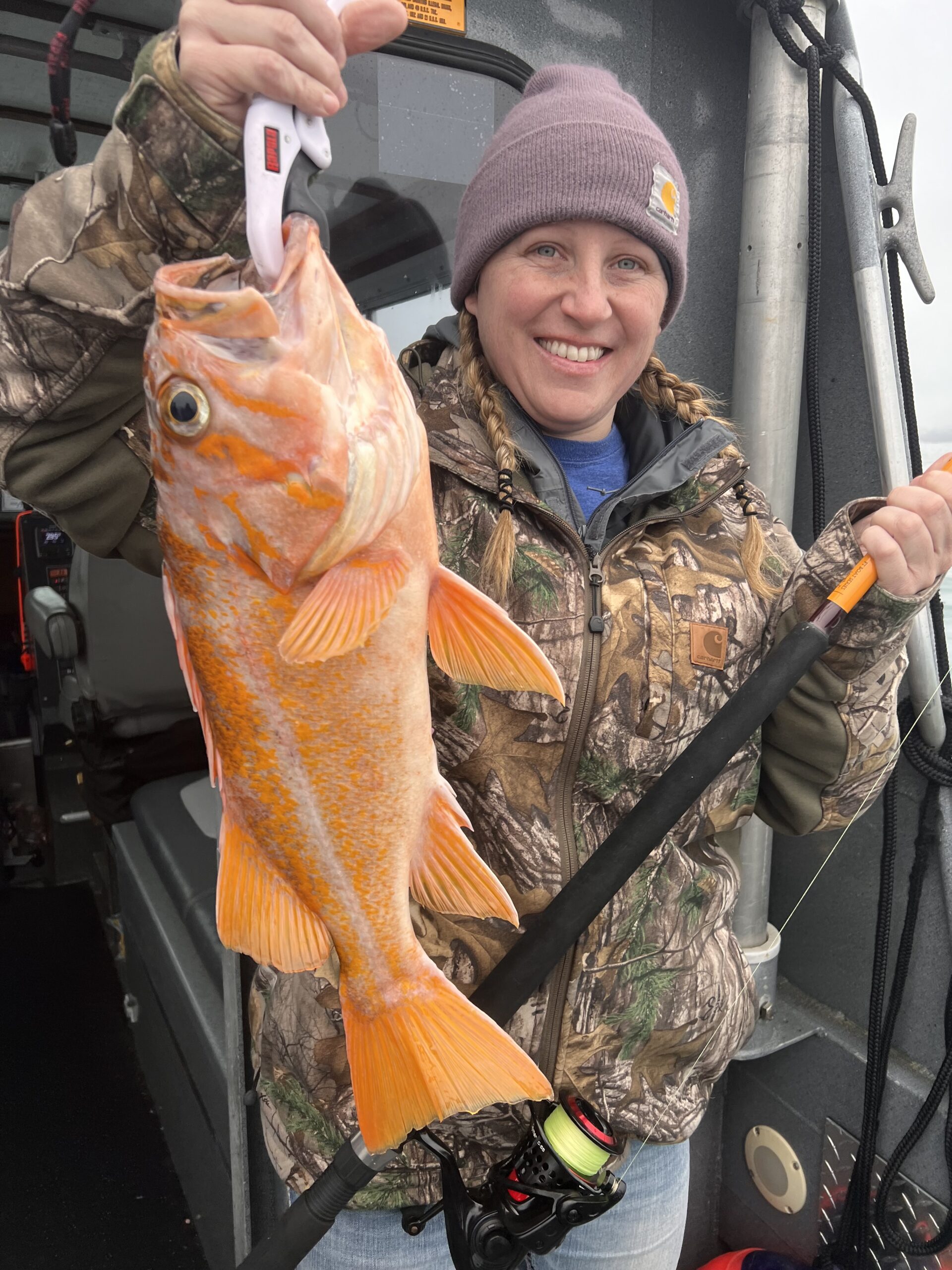
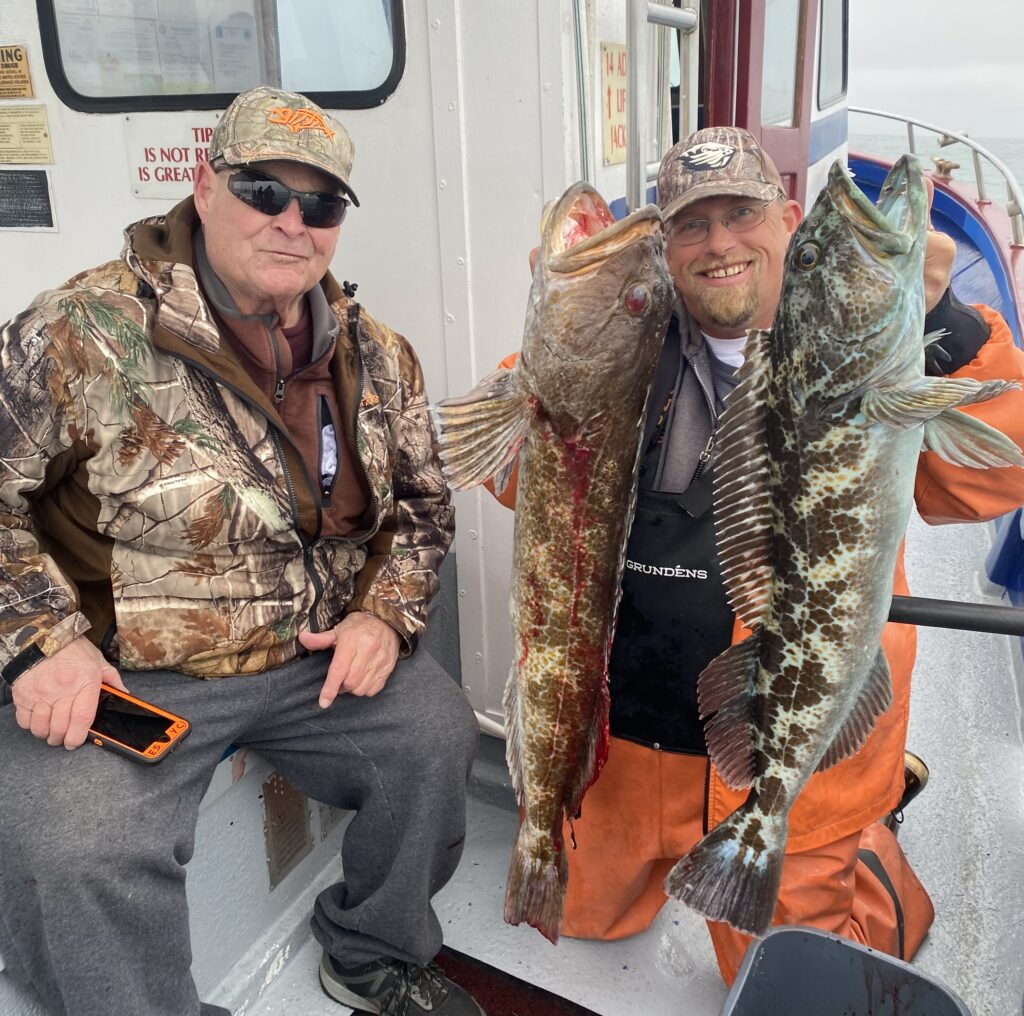
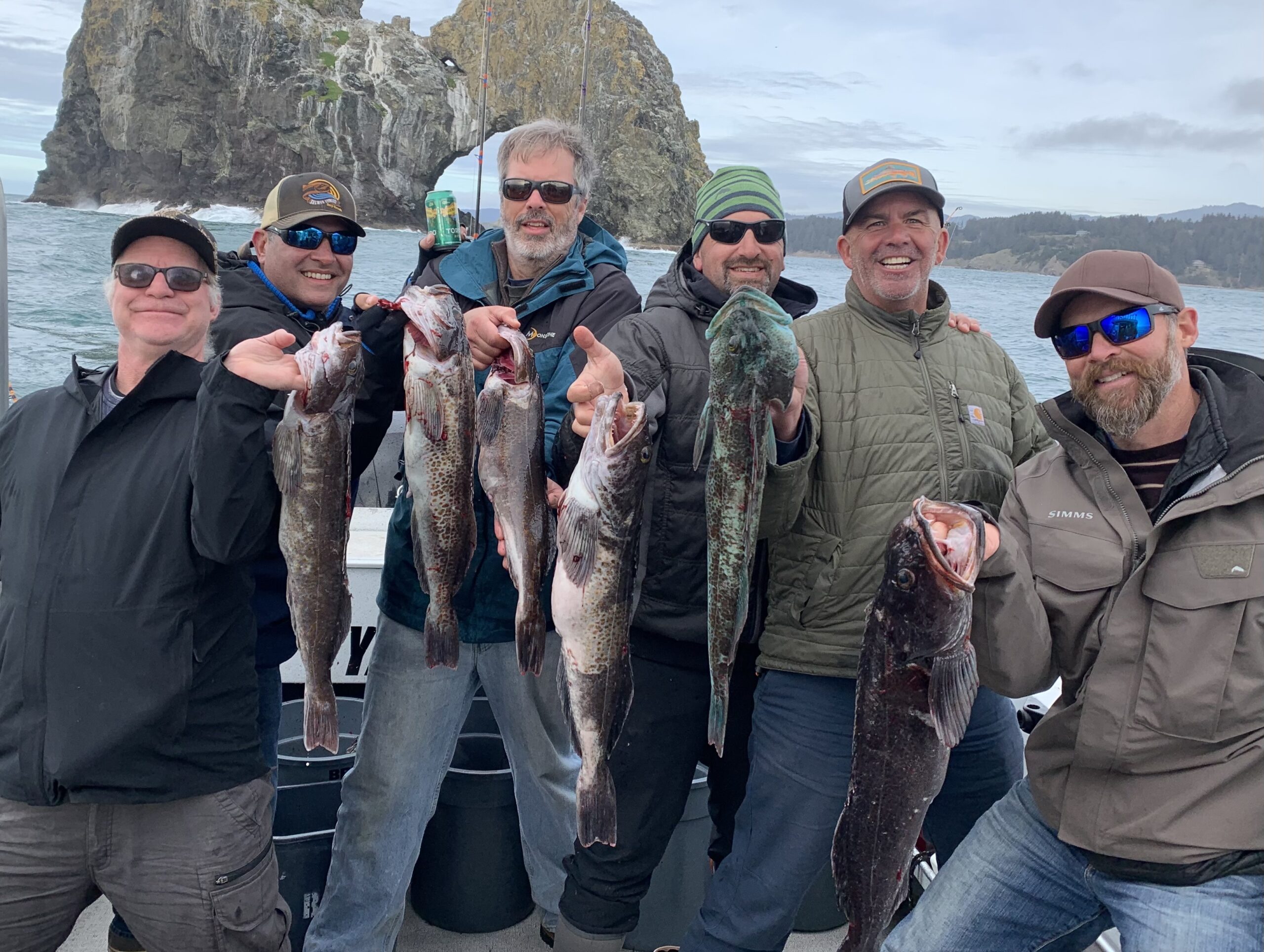
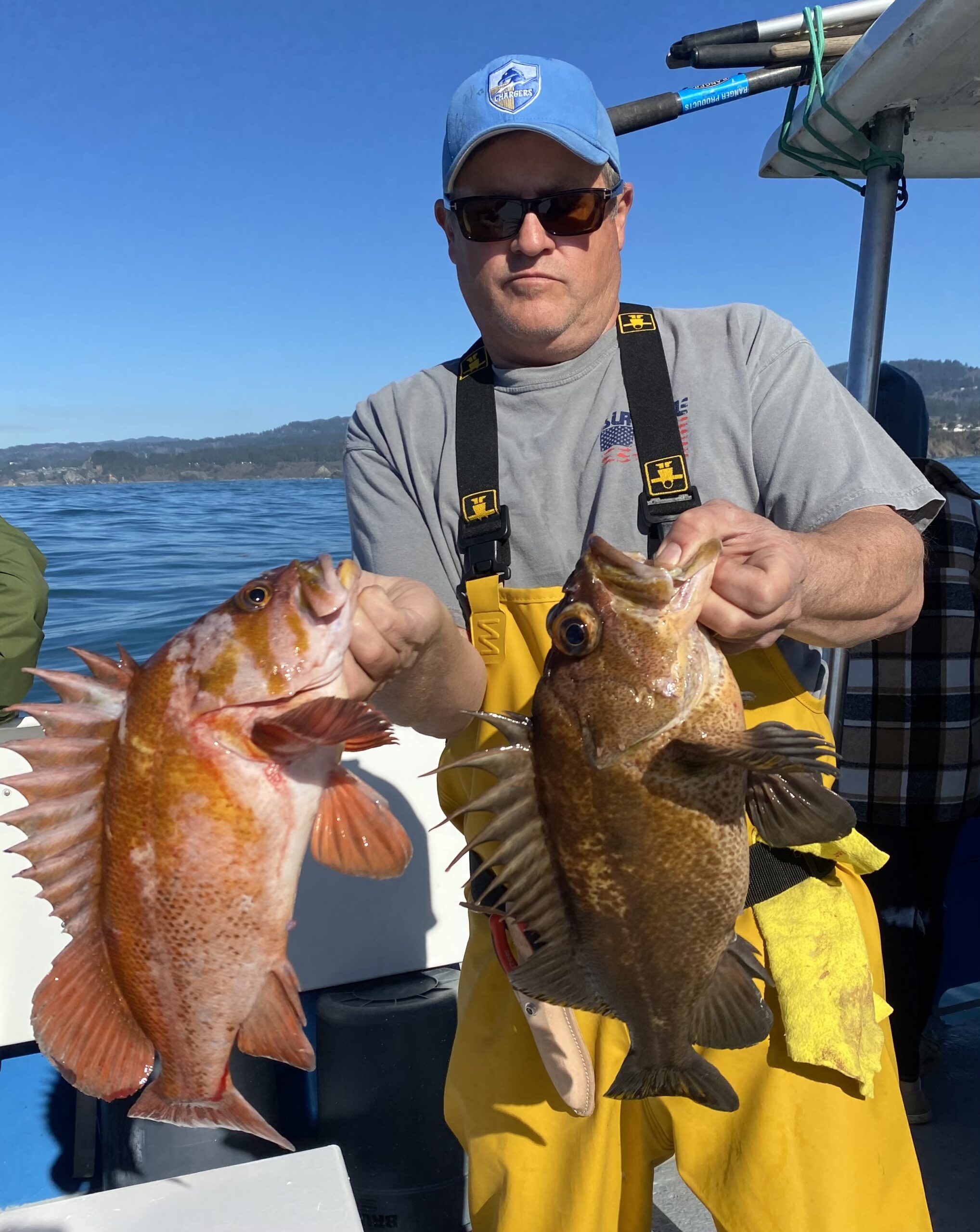
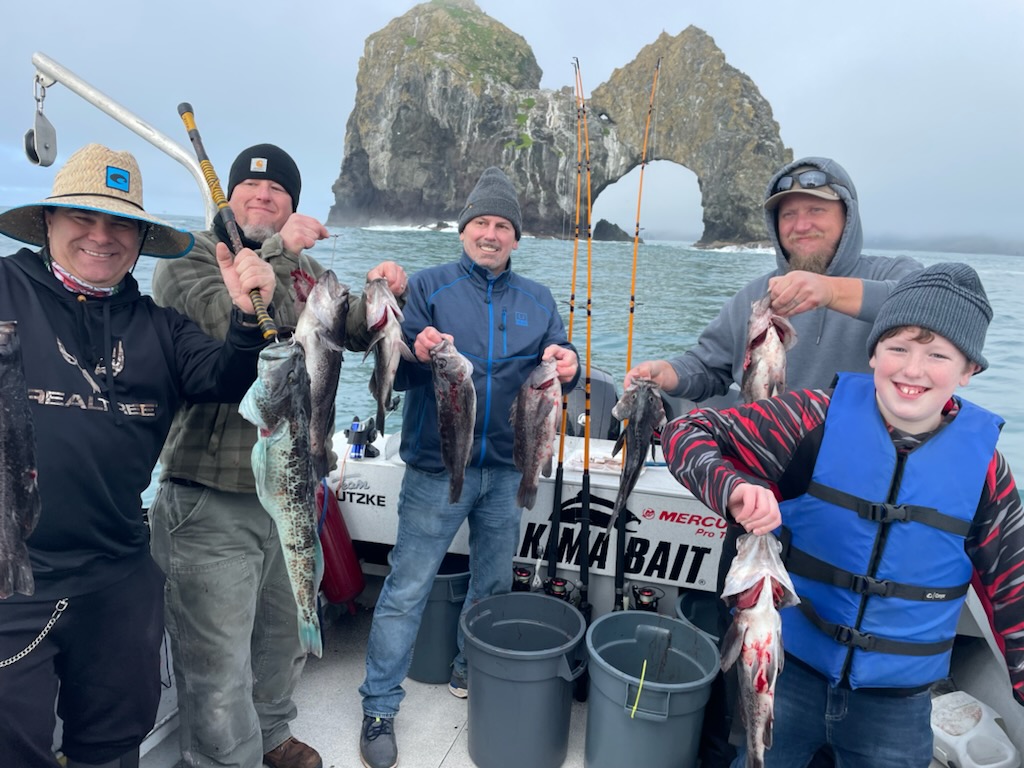
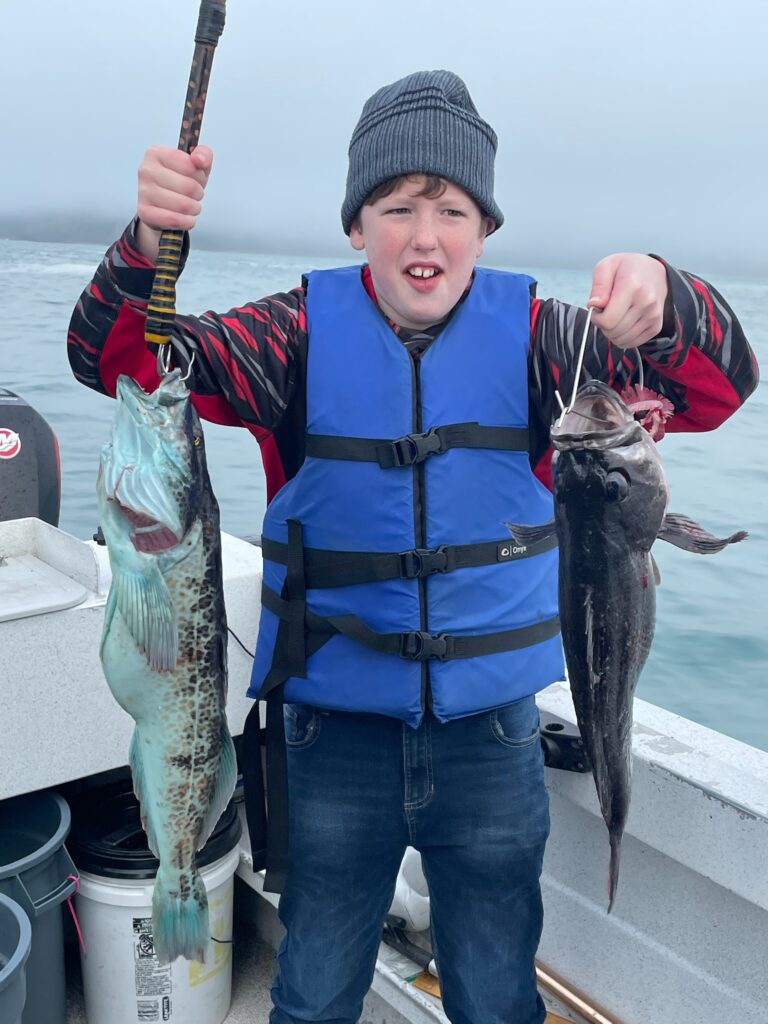
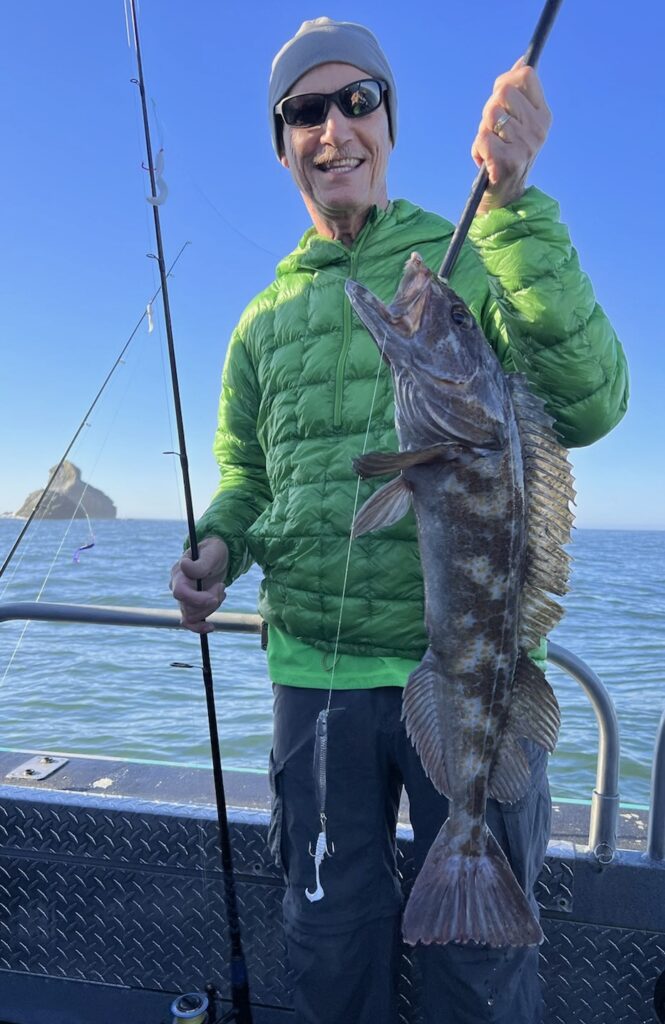
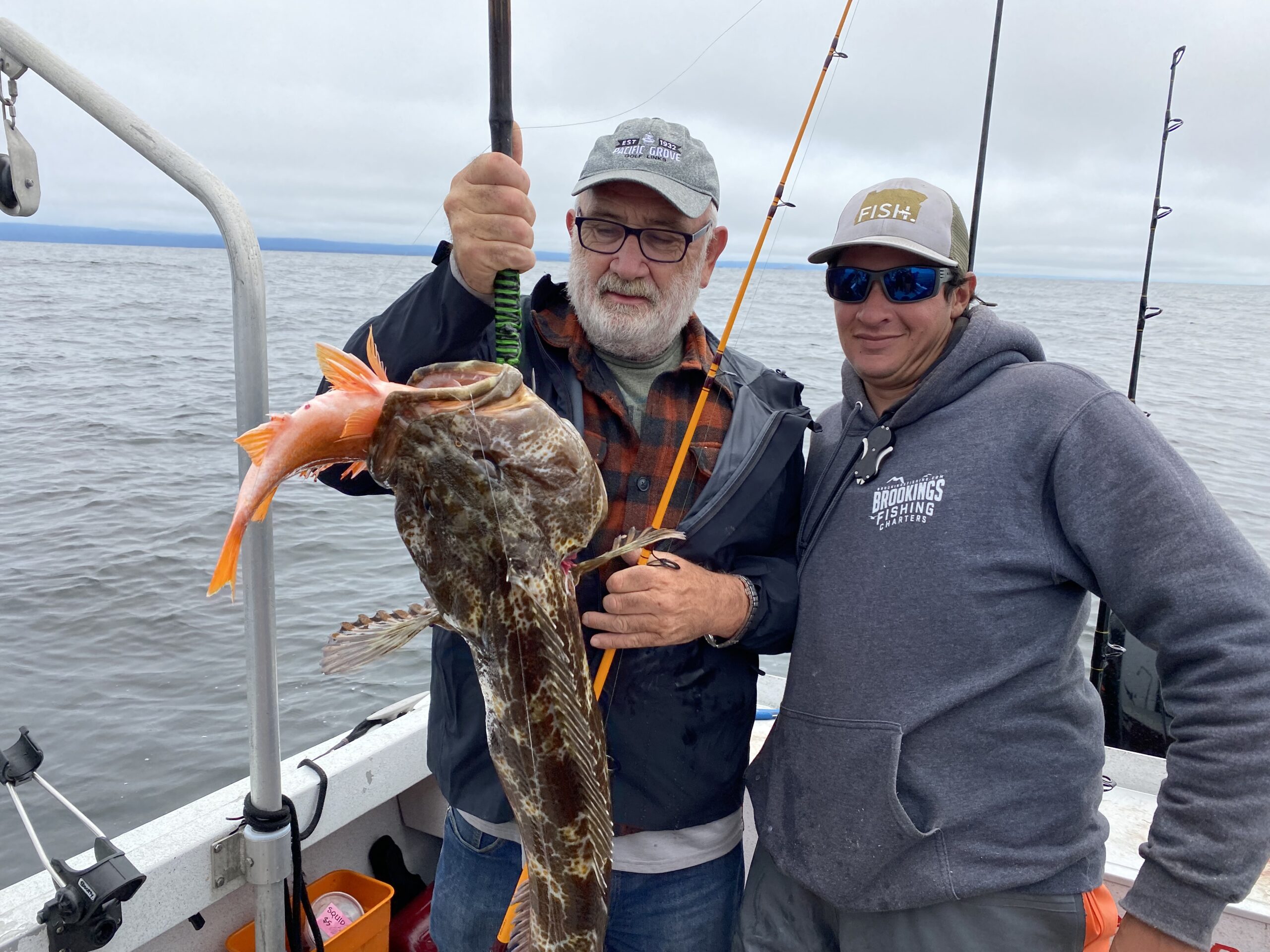
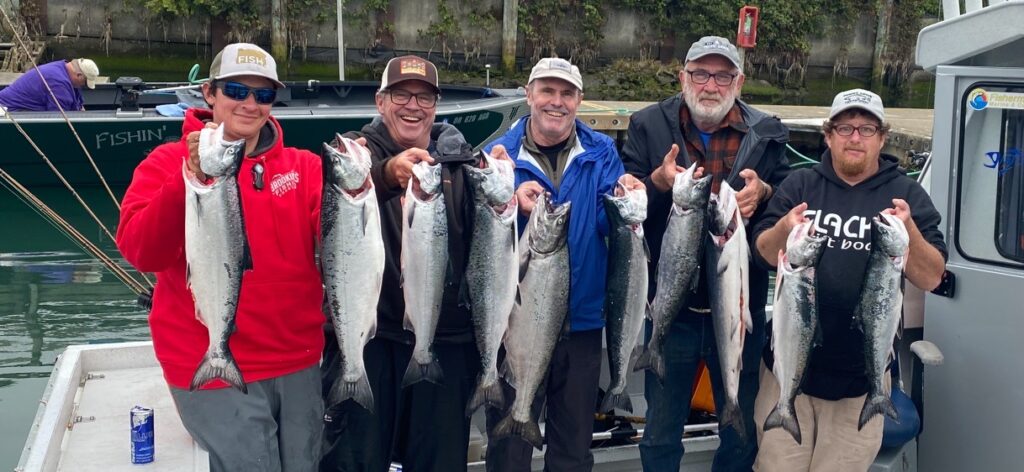
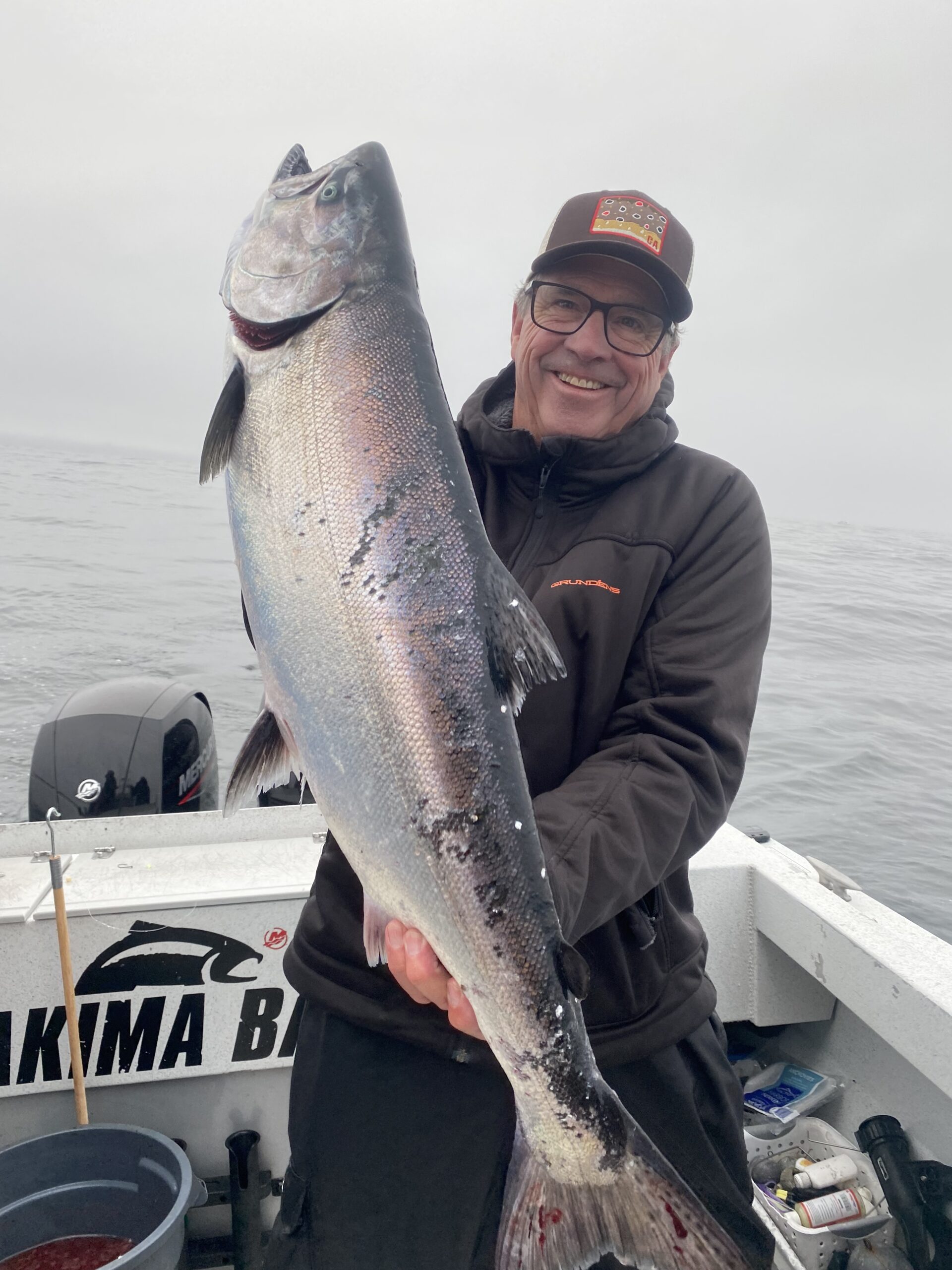
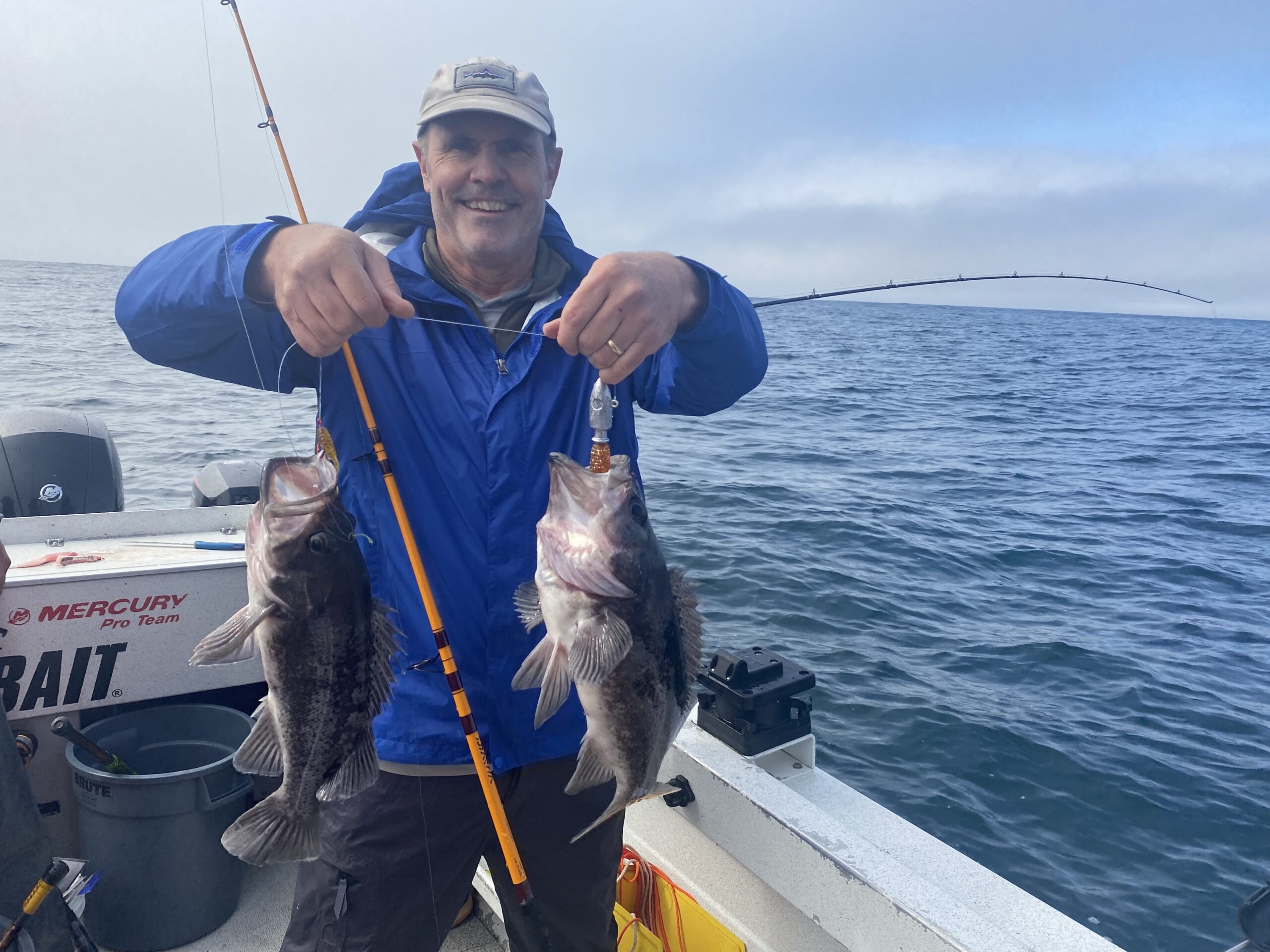
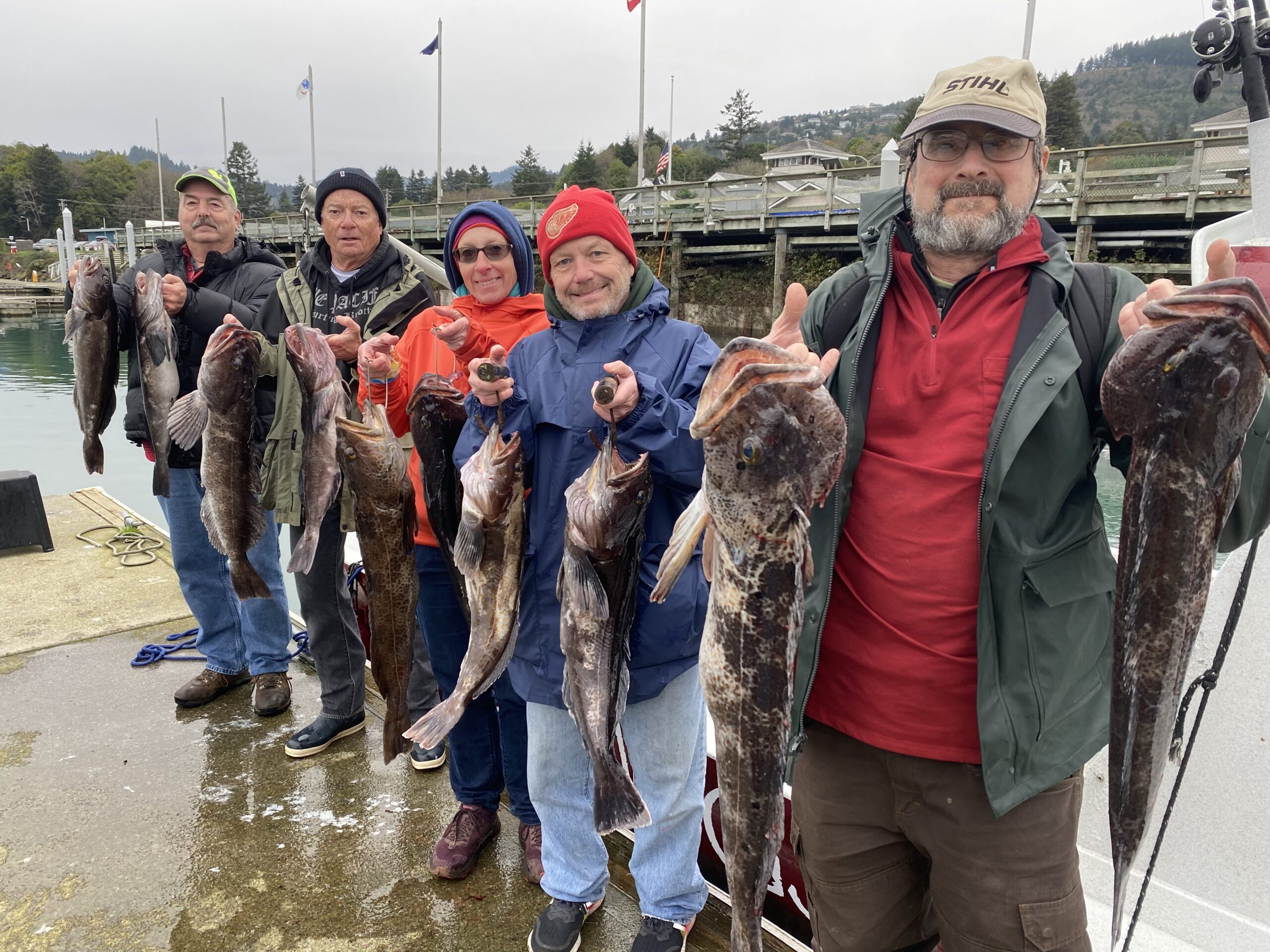
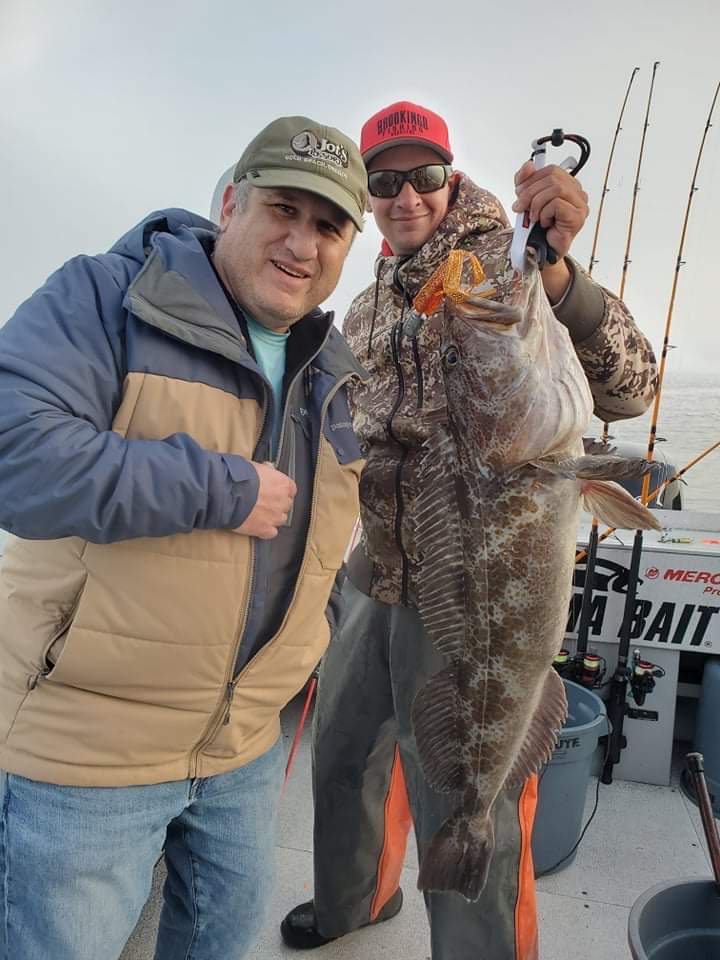
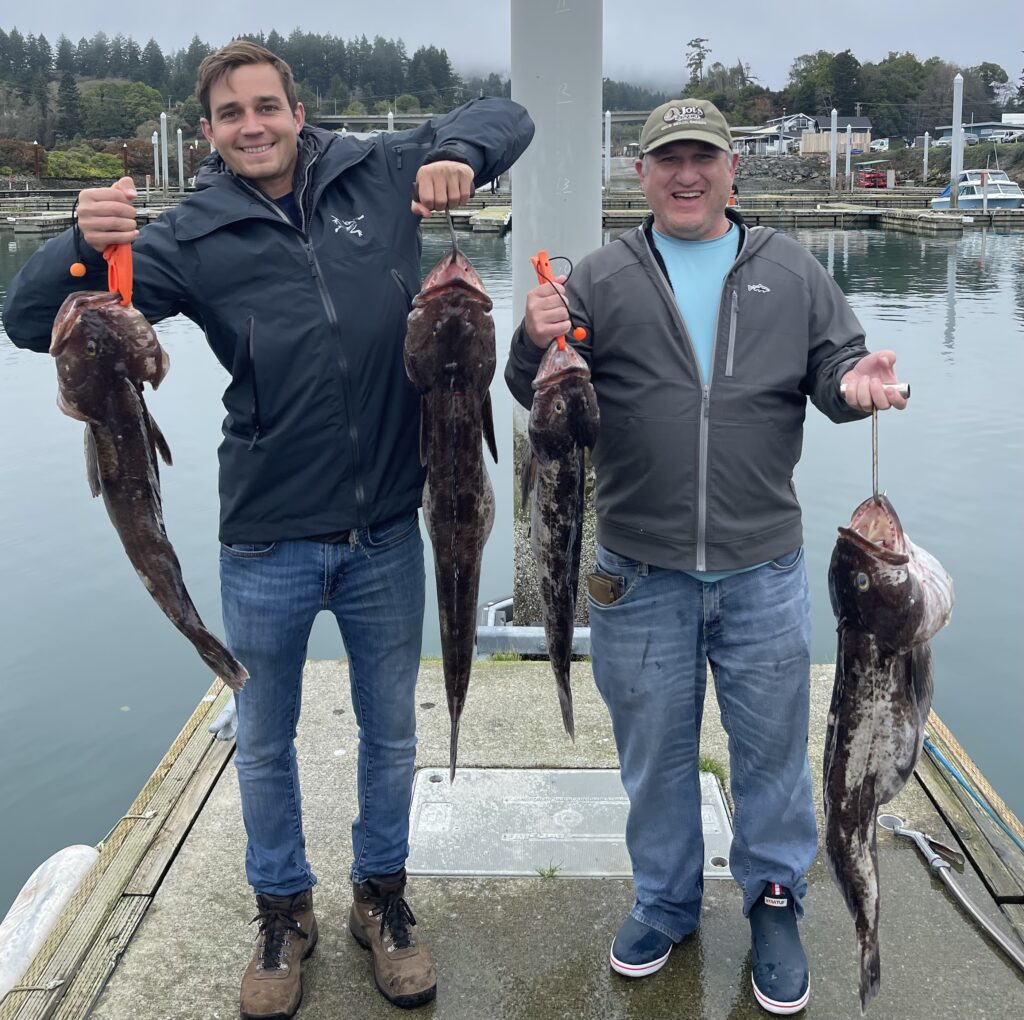
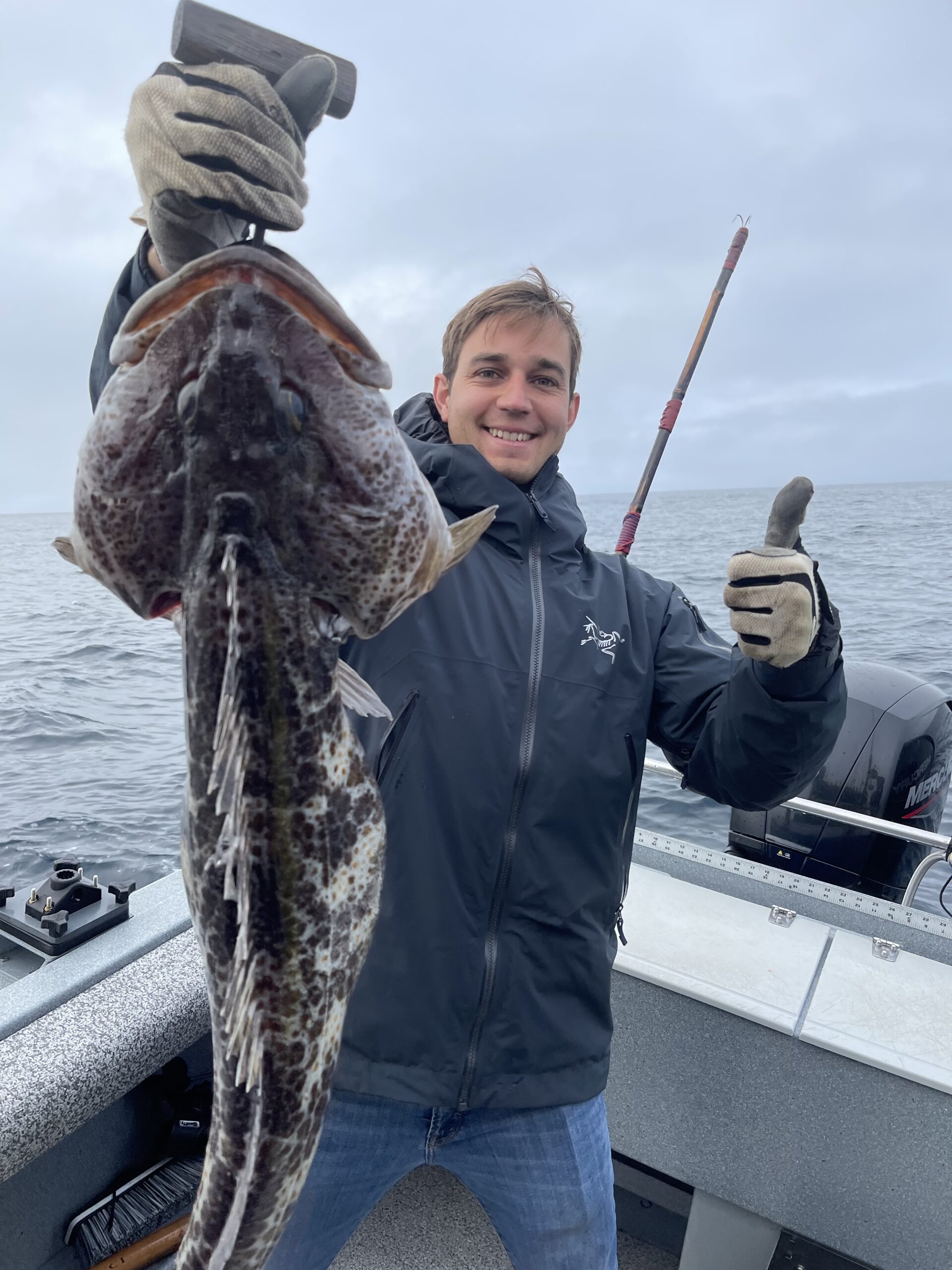
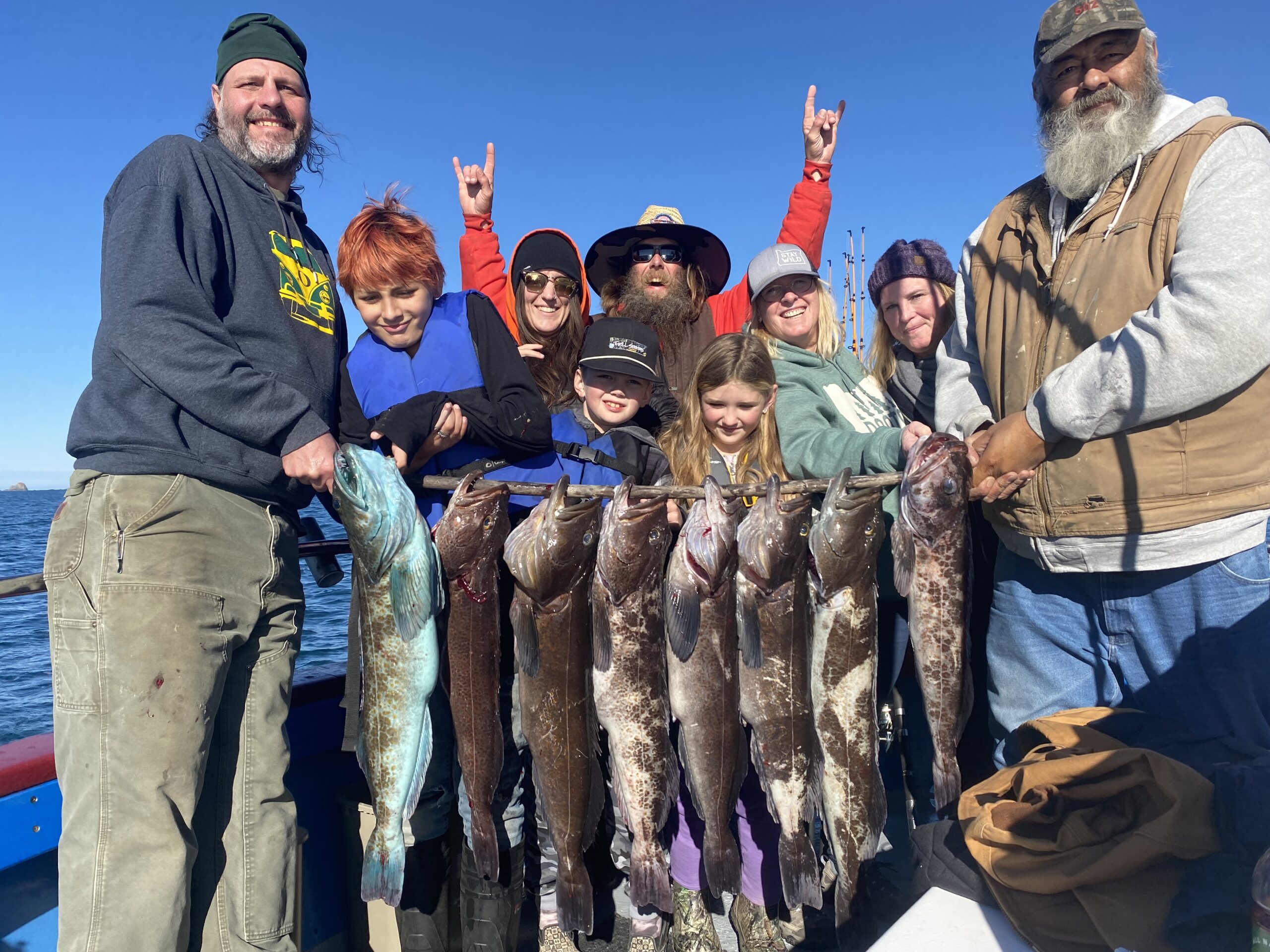
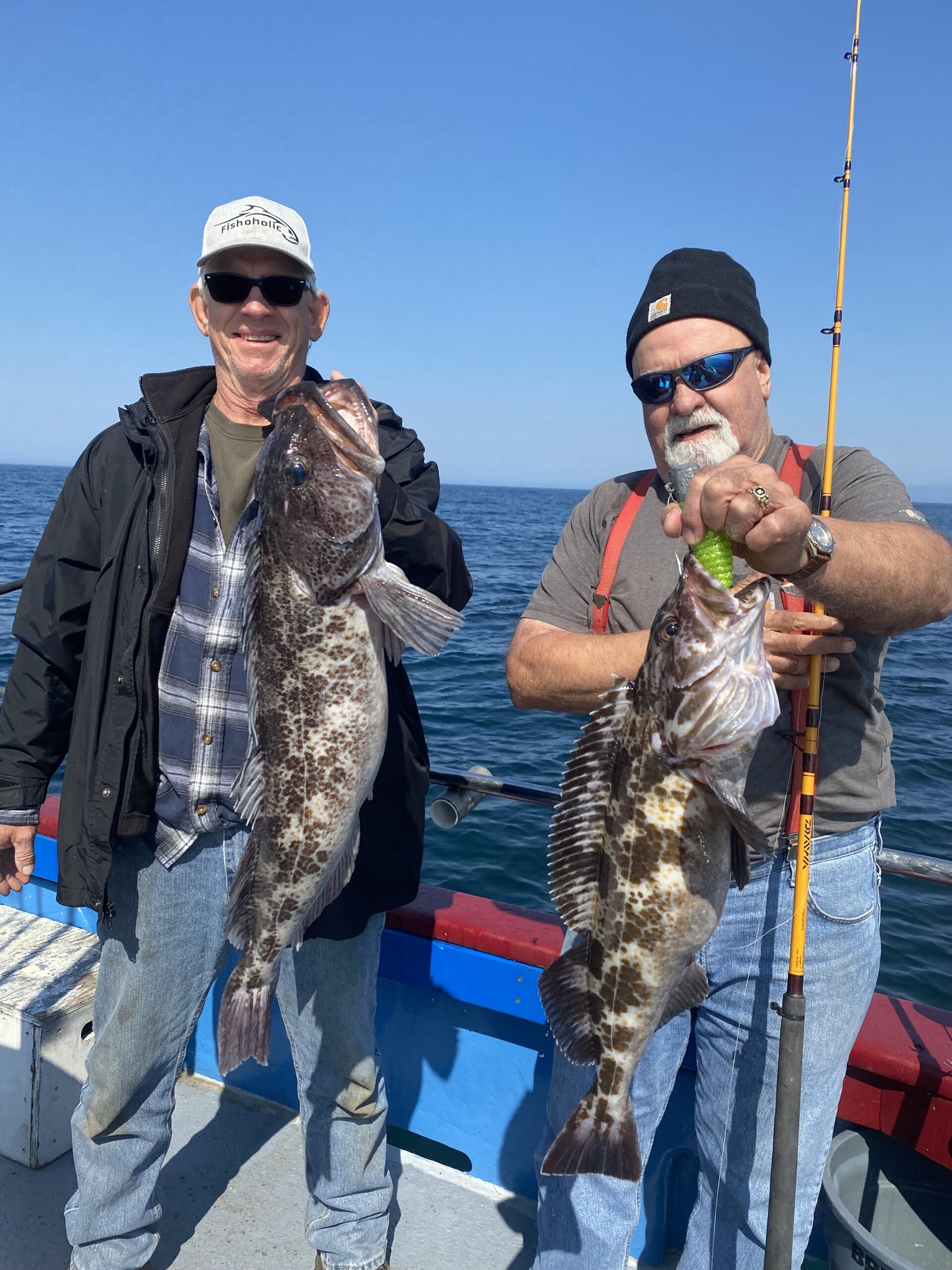
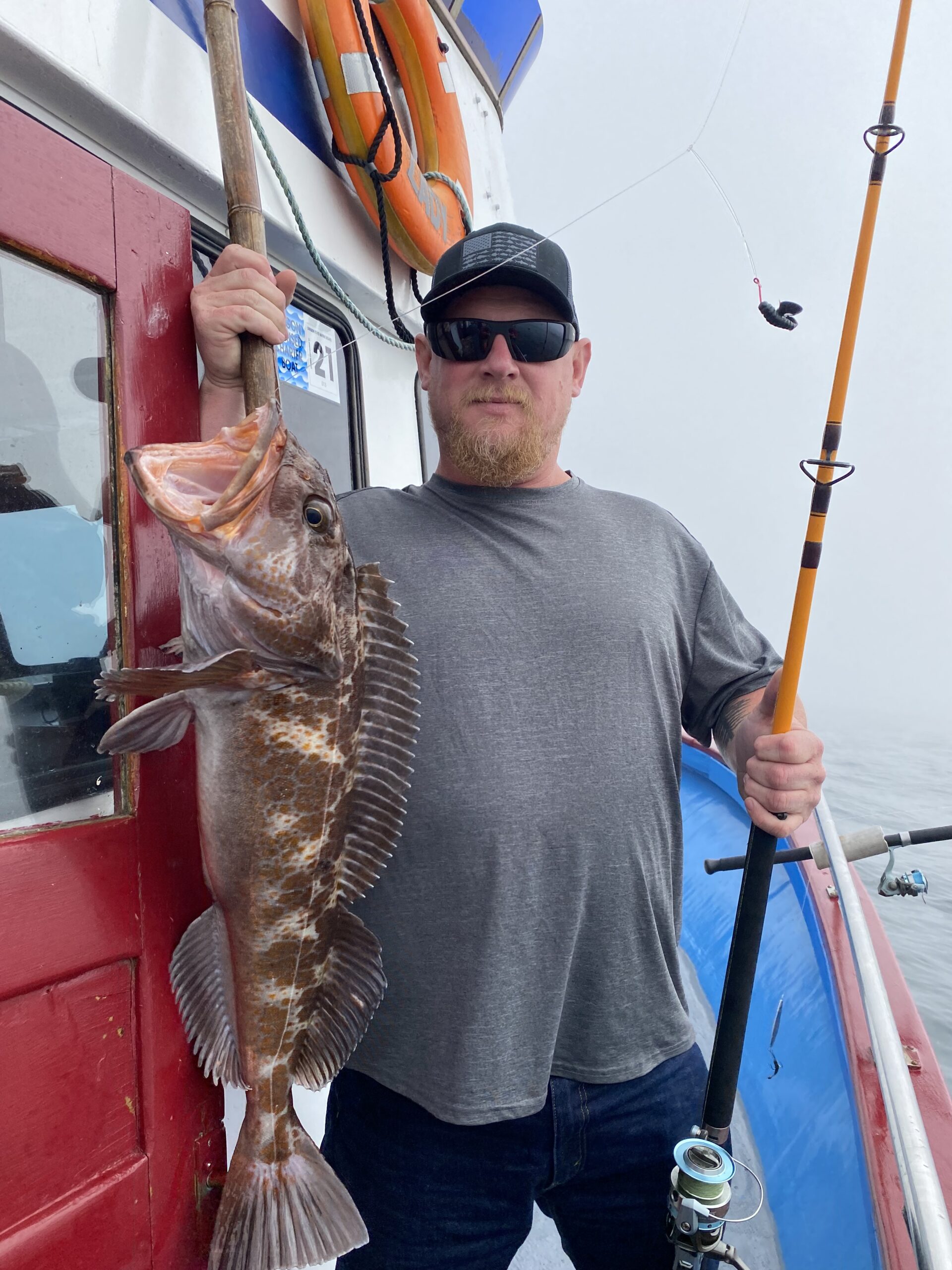
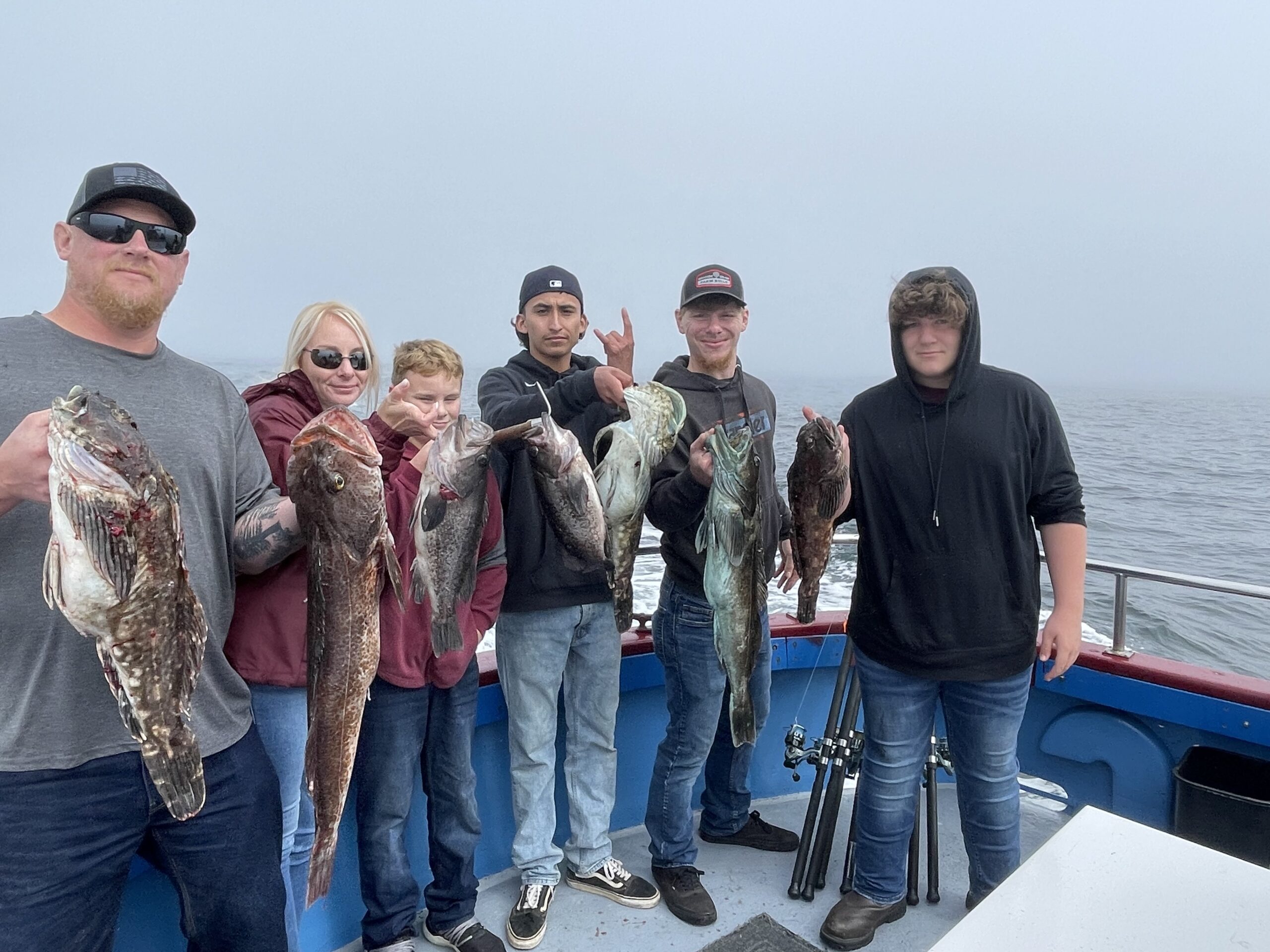
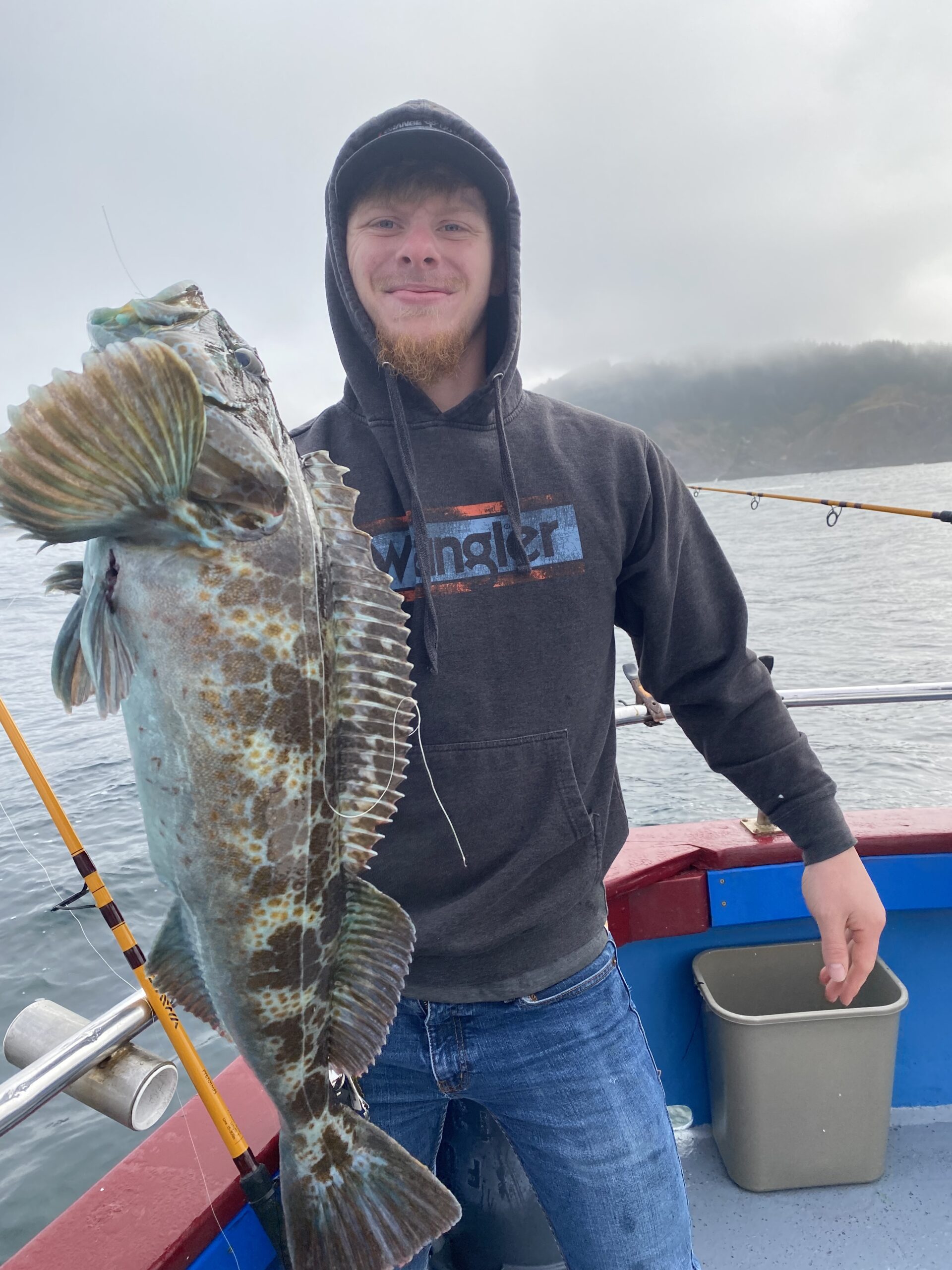
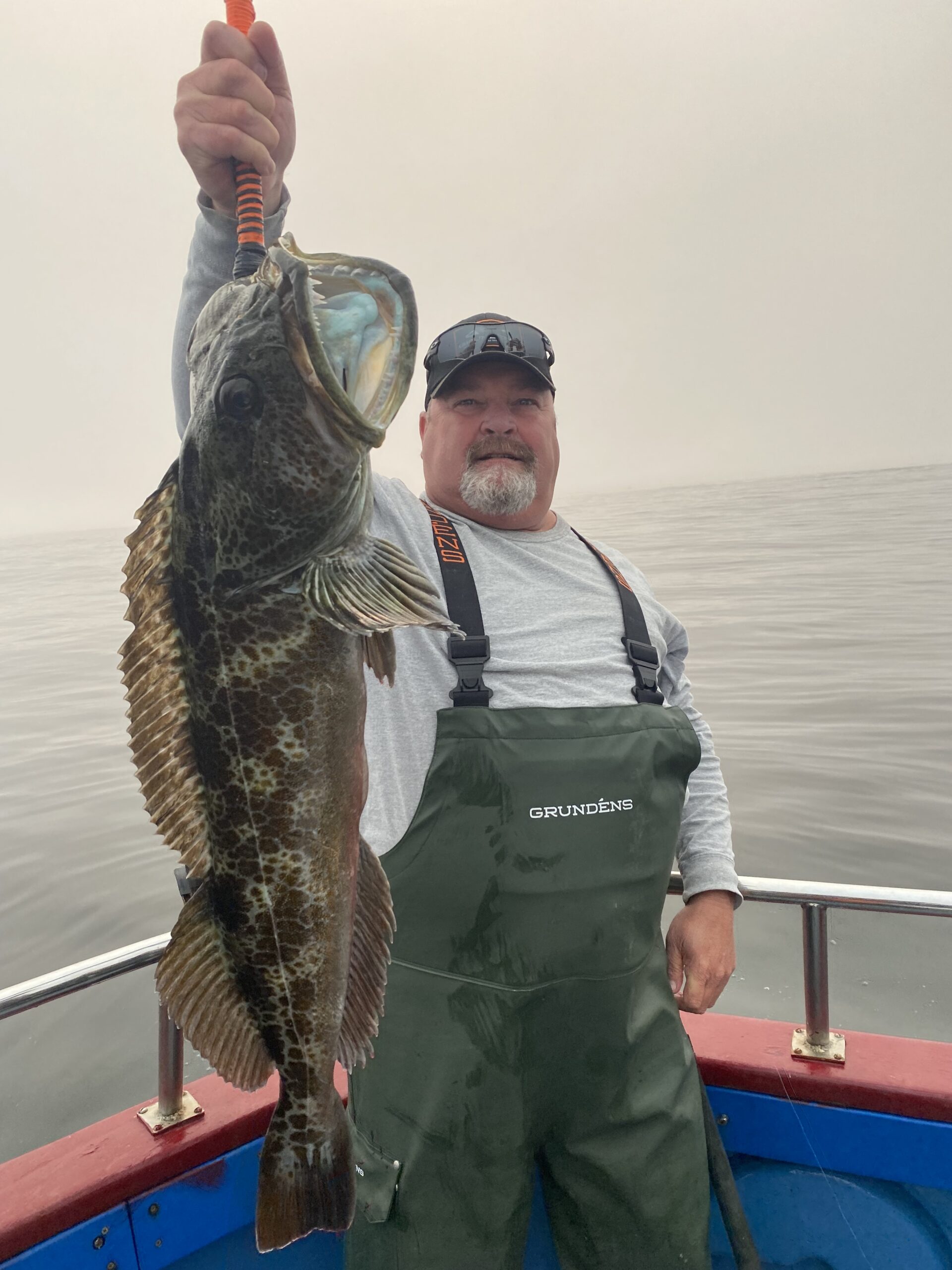
Lingcod caught aboard the Nauti-Lady in February 2020.A nice catch of lingcod caught aboard the Dash in February 2020.More lingcod caught on the Miss Brooke.A double hookup of rockfish from the Nauti-Lady.One of many lingcod caught aboard the Nauti-Lady in February.Nice first lingcod for a young angler aboard the Nauti-Lady.Cabezon must be released until July. We have been seeing good numbers of them.A limit of lingcod from the Nauti-Lady.A happy angler with a lingcod from the Miss Brooke.A large canary rockfish caught aboard the Kraken.Capt. Andy holds a limit of lingcod caught by regular customer Dennis aboard the Nauti-Lady.
March began with rough weather, with the first major storm since early January. Charters will run throughout March as conditions allow.
Unusually calm weather has allowed the Brookings Fishing Charters to run numerous ocean charters in January and February. So far this year, fishing has been great for lingcod and rockfish. Big schools of rockfish are being found in the close-in reefs near the harbor, and to the north from Chetco Point to Bird Island, Twin Rocks, House Rock and Mack Arch.
Each of the Brookings Fishing Charters boats – the Miss Brooke, Nauti-Lady, Kraken, Papa B, Dash and Bout Time – have run numerous trips. Limits of rockfish have been the norm, and lingcod fishing appears to be above average so far this season. A 25-pound lingcod caught aboard the Miss Brooke with Capt. Travis in early February is the largest so far this season.
Nice limits of lingcod caught aboard the Miss Brooke near Mack Arch.A nice lingcod caught aboard the Nauti-Lady near Bird Island.Happy customers aboard the Nauti-Lady.
With the calm weather, boats have been able to get up to Mack Arch, where there are plenty of large lingcod. Limits have been likely near Mack Arch.
Frequent customer John with a nice lingcod from the Miss Brooke.More lingcod from the Mack Arch area.
The rockfish population has been thriving near Brookings. We are seeing large schools of black, blue and canary rockfish. The grade has been excellent. Anglers have been able to release smaller rockfish and focus on larger fish for their limits. Since our boats specialize in shallow water with light tackle, the fish are not injured as they are reeled up from the bottom. It is more difficult to release rockfish caught in 80 feet of water or more, but our charters often fish in 40 to 60 feet of water, or shallower.
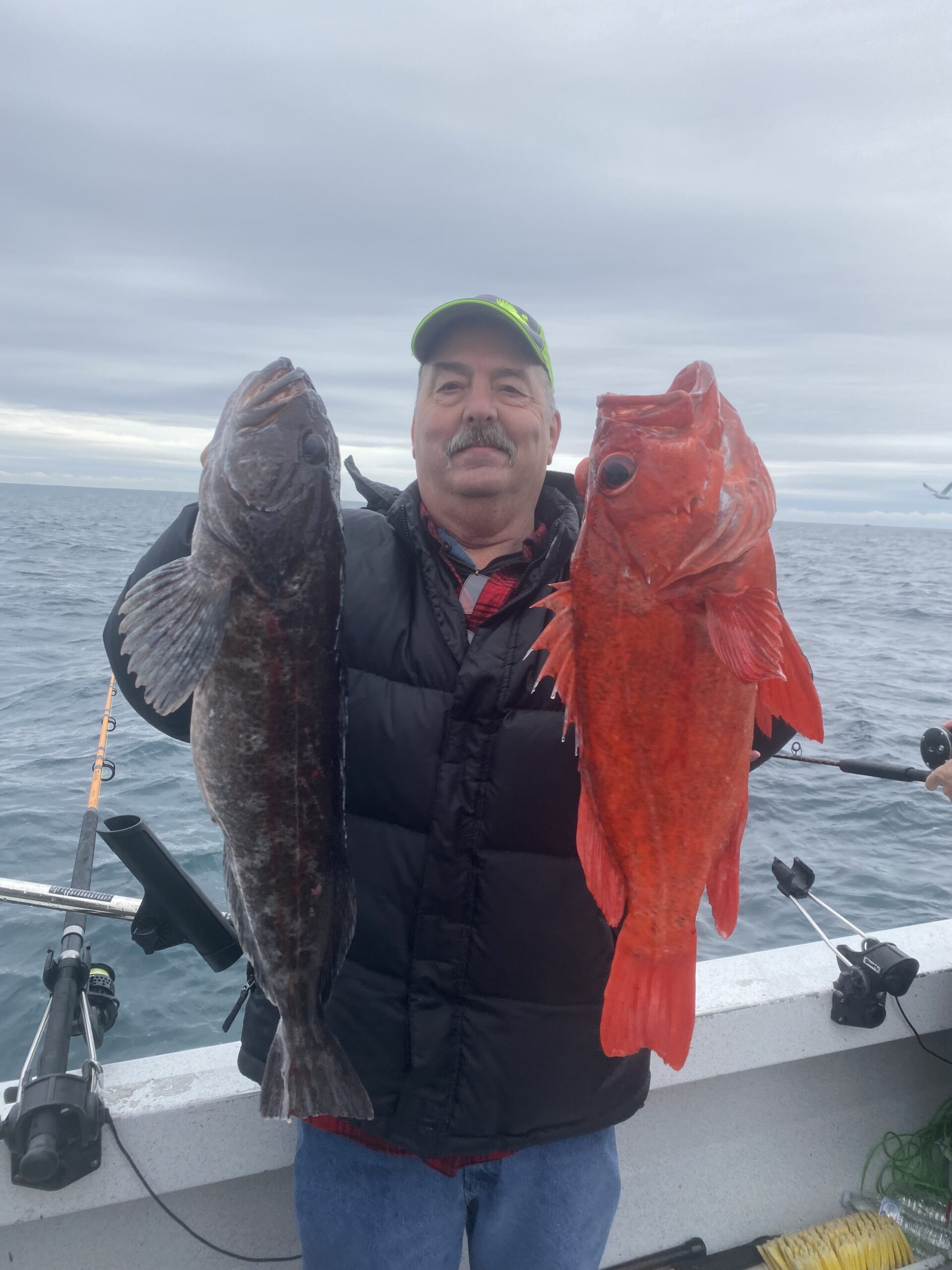
A nice lingcod and very nice canary rockfish from the Miss Brooke.A black rockfish and a blue rockfish caught aboard the Papa B.Another double hookup on the Nauti-Lady.It’s a triple! the rockfish action has been fast and furious so far this season.
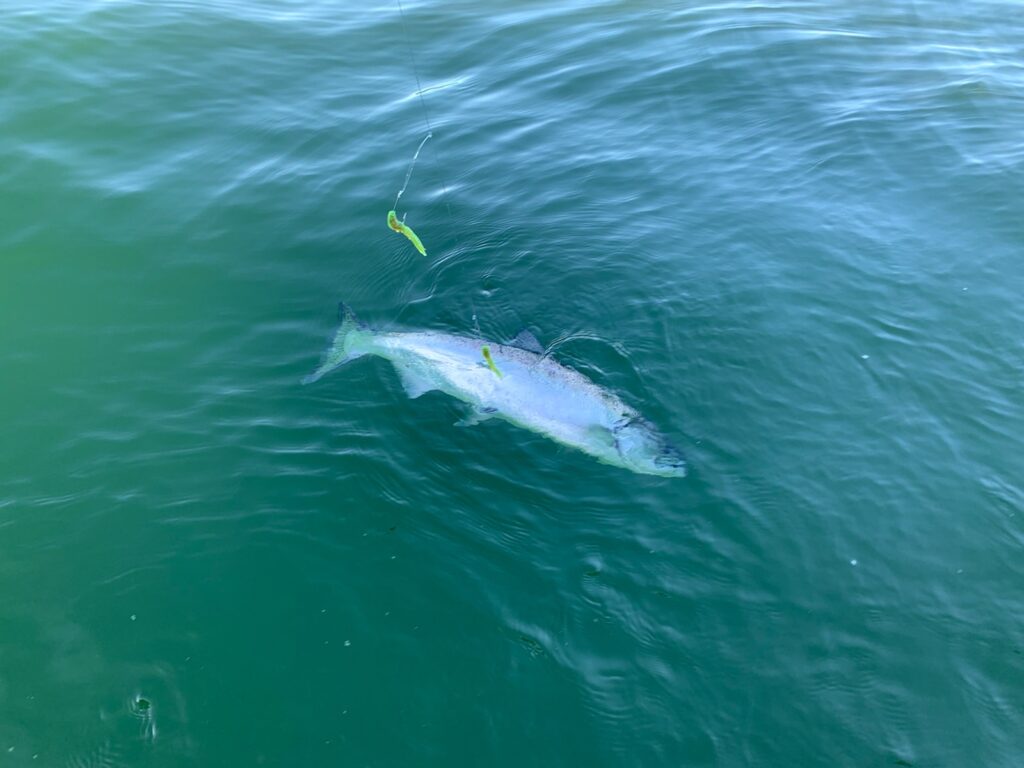
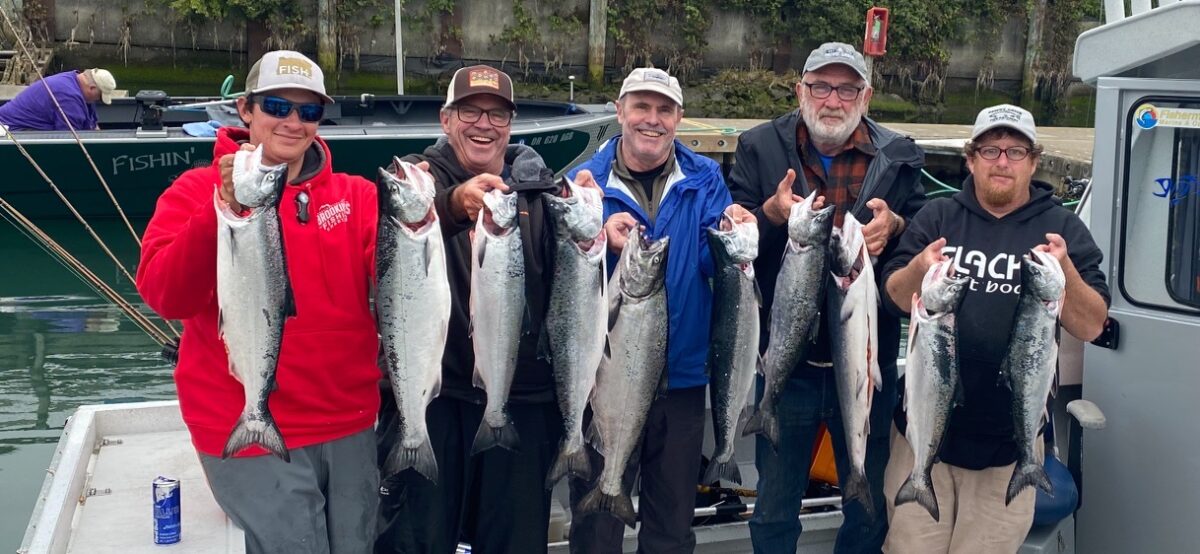
On recent charters, our customers have caught a release numerous king salmon. The ocean salmon season won’t open until May or early June, but the abundance of salmon in the ocean right now near Brookings is a great sign. These are likely feeder kings that will return to the Klamath or Sacramento rivers. When they stack up near Brookings during the winter, they are usually still around by the time opening day arrives.
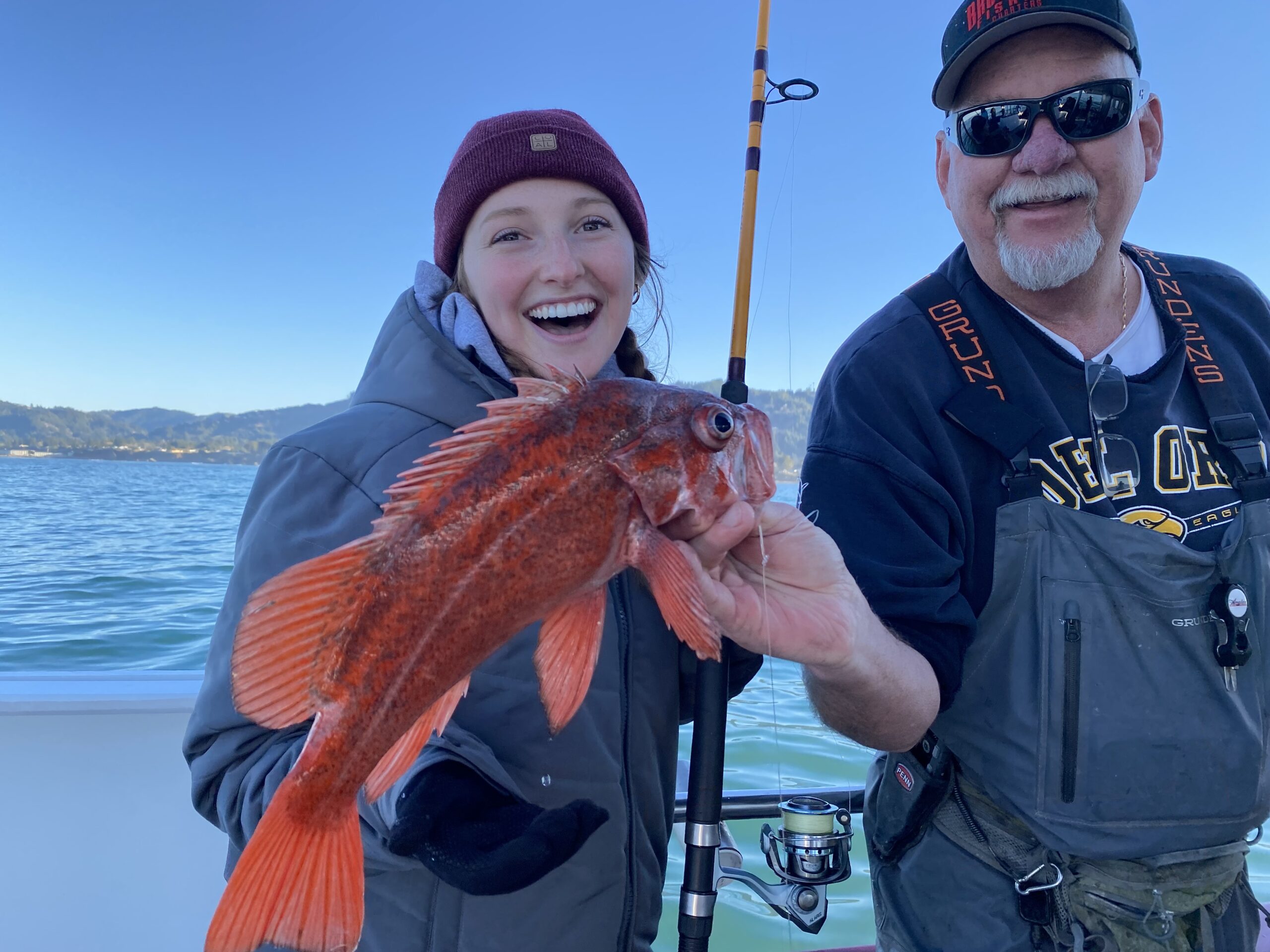
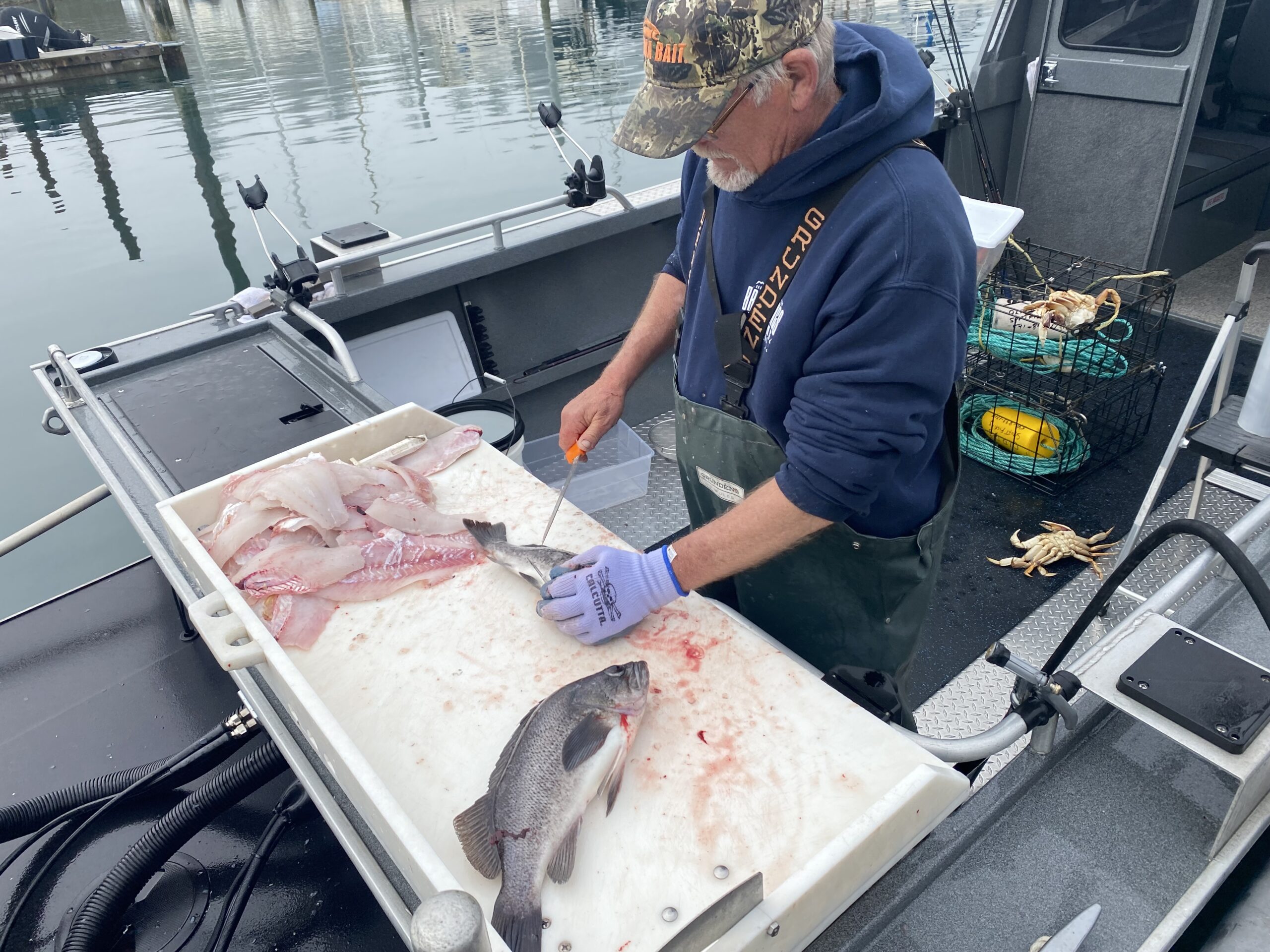
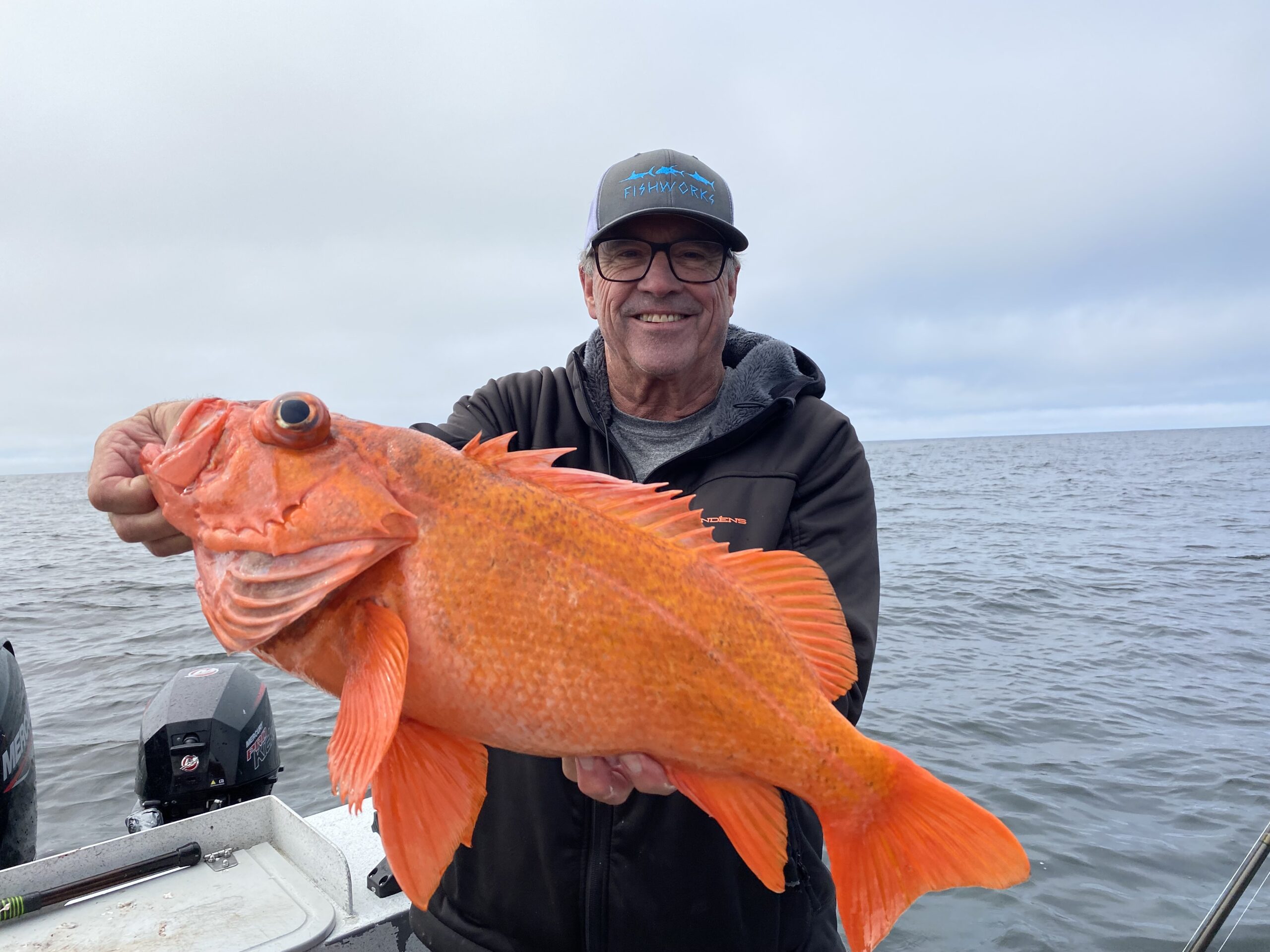
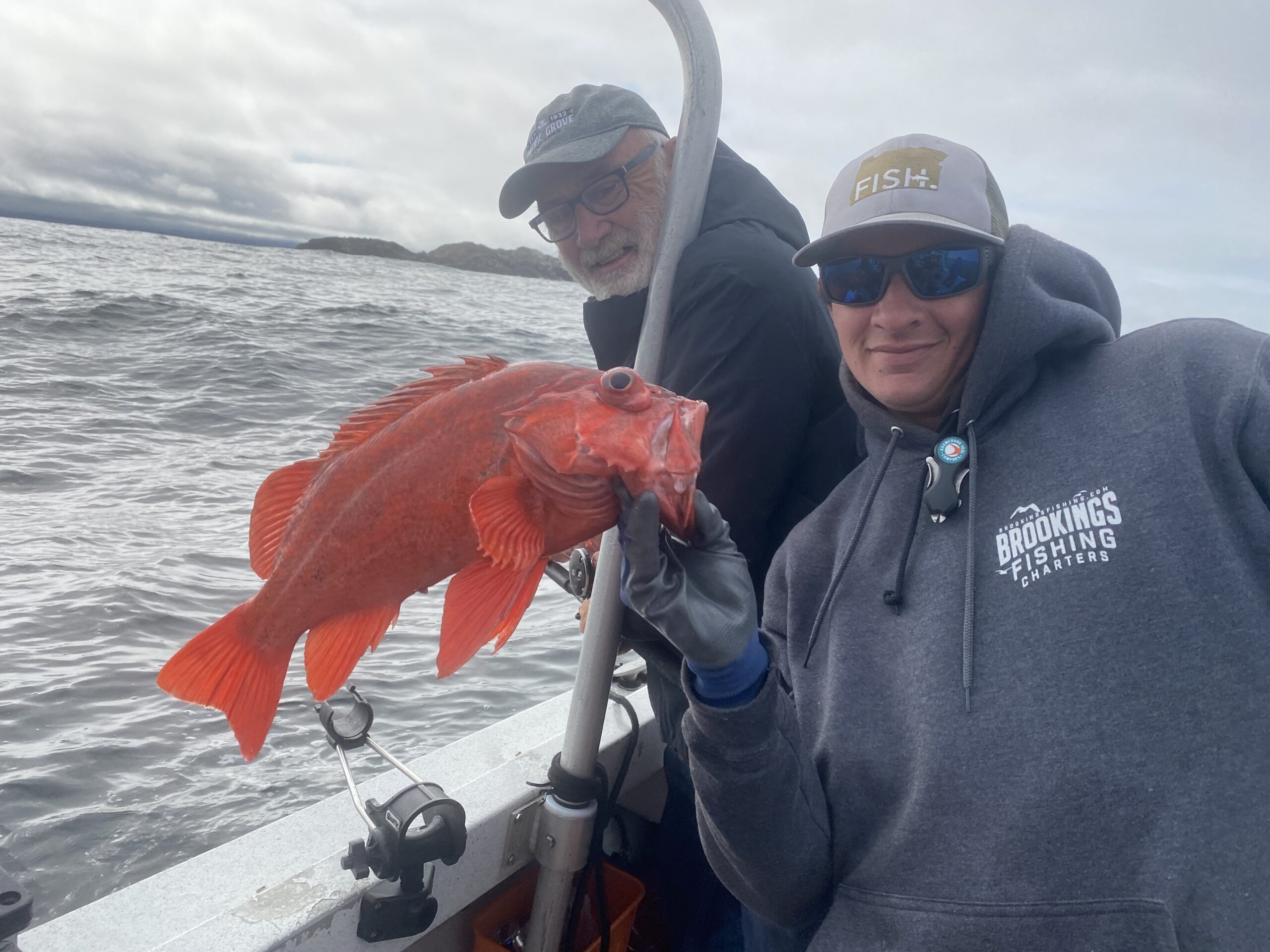
One of many salmon caught and released this winter during bottom fishing charters.Frequent customer Vince with a nice lingcod aboard the Miss Brooke.You’d be smiling too if you just caught a nice vermilion rockfish.Deckhand Brent with a copper and quillback rockfish. The quillback was released, while coppers may be retained.Nice lingcod from the Miss Brooke near Mack Arch.Great catches from our first charter of the season on the Miss Brooke.Capt. Mike filletsrockfish after a successful charter on the Papa B.A big ling and a lunker rockfish make for a very happy young customer.Rockfish are a blast on the light spinning tackle we use on all of our charter boats.The Miss Brooke has been successful at finding nice lingcod on each charter so far this season.
The Brookings Fishing Charters fleets runs charters daily, weather permitting. Our six-pack boats are fast and perfect for smaller groups. Families and larger groups love the comfortable ride of the spacious Nauti-Lady, our 42-foot party boat.
To book a trip, visit www.brookingsfishing.com, or call our booking office at (541) 813-1082.
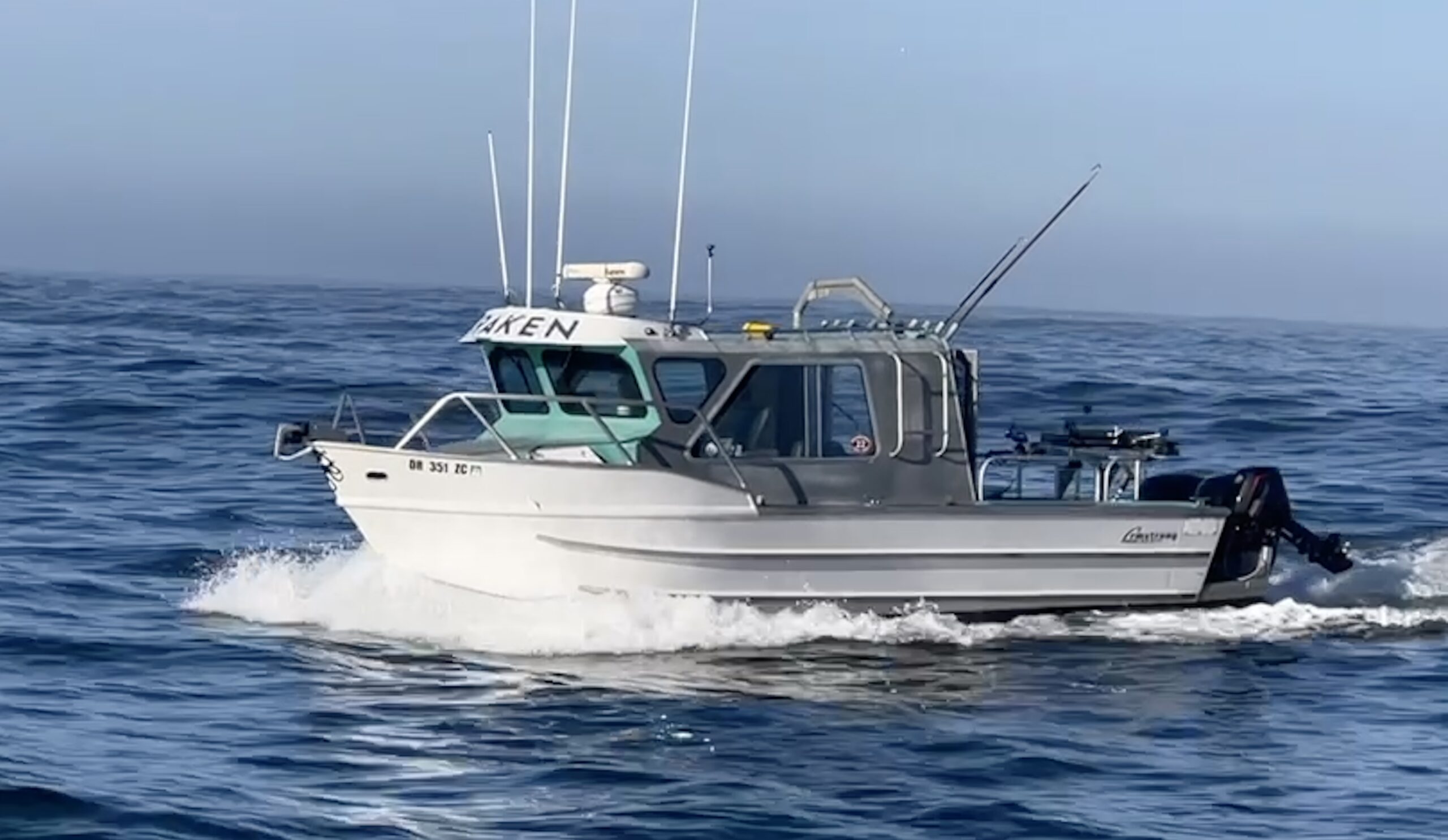
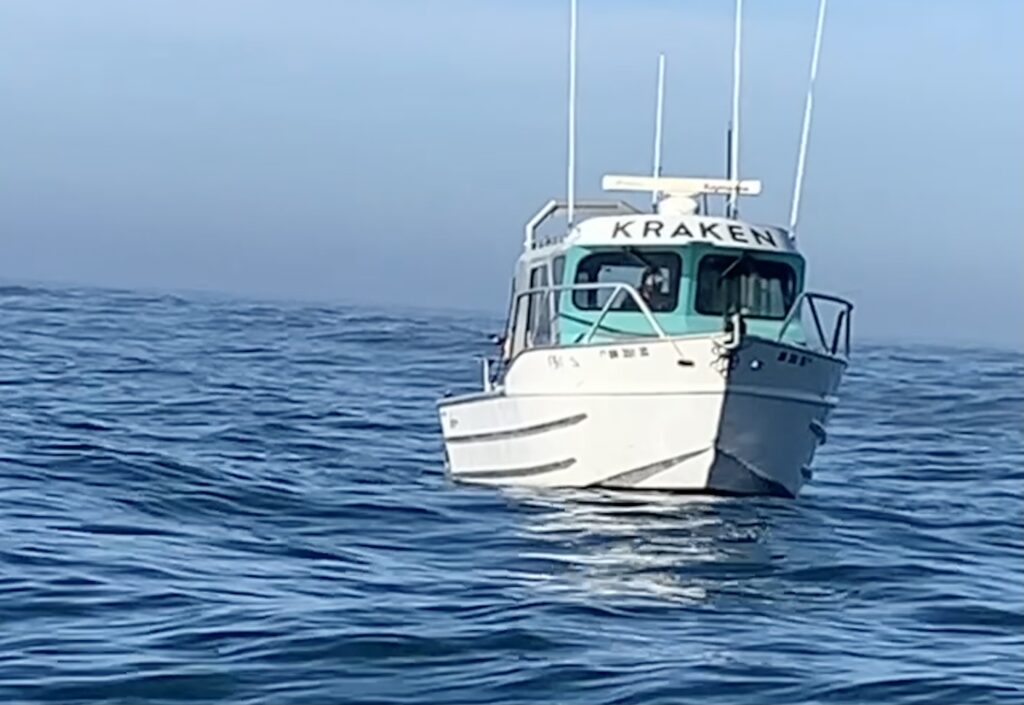
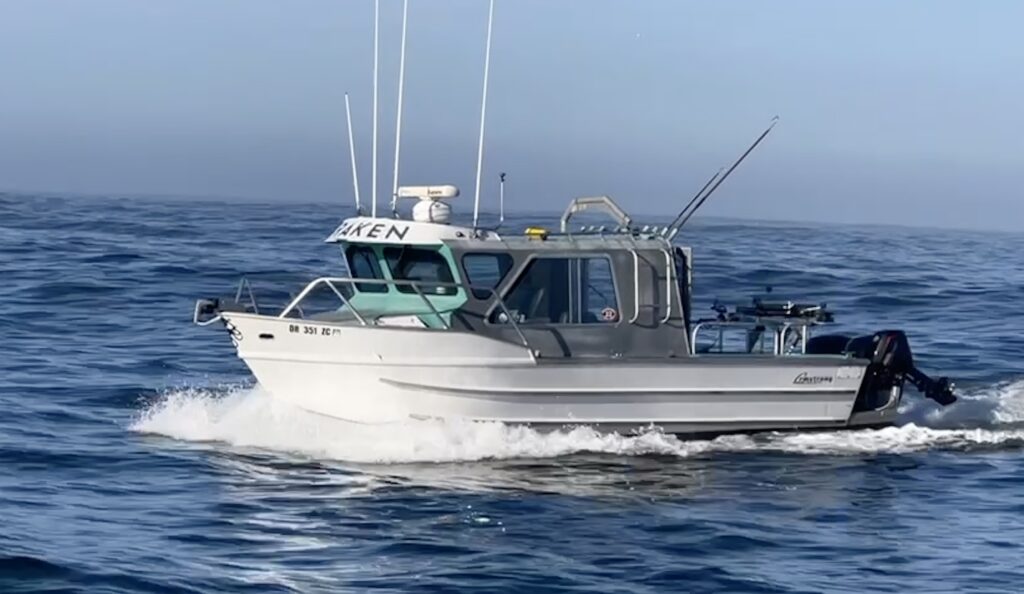
The super-fast, heavy-duty Kraken, a 27-foot six-pack offshore boat built by Armstrong Marine, is the latest addition to the Brookings Fishing Charters fleet. The Kaken began running trips out of Brookings this month, and joins the Miss Brooke, Nauti-Lady, Papa B, Dash and Bout Time as a premier Oregon Coast charter boat.
The Kraken joined the Brookings Fishing Charters fleet in February 2022.
Capt. Andy Martin purchased the Kraken and repowered the boat with twin Mercury outboards, and a new kicker trolling motor. Previously, the Kraken was a charter boat in Newport, Oregon, and specialized in ocean salmon and albacore tuna. It is one of the fastest charter boats on the coast, and its super duty hull is built to specifications of six-pack charter boats used in Alaska. It is capable of handling rough water, and cuts through chop while staying on plane. The Kraken will be used for all of the charter offerings by Brookings Fishing Charters, with an emphasis on Point St. George Reef Lighthouse trips, halibut charters, albacore tuna and ocean salmon.
Capt. Michael lifts a rockfish into the Kraken during a hot bite near Bird Island.
After its repower, the Kraken was able to reach speeds in the mid-40 mph range, with a cruising speed close to 30 knots in moderate chop. It is designed to get to and from the fishing grounds quickly to maximize the fishing time for the customers on board.
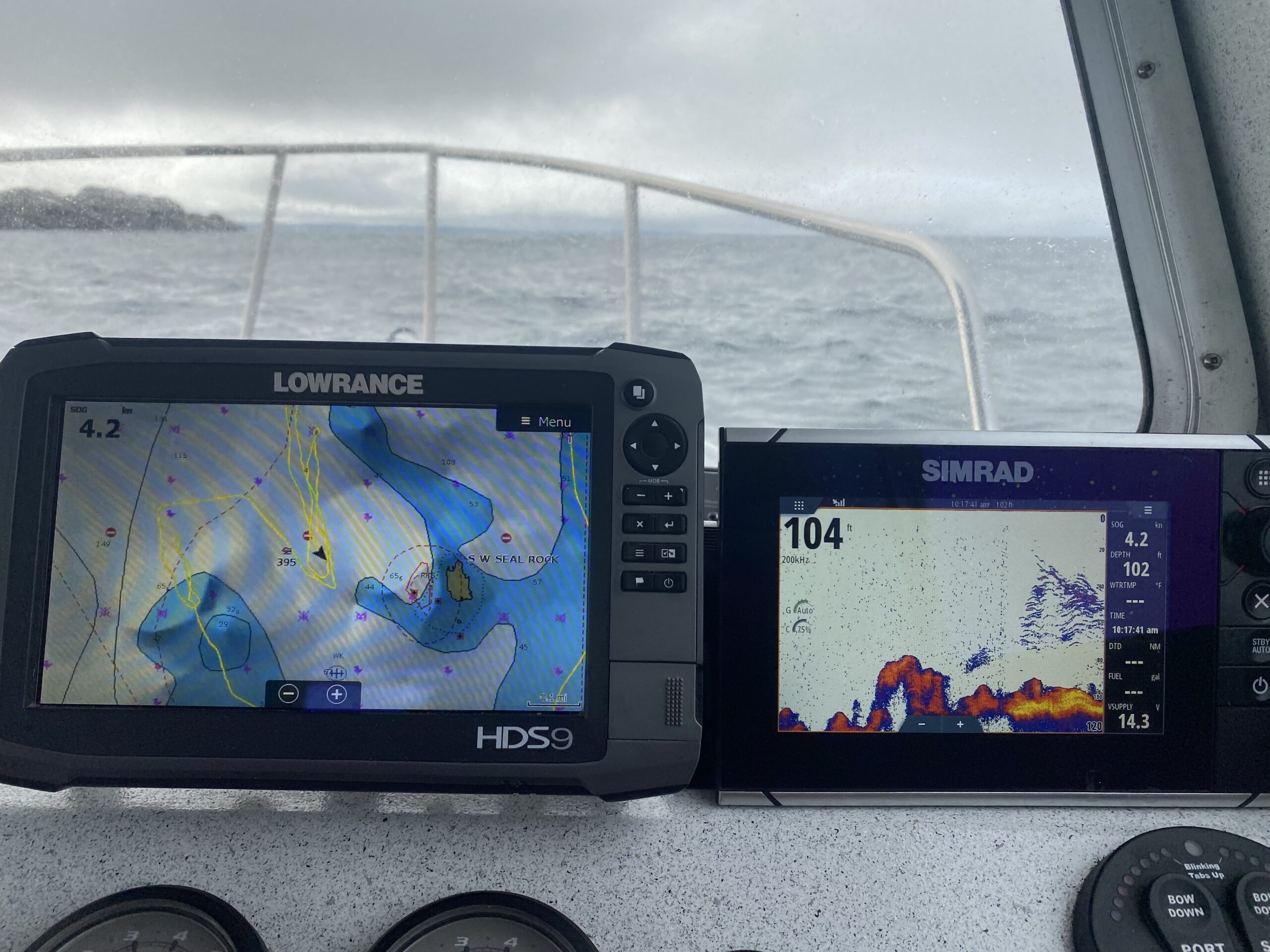
The Kraken has the most advanced electronics in the fleet, with high-end sonar, radar and charter plotters from RayMarine. It is equipped with auto pilot, auto trim tabs, and multiple sonars to easily locate schools of fish.
The first lingcod caught aboard the Kraken after it joined the Brookings Fishing Charters fleet.
The Kraken can comfortably seat six customers, plus crew. It is captained by Capt. Michael, Capt. Sam and Capt. Andy, depending on the trip. With insulated fish holds, under-deck storage for ice, and rails and outriggers, it is designed for long-range tuna trips. The spacious under-deck fish holds will allow anglers to load up on albacore.
BY RICH HOLLAND/Western Outdoor News. BROOKINGS, Ore. – Fires raged both sides of the border, the delta variant was on the move and the wind was blowing a gale along the southern Oregon coast, yet nothing was going stop a group of four anglers from a week of fishing planned six months earlier.
The crew with halibut caught in August 2021 aboard the Nauti-Lady.
The plan? To use the growing fleet of Andy Martin’s Brookings Fishing Charters to maximize whatever opportunities the waterways and coast from Gold Beach to Crescent City could offer the first week of August. The list of possibilities is long: king salmon, silver salmon, Pacific halibut, California halibut, rockfish, lingcod and albacore.
Martin’s cooperation and flexibility were both necessary and outstanding. It was he who suggested that we book Monday, Wednesday and Friday, leaving as much room for adapting to conditions as possible.
As luck would have it, conditions were excellent when we arrived, dead calm under the protection of Chetco Point. A slight change in the forecast noted that while Cape Blanco to Gold Beach was under a gale warning, the area from Brookings south would be variable 5 to 10 knots with fog and overcast.
Patrick Bird fishes aboard the Miss Brooke near the Point St. George Lighthouse.
“It’s looking good for the Lighthouse tomorrow morning, so make sure you have both your California and Oregon licenses,” said Martin when we called to check in Sunday. “Since we are leaving from and returning to Oregon, we will be under Oregon regulations as far as our catch.”
Brookings Fishing Charters is right across from the launch ramp boat lot and is both office and tackle store. After we paid up, it was a short drive to D Dock where the Miss Brooke, a 29-foot Kingfisher aluminum with twin 150 outboards, was tied up and Andy and Michael McGahan were ready to go at 6 a.m.
Limits of lingcod aboard the Miss Brooke near the lighthouse.
“It’s a little windy and bumpy this morning but it is going to lay down all day,” said Martin as he steered for the St. George Reef Lighthouse. As we neared and the spire came into view, as well as islands and basaltic outcroppings, he also told the story of the hundreds who died in a shipwreck just after the Civil War, resulting in the construction of the costliest lighthouse ever built in US waters.
Wind with current meant a quick drift despite the braking of the kicker motor, so even in the shallow water it was hard to feel the bottom. Some heavier heads induced a steady inpouring of beefy black rockfish to come aboard. Then Steve Holland caught the first lingcod of the morning, followed quickly by Paul Freese. Both sported the blueish tint occasionally seen on lings.
A trophy vermillion rockfish caught by Rich Holland.
The size of the black rockfish increased as the drift improved with the weather, and canary, yellowtail, copper, china and yelloweye rockfish all found the lures. The last three had to be released under Oregon regulations. The yelloweye were huge and at first gave the impression of being a big lingcod.
Except the big lings gave a much better impression when hooked – besides the ones that fought all the way to the top, a couple almost spooled Steve and Patrick Bird before finding it back to the rocks.
With a slot or two left for some big rockfish, it was time to move the drifts to Martin’s best big lingcod spot for the last of the lings needed for the two fish per person limits. While no monsters were landed Patrick scored the biggest ling of the day when it hitchhiked aboard via a small rockfish, while this writer connected with a beauty of a vermilion rockfish.
Patrick and Capt. Michael with a hitchhiking lingcod.
“The weather is going to keep getting better every day,” said Martin, “Wednesday could be the best.”
Tuesday was beautiful and with the opportunity to move farther offshore, and while we hiked and golfed, some boats got into both silver and king salmon. Yet the good conditions had Capt. Martin leaning in a different direction for our Wednesday run.
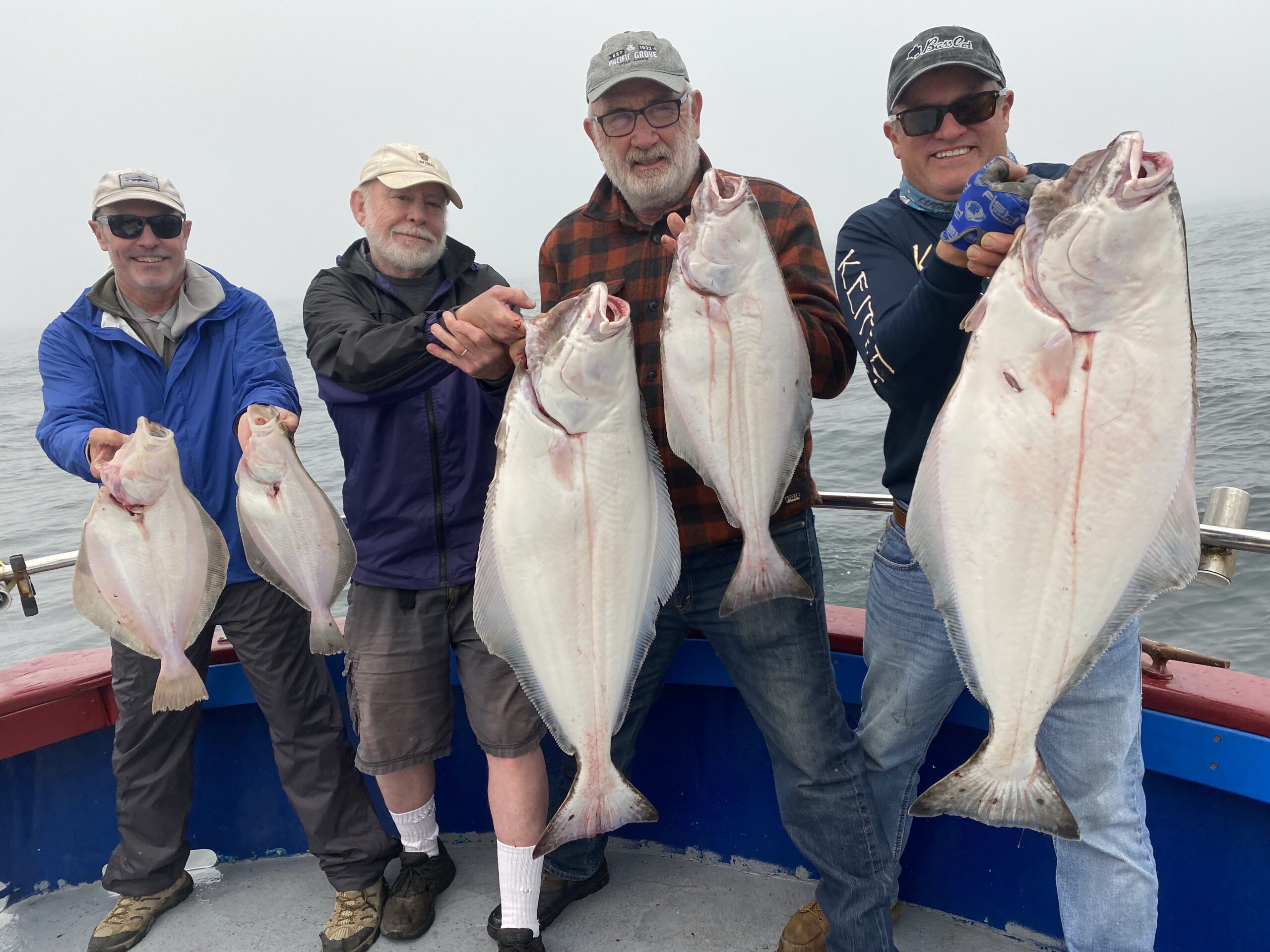
“Our boats that have been trying have been getting at least one good halibut a day up to 50 pounds, even in the rough water,” he noted. “I think we’ll take the big boat out and I bet we can do better than that. We also catch a lot of big petrale sole, and they are great eating.”
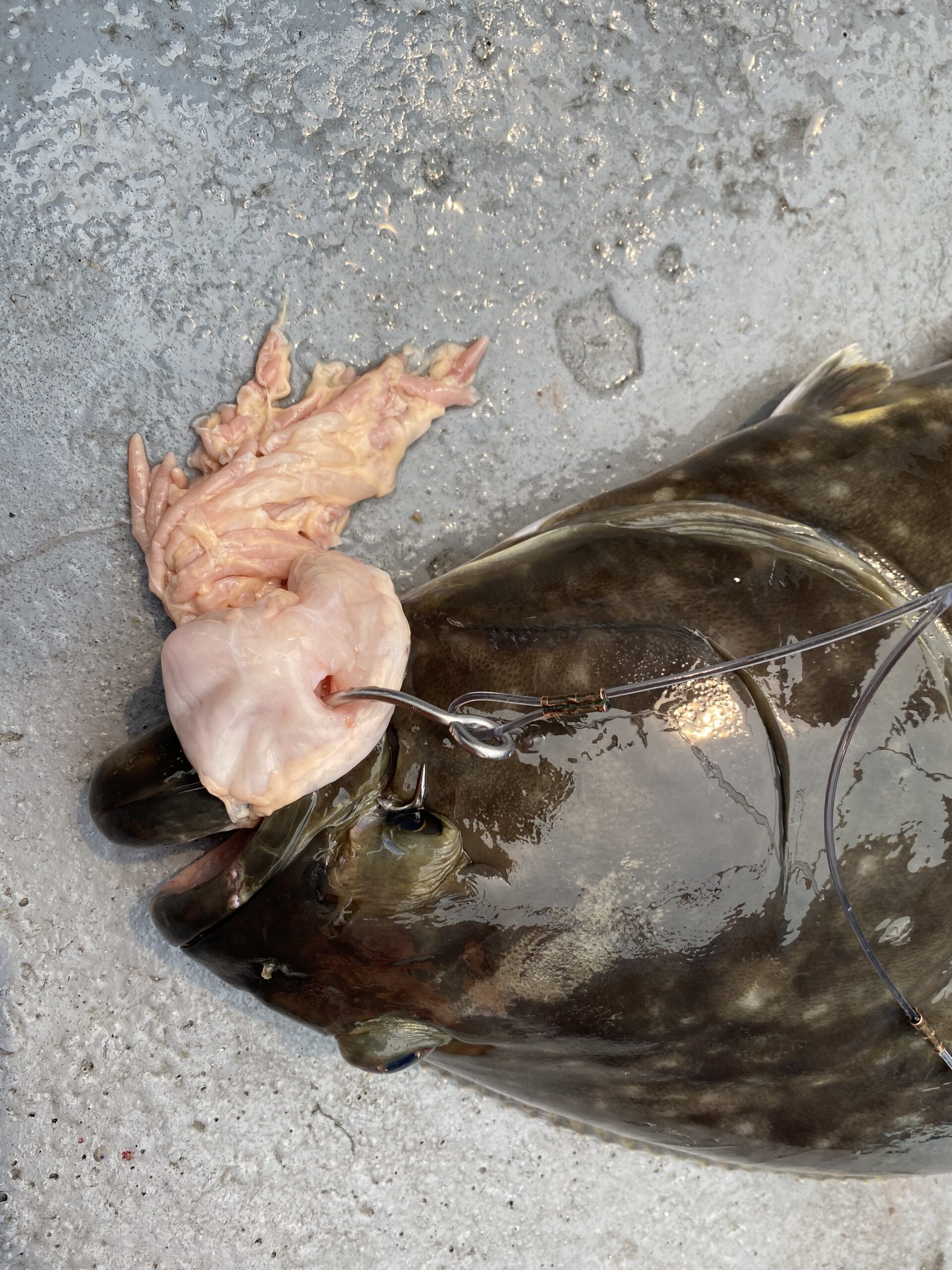
Fresh salmon guts tricked this halibut aboard the Nauti-Lady.
As a result, we were out on the 41-foot Nauti-Lady early Wednesday morning sliding through the smooth windswell and fog out to one of Martin’s favorite spots for Pacific halibut.
“We have to wait for the halibut to pick up our scent and find us,” Martin pointed out as Ron baited double circle hook rigs with squid and herring and Andy set up rods for sand dabs and petrale sole. “Once the sand dabs really start biting, the halibut show up at this spot.”
Brent Foster, who sold his house after surviving the Paradise fire and moved to Brookings, was also aboard and he was the first to hook up with a flattie. Not long after a 24-pound halibut was flopping on the deck.
A long time passed without a bite, then the few that came were light. The sound of nearby humpback whales spouting whooshed through the fog. Every now and then the dense mist would lift and other boats would appear and disappear.
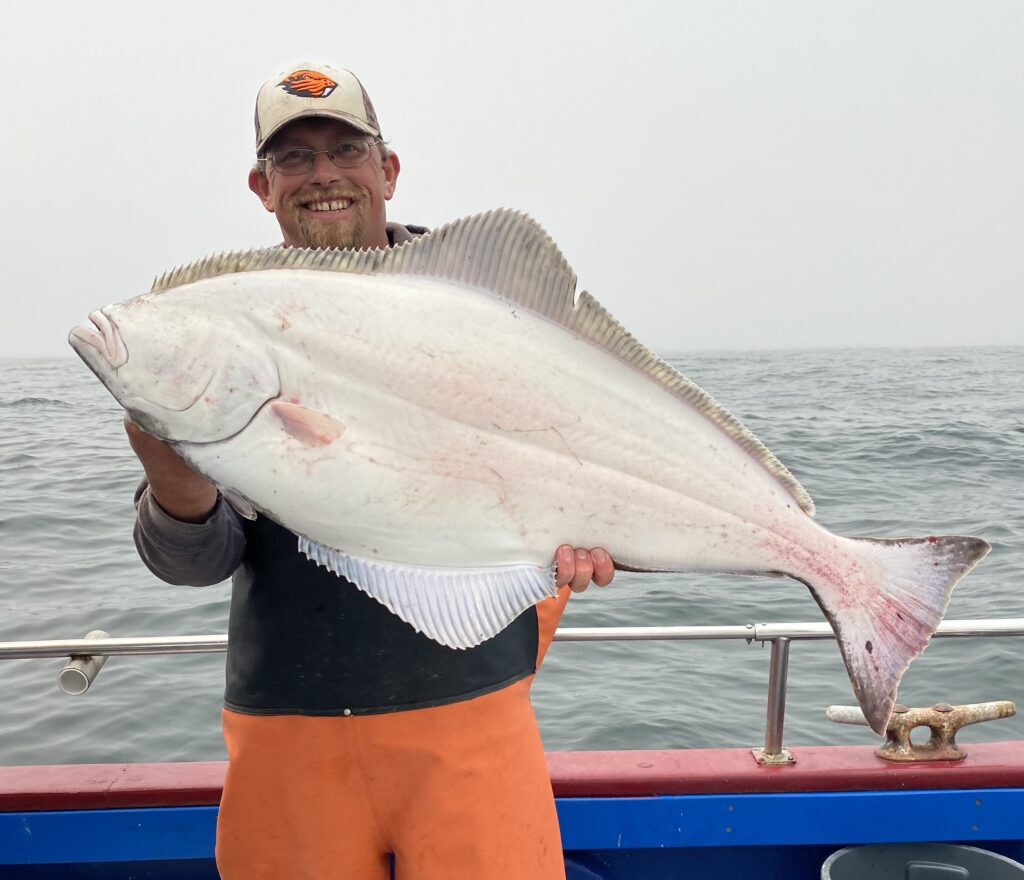
Capt. Andy holds a nice Pacific halibut.
Salmon started to jump around the boat and at times when the fog lifted we would watch a boat net a salmon. Then a call came in from Michael on the Miss Brooke – his group was limited out on king salmon to 35 pounds by 9 a.m.
Believe me, it was getting a little hard to bear!
Andy asked Michael to come by and drop off the salmon guts for bait and we got to see the big king held up by the happy angler. Then when the bait went on the hooks, the halibut started to climb on ours. Patrick broke the ice with a 15 pounder, the Paul landed a 28-pound flattie. We missed a few other bites and decked a handful of big petrale sole to make for plenty of meat to go around.
Big schools of rockfish at the Point St. George Reef Lighthouse.
All of the Brookings Fishing Charter boats and most of the other boats out Wednesday had whacked both kings and silvers. It should be noted lots of wild silvers and shaker (short) kings were released.
When Andy asked if we would like to go salmon fishing the next day (Thursday) it was probably one of the quickest times I ever said yes.
We were back out on the Miss Brooke with Michael and Travis at the wheel and on deck Thursday and a breeze was up and the ceiling of grey was well overhead. It was a chunky ride out to the fishing grounds of the day before.
Limits of salmon aboard the Miss Brooke.
“I’m not marking any bait – the krill was everywhere yesterday – there are hardly any birds and I don’t see any whales, but let’s put the rods out and look around,” Michael said. “Keep an eye out for whales, all of our fish yesterday were on whales.”
Was the day after hex going to take hold?
A handful of bites, two small silvers released and a decent sized hatchery silver boated later, well off the port bow two massive humpbacks twisted back into the water in a massive splash.
“Pull in the gear, we’re going to run for them,” said the skipper. “If we troll to the whales we’ll get there too late.”
Rich Holland with a big king.
We got there in time all right – so close we could smell the stench of the leviathans’ breath, so close we had to pull back the throttle and steer clear of the big fellas while we put out lures and baits in the slime of their feeding frenzy.
Instantaneous action doesn’t describe what followed, it was a scramble for one bent rod after another, with the inevitable misses and the satisfying runs of a solid hookup intertwined.
At first a lot of the kings were small. Travis dropped the Brad’s Lures fished on divers off the stern to 100 feet back and the keeper kings latched on. For whatever reason the anchovy baits fished tight on the inside at 25 feet also started to pick up more quality.
Whenever the bite slowed at all or the size dropped off, we ran towards the next whale. By 7:55 a.m. we had our 2-fish limits each of kings and silvers, mostly kings. We had dodged the “should have been here yesterday” jinx and done even better.
From the beach the next morning we could see the fog lay heavy. Word was only a rare keeper made it in the box. Later the fog gave way to a mid-afternoon gale. The weather had cleared again as of this writing (Aug. 11) and the boats were into the albacore offshore.
Next time.
For more information on fishing out of Brookings, go to Brookings Fishing Charters at brookingsfishing.com or phone (541) 813-1082.
Trip Info
Location and Recreation
Brookings/Brookings Harbor is located just north of the California border on Hwy. 101. There are many motels and vacation rentals available. We stayed Ocean Suites Motel. Accommodations can also be found to the south in Crescent City. The Chetco River bar is the mouth of Brookings Harbor. The Rogue River in Gold Beach is an hour away and the Smith River in California is 20 minutes south. The spectacular redwoods of Jed Smith State Park line the Smith and Harris Ranch and Lone Ranch State Beaches are just north of Brookings. Salmon Run golf course is on the Chetco and Del Norte golf course is adjacent to the Smith.
Dining
From seafood to steaks, breakfast to burgers and brew pubs, there are lots of options: Alta’s Burger Bar (Smith River), Hiouchi Café (Smith River) Catalyst Seafood, Slug N Stone Ice Cream, Pacific Sushi, Bean and Whistle Coffee Bar, Zola’s Pizza, Wild River Pizza, SuperFly, O’Hollerans Steaks, Mattie’s Pancake House, Chetco Brewing, Misty Mountain Brewing, and Seaquake Brewing (Crescent City). A Fred Meyer has all your shopping needs.
Smoking salmon or steelhead is one of the most popular ways of enjoying the highly prized Oregon Coast fish. While there are dozens of great recipes for smoked fish, our favorite involves a quick and simple dry cure that is both sweet and salty, but not too much of either. Brown sugar cured salmon or steelhead is a tried and true smoked fish recipe that has regained popularity in recent years.
Chetco River steelhead smoked after being cured with brown sugar and salt.
The fish is cured with a dry cure. No brine is involved. The end result is smoked fish with all of its flavor, and the perfect texture. This recipe is especially popular for steelhead and coho salmon, which have more of a mild flavor compared to king salmon, but it works great for all species of salmon, including those caught in the ocean or river.
The dry cure is simple. Four parts brown sugar (light or dark may be used) and one part non-iodized salt. For a single coho or steelhead, two cups brown sugar and a half of cup of salt work. For multiple fish, or a large king salmon, use four cups brown sugar and one cup salt. Mix the brown sugar and salt in a plastic bag.
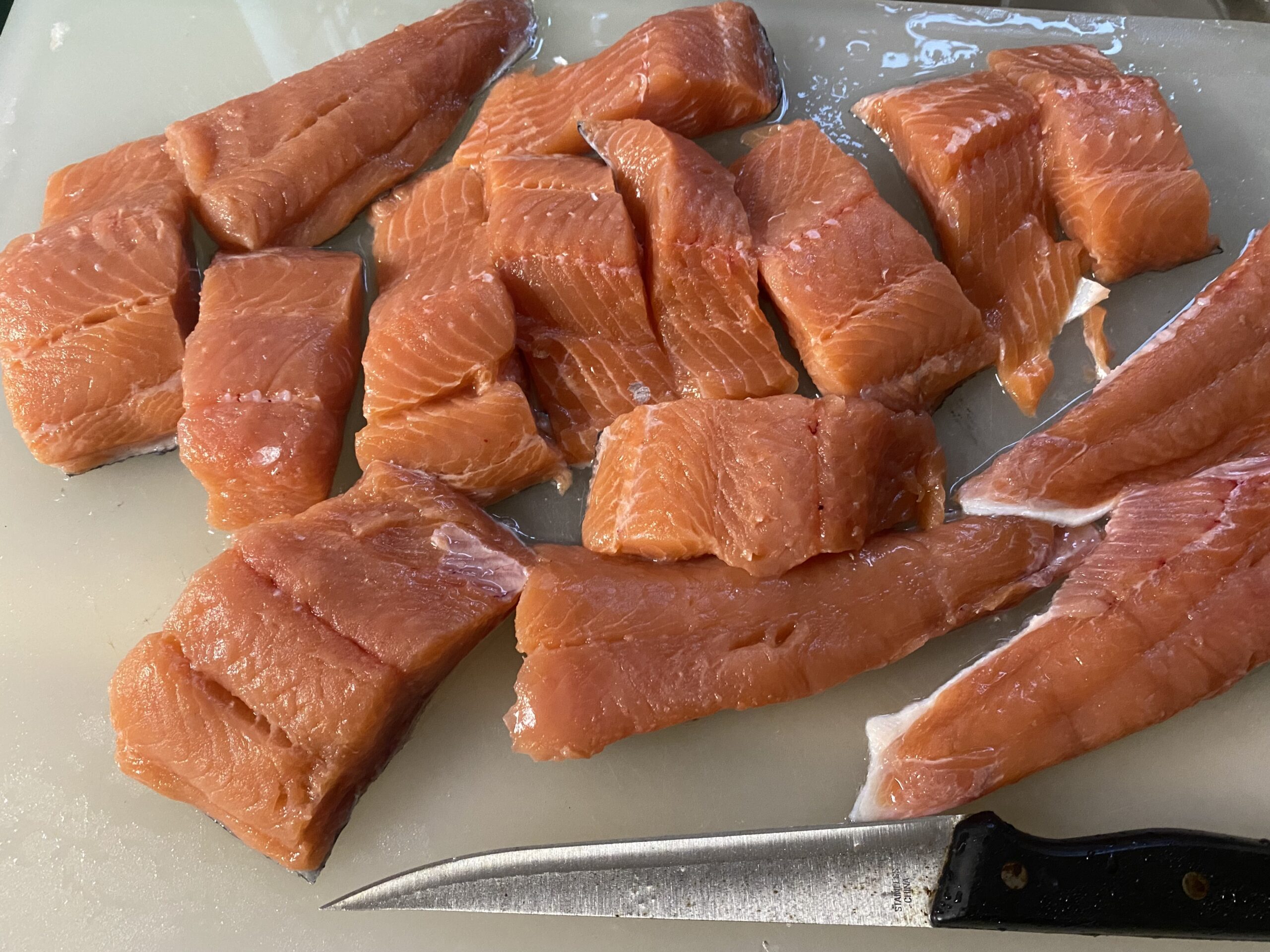
Steelhead fillets cut into small pieces for smoking.
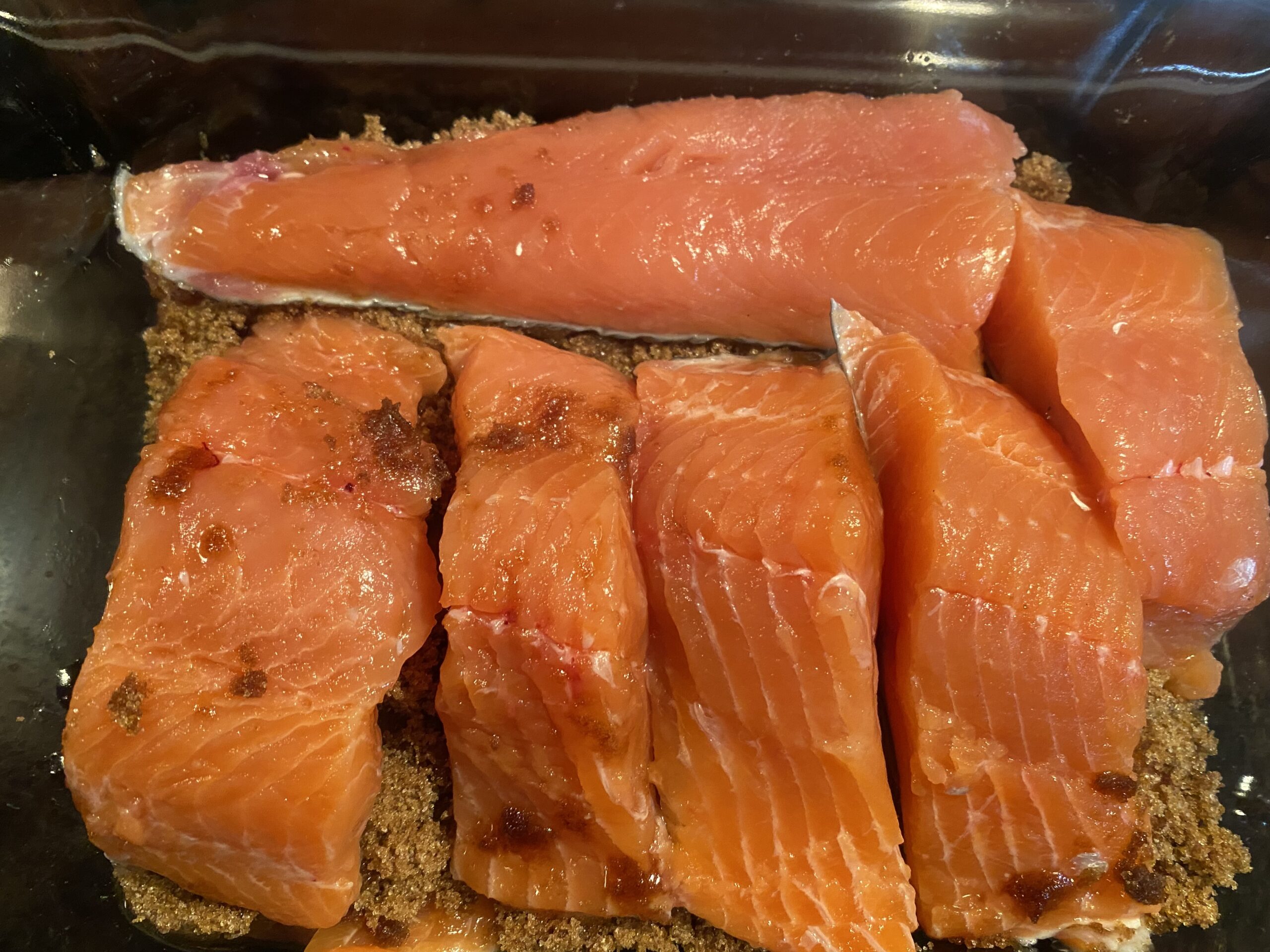
Cut the salmon or steelhead fillet into smaller pieces. The smaller pieces will cure more evenly, and smoke better than larger fillets. For best results, remove the rib bones, although they can be left if desired. Leave the skin on the fillets, as they will be smoked skin-side down.
Cure the fish in a large glass baking dish. A large plastic bowl also will work, or even a bucket if you have several salmon to cure and smoke.
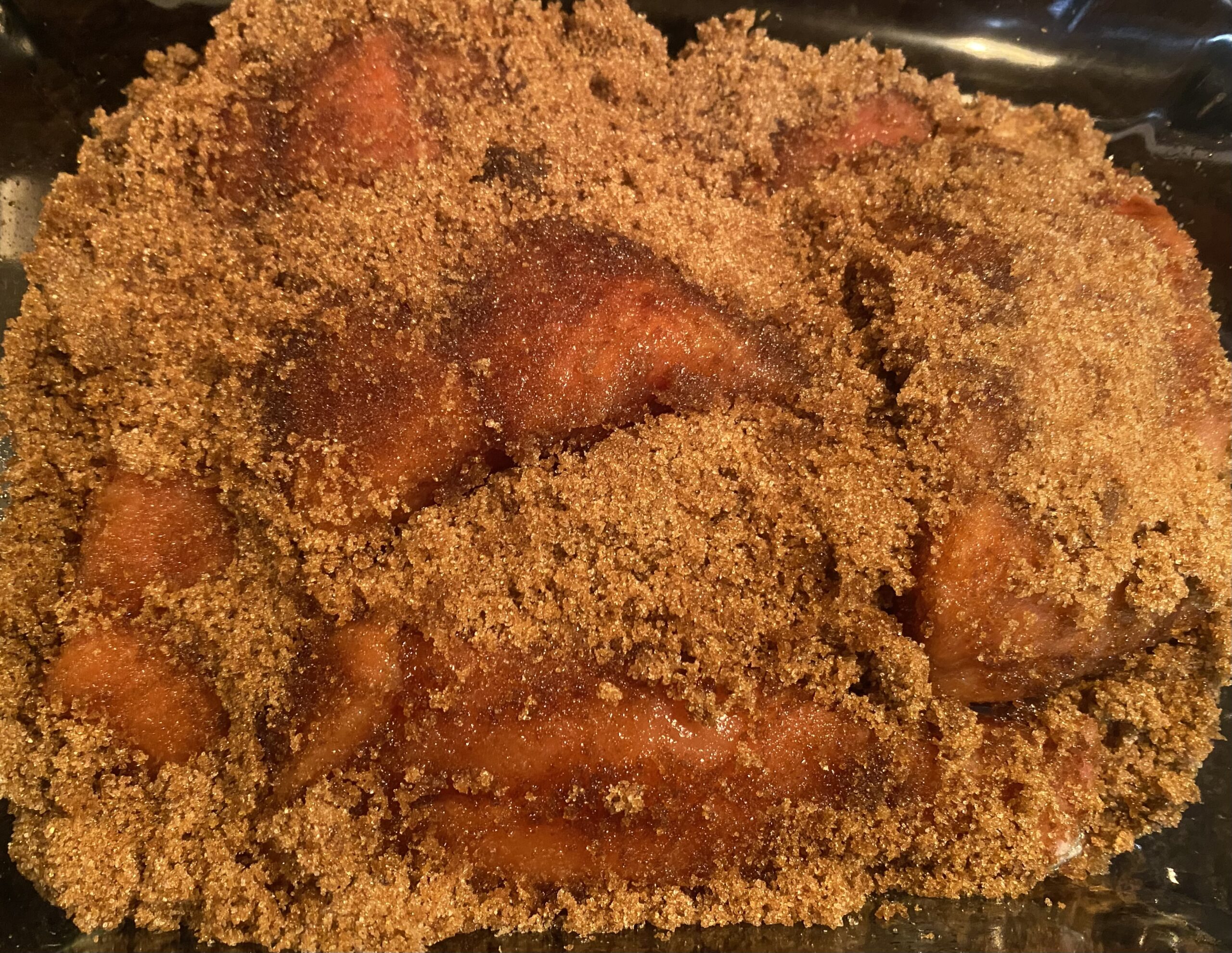
The brown sugar cure over the steelhead fillets.
Layer the bottom of the baking dish with the small pieces of fillets, skin-side down. Place a single layer on the dish. Apply a generous amount of the brown sugar and salt mixture over the fish. Add a second layer of fish, skin-side down, over the initial layer, and then another coat of the brown sugar cure.
The second layer of salmon fillets.
Continue to add layers of salmon or steelhead, and the brown sugar cure. After just a few minutes, the dry cure will begin to pull the moisture/liquid from the salmon or steelhead fillets. Cover with a plastic wrap and place in the refrigerator or a cool area (the garage) for three or four hours.
After just a few minutes, the sugar and salt will begin to become saturated with moisture from the fish.The cure dissolves as it pulls the moisture from the fish.
After an hour, the sugar and salt will be completely dissolved as it pulls the moisture and liquid from the fish. After three to four hours of curing, stir the fish by hand to ensure all the fillet pieces are covered with the cure.
Stir the fillets to make sure they are completely exposed to the cure.
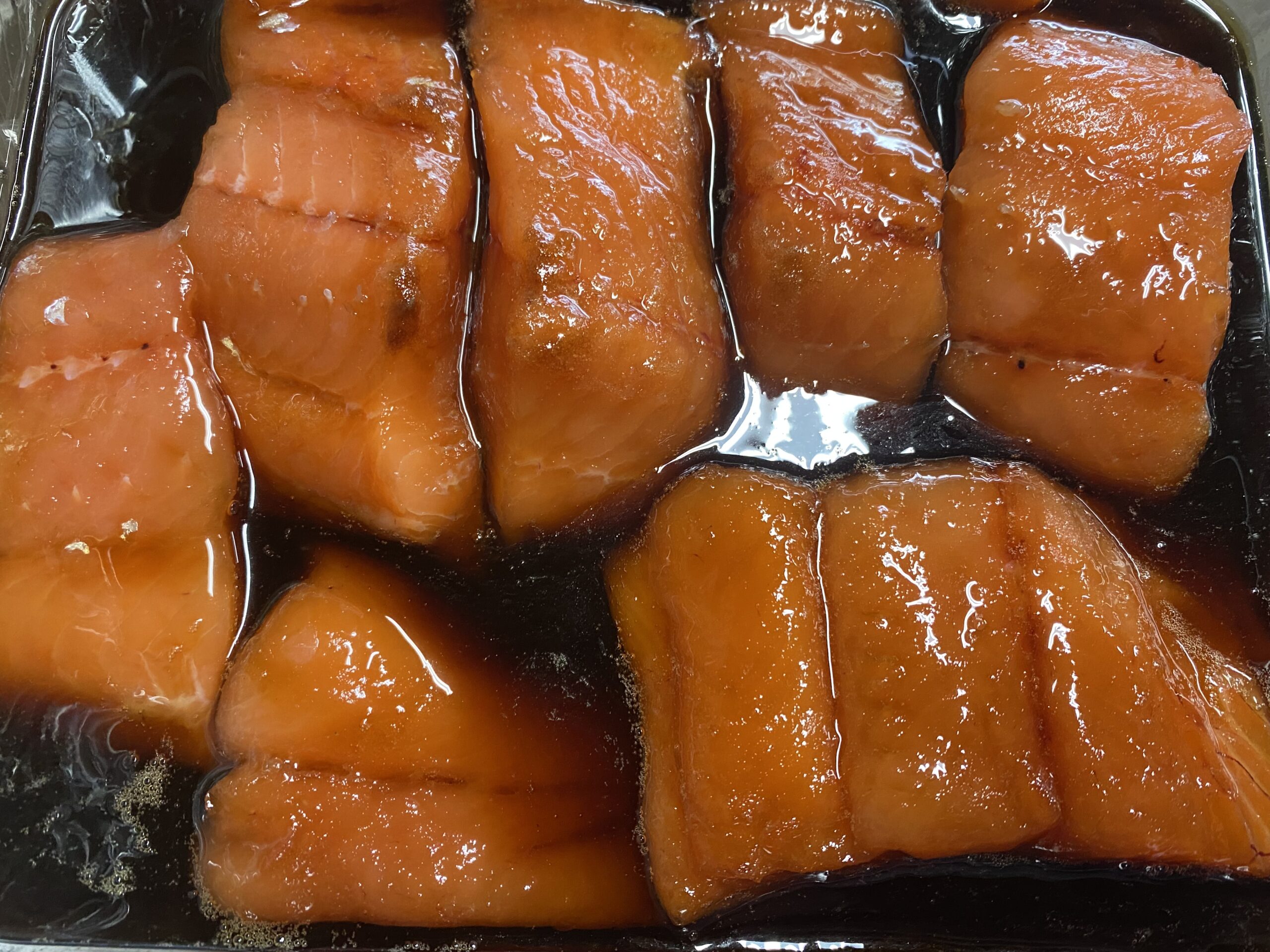
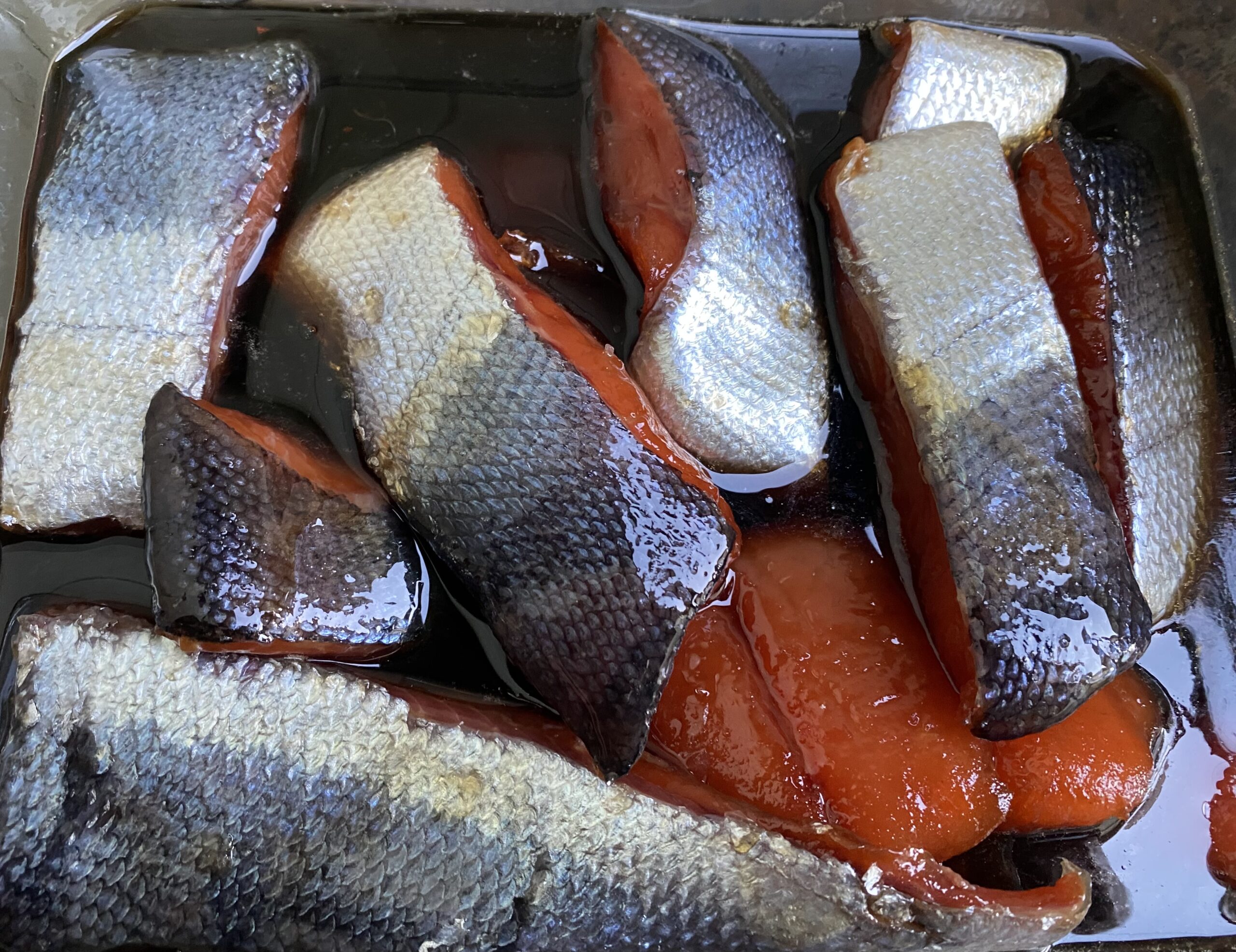
Cure the fish for 12 to 24 hours. Smaller pieces will cure quicker. Larger king salmon may need the total cure time of 24 hours, or longer. The fish will take on a brighter color, and the meat will be firmer once it is cured.
When its ready to smoke, remove it from the cure, shake or wipe off the remaining cure and place on the smoke trays or screens to air dry. Do not rinse.
The fillets will be bright and firm once cured.The unrinsed fillets are allowed to air dry.
Once the fillets have air dried and are firm and tacky, season to taste with garlic powder, black pepper, dill weed and lemon pepper. Some people simply add a little black pepper and no other seasonings.
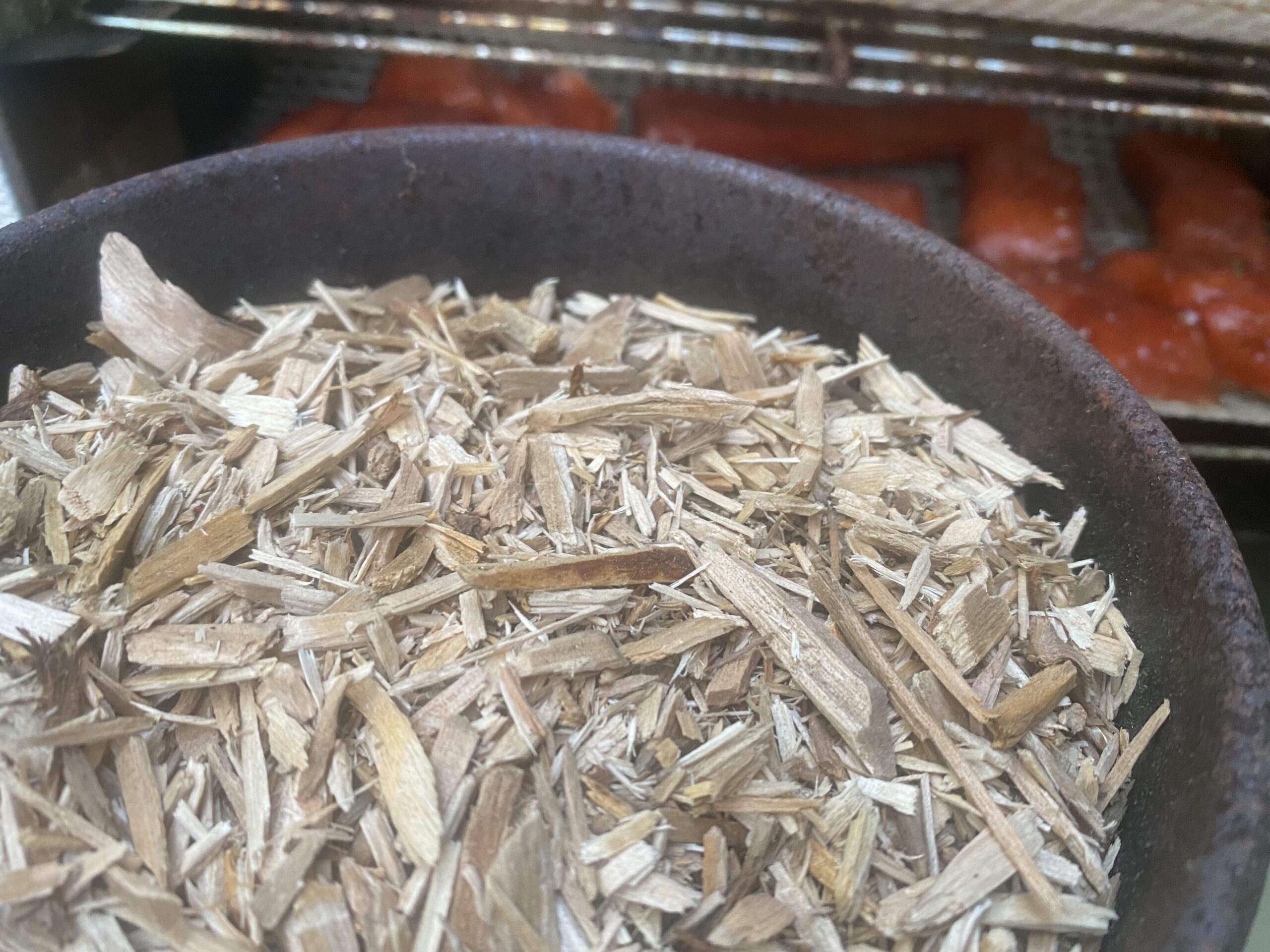
Once the fillets are tacky, season and begin to smoke.Use apple, cherry or alder chips.
Smoke the fish for 6 to 12 hours. Use three pans fulls of chips, and then simply use the heat from the smoker. Continuing to add chips/smoke after the first 1 to 2 hours can give the fish a bitter taste.
The Big Chief Smoker doing its thing.
If you like sweeter smoked fish, add a small amount of honey to each fillet halfway through the smoking process.
During the winter months, or on the coast during cool, foggy weather, sometimes it is necessary to finish the fish off in the oven. If necessary, finish cooking the salmon at a low temperate (175-200 degrees) for 20 to 30 minutes in the oven.
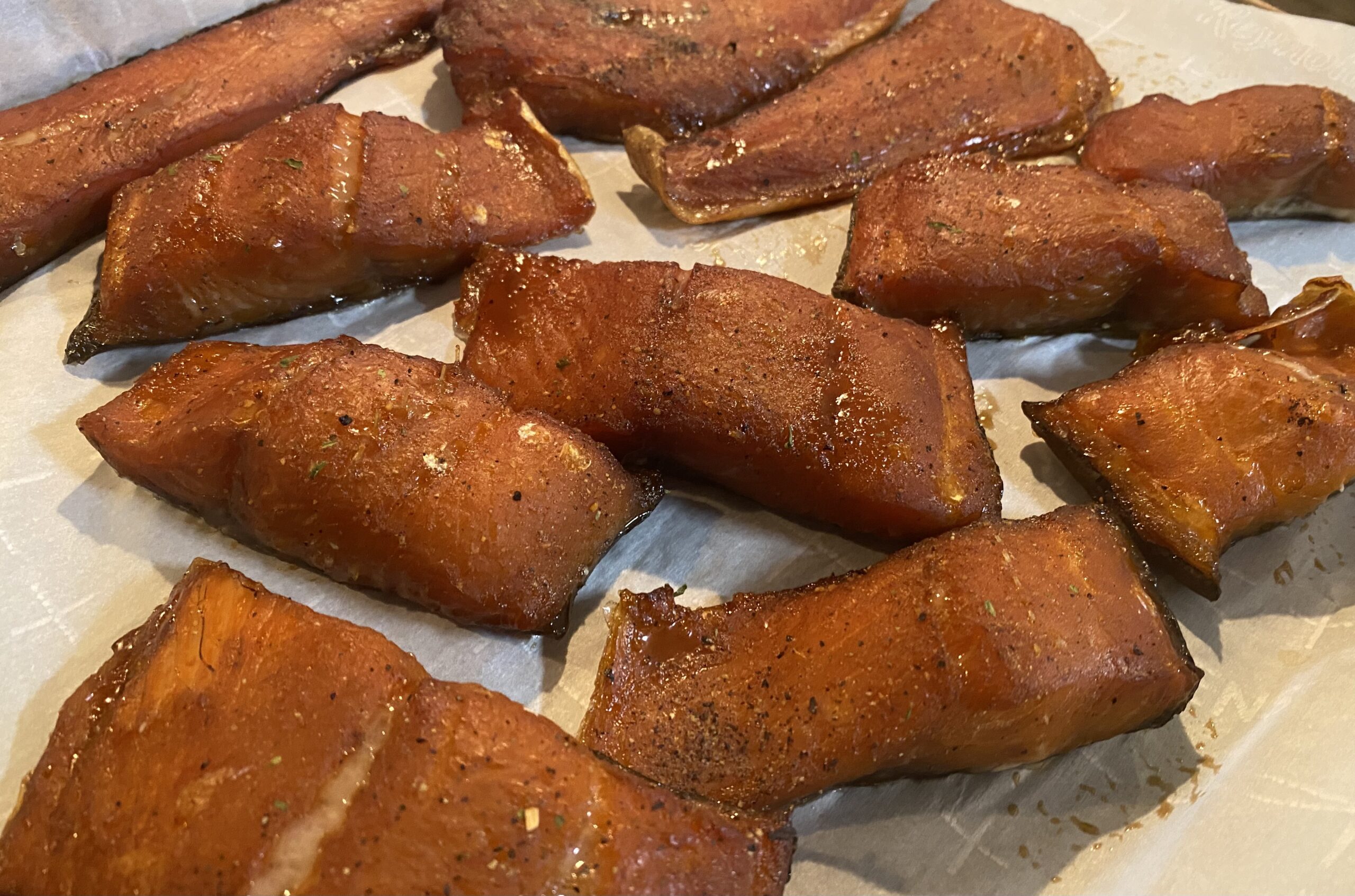
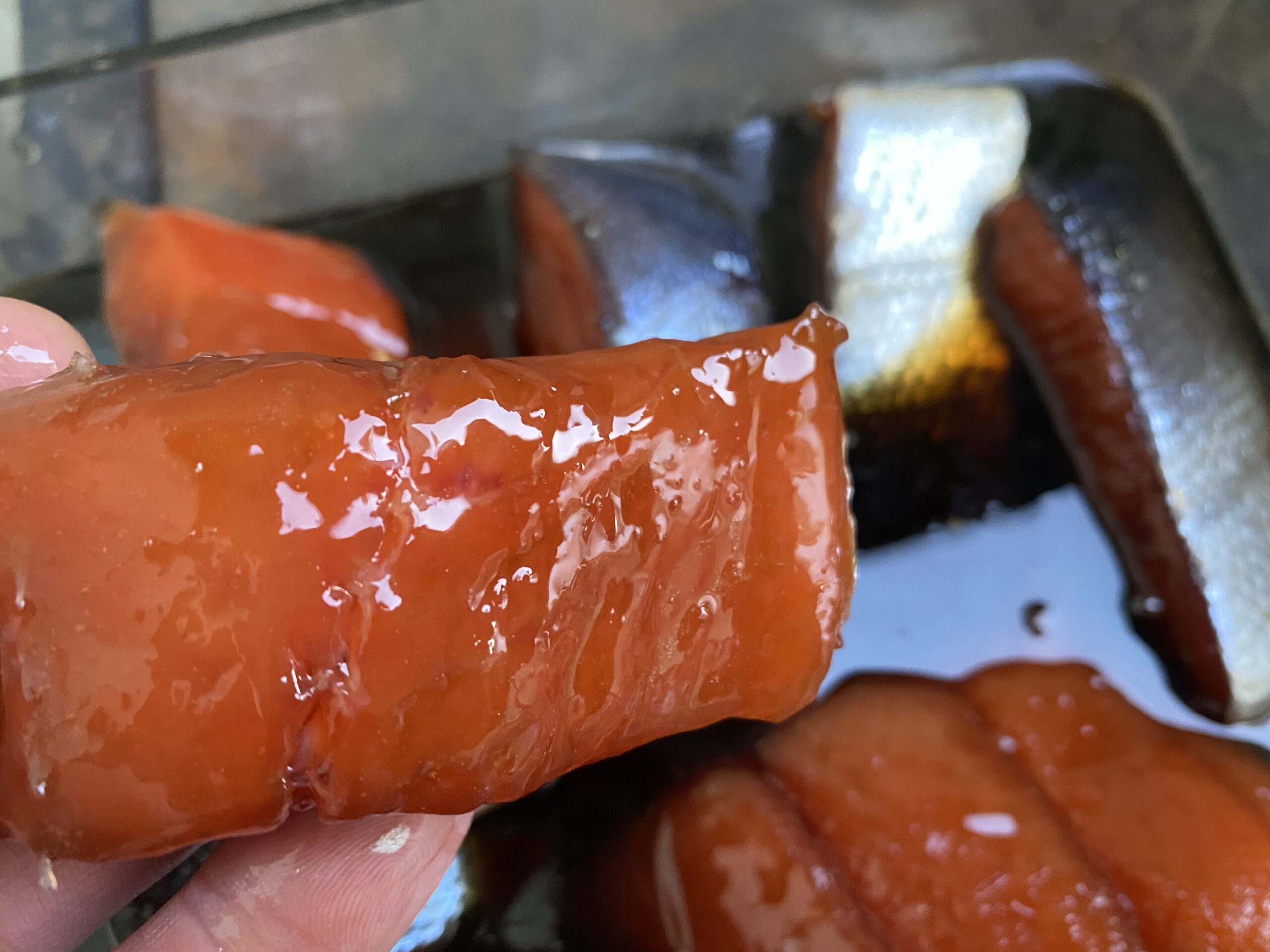
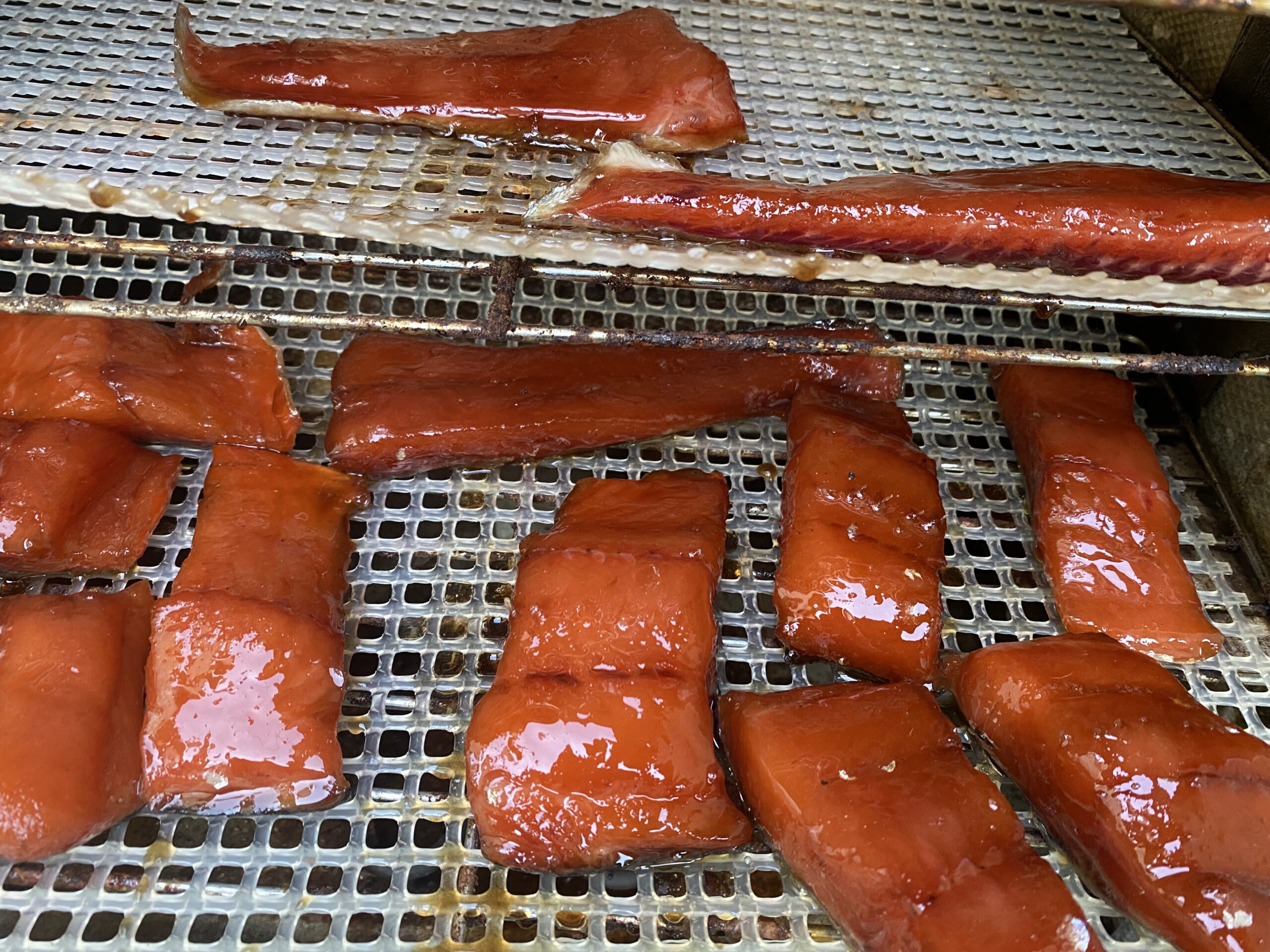
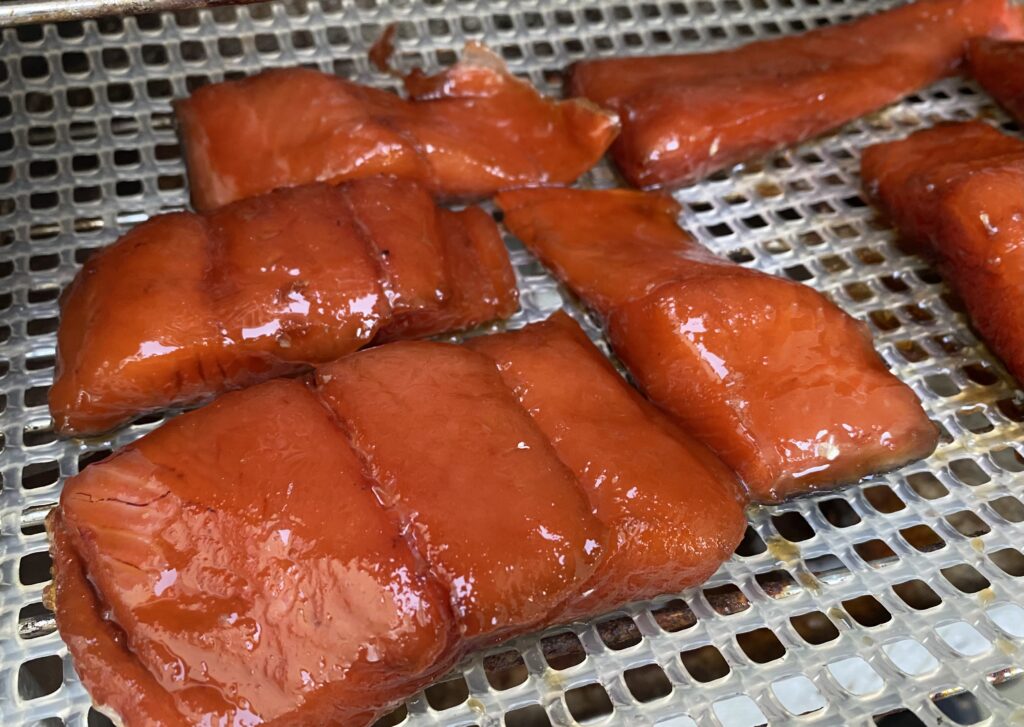
The finished product.King salmon caught on the Miss Brooke of Brookings Fishing Charters.
By Capt. Andy Martin – Growing up on the Oregon Coast, traditional New England clam chowder, and other seafood dishes, were readily available. We ate seafood several times a week. A dish my family never enjoyed is Manhattan clam chowder. The thought of a tomato-based clam chowder just wasn’t appealing.
I first made Manhattan clam chowder a few years ago while looking for a keto-friendly, low-carb version of clam chowder. The results were surprising. Manhattan clam chowder is delicious, easy to make, and much lower in carbs than cream- and potato-based chowders. The following recipe is more of a traditional Manhattan clam chowder – to reduce carbs, simply reduce or eliminate the potatoes, use less onion and forgo the carrots. Zucchini may also be substituted for potatoes.
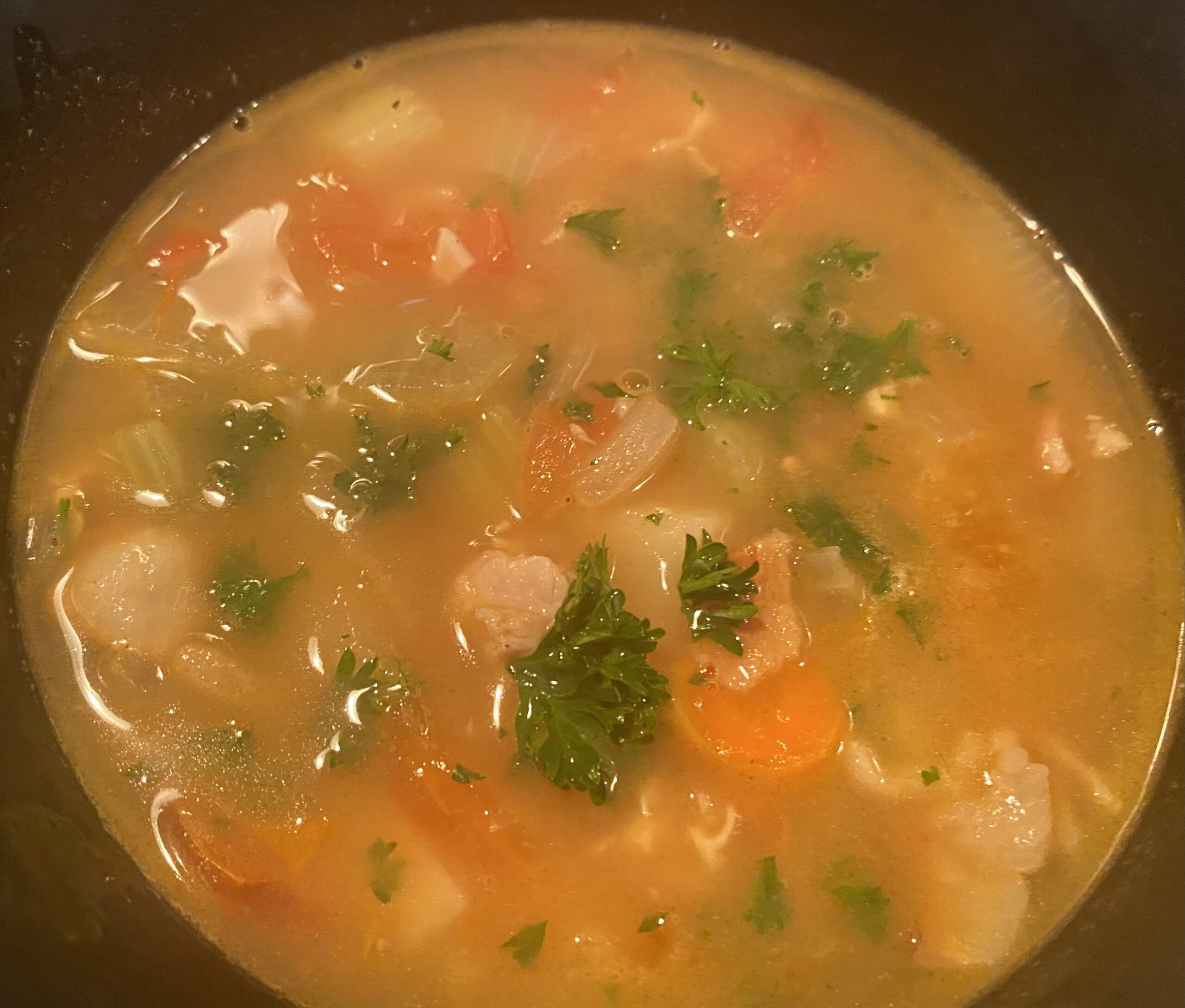
Manhattan clam chowder is a simple, delicious alternative to New England clam chowder.
Ingredients
4-6 slices bacon
1 small onion, diced
1-2 carrots, chopped
2-4 medium potatoes, diced
2 garlic cloves, chopped, or 2 teaspoons minced garlic
1/2 cup white wine
3 tablespoons tomato paste
1/2 teaspoon dried thyme
2 bay leaves
2 cans (14.5 ounce each) chicken broth
2 cans (14.5 ounces each) diced tomatoes
1 bottle (8 ounces) clam juice
2 cans (6.5 ounces each) diced clams
1 can (6.5 ounces) minced clams
1 cube (8 tablespoons) butter
1/3 cub fresh parsley, chopped
salt and pepper to taste
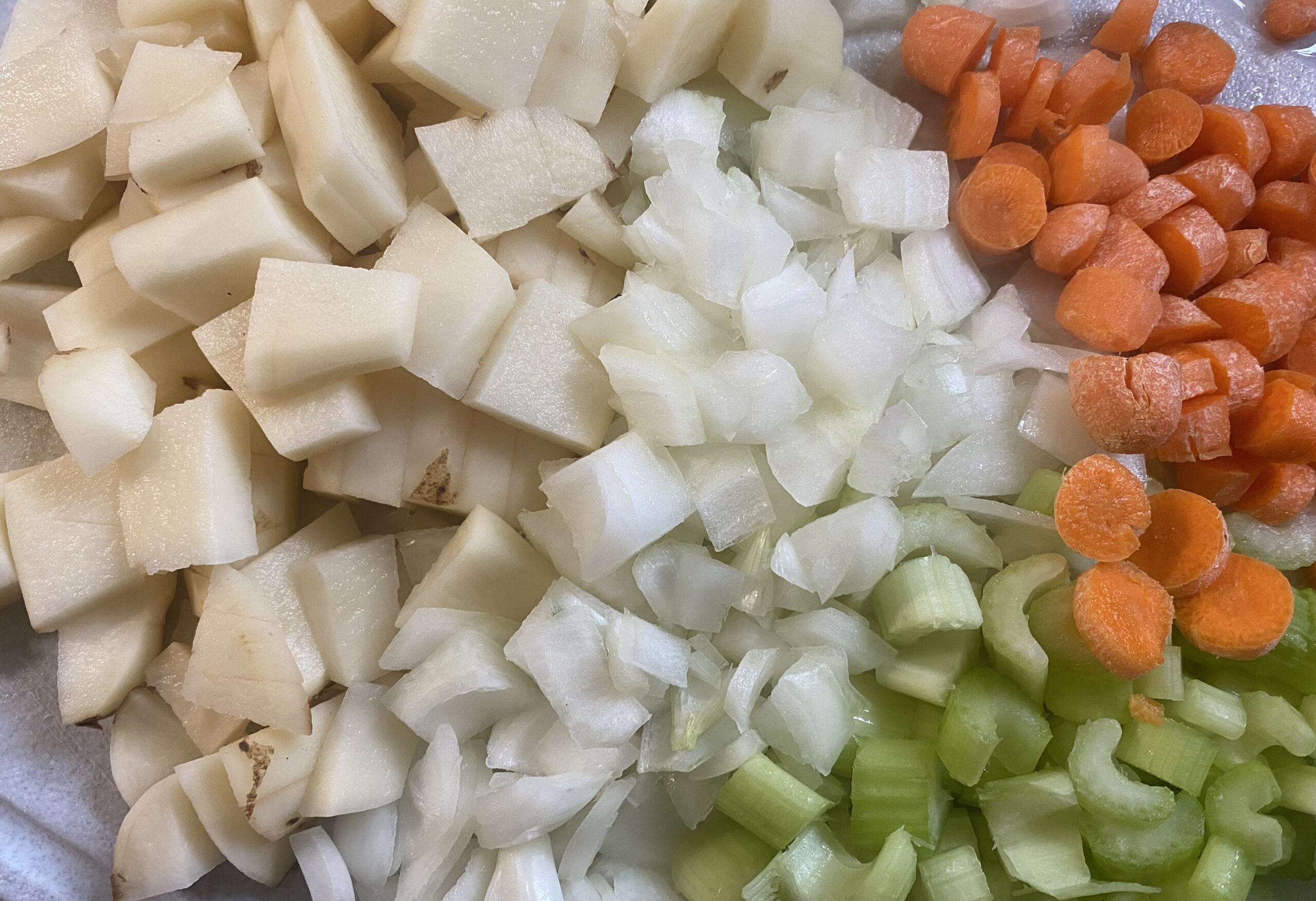
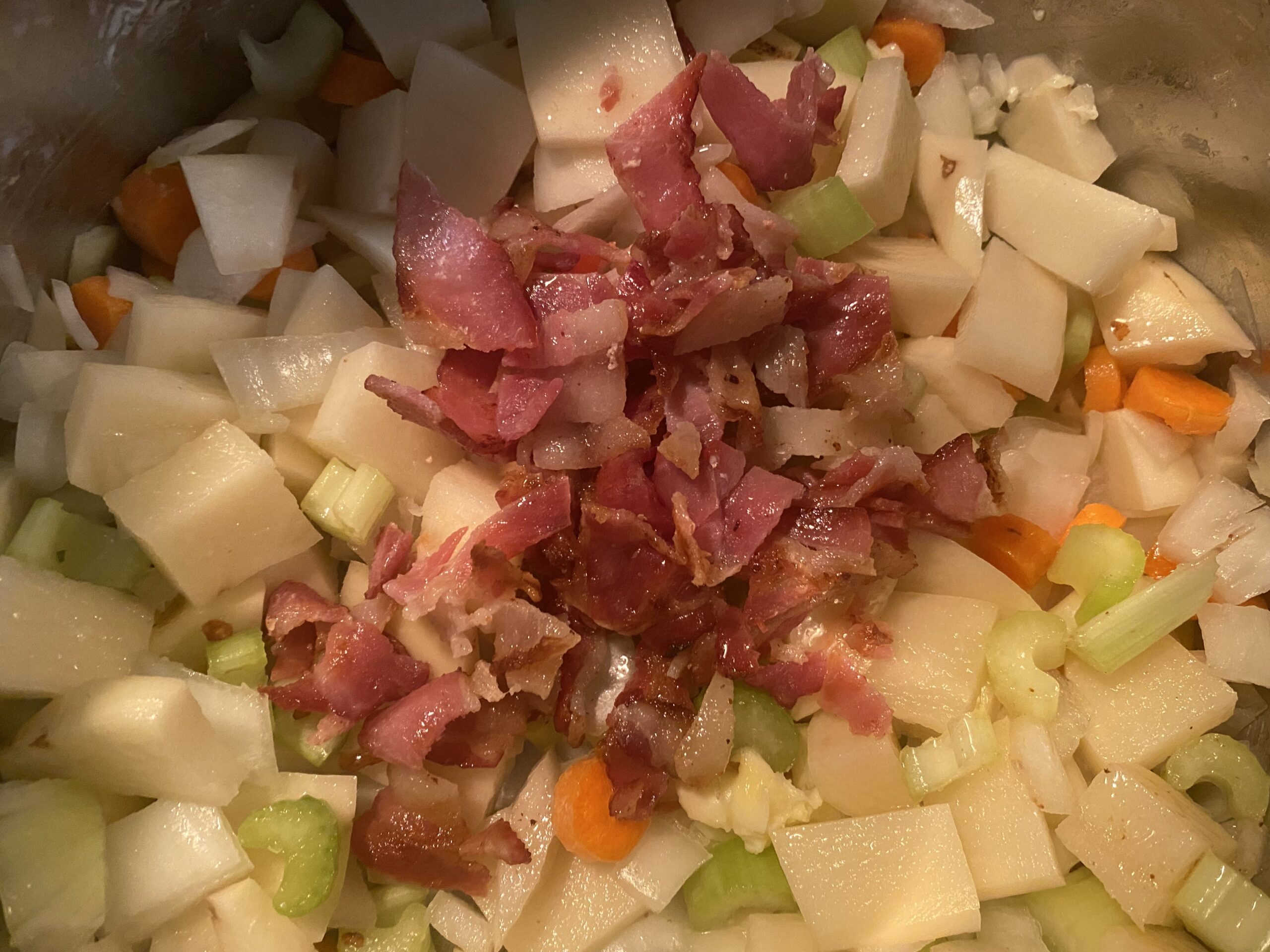
Fresh potatoes, carrots, onion and celery makes this a wholesome meal.
Heat a large soup pot over medium heat, add a small amount of oil, and cook bacon. While bacon is cooking, chop the potatoes, onion, celery, garlic and carrots.
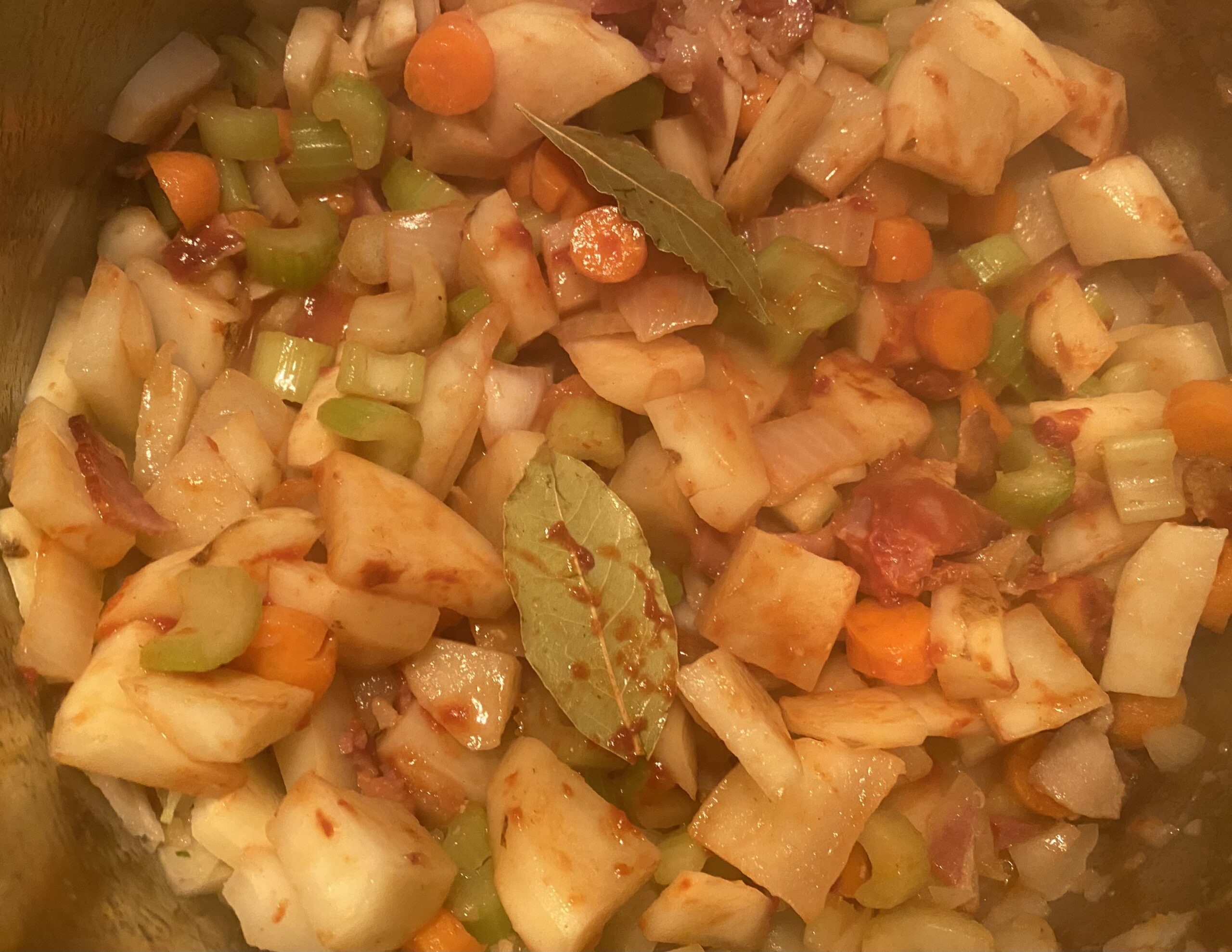
Remove cooked bacon. Lower heat to medium low and add potatoes, onion, carrots, garlic and celery to bacon grease. Chop bacon and add it to the vegetables. Cook for 7 minutes, stirring frequently.
Add the wine, cover with lid, and cook for 3 minutes, stirring occasionally. Add the tomato paste, bay leaves and thyme.
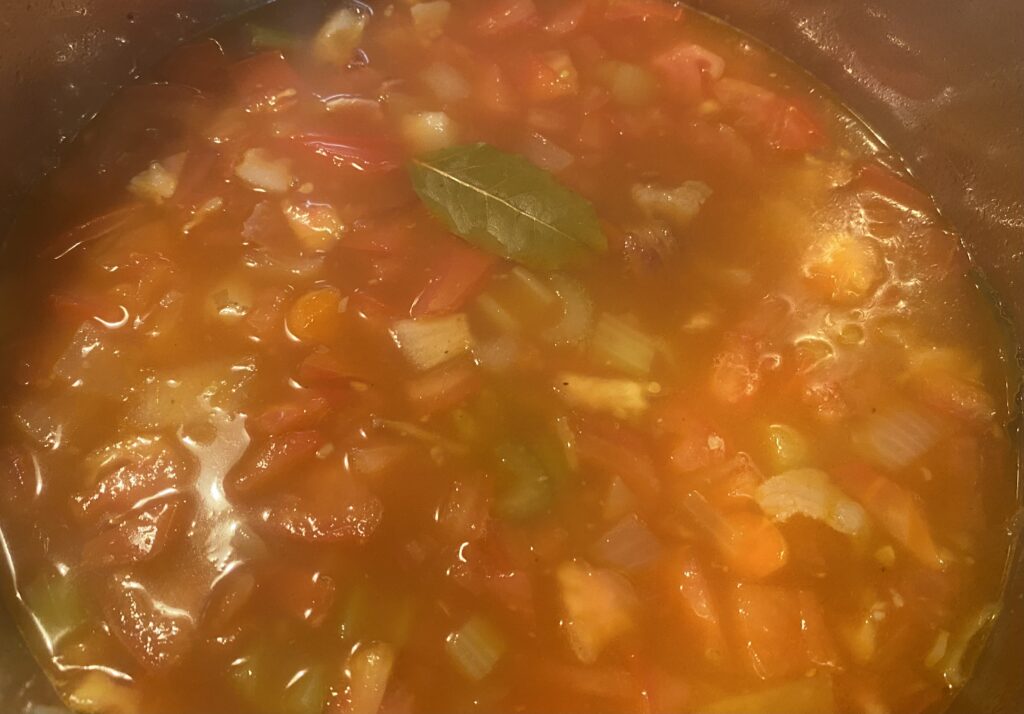
Add tomatoes with liquid, chicken broth and clam juice. Heat to a boil at medium high heat, then reduce heat to low and simmer for 20 minutes.
Return heat to medium high, add clams with juice, and bring to a boil. Reduce heat to simmer again, add stick of butter. Season with salt and pepper. Once butter is melted, stir in parsley. Serve.
(Capt. Andy Martin owns and operates Brookings Fishing Charters. When he is not running charters aboard the Nauti-Lady, Miss Brooke or Kraken, he enjoys cooking).
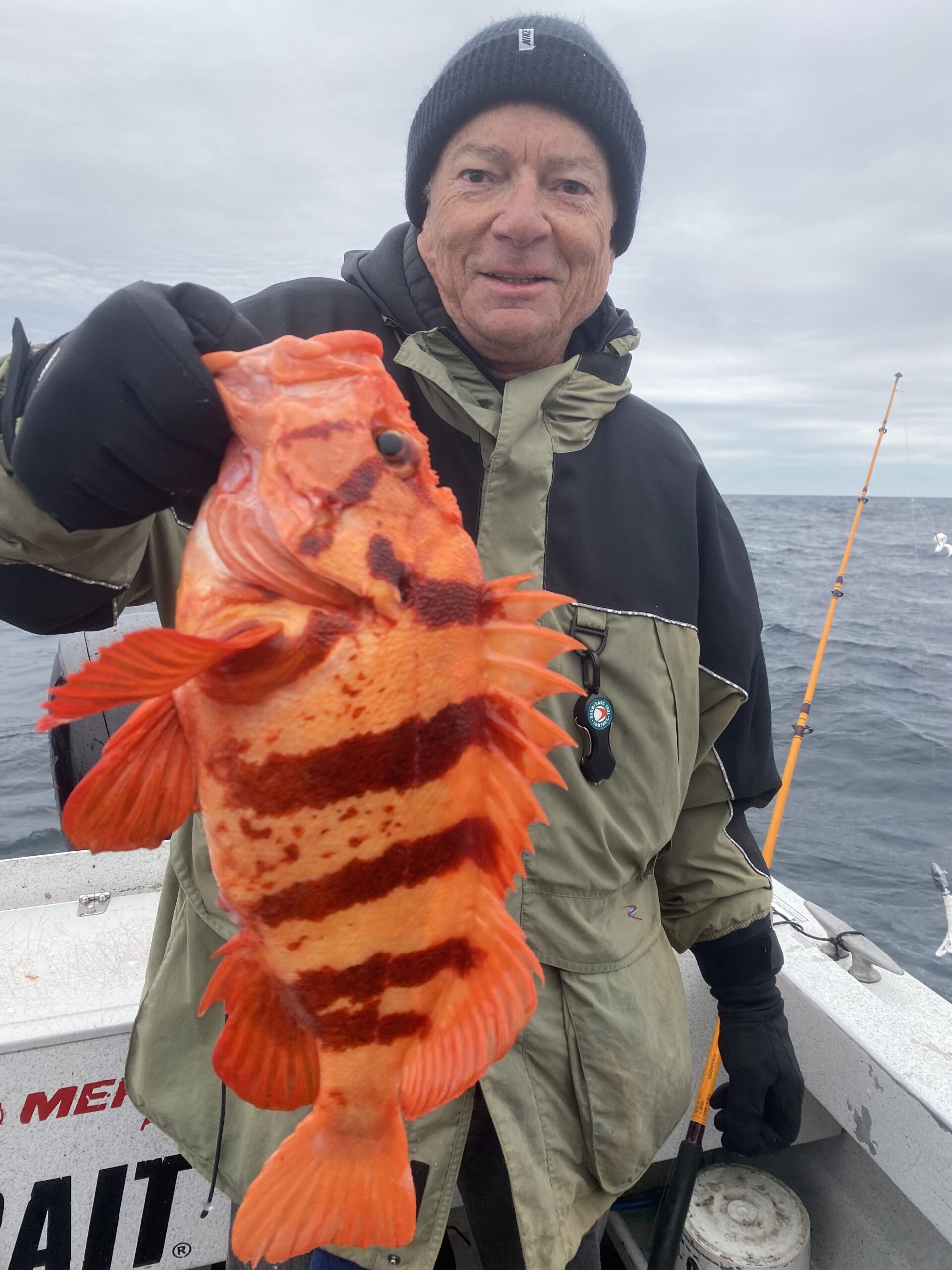
Our trips to the Point St. George Reef Lighthouse, located offshore between Brookings and Crescent City, have been a huge hit with our customers. During recent trips this fall, in between storms, we have been catching limits of nice rockfish, and a very nice grade of lingcod. Anglers often see a wide variety of rockfish during these trips, with black, blue, canary, vermilion, China, copper, quillback and even tiger rockfish.
A happy angler holds a big lingcod caught in late November 2021 aboard the Miss Brooke.
During a period of nice weather in late November, we were able to run several trips to the lighthouse area aboard our six pack boats, including the Miss Brooke and Bout Time. During the fall months, lingcod fishing is often wide open at the lighthouse, and aside from limits, large numbers of keeper-size lingcod are also released.
We target the big lingcod with large jigs. As is often the case when hunting trophy-size fish, the bigger the bait, the bigger the fish.
An angler holds a tiger rockfish caught near the lighthouse.
One of the main draws of the lighthouse is the fast action, and wide variety. With each fish that comes up, anglers don’t know if it will be a cabezon, large rockfish, lingcod or even a halibut. The massive schools of fish at the Point St. George Reef are unmatched and rival the quality fishing in remote parts of Alaska.
Limits of rockfish caught at the Point St. George Reef while fishing aboard the Miss Brooke.
The lighthouse itself is located 11 miles south of the Chetco River jetties. Our charter boats fish near the lighthouse, or travel further south to fish near the Dragon Channel, Great Break, East Break and other productive parts of the reef.
Similar to our other charters, we start out with light spinning tackle to catch rockfish, usually fishing as shallow water as possible. It is easer to release rockfish in shallow water. If they are caught in deeper water, we will use a descending device to get the rockfish safely back to the bottom, deceasing release mortality of these prized fish.
An angler holds a trophy vermilion rockfish and a keeper-size lingcod from a recent lighthouse trip.
To fish the lighthouse area, the Brookings Fishing Charters boats are licensed in Oregon and California. We depart the Port of Brookings, in Oregon, but fish in California waters. Our boats have a California Commercial Passenger Vessel License and each angler must have a California sport fishing license. One-day licenses are available for $17. The fish are landed in Oregon, so an Oregon license also is required. The extraordinary fishing near the lighthouse makes the extra charter licenses, and angler licenses worthwhile, with unmatched fishing and the potential for trophy size fish.
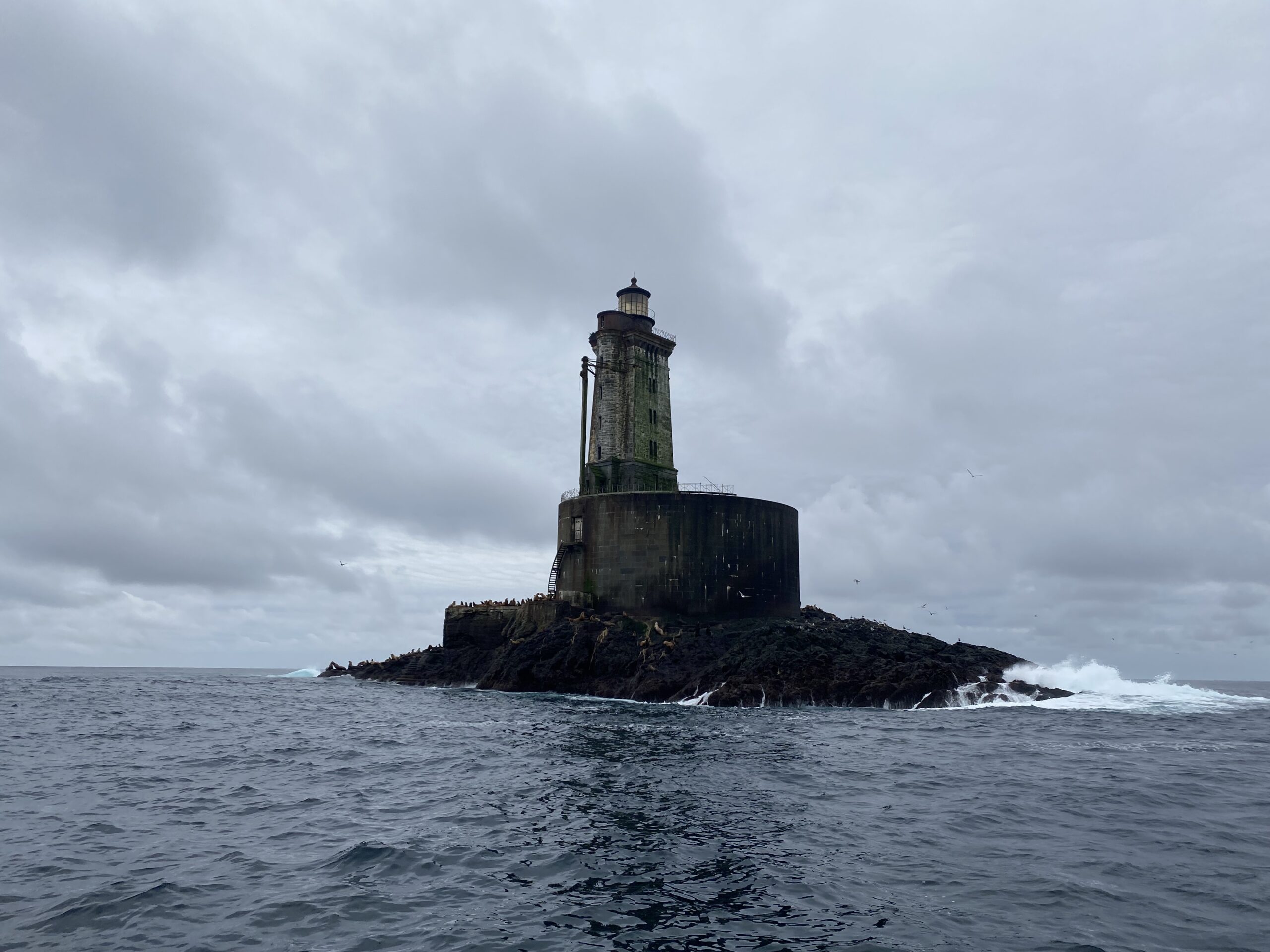
The historic Point St. George Reef Lighthouse is home to some of the best lingcod and rockfish action on the entire West Coast.
The lighthouse area is open May-December. The rest of the year, we focus on other hot spots, such as Mack Arch, House Rock and the productive reefs close to the Port of Brookings Harbor.
Our charter boat captains have extensive experience fishing near the Point St. George Reef Lighthouse. Capt. Mick and Capt. Sam both grew up in Crescent City, and have been fishing the lighthouse area their entire life. Mick used to fish commercially near the Point St. George Reef, but now works year round, full time as a charter boat captain and fishing guide. Capt. Andy and Capt. Travis grew up in Brookings, and also have decades of experience fishing local waters, including the lighthouse area. Capt. Rye, Capt. Rich and Capt. Michael also have extensive experience fishing the lighthouse. Each captain has their own “hot spots,” and our charter crew is in constant communication with each other to make sure each boat is on the bite.
An average-size lingcod from the lighthouse area.
New for 2022, we will be offering combination lighthouse and ocean salmon trips during the month of June. We also offer halibut and lighthouse trip combos in June and September. Depth restrictions limit the halibut combos other times of the year.
The Point St. George Reef and lighthouse are a fascinating part of local history. The lighthouse was built in 1892 after several tragic shipwrecks in the Point St. George Reef. Towering 146 feet above the ocean, the lighthouse can be seen from Brookings and Crescent City. The reef is part of what was named “Dragon Rocks” by Sir Francis Drake. On July 30, 1865, during a gale, the 220-foot Brother Jonathan, carrying 244 passengers, struck the reef and sank. Only 19 people survived. A fortune in gold went down with the ship. Most of the gold is said to still be at the bottom of the ocean near the lighthouse, although a fisherman claimed to have caught 22 pounds of gold bars in his net in the 1930s. The sinking of the Brother Jonathan played a key role in the decision to build the lighthouse on Northwest Seal Rock.
The lighthouse cost $752,000 to construct in 1892, equivalent to $22 million today, making it the most expensive lighthouse ever built in the United States. The lighthouse was major construction feat. Several people died during construction and more were killed while serving at lightkeepers.
The Nauti-Lady, the 42-foot party boat usually used for half-day bottom fishing trips for Brookings Fishing Charters, has been getting customers into nice lingcod as of late. In between winter storms, the Nauti-Lady has been venturing offshore for lingcod and rockfish, with an occasional trip to the Point St. George Reef Lighthouse.
Mark, a frequent Brookings Fishing Charters customer, holds a limit of lingcod caught on the Nauti-Lady.
Just before Thanksgiving, the Nauti-Lady took a family out for a half-day bottom fishing trip, and aside from nice limits of rockfish, they hammered the lingcod in shallow water. One of the young anglers excitedly said the charter was one of the “best days of my life.” The lingcod action was fast and furious that day.
A family holds their Thanksgiving week catch of lingcod from the Nauti-Lady.
Another customer fished aboard the Nauti-Lady in November for her birthday. She caught a limit of rockfish and a limit of lingcod. She said the charter fishing experience was a great way to spend her birthday, and she was pleased with the catch and experience.
Earlier this fall, anglers aboard the Nauti-Lady also encountered great rockfish action, and lingcod-after-lingcod near House Rock.
During the late summer, the Nauti-Lady made numerous trips to the lighthouse, where the lingcod action is among the best on the West Coast. Lingcod from 5 to 25 pounds were caught, with a few bigger fish mixed in.
Cathy celebrated her birthday aboard the Nauti-Lady in November, and caught her limit of lingcod.
The Nauti-Lady joined the Brookings Fishing Charters fleet in 2020. Originally from Ilwaco, Wash., the Nauti-Lady is a 42-foot Rawson specifically designed for Northwest charter fishing. It is skippered by Capt. Andy Martin, as well as Capt. Michael McGahan. The charter boat is especially popular with families and large groups, but also runs mixed charters to the lighthouse and the local half-day trips to Bird Island and Twin Rocks.
The Brookings Fishing Charters fleet also includes the Miss Brooke, Kraken, Papa B, Dash and Bout Time. All of the captains are local, full-time, year-round charter boat captains and fishing guides.
Here are some of the great lingcod catches in recent weeks aboard the Nauti-Lady.
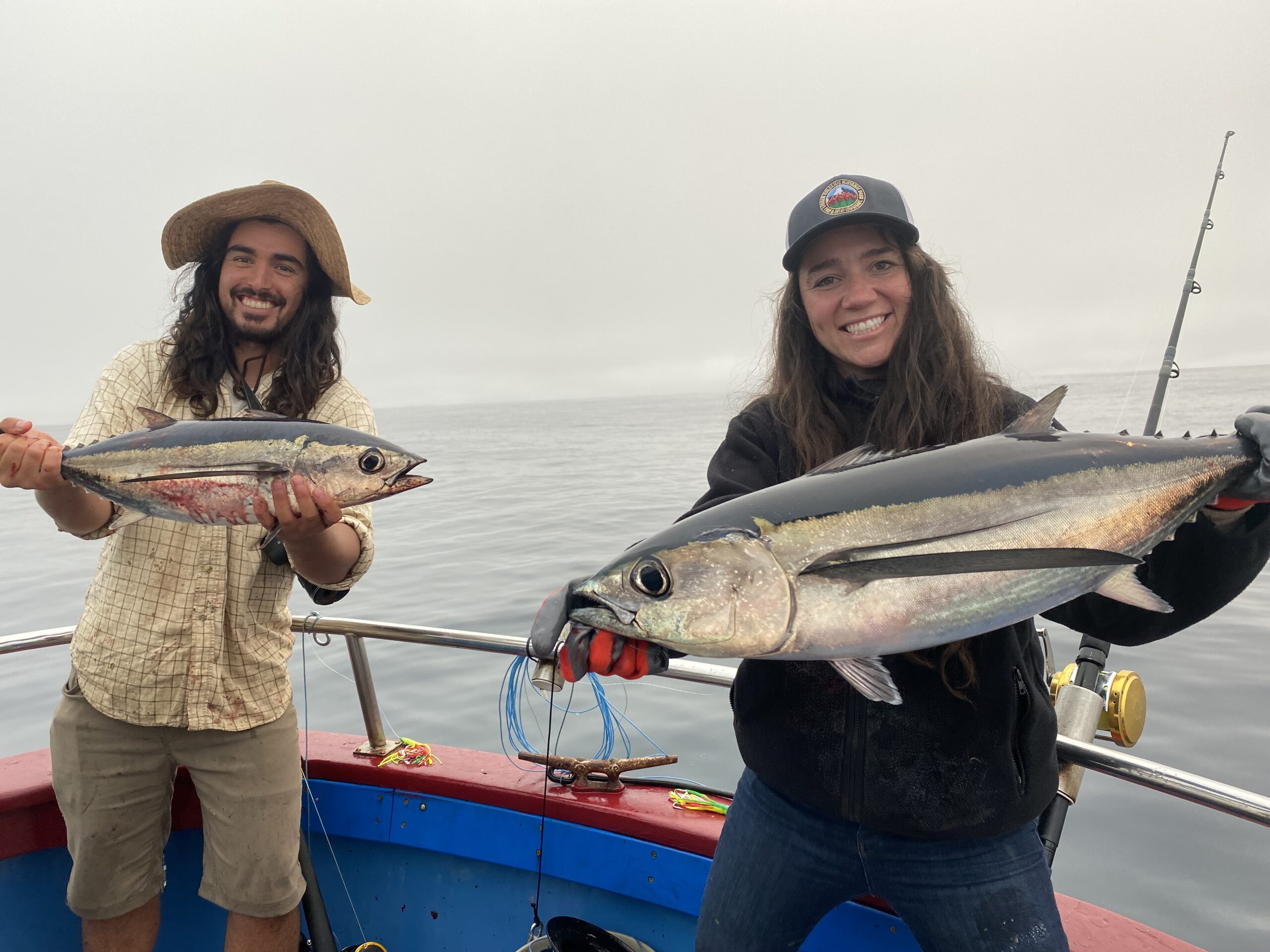
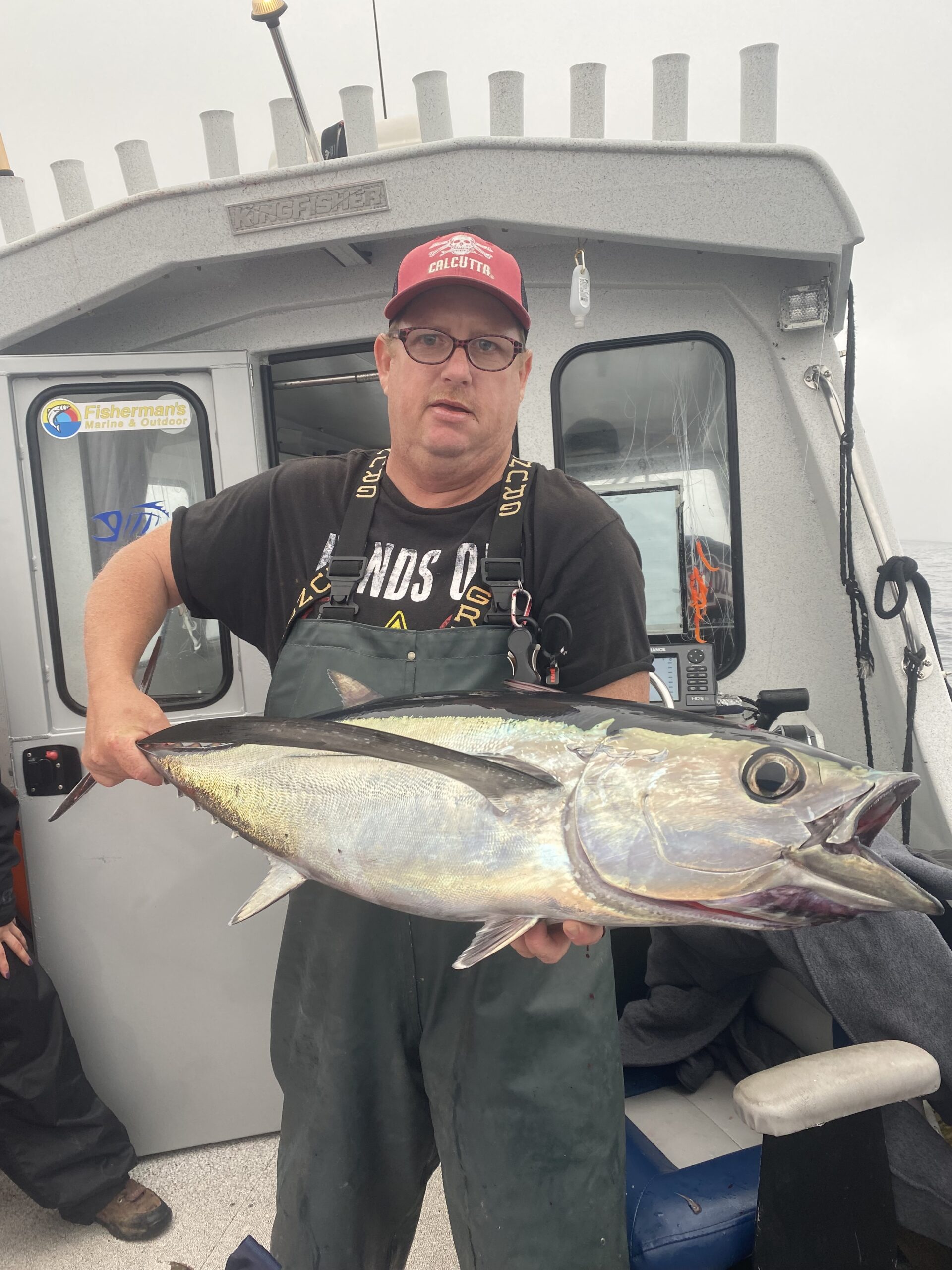
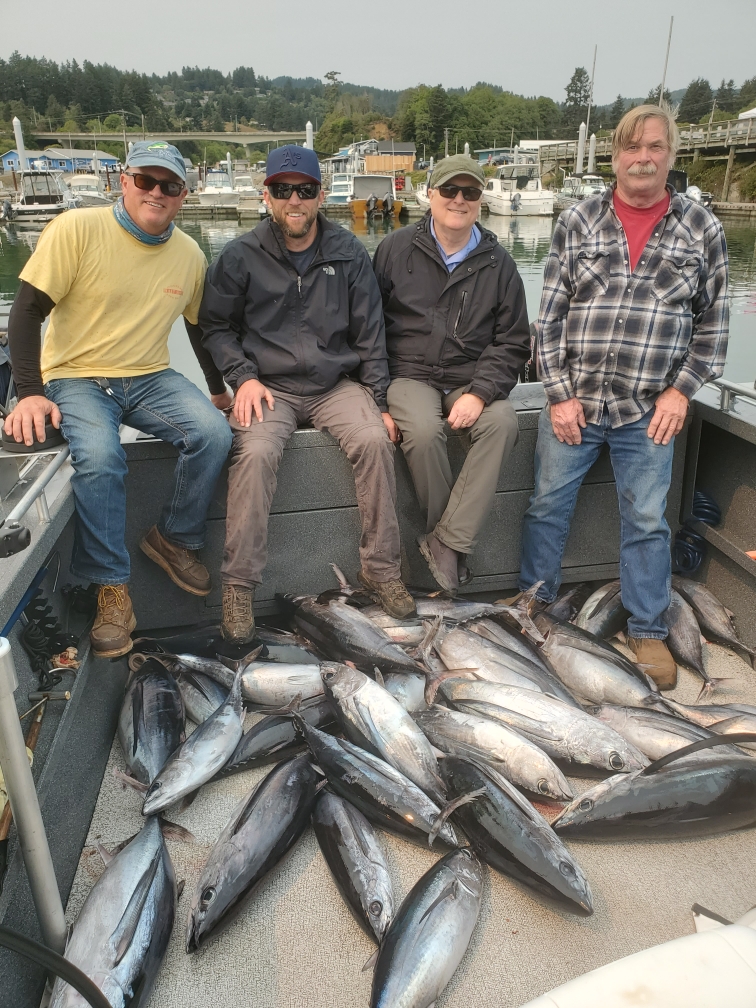
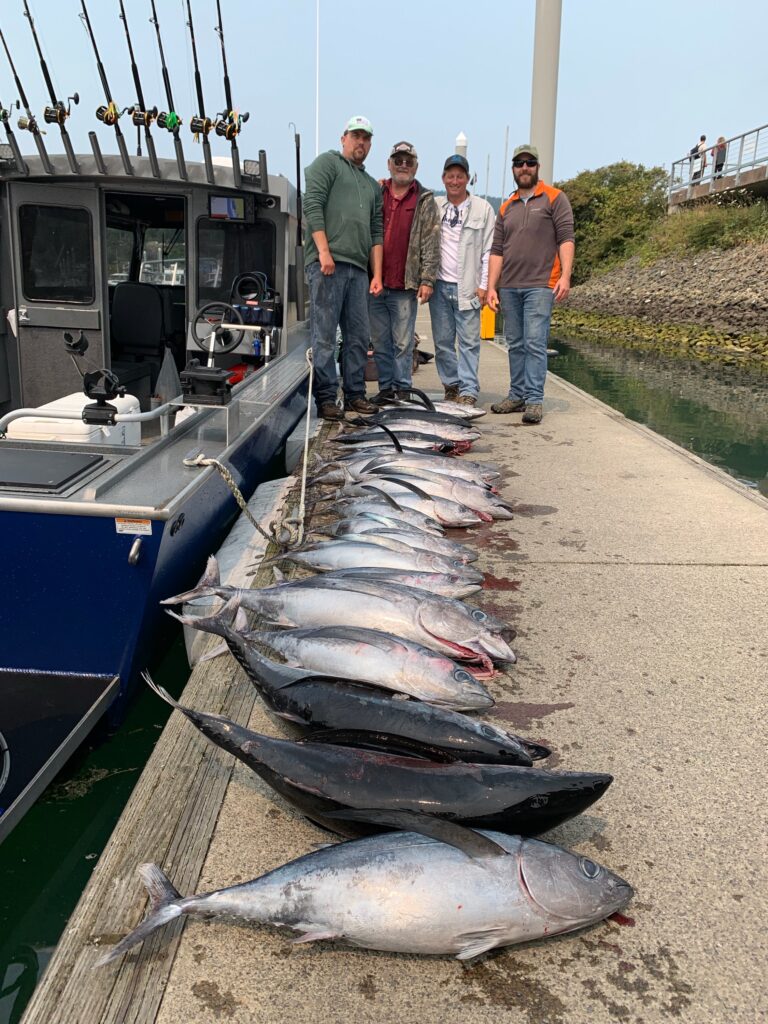
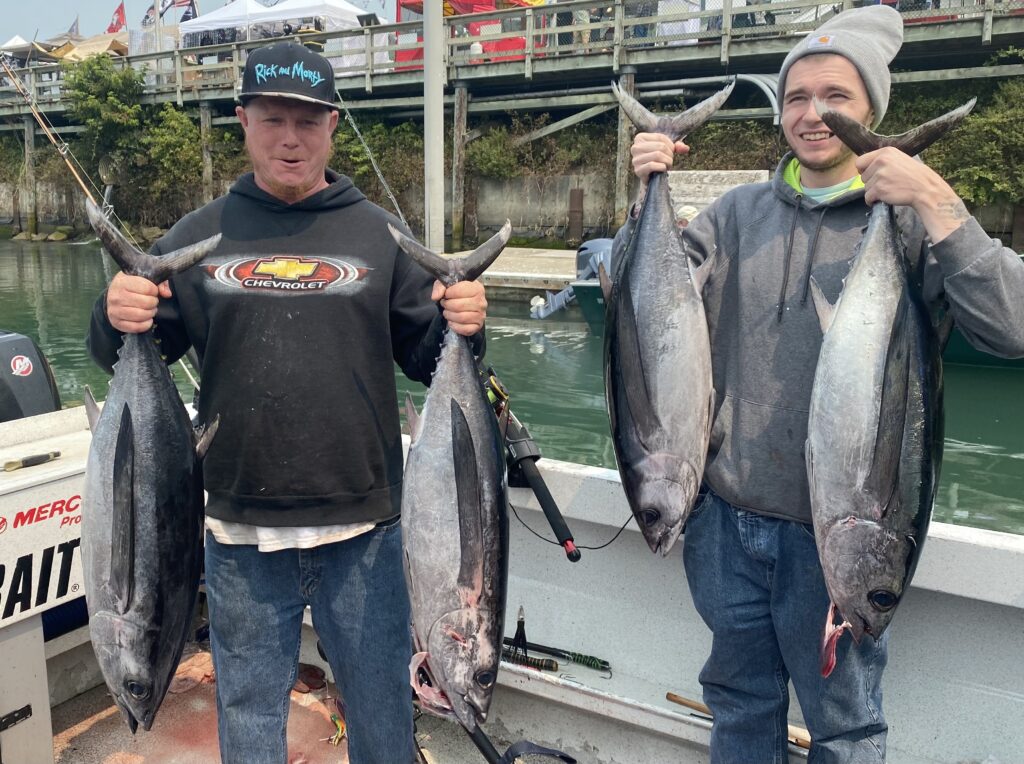
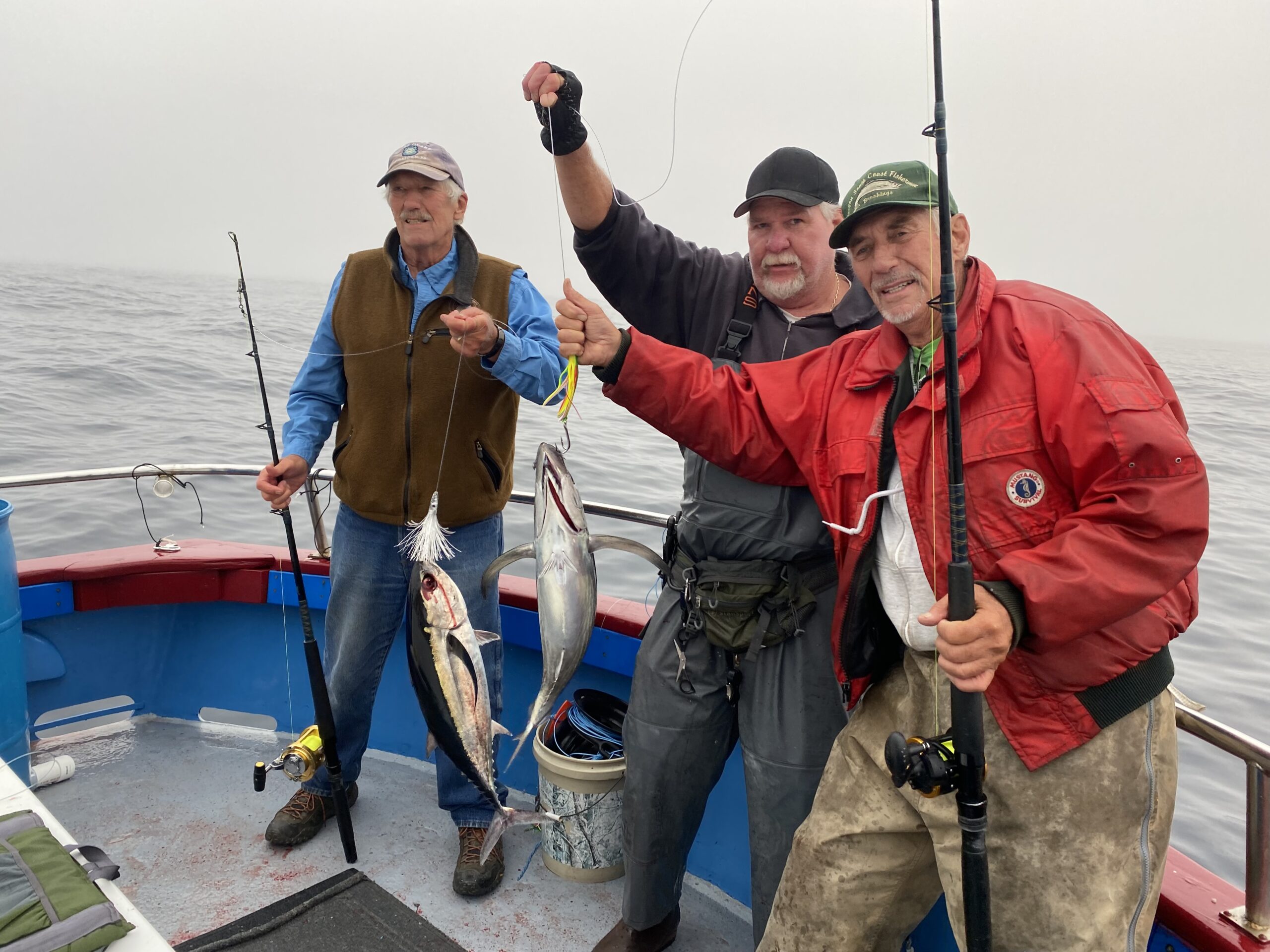
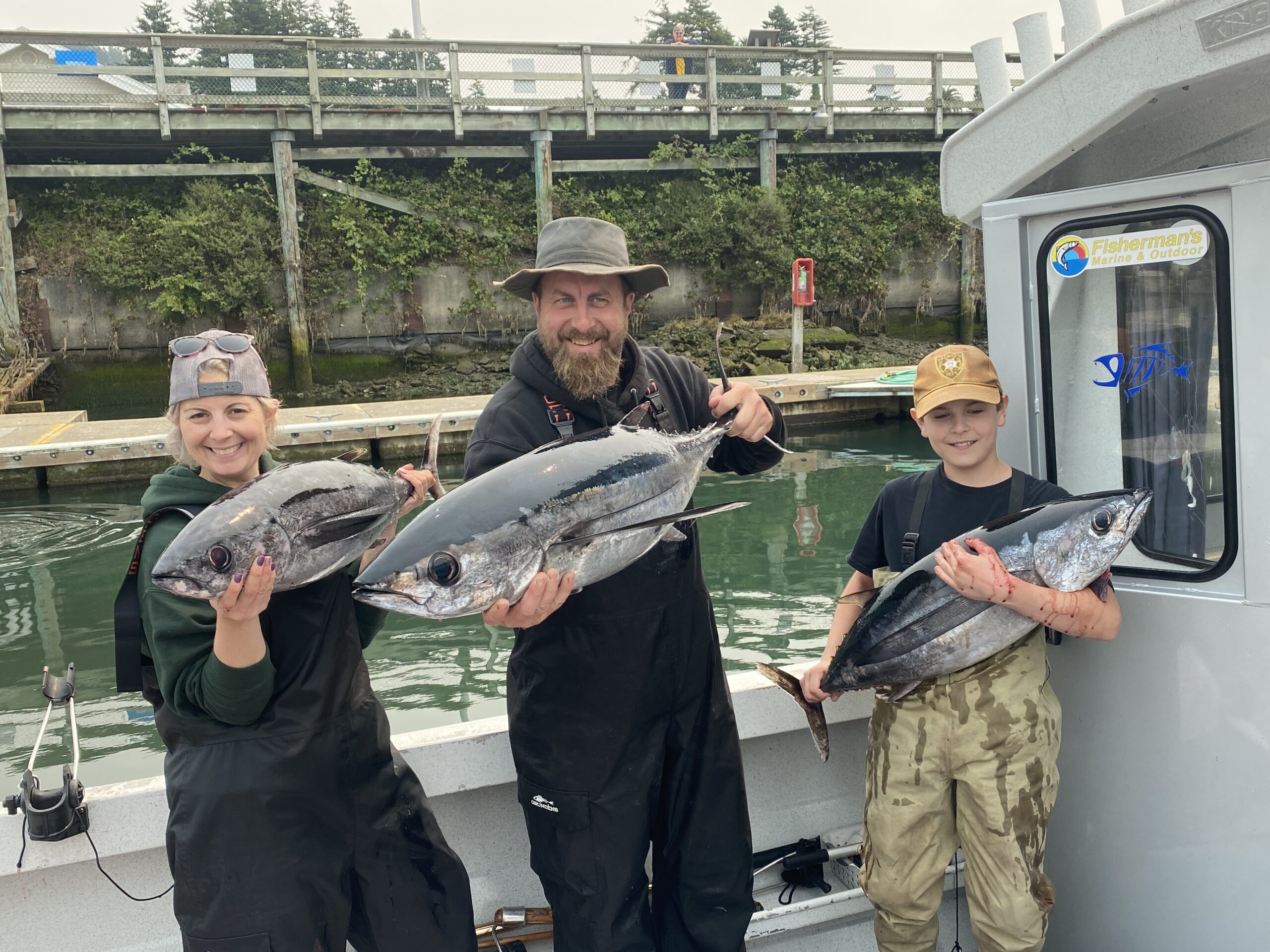
The albacore tuna action was fast and furious for a couple of weeks this summer out of Brookings, as the hard-fighting, great-eating fish came within 20 miles of the harbor and produced steady action for the charter and private boat fleet.
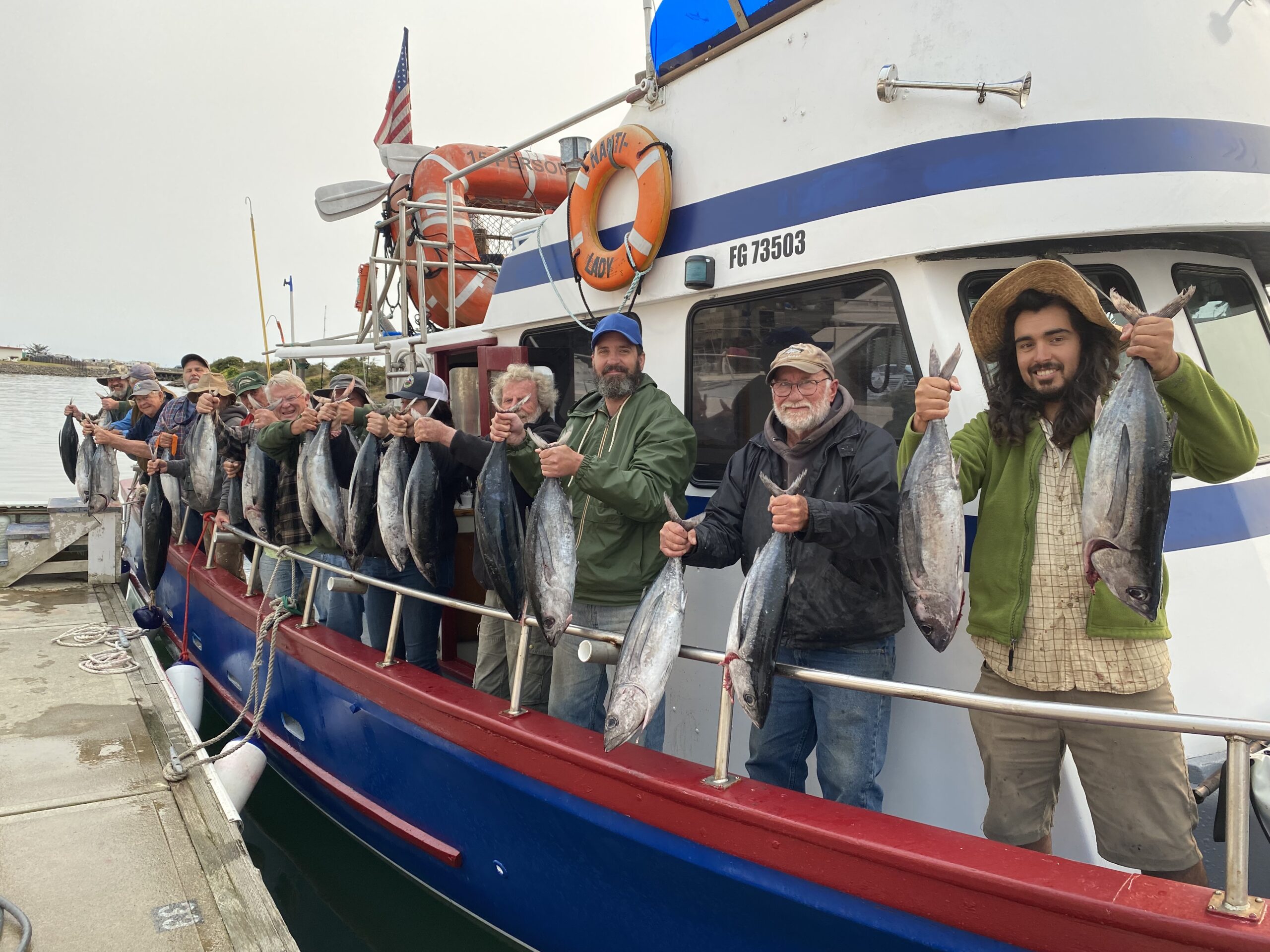
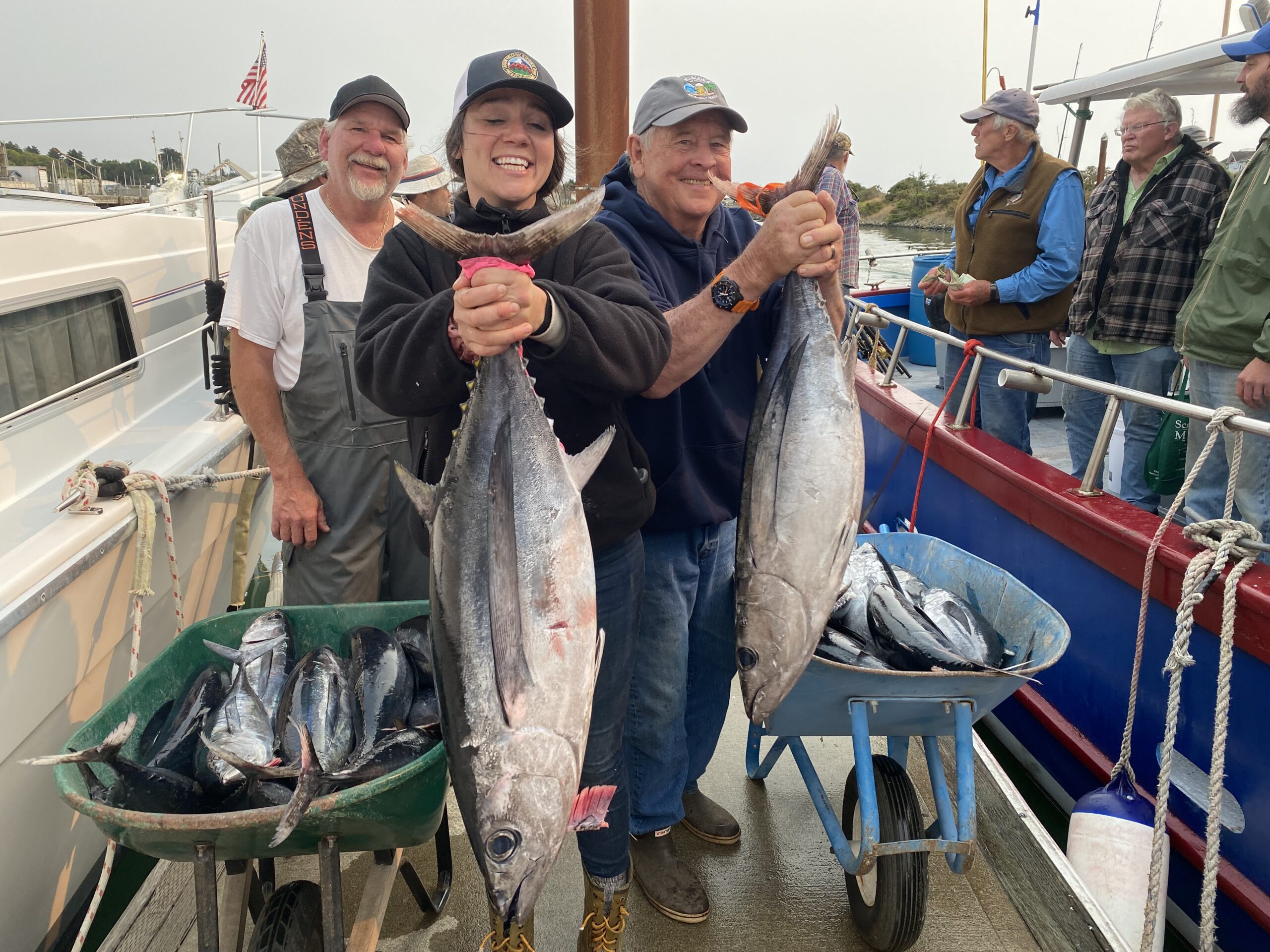
Customers hold some of the albacore tuna they caught in August 2021 aboard the Nauti-Lady.
Brookings Fishing Charters ran numerous tuna trips this summer aboard the Miss Brooke, Nauti-Lady, Dash and Papa B. The best action was in mid-August, but fish were caught in early September as well.
Anglers watched satellite images for weeks and waited for a break in the weather. On Aug. 12, Capt. Andy aboard the Nauti-Lady found 59-degree water only 18 miles offshore. He took 12 anglers aboard the Nauti-Lady to the tuna grounds, and they got into the albacore quickly trolling tuna drones behind Okuma big game rods combined with Penn Squall big game reels. A few miles further offshore, Capt. Travis and Capt. Michael aboard the Miss Brooke found another large school of tuna and quickly filled their fish bags and barrels.
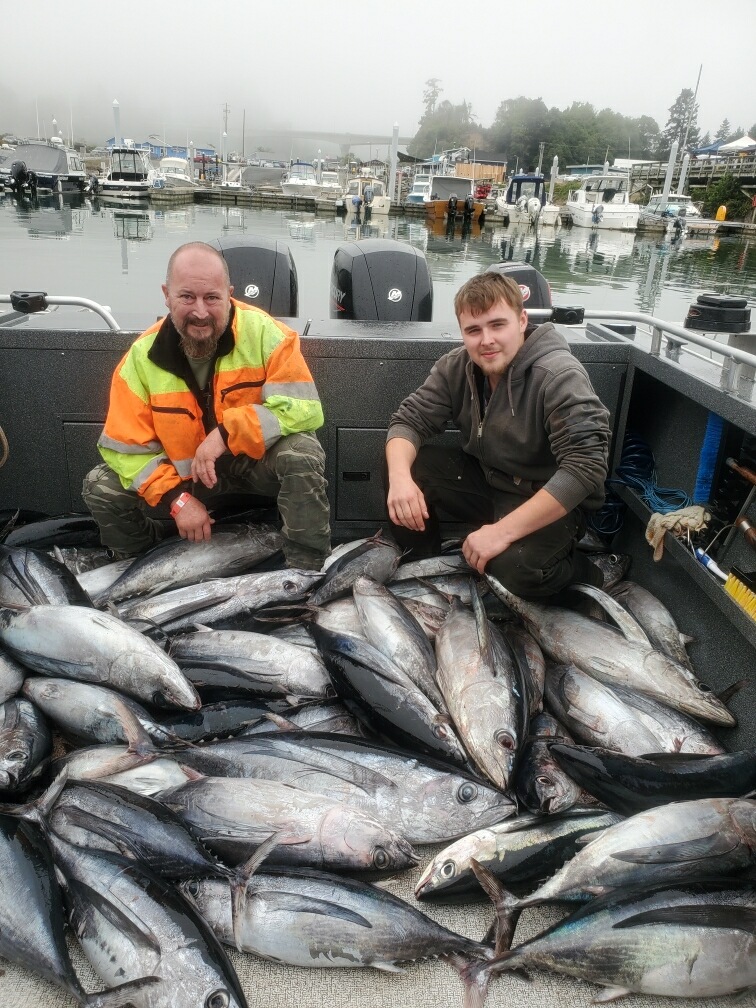
A boat full of albacore tuna caught aboard The Dash with Capt. Mick.
The next day, the Miss Brooke, Dash and Papa B returned to the tuna grounds for more hot action. The Brookings Fishing Charters crew ran a few more trips that week before windy weather returned. Later in the month, tuna were still caught, but the fish had moved offshore and scattered.
During the peak of the action in mid-August, the Dash returned to port with 75 tuna for five anglers. The boat ran out of room to hold any more tuna. Most days the charters averaged four to six tuna a person.
Capt. Travis shows off an average tuna from the Miss Brooke this past summer.
The Brookings Fishing Charters fleet is equipped with the highest-quality tuna gear in the local charter fleet, with Penn reels and high-end big game rods, plugs a wide selection of tuna lures. The six-pack boats also get to the tuna grounds quickly, while the Nauti-Lady can accommodate larger groups and hold bigger quantities of fish.
To learn more about tuna fishing with Brookings Fishing Charters, visit www.brookingsfishing.com. Most tuna trips are booked through a call list, since the albacore arrive off the coast of Brookings at different times each summer.
A nice load of tuna from the Dash in 2021.Some of the great albacore tuna caught aboard the Papa B with Capt. Mike.Customers hold some of the albacore tuna caught aboard the Miss Brooke during the summer of 2021.One of many double hookups aboard the Nauti-Lady.Family fun catching albacore aboard the Miss Brooke.Another double aboard the Nauti-Lady.Wheel barrels full of albacore tuna after a day of fishing aboard the Nauti-Lady.
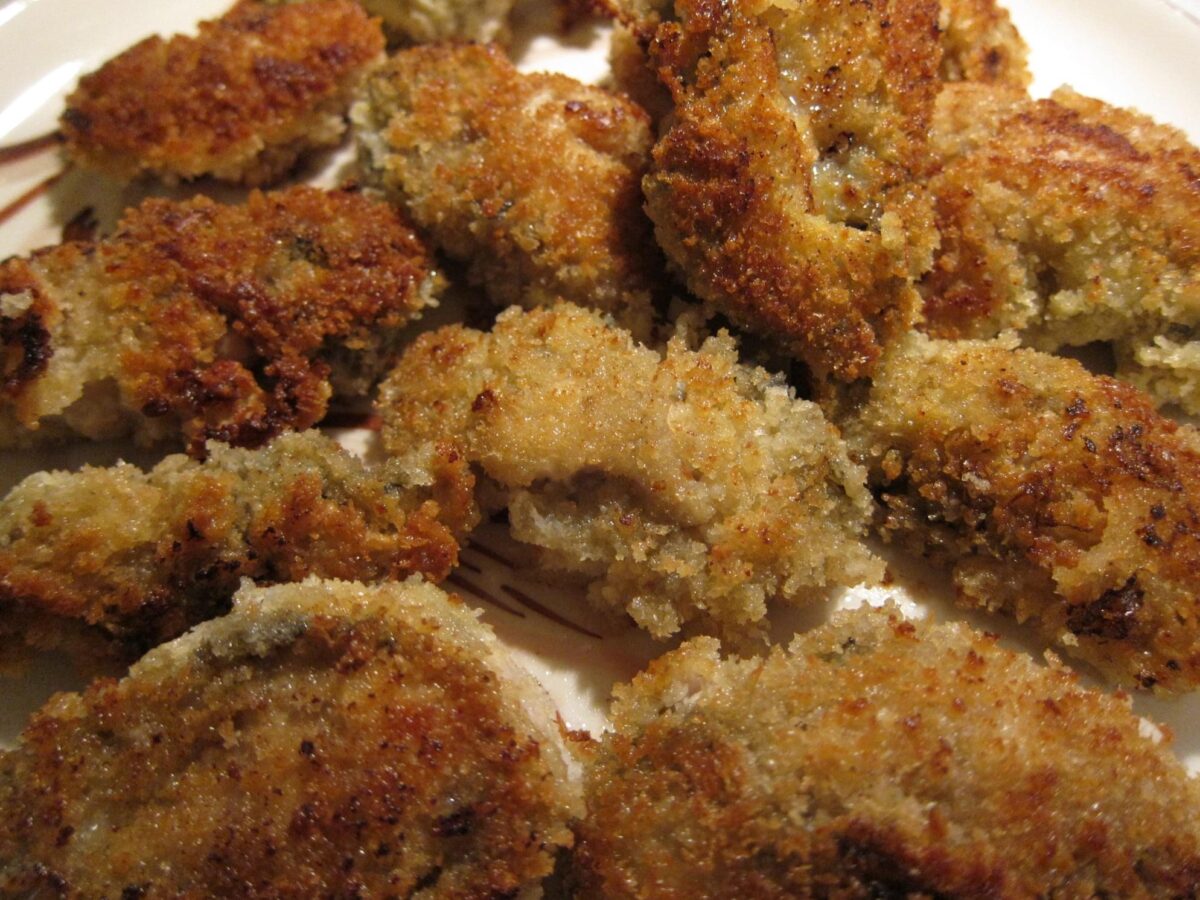
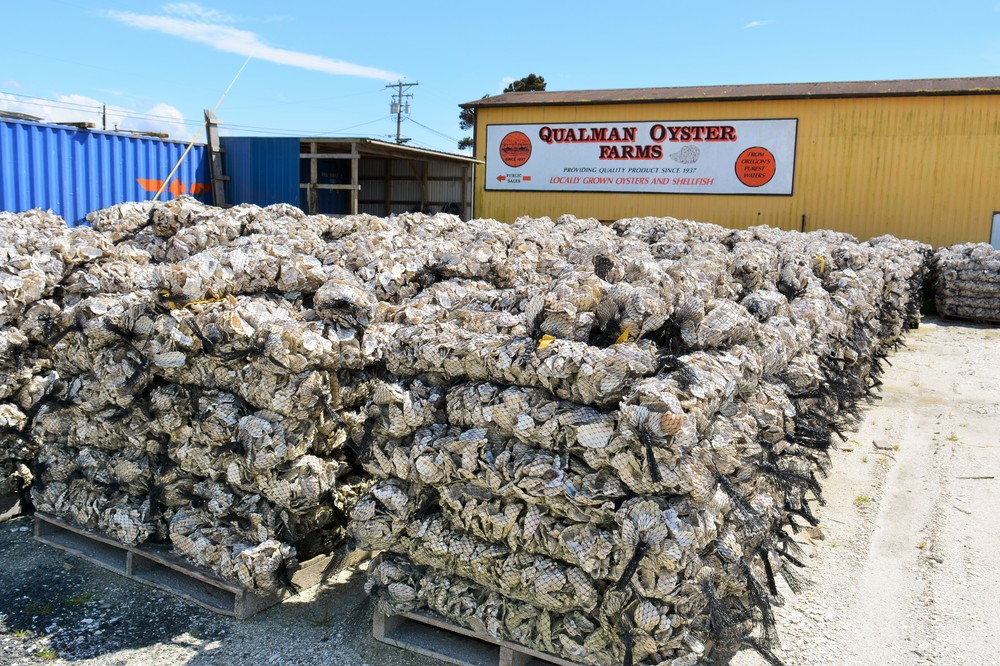
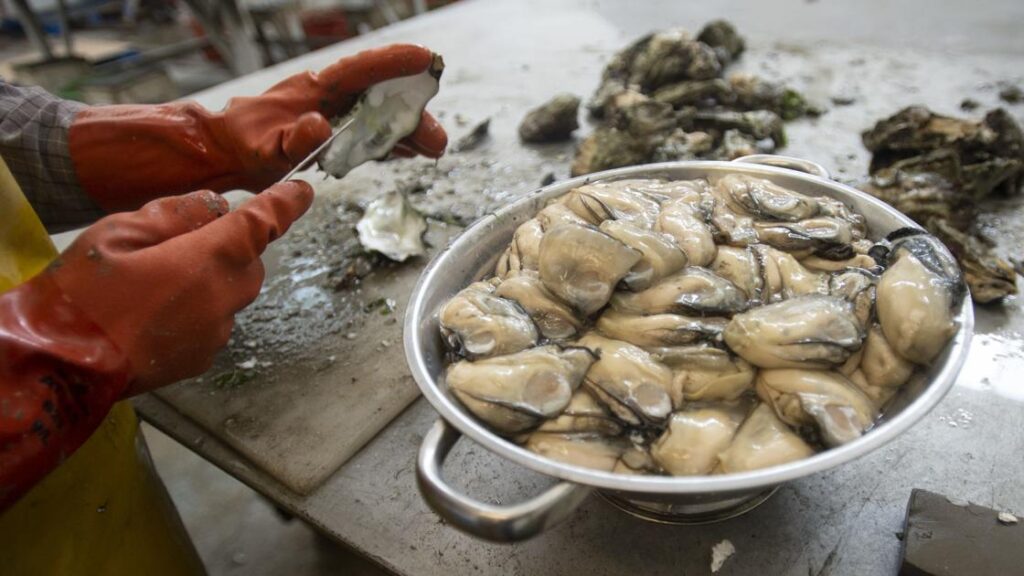
Aside from king salmon, Dungeness crab and big lingcod, the Oregon Coast also is known for its abundant oysters. While oysters cannot be harvested by sport anglers – they are actually private property that belong to oyster farms spread throughout the coast – they are readily available at seafood markets and grocery stores. Oyster farms are big business in places like Coos Bay, Newport and Tillamook Bay. Oregon oysters are known for their delicious flavor and freshness.
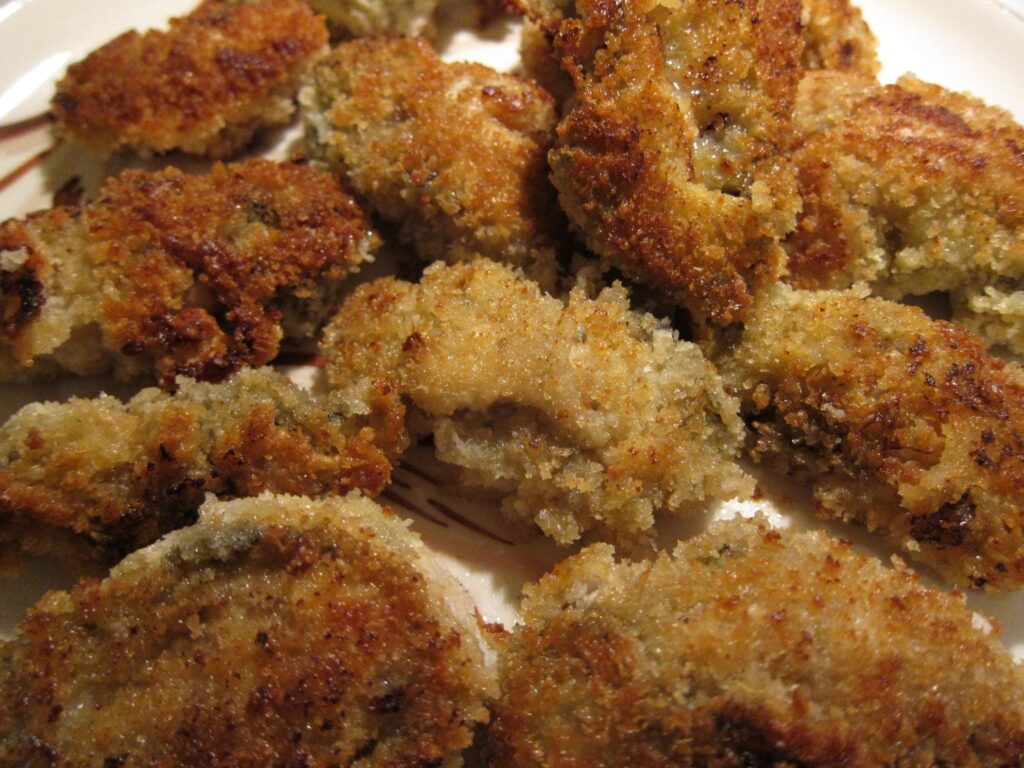
Fried oysters from the Oregon Coast are delicious.
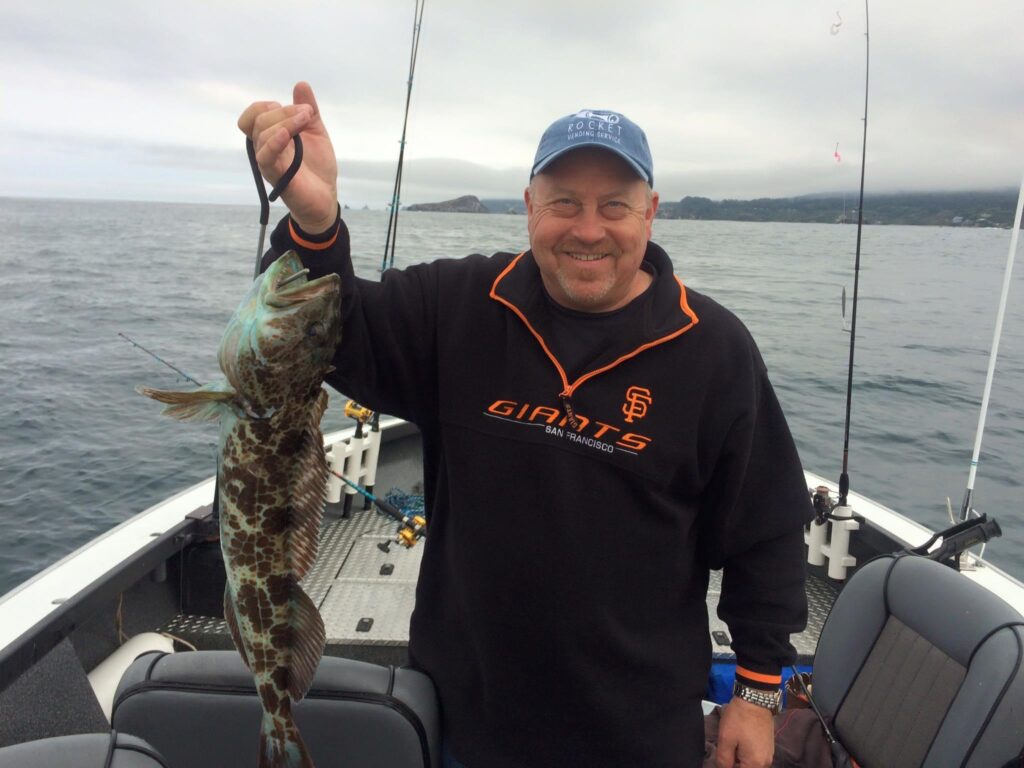
Our favorite oyster recipe comes from Brookings Fishing Charters customer Dave Tappan of Redding, Calif. Dave is a popular radio personality in Northern California, and is also a chef extraordinaire. Dave often shares recipes on social media sites.
Oysters are grown in Coos Bay, Newport and Tillamook Bay.
Here is his delicious recipe for pan friend oysters:
Pan Fried Oysters with Tartar Sauce
For the Fried Oysters: 2 cups oysters, drained 2 large eggs, beaten 2 cups cornmeal 1 teaspoon sugar 1 tablespoon Old Bay seasoning Kosher salt and fresh ground pepper, to taste 2 tablespoons all-purpose flour 2 cups vegetable oil, for frying Malt vinegar, for serving Lemon wedges, for squeezing
For the Tartar Sauce: 1 cup mayonnaise 1/3 cup dill relish, or finely chopped dill pickle 2 teaspoons capers, drained and chopped 1 teaspoon Dijon mustard 2 teaspoons lemon juice Fresh ground pepper, to taste 2 green onions, chopped
Fry the Oysters Pat the drained oysters dry with paper towels or a clean kitchen towel. In a medium-sized bowl, beat the eggs. Add the oysters to the egg bowl and set aside for 10 minutes. In a medium bowl, combine the cornmeal, sugar, pepper, salt, Old Bay and flour. Lift each oyster out of the egg mixture and allow the excess moisture to drip off before rolling them in the cornmeal mixture to evenly coat. Repeat the process with all oysters. Pour about 3 inches of vegetable oil in a large, cast iron skillet, or whatever skillet you have. Place the pan over medium-high heat and bring it to a temperature of 370. Carefully add the oysters to the hot oil. Do not overcrowd the pan. Fry each batch of 6 to 8 oysters for about 2 to 4 minutes, or until they are golden brown. Use a metal slotted spoon to remove the oysters to paper towels to drain. Reserve.
Make the Tartar Sauce Gather the ingredients. In a bowl, combine the mayonnaise with the dill relish, capers, Dijon mustard, lemon juice, and black pepper. Mix well. Add the green onions to the sauce and stir it into the mixture, or reserve the onion to garnish the finished oysters. Stir to blend thoroughly. Serve the sauce alongside the fried oysters with the lemon wedges and malt vinegar, for dashing and enjoy.
Fresh oysters are delivered weekly to seafood markets up and down the Oregon Coast.Dave Tappan of Redding is a popular radio host, chef extraordinaire and a customer of Brookings Fishing Charters.