BROOKINGS, Ore. (April 12, 2026) – The earliest ocean salmon season opener since the 1980s has produced some of the best saltwater king fishing in years out of Brookings, and by all indication it will get even better as the peak season approaches.
This year’s ocean salmon season for Brookings and most of the Oregon Coast runs March 15-Aug. 31, with a two-salmon-per-day limit. Wild or hatchery kings may be kept. Anglers can also keep hatchery coho salmon as part of that limit from June 6-Aug. 23. Peak season is generally June and July out of Brookings, which already has the highest catch rates in the entire state for the first month of the season from mid-March and early April.
The Pacific Fishery Management Council gave final approval to the season today (April 12), concluding a week-long meeting in Portland with fishery managers and fishing advocates from Oregon, Washington, Idaho and California. Strong run forecasts for the Sacramento and Klamath Rivers, as well as the Columbia and Snake rivers allowed state and federal fishery managers to approve the 170-day ocean salmon season for Brookings and the rest of the Oregon Coast south of Cape Falcon. It is the longest season for Brookings in at least four decades, and major shift in salmon management that saw severe closures from Humbug Mountain, near Port Orford, to the California border in recent years.
Fishing has been good out of Brookings so far this season, much better than was expected, but a sign of a large salmon run with abundant baitfish and good ocean conditions. The majority of the salmon caught offshore of Brookings are from the Sacramento and Klamath systems, and those rivers have an ocean abundance forecast of around 750,000 adult salmon this year. Salmon from the Columbia and Snake rivers also contribute to the catch off of Brookings, with fish also mixed in from the Rogue, Chetco, Smith, Umpqua and Eel rivers.
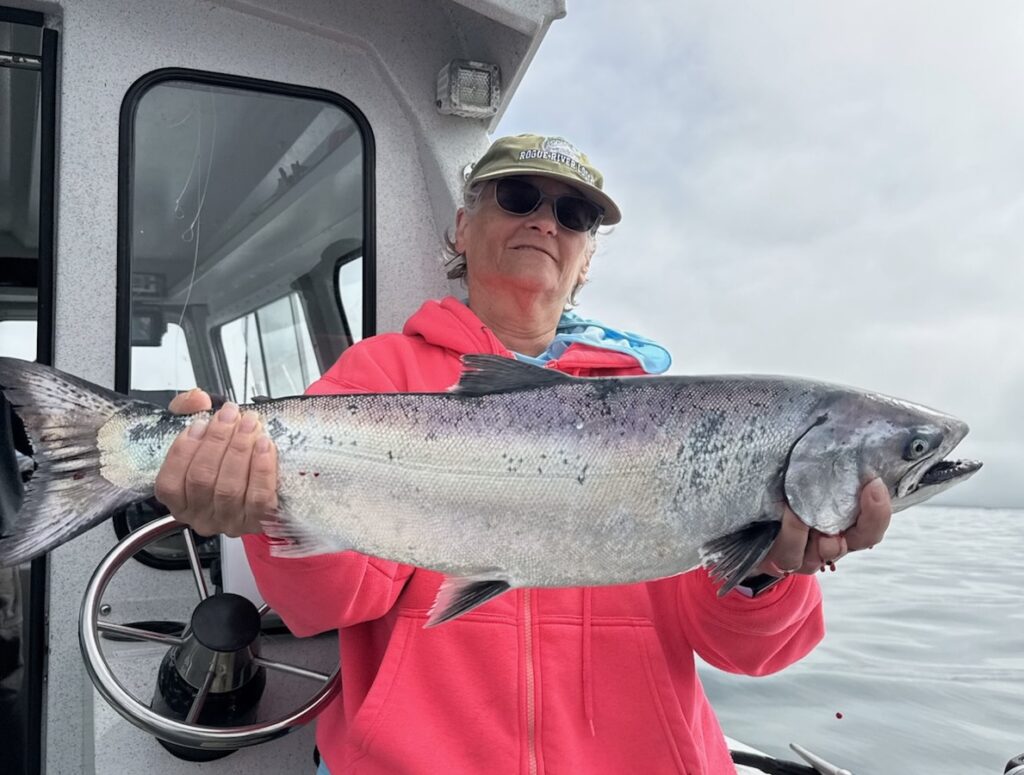
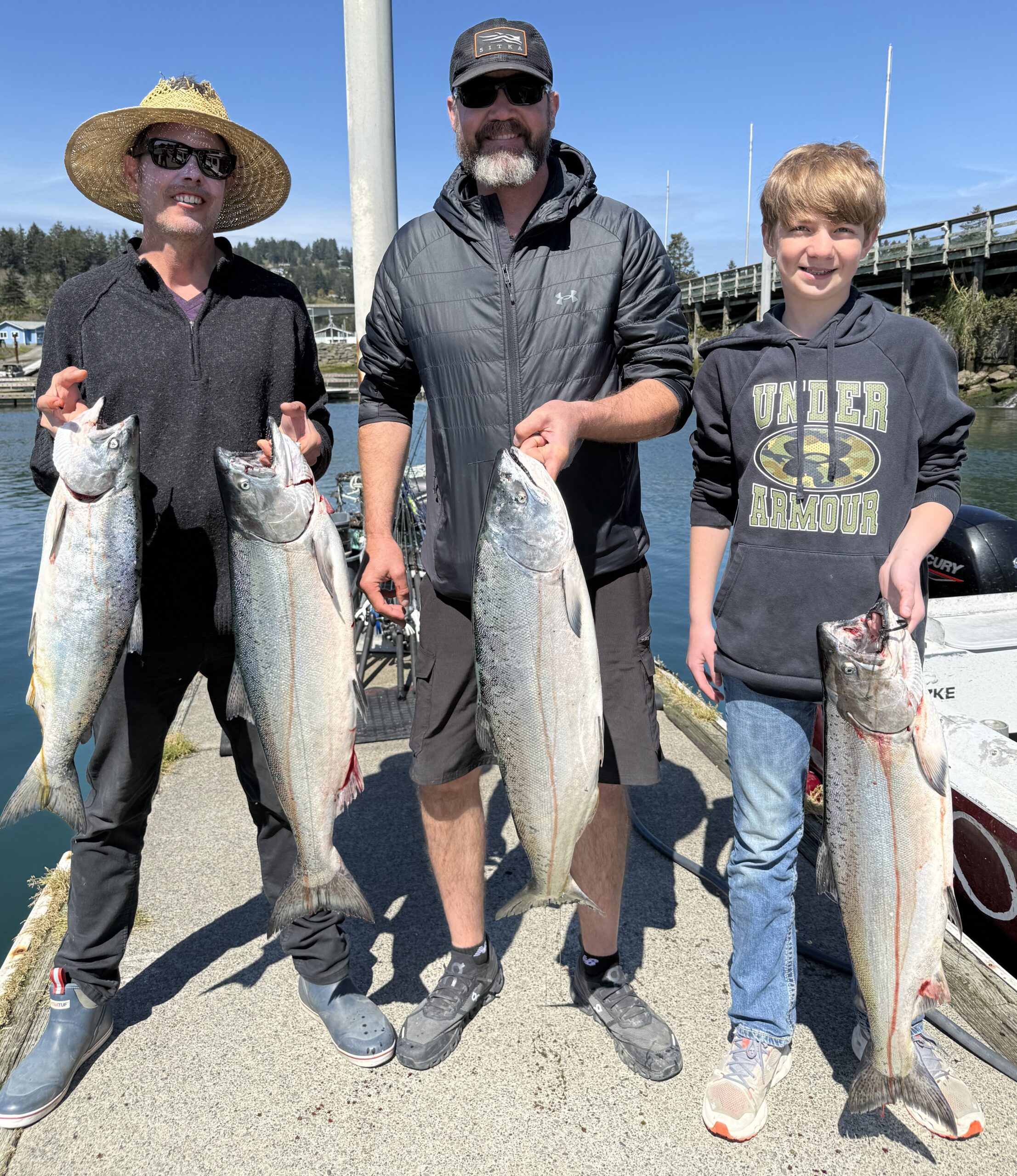
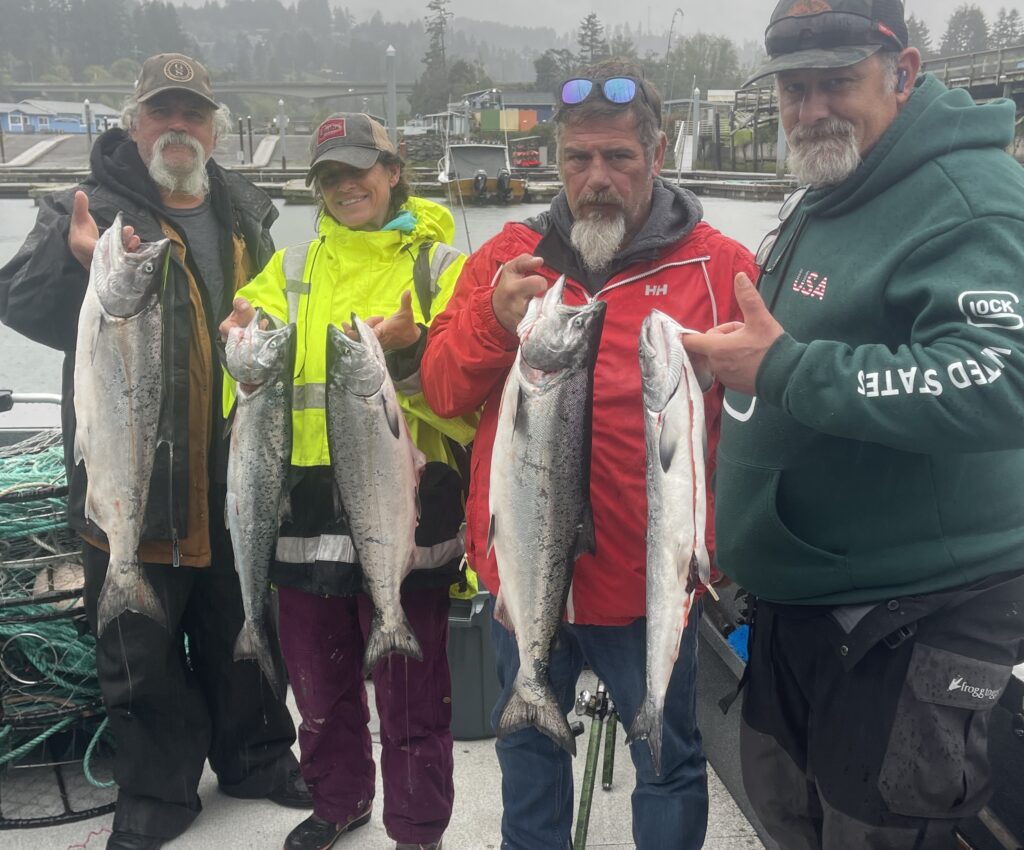
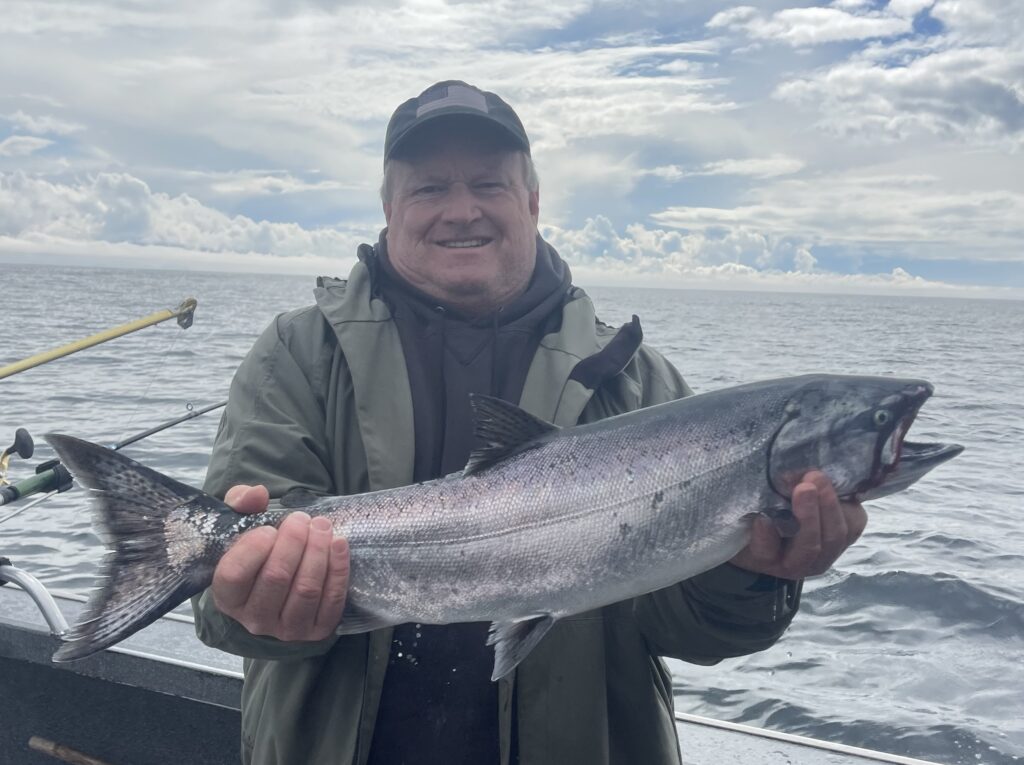
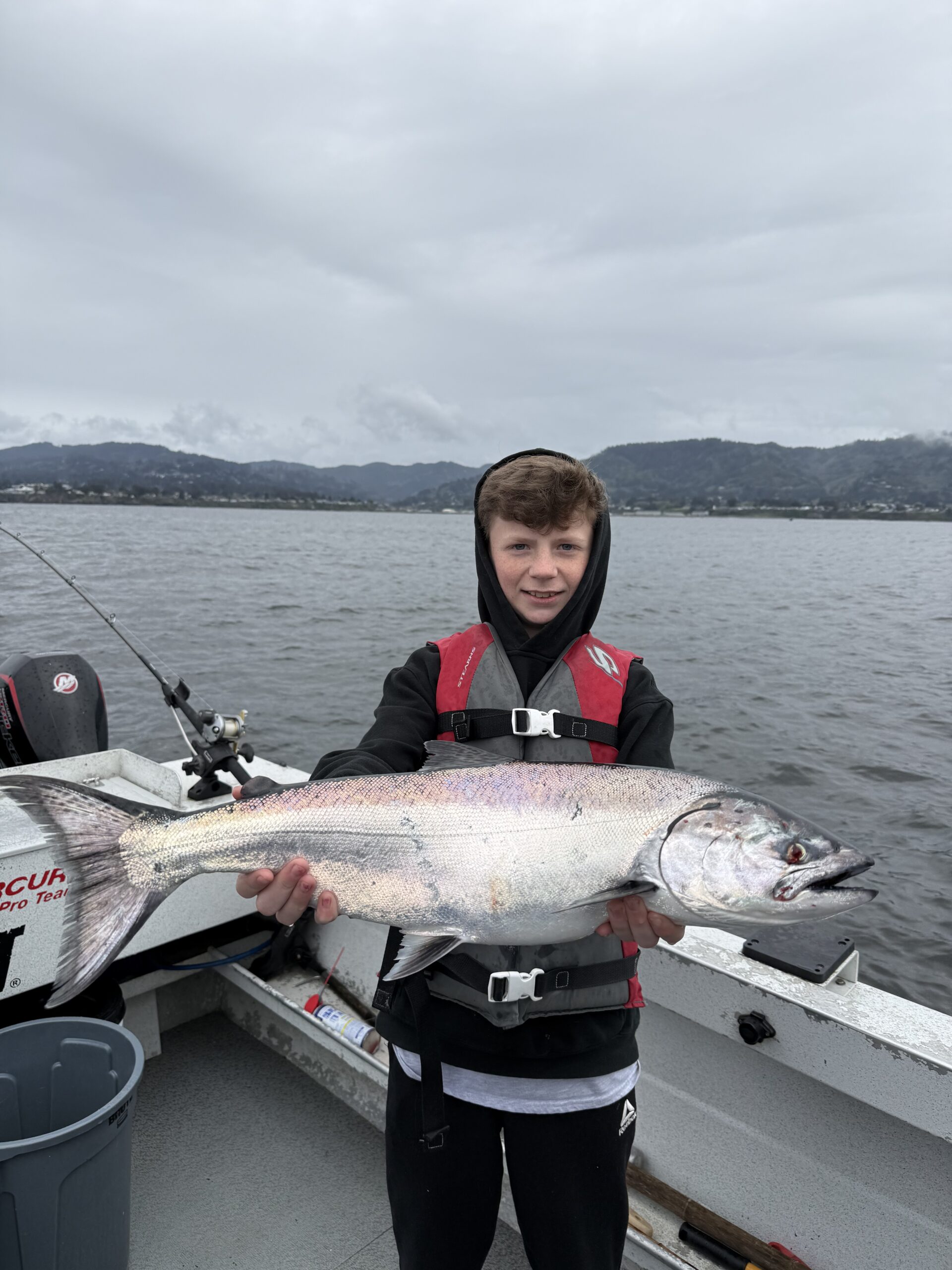
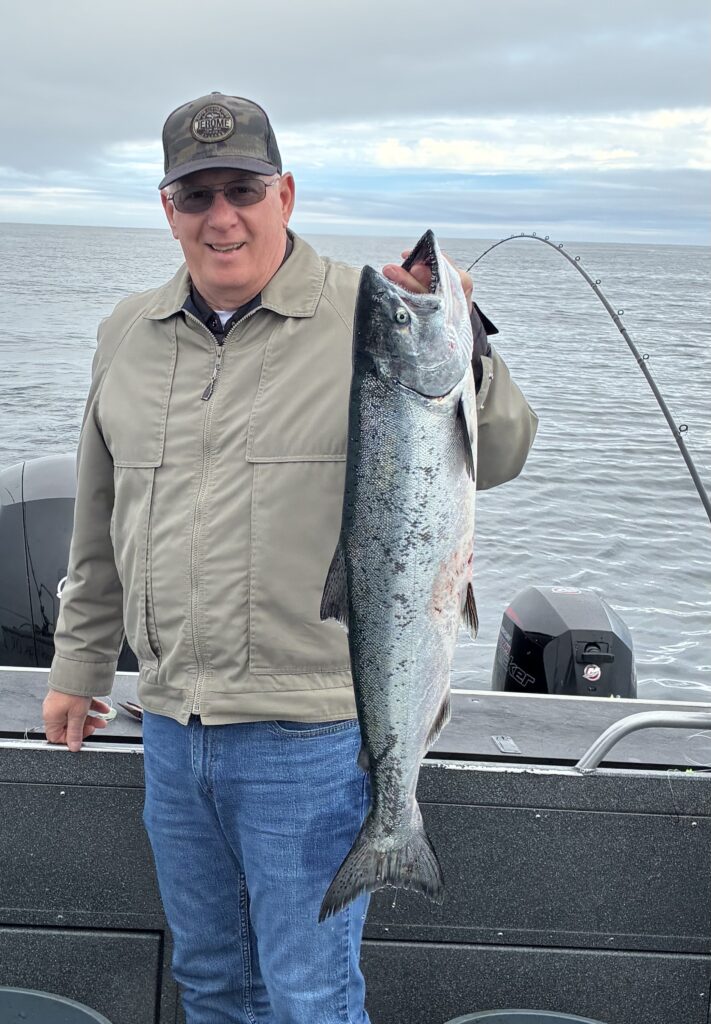
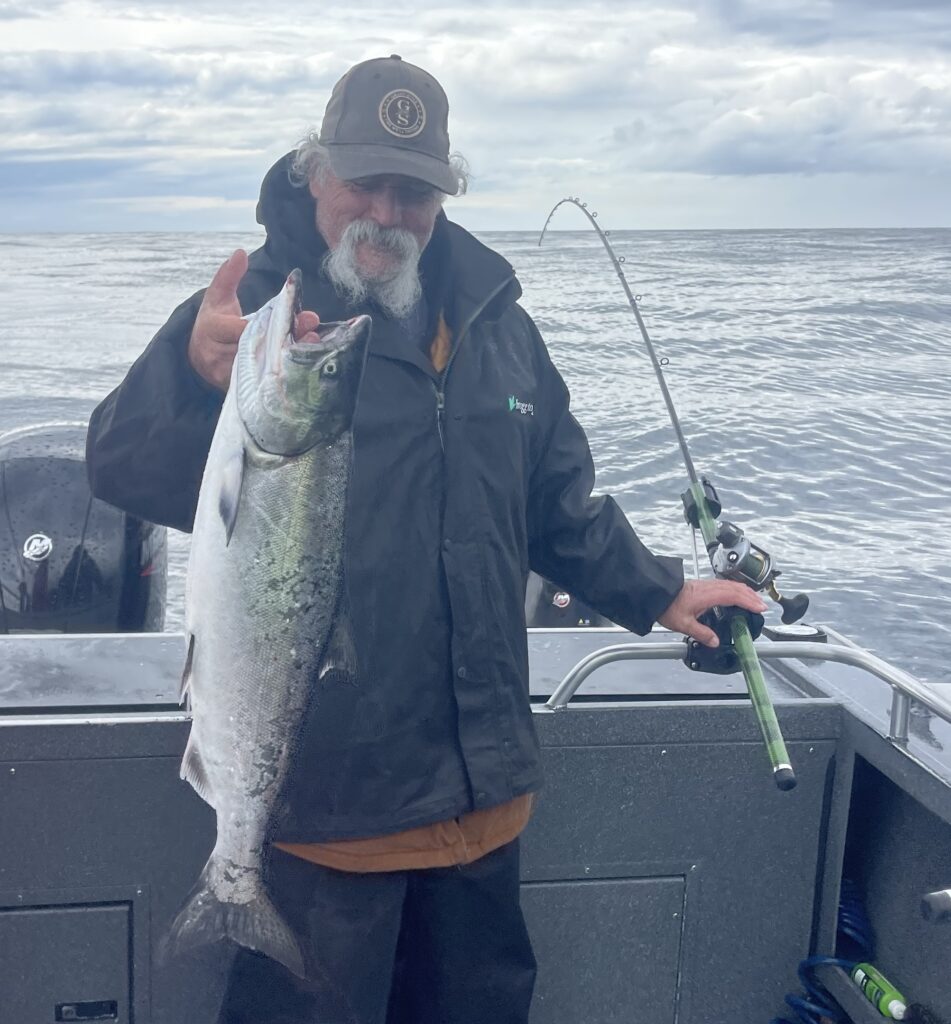
So far this season, the Miss Brooke and Dash of Brookings Fishing Charters have been producing good catches for customers, with catches ranging from a fish per rod to limits. In March, many of the salmon were 5 to 8 pounds, but now fish to 15 and even 20 pounds are being caught. Historically, fishing was slow out of Brookings in March, April and early May, but this year has been steady and showing rapid improvement. Private boats and the charters from Brookings Fishing Charters are reporting good catches and impressive numbers of fish, both inshore and offshore.
Trolling anchovies or herring behind Fish Flash flashers has worked best. Some fish also are being caught on Spin Fish, Cut Plugs and other artificial baits. Anglers trolling with divers are doing well, while downriggers also are producing fish. Early in the season, the best fishing was closer to shore, but as commercial crabbers pulled gear from deeper water, fishing took off in 200 to 250 feet of water offshore of Bird Island.
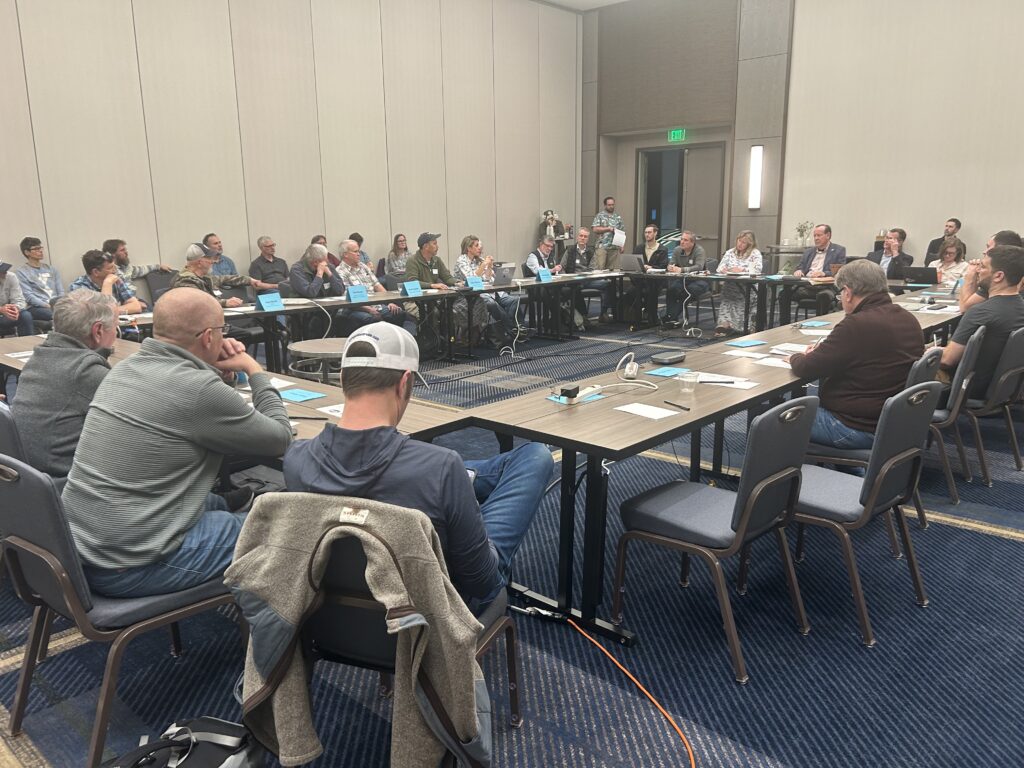
Brookings Fishing Charters Capt. Andy Martin made the trip to Portland this past week to participate in the Pacific Fishery Management Council meetings and advocate for the lengthy season. Capt. Mike Sorensen of the Miss Raven in Newport was a chief architect of the seasons, serving as the charter boat representative to the council, along with sport fishing representative John Christie. Other charter boat captains involved in developing the seasons were Capt. Steve Sohlstrom of Ilwaco and Capt. Butch Smith of Ilwaco, who is also a voting member of the PFMC.
With abundant schools of baitfish off of Brookings, the size of the salmon is quickly increasing. The salmon are known as “feeder kings,” as they put on weight and size before returning to rivers in the fall to spawn. Some of the salmon will spend another year in the ocean, returning in 2027.
Strong returns to the Sacramento River last year, much higher than expected, with a jack salmon count the highest since 2011, helped ease concerns over the lengthy season this year. Salmon also were observed naturally in the upper Klamath River after dam removal, giving fishery managers confidence the Klamath salmon run will rebound.
California also will have a salmon season this summer, but it is much shorter and more restricted. Brookings is poised to produce the best fishing on the coast this year, as abundant bait could very well keep the salmon close to Brookings and Gold Beach for much of the summer. The baitfish also have attracted big groups of pelicans and seabirds that feed on them.
To book an ocean salmon charter with Brookings Fishing Charters, call (541) 813-1082 or book online at www.brookingsfishing.com.