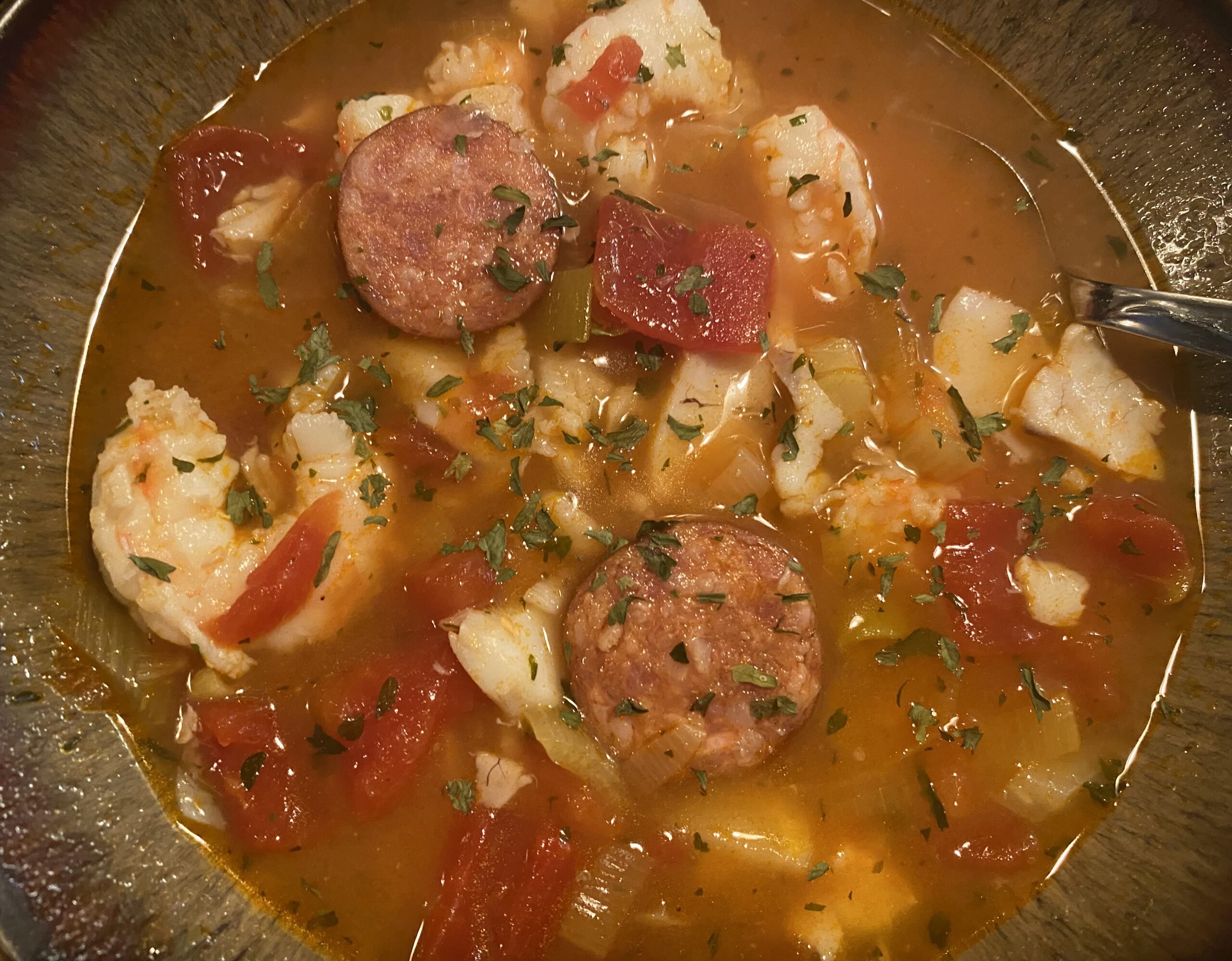
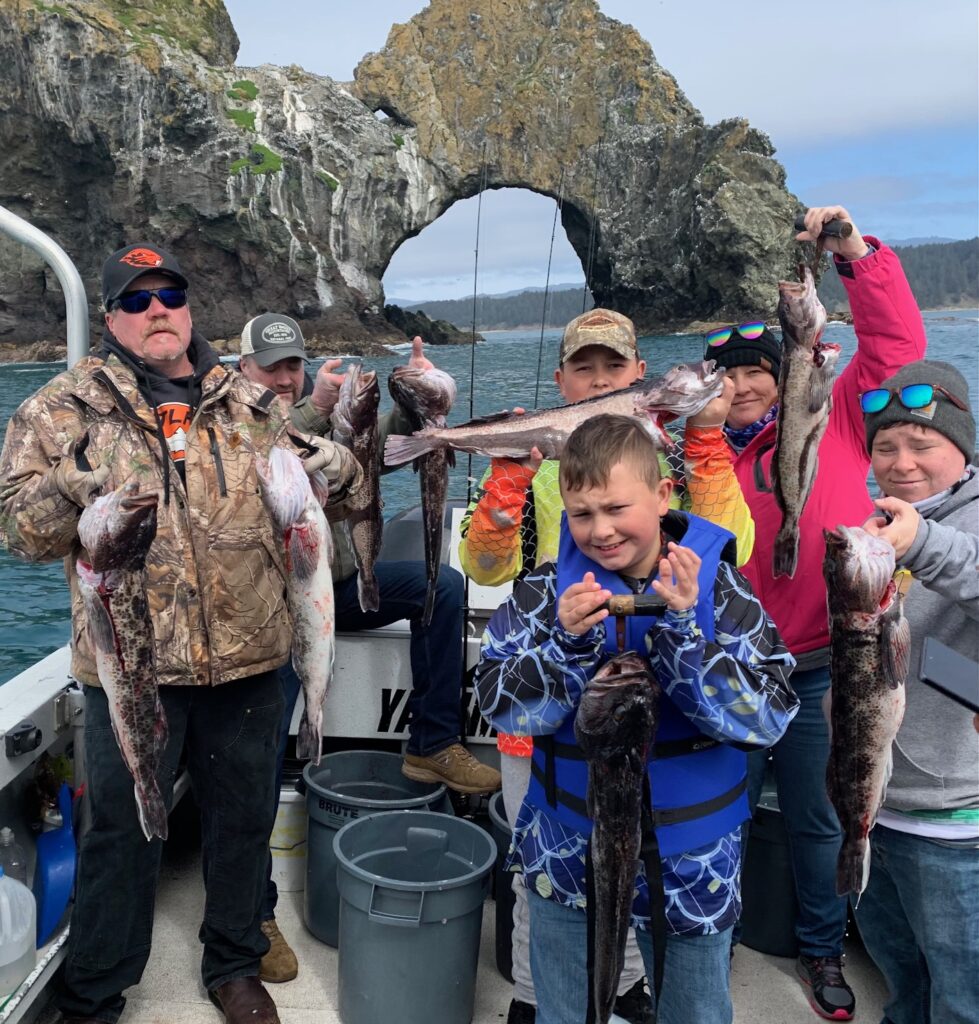
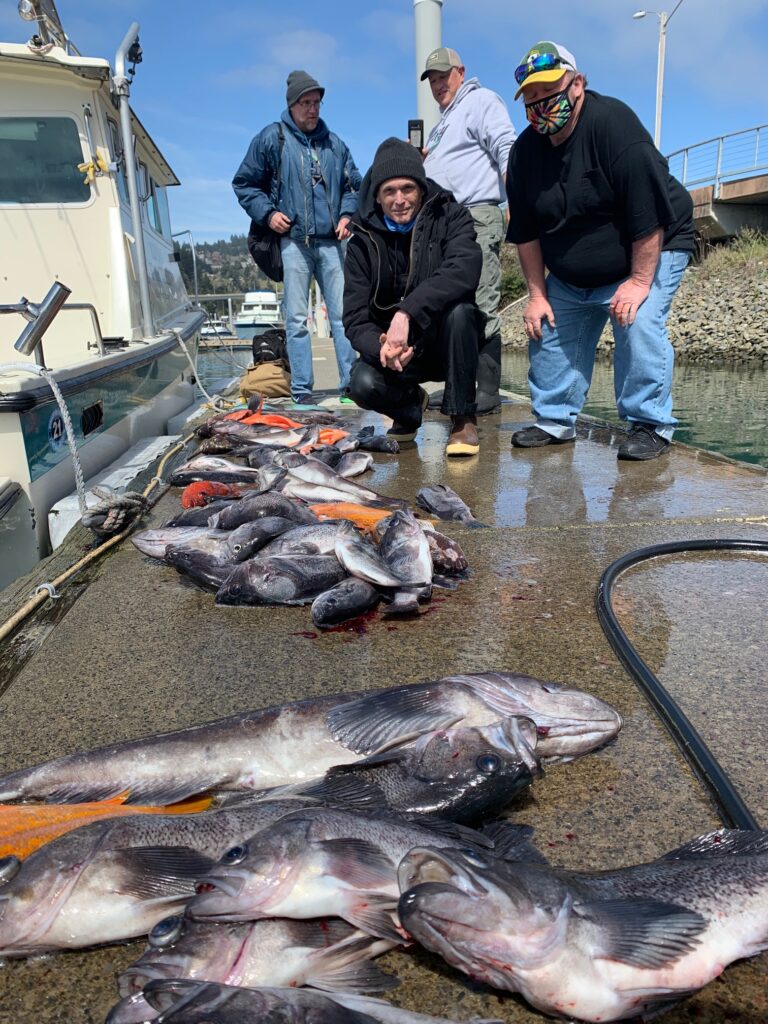
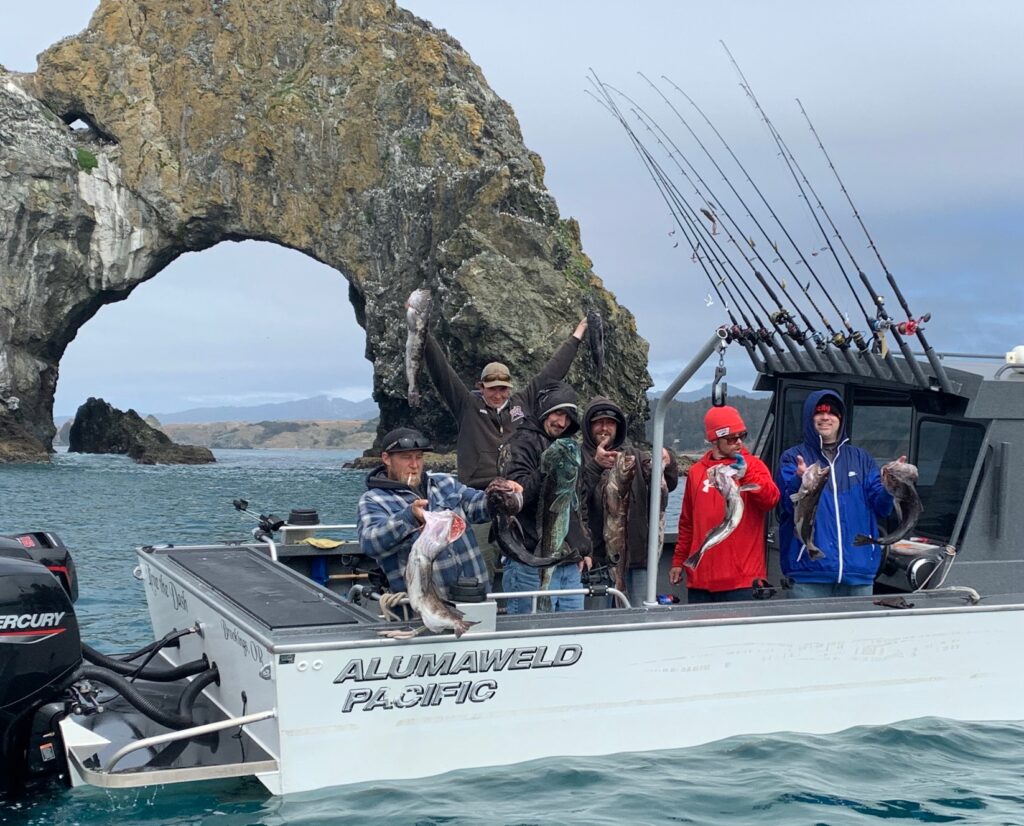
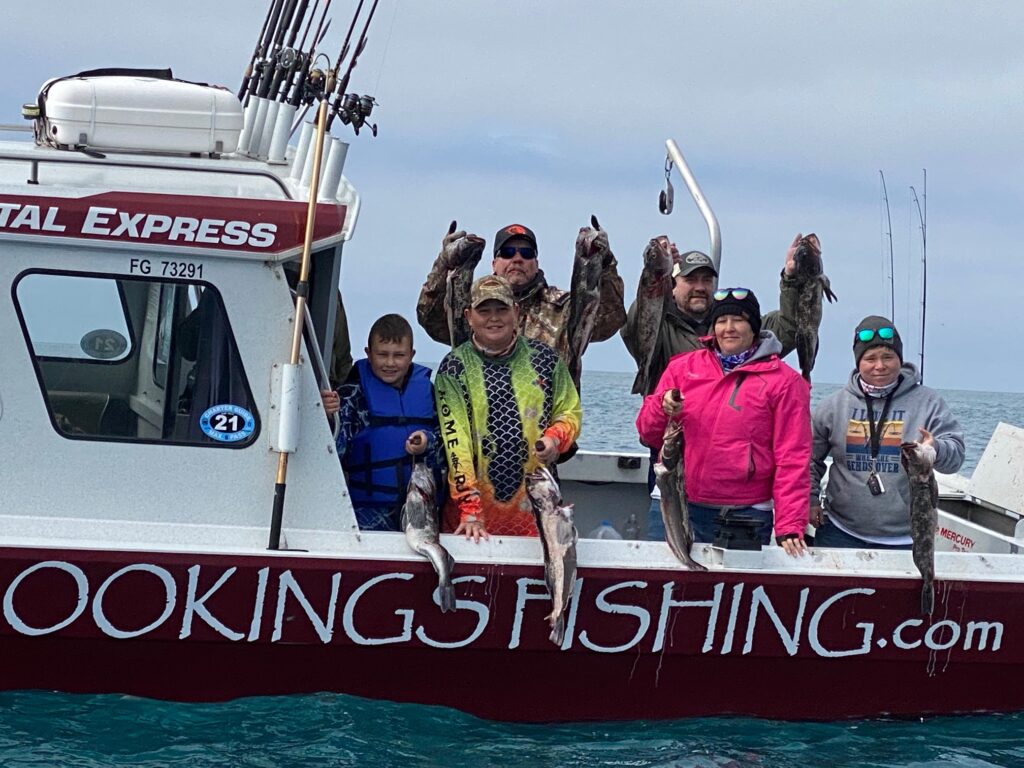
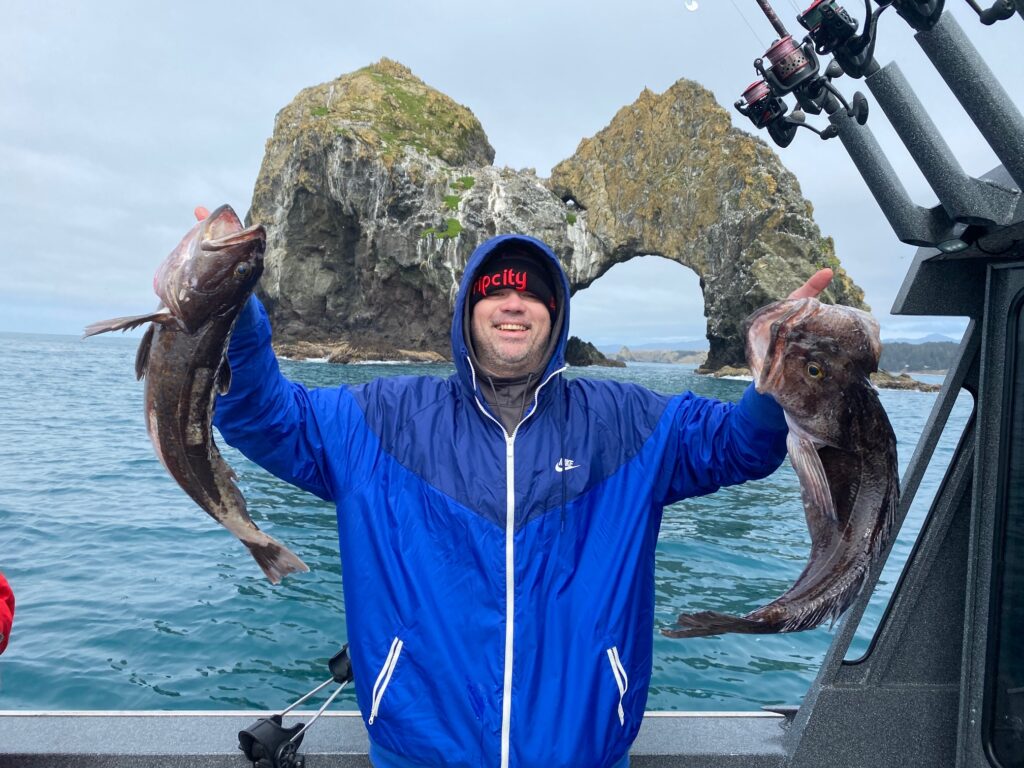
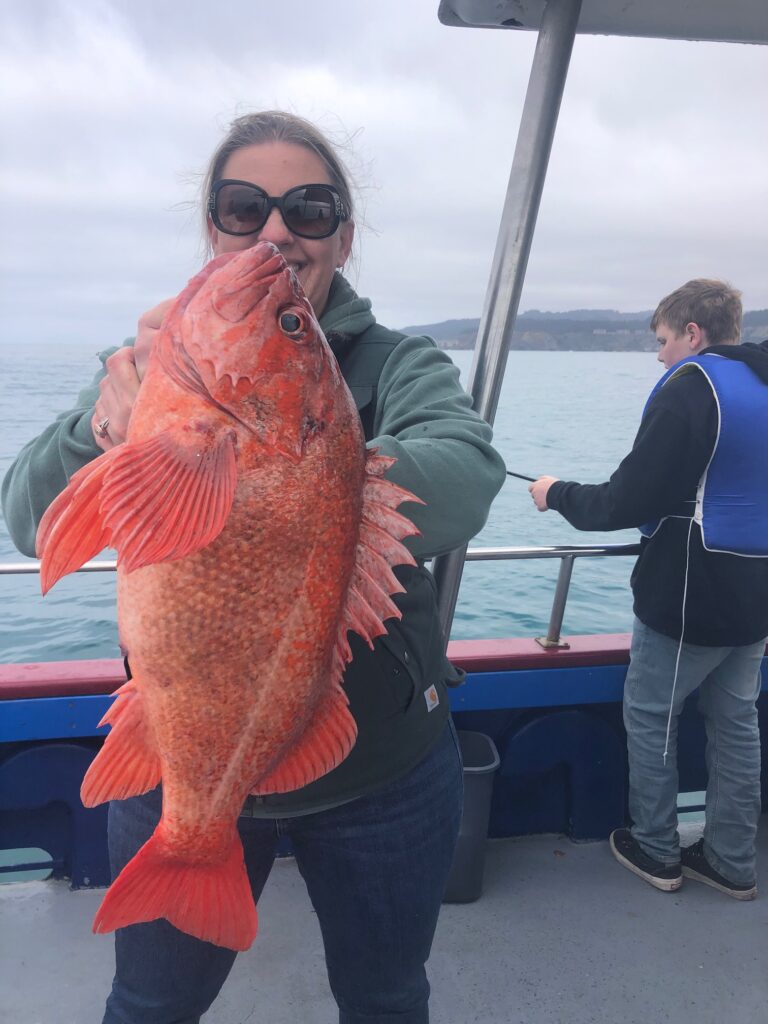
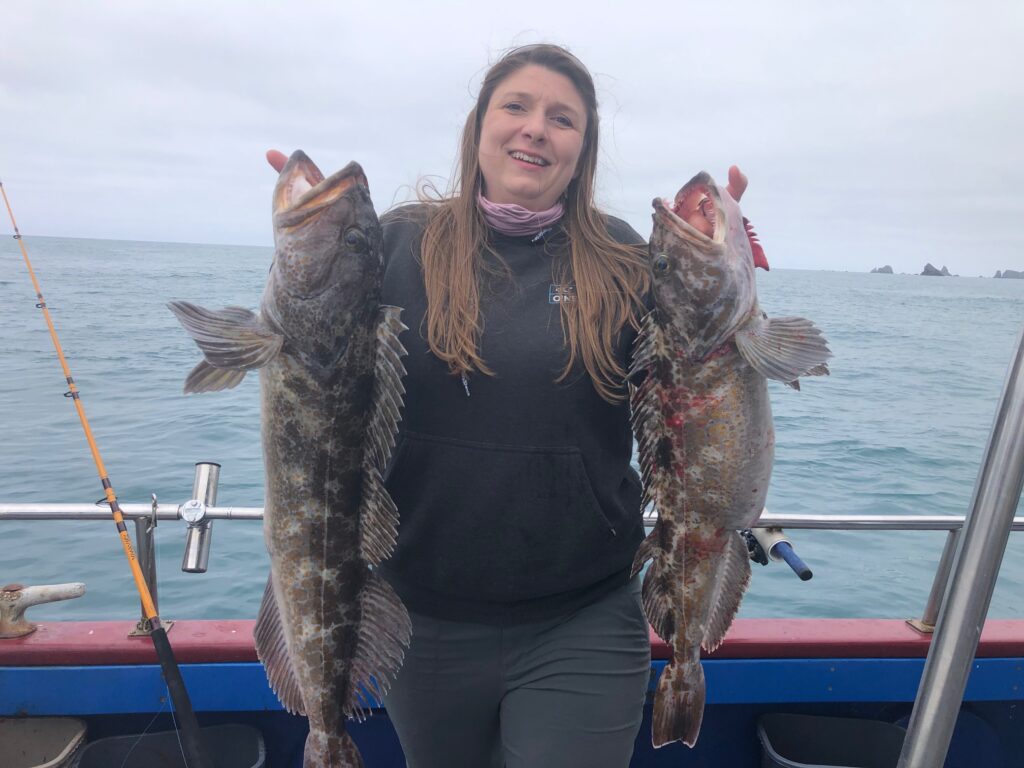
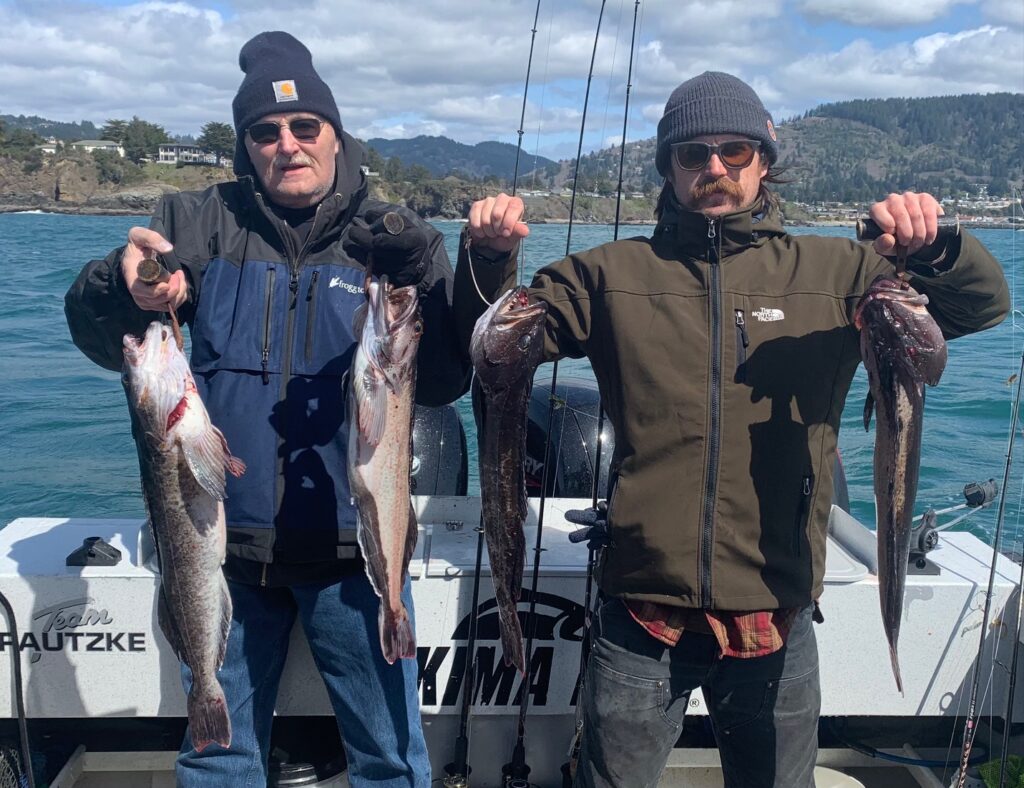
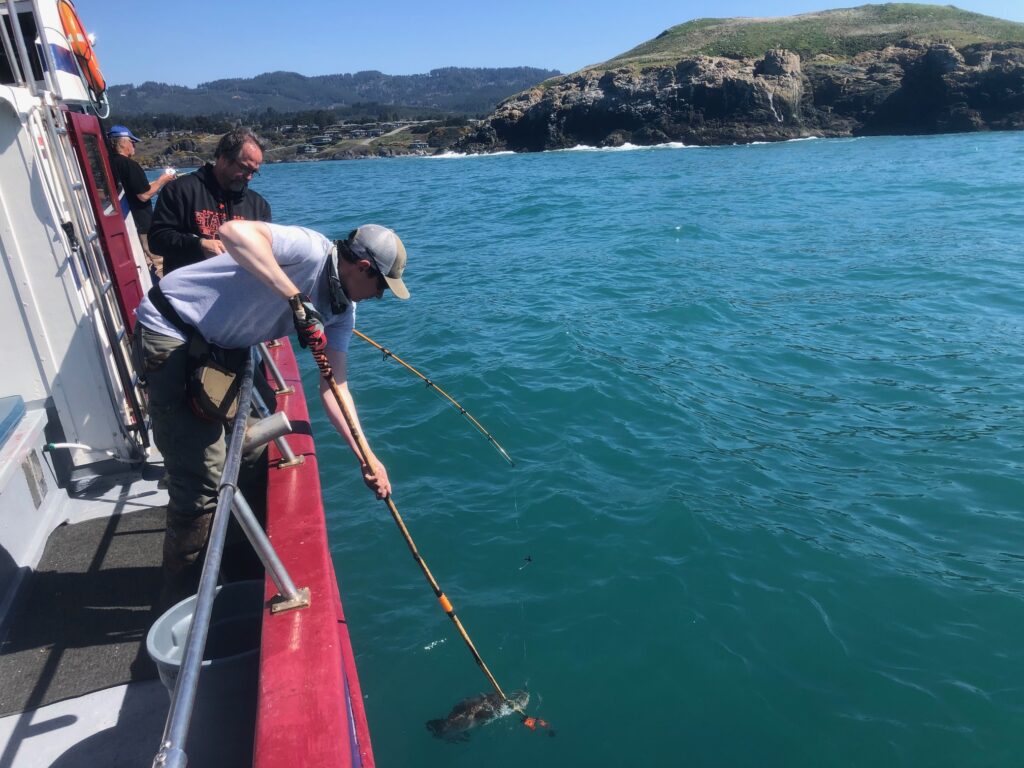
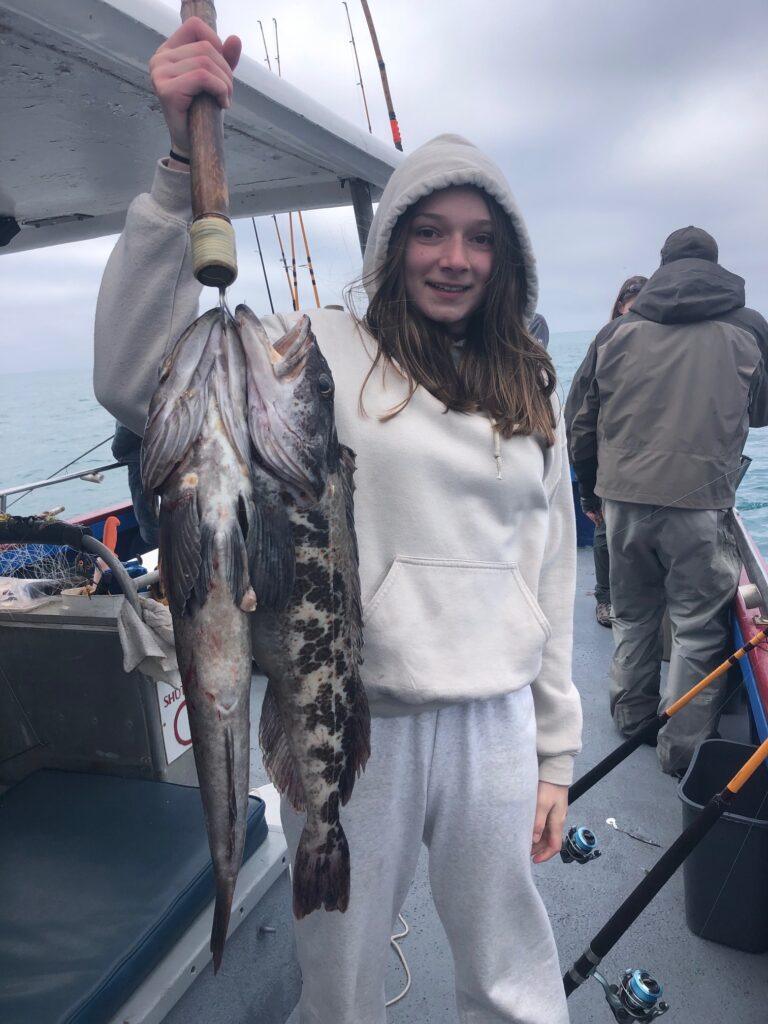
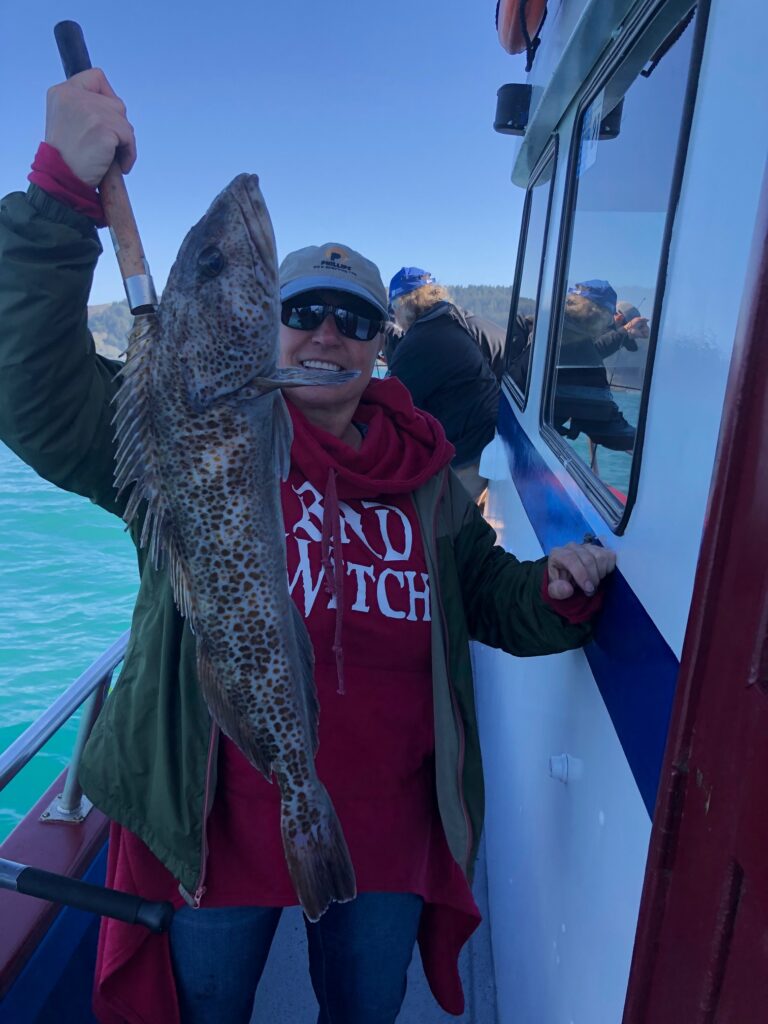
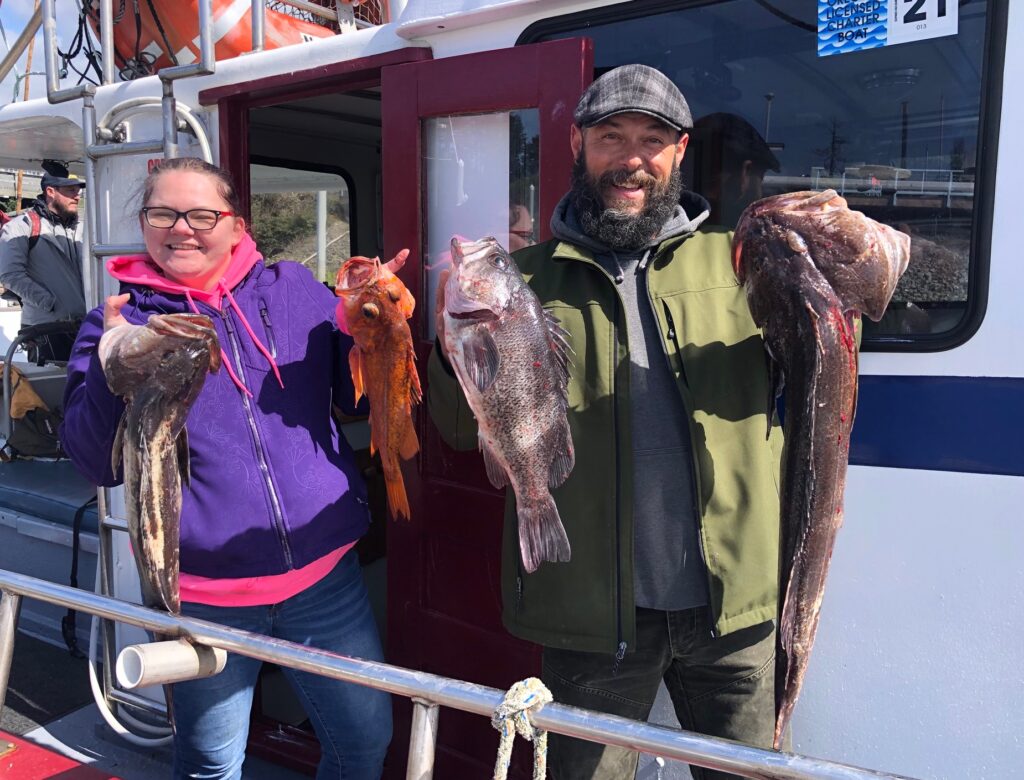
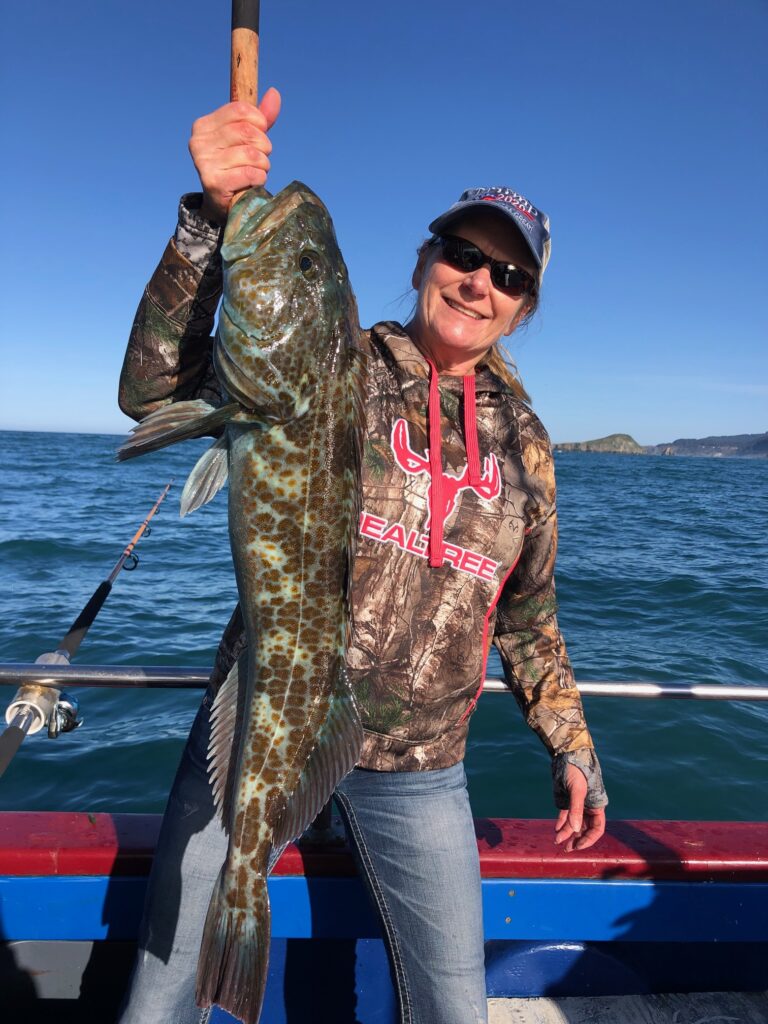
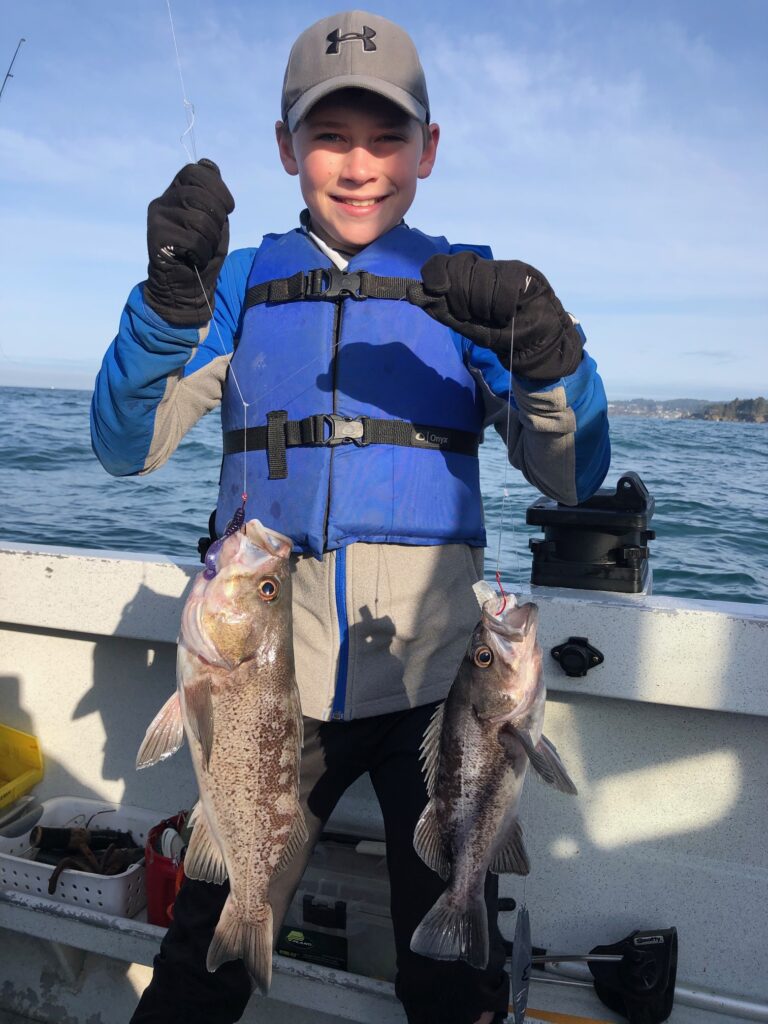
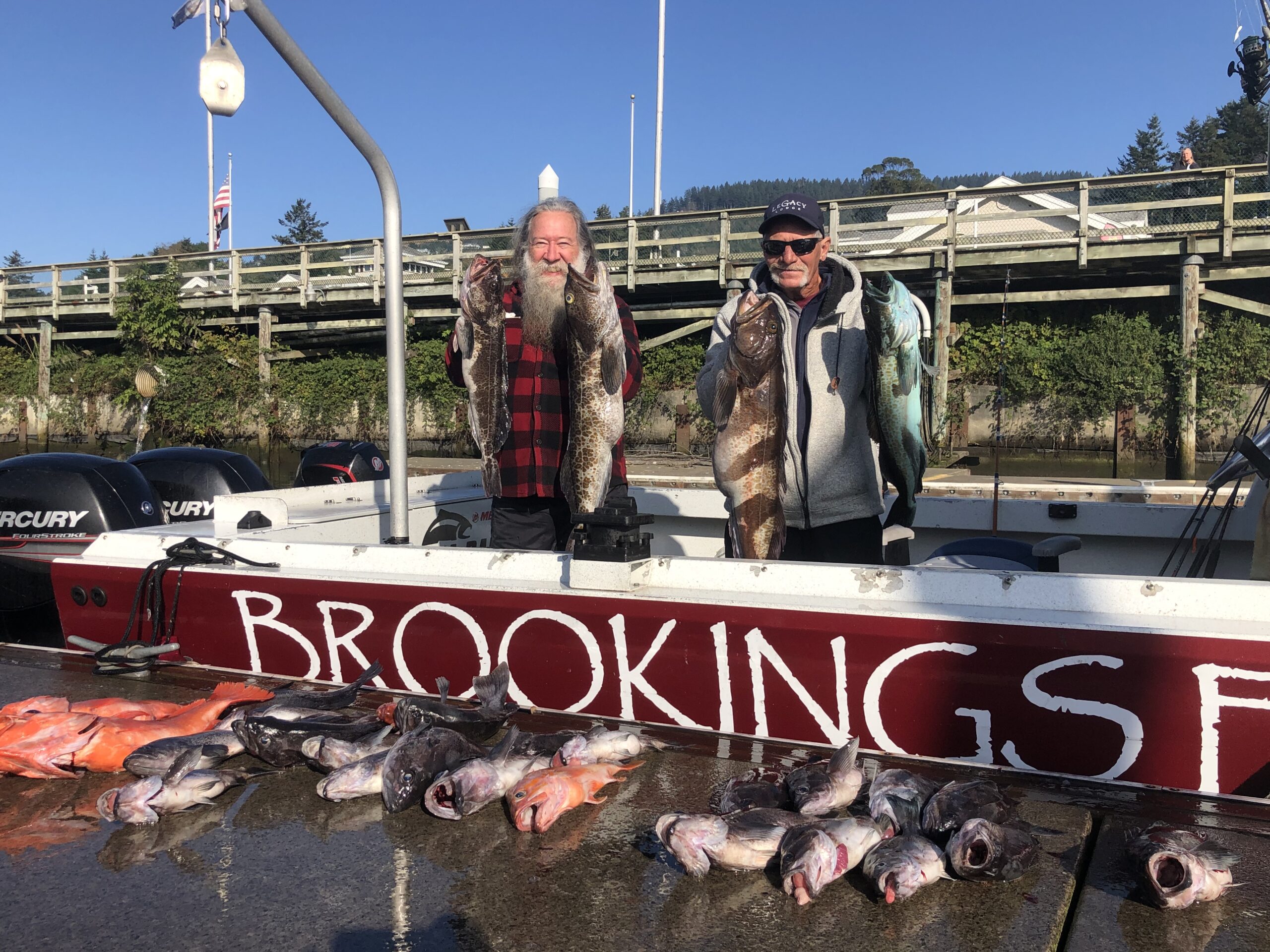
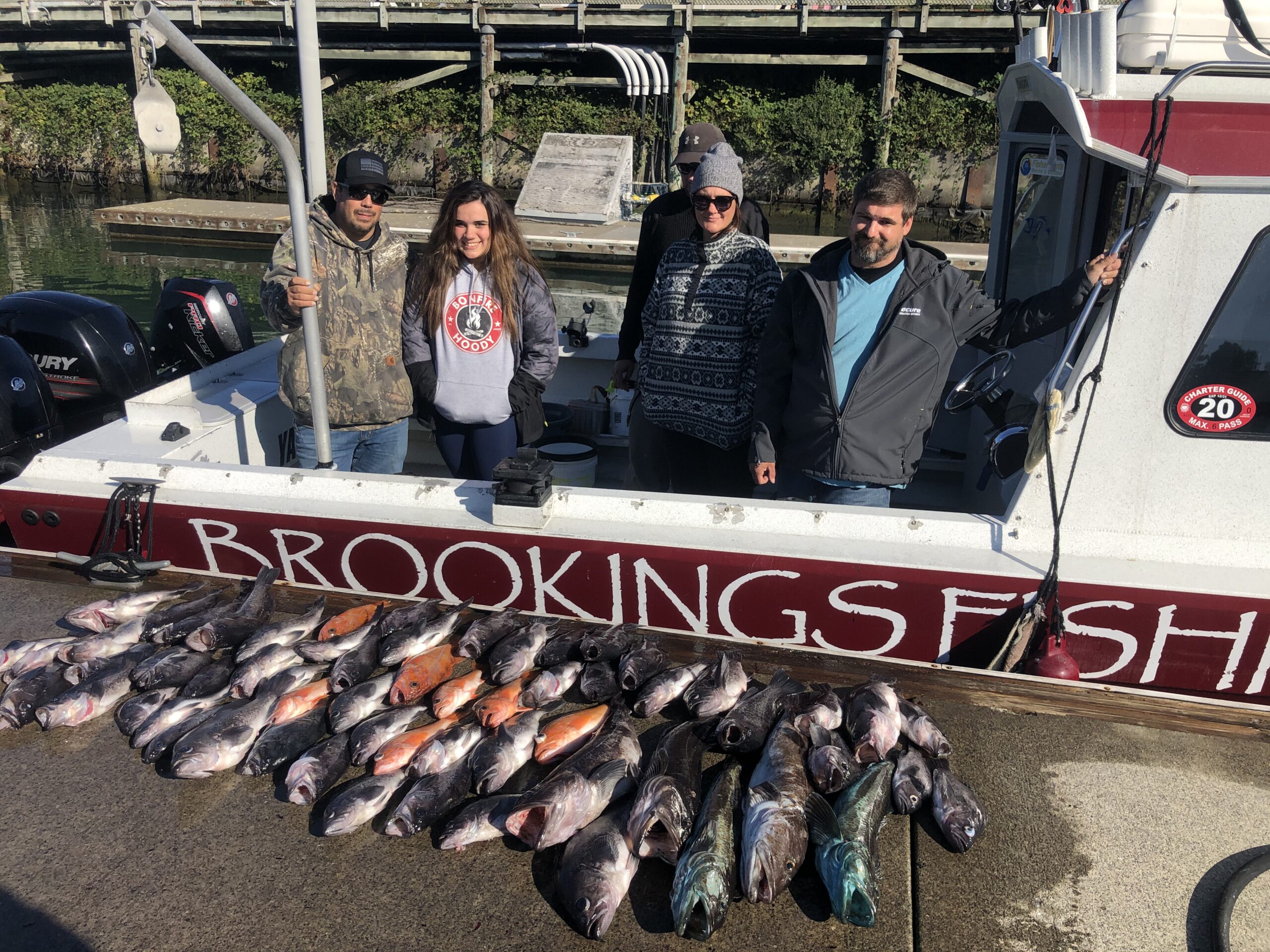
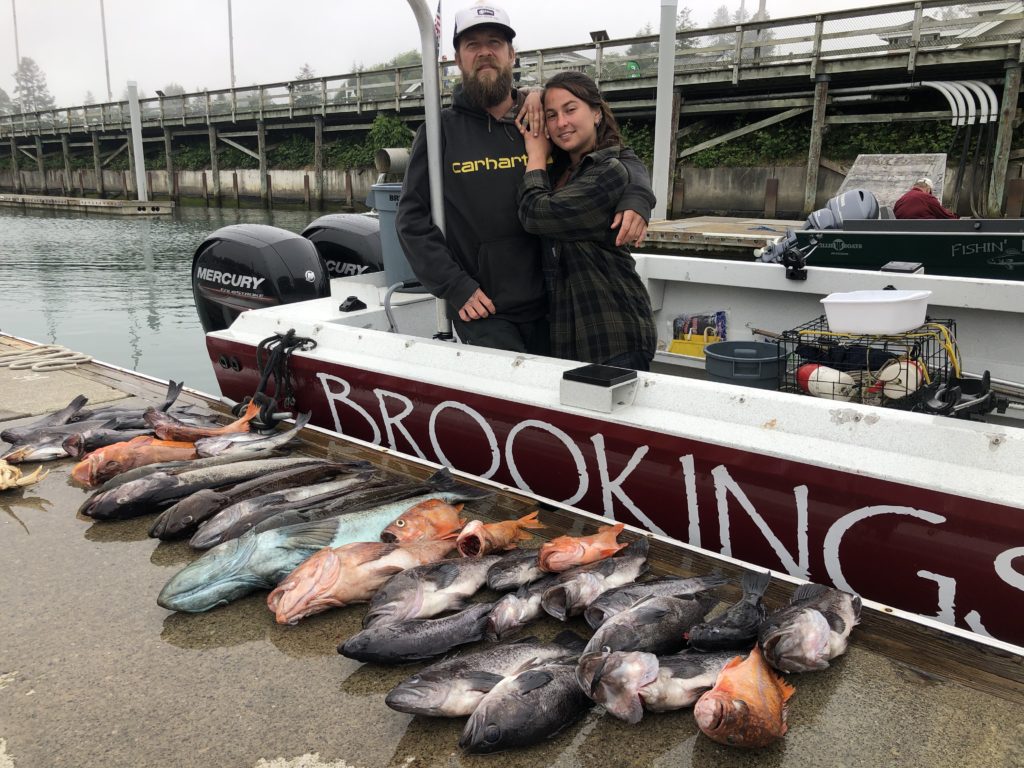
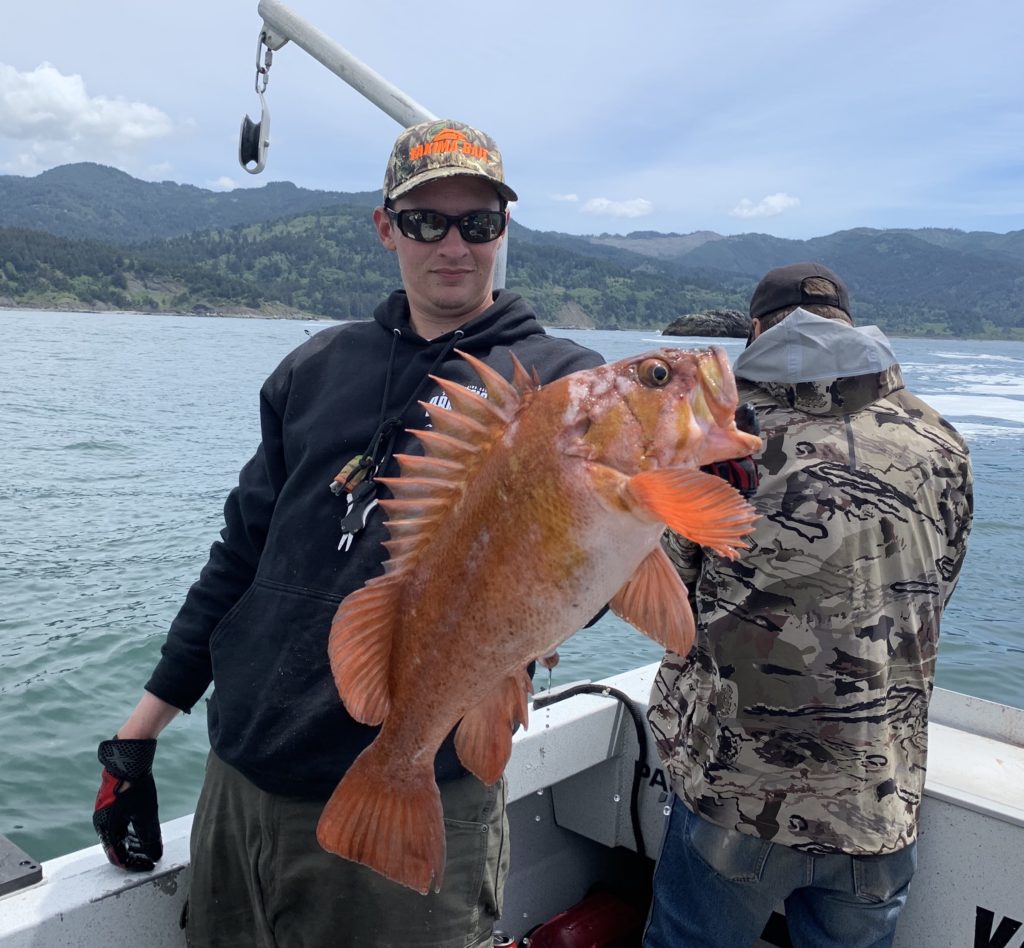
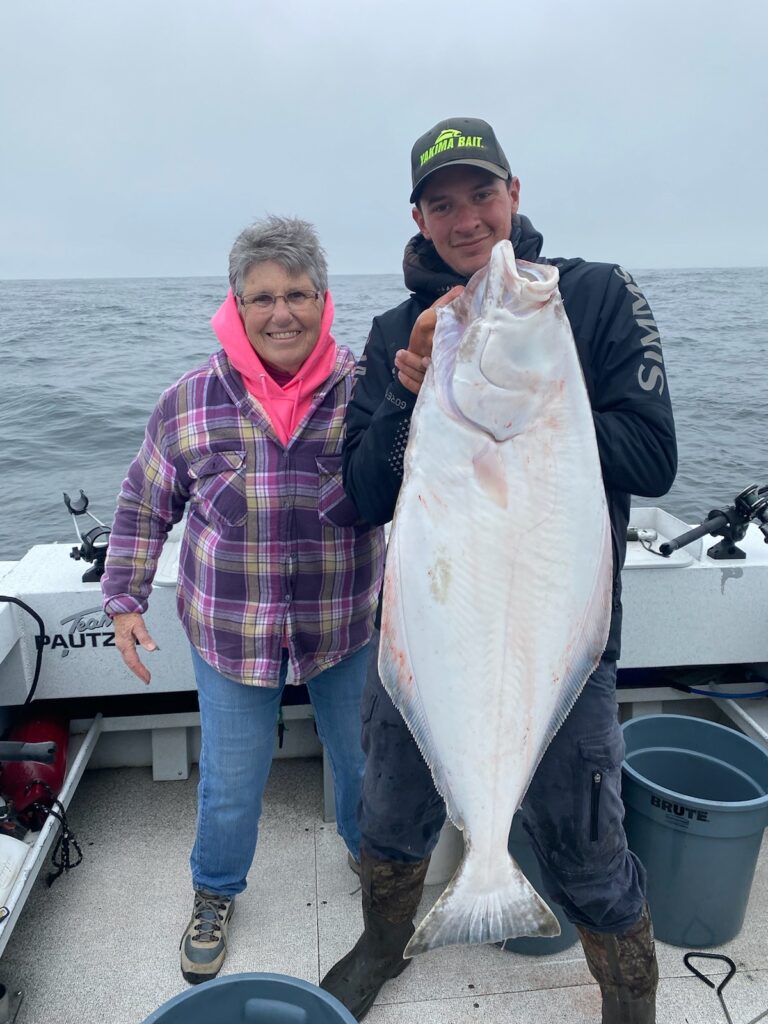
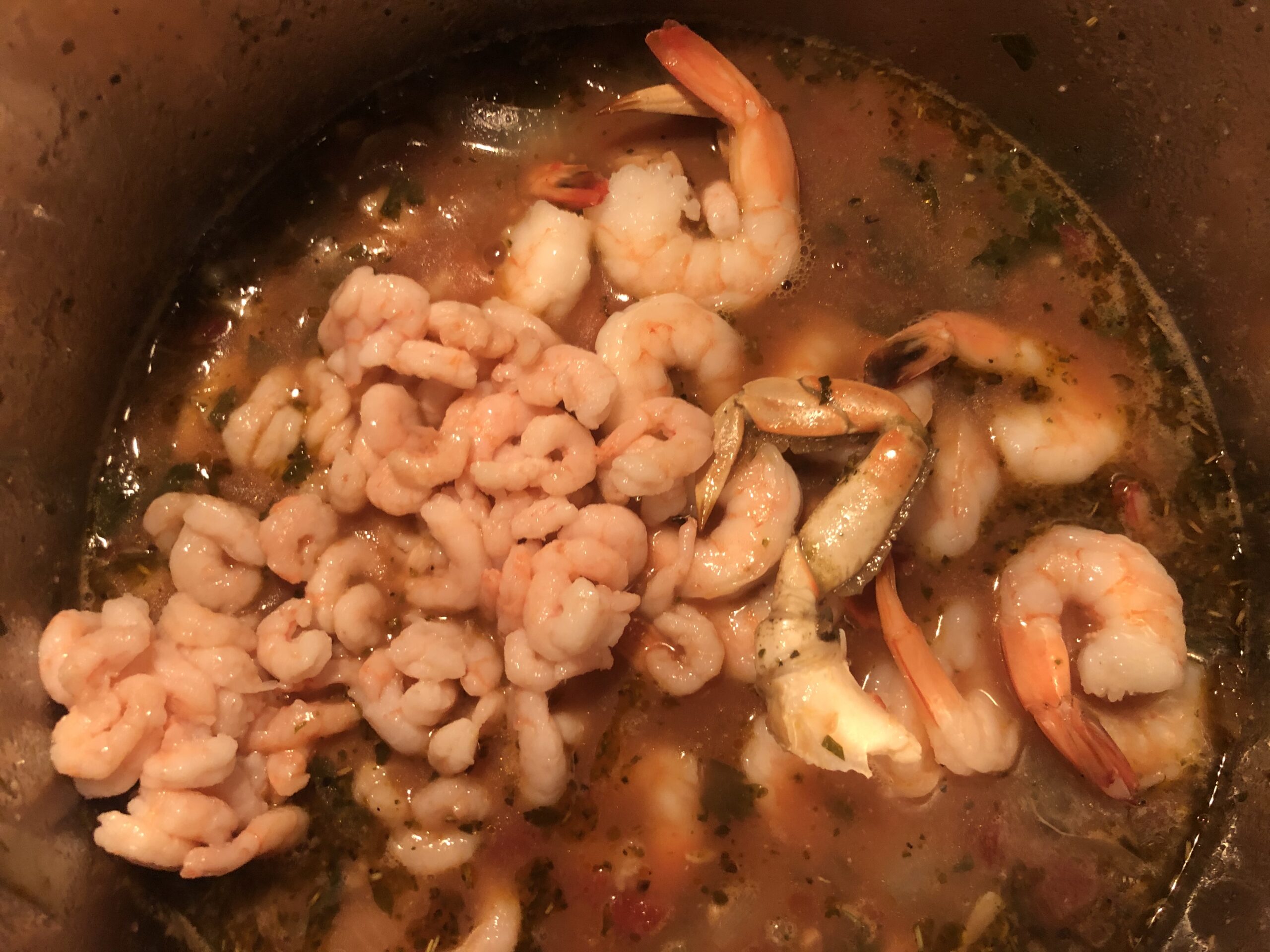
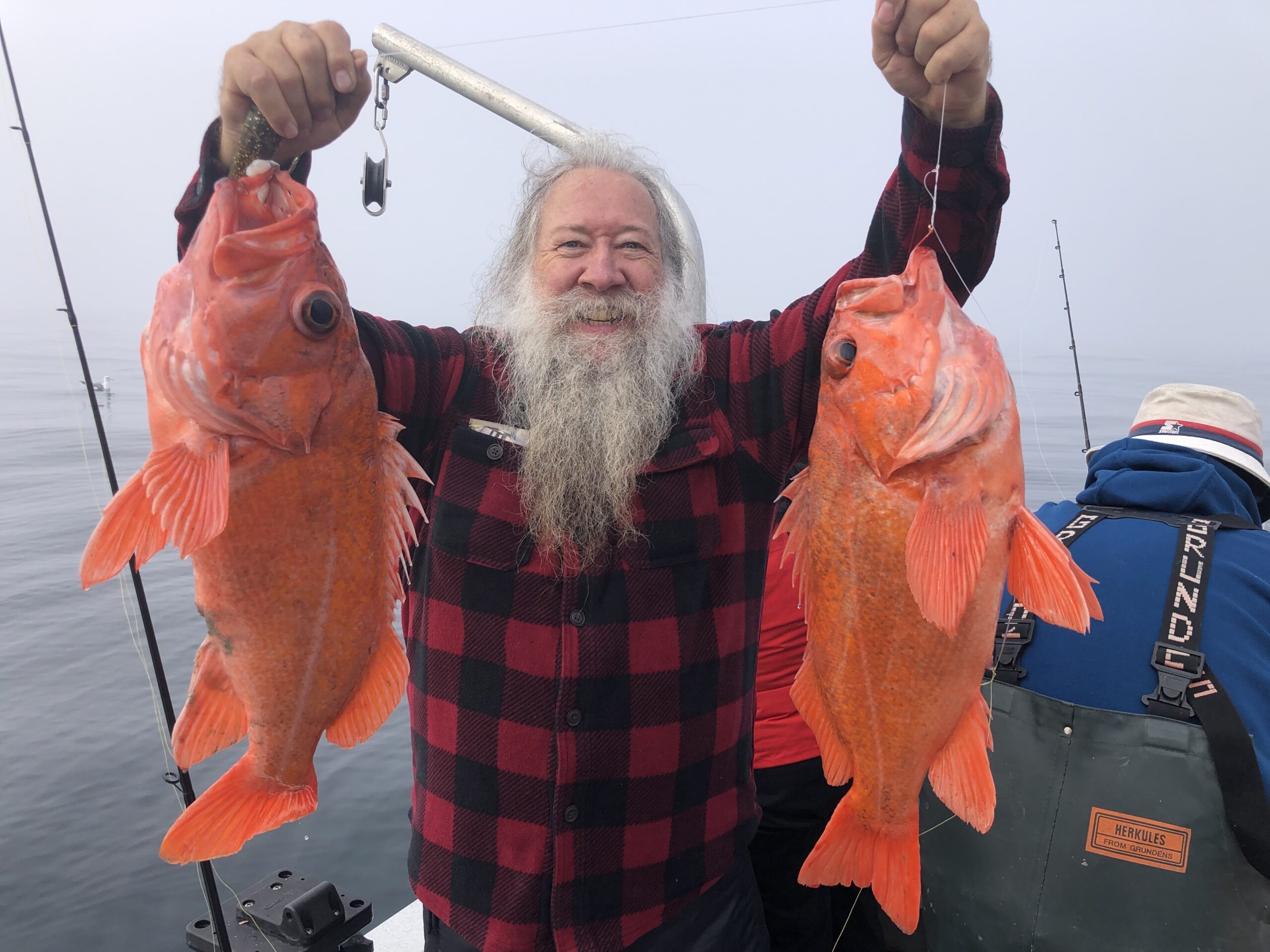
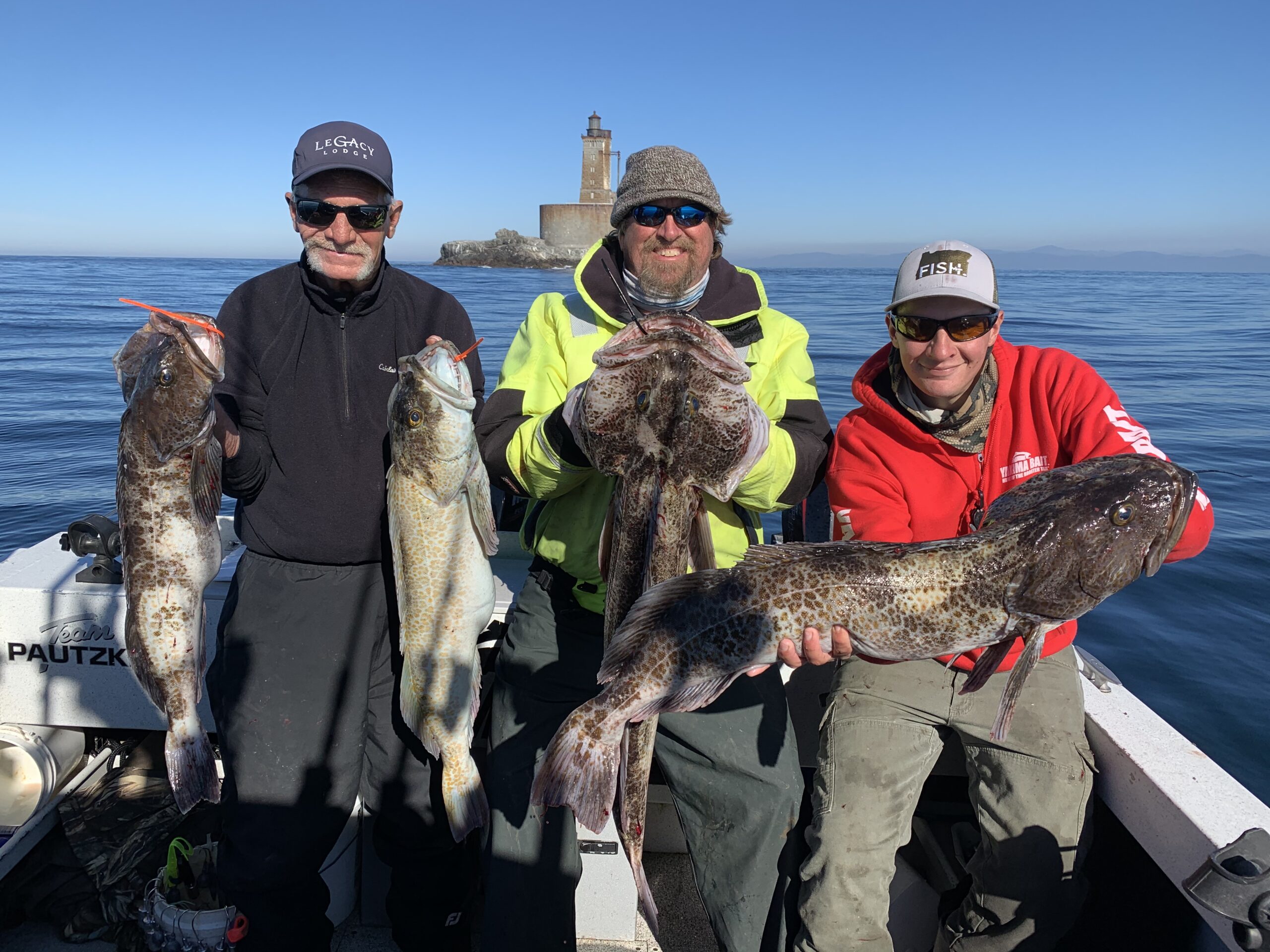
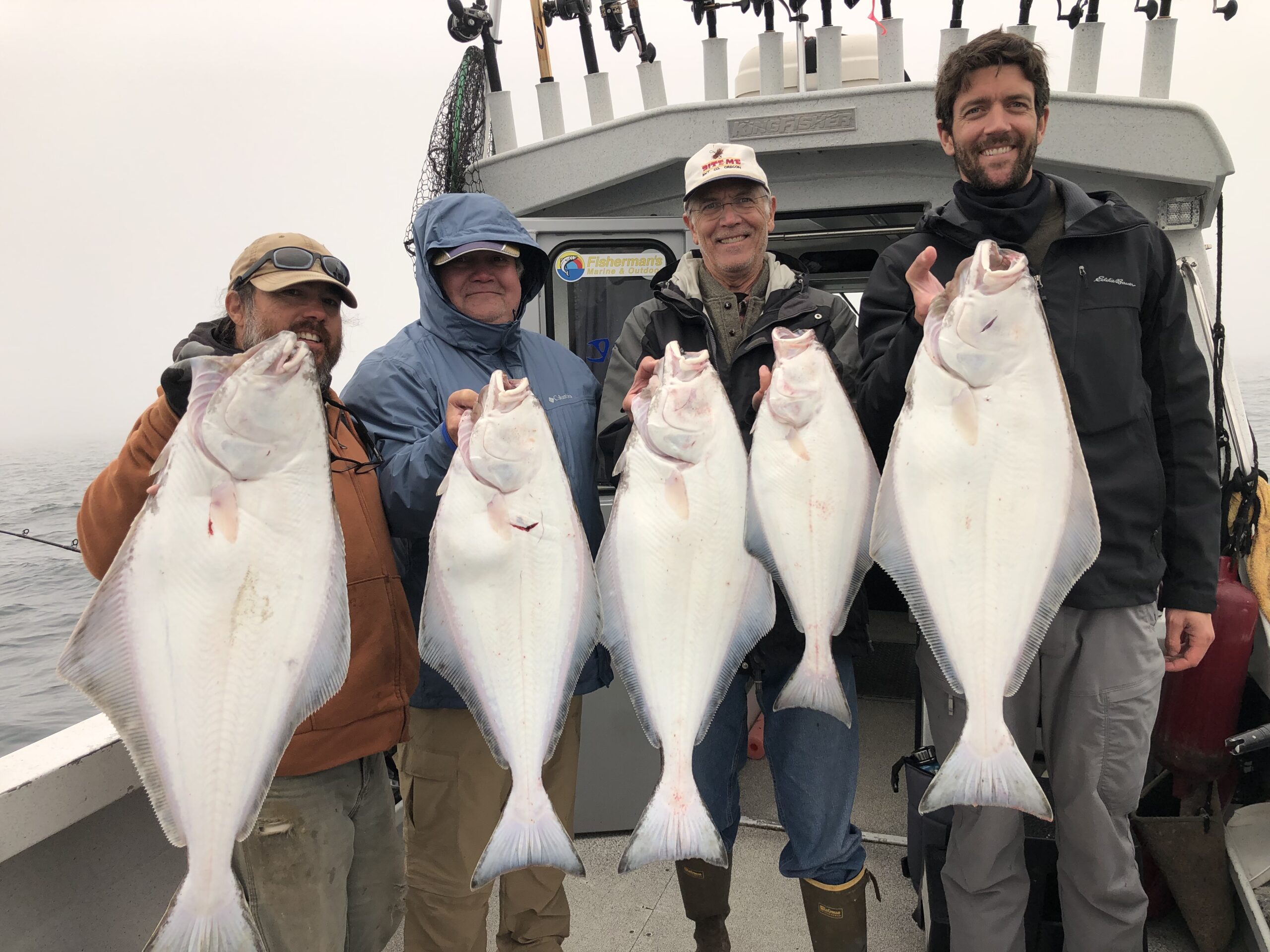
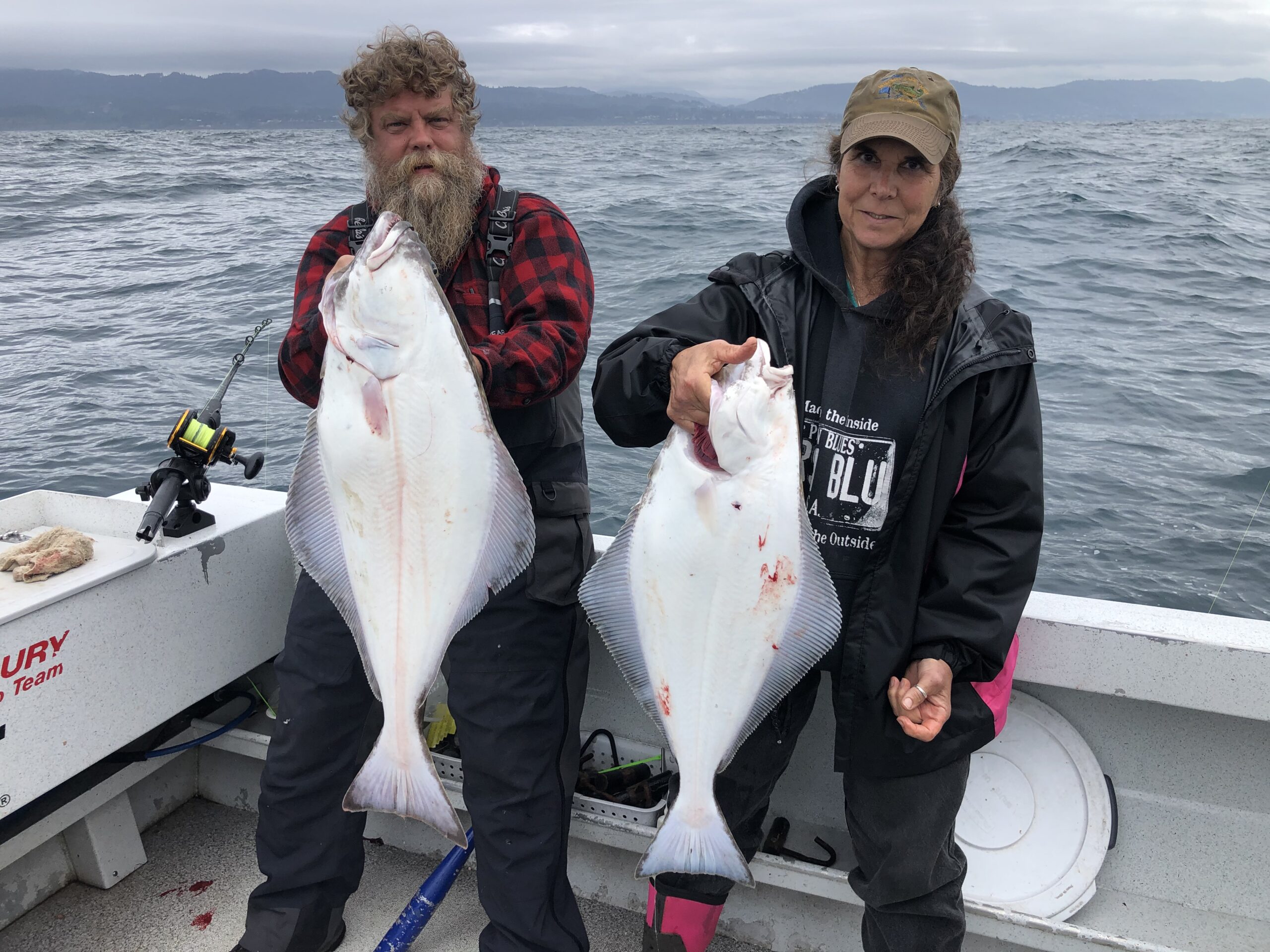
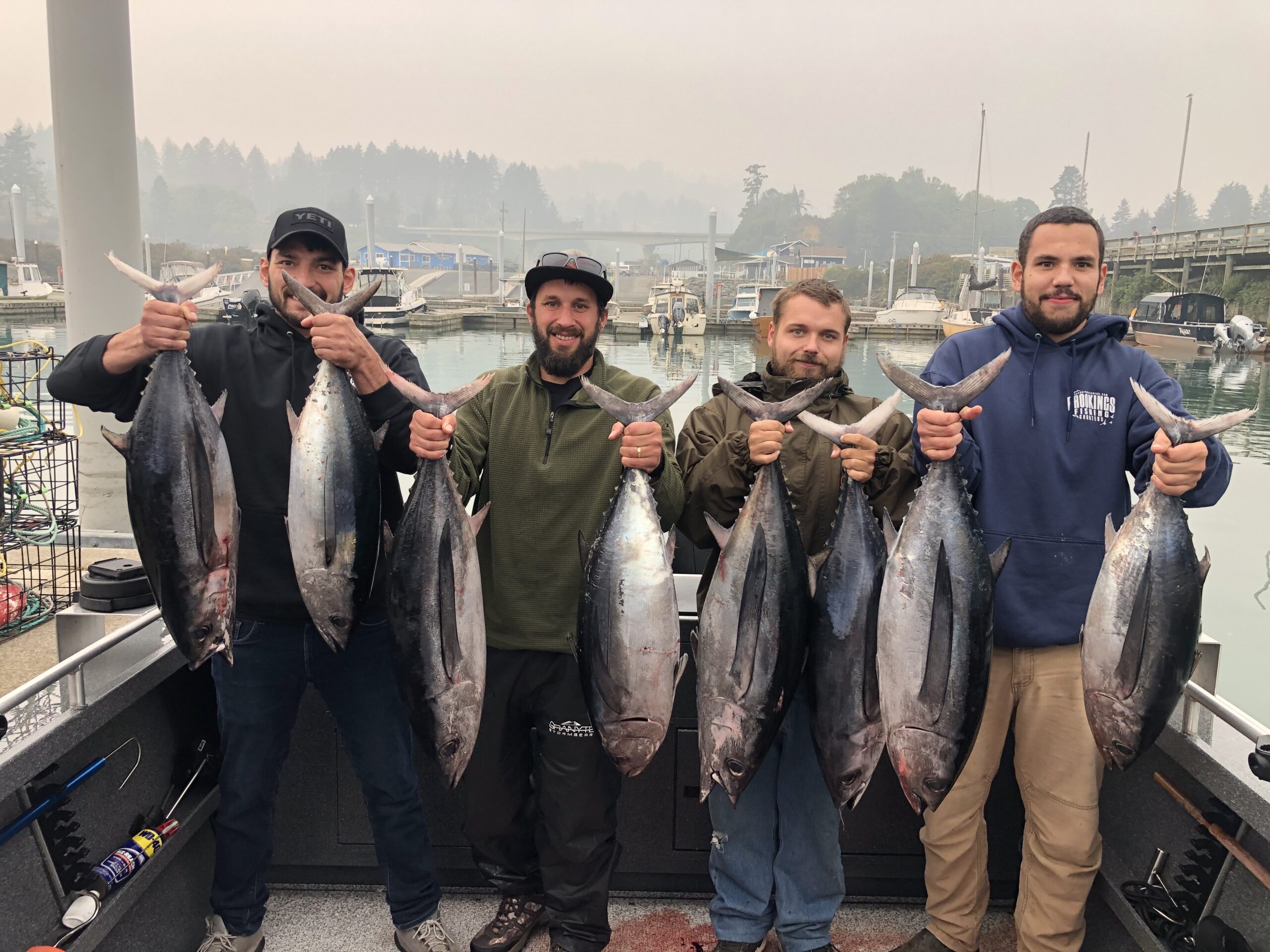
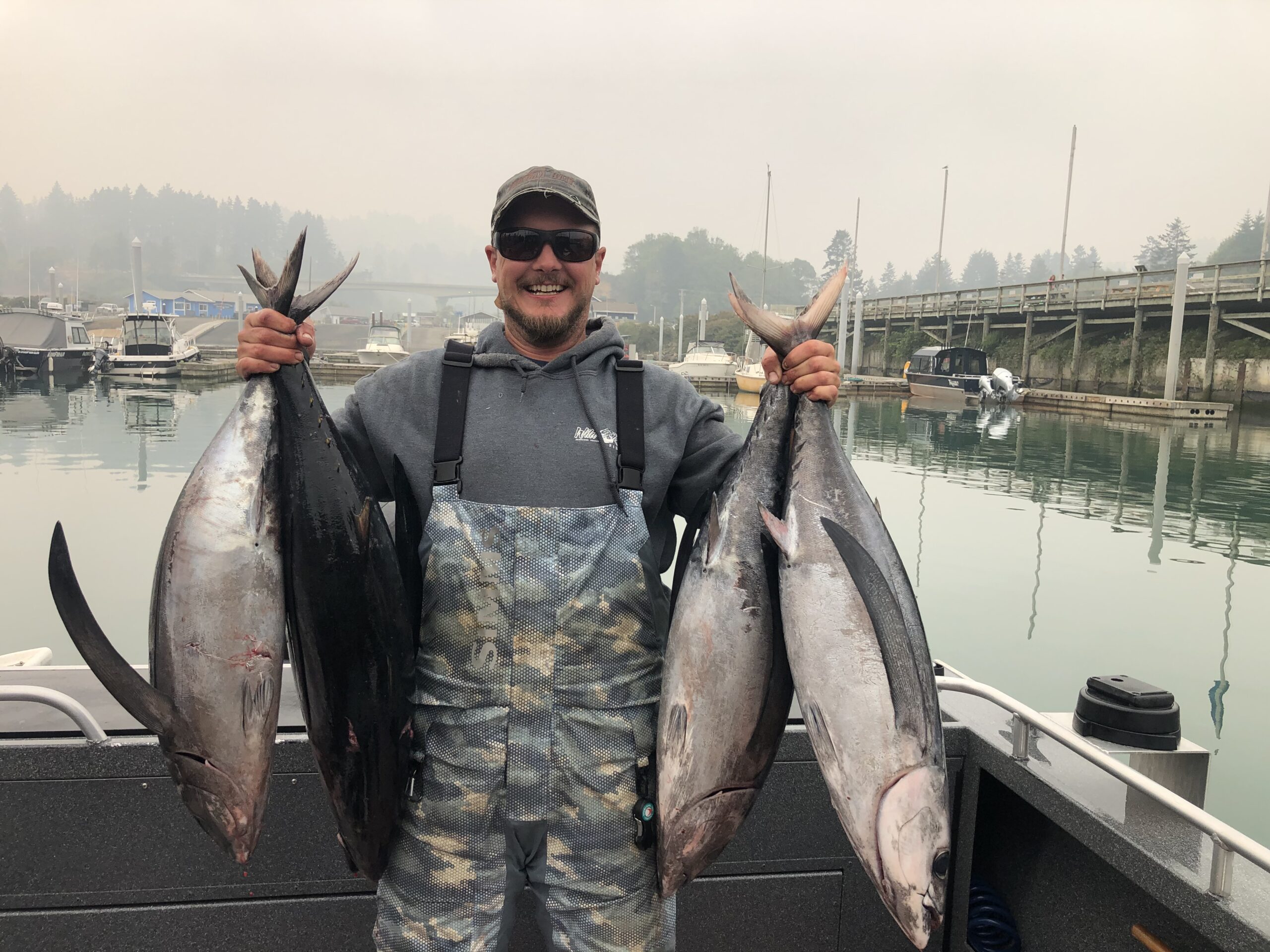
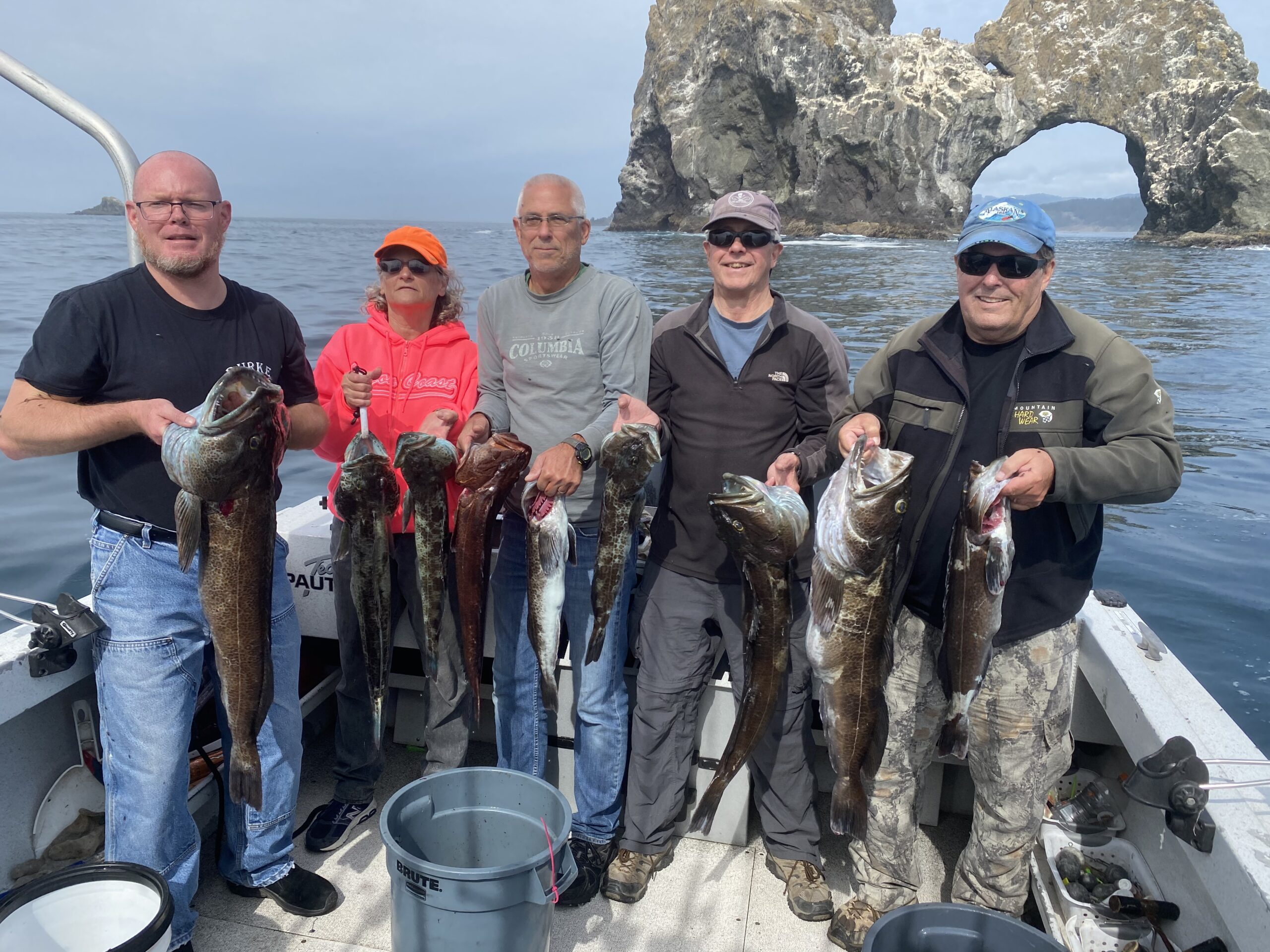
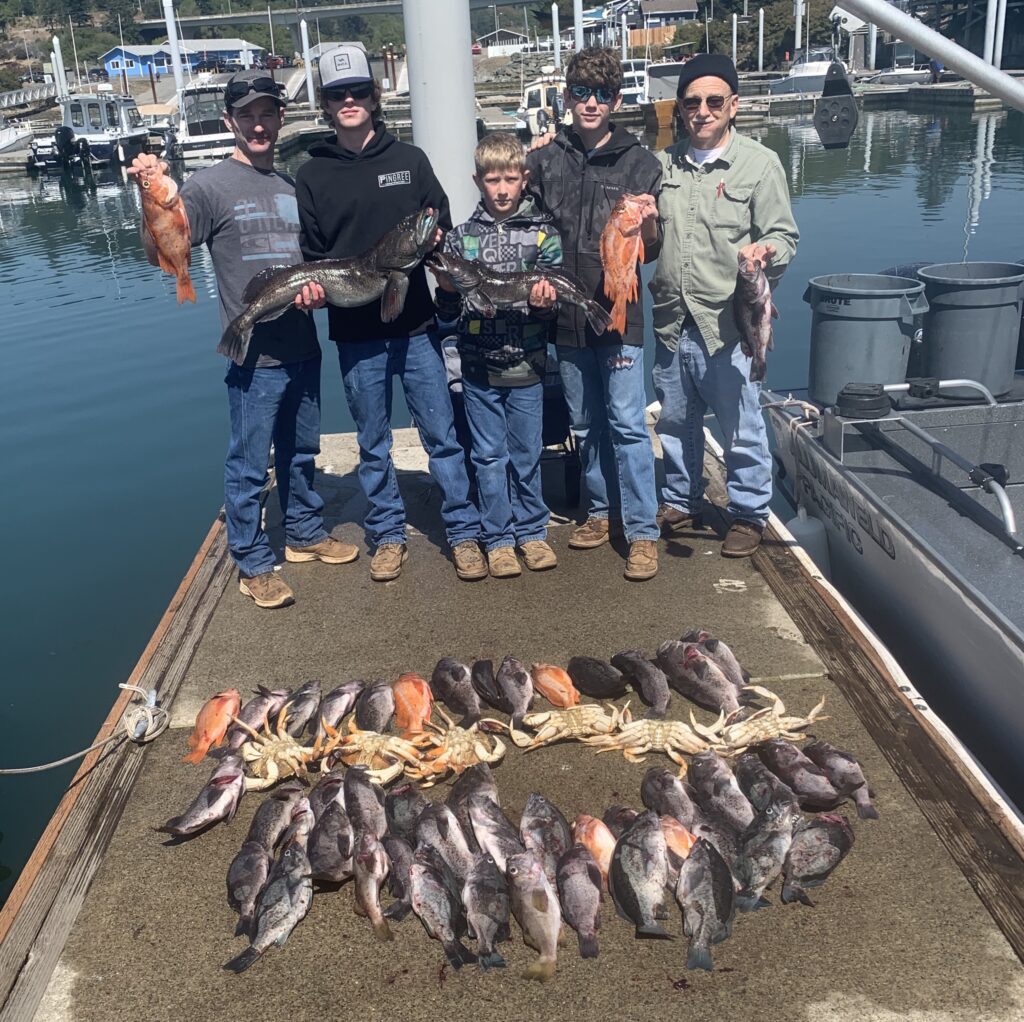
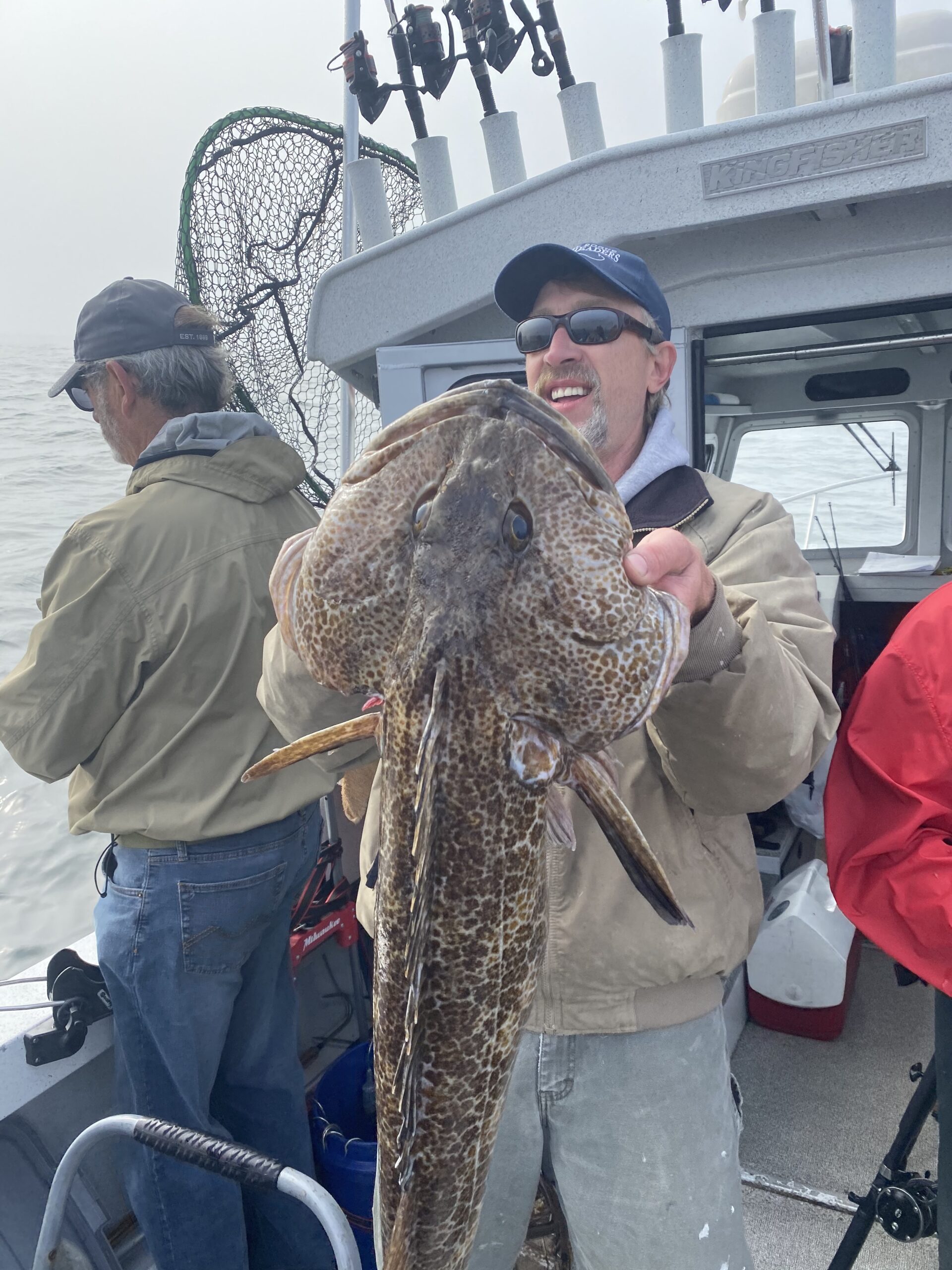
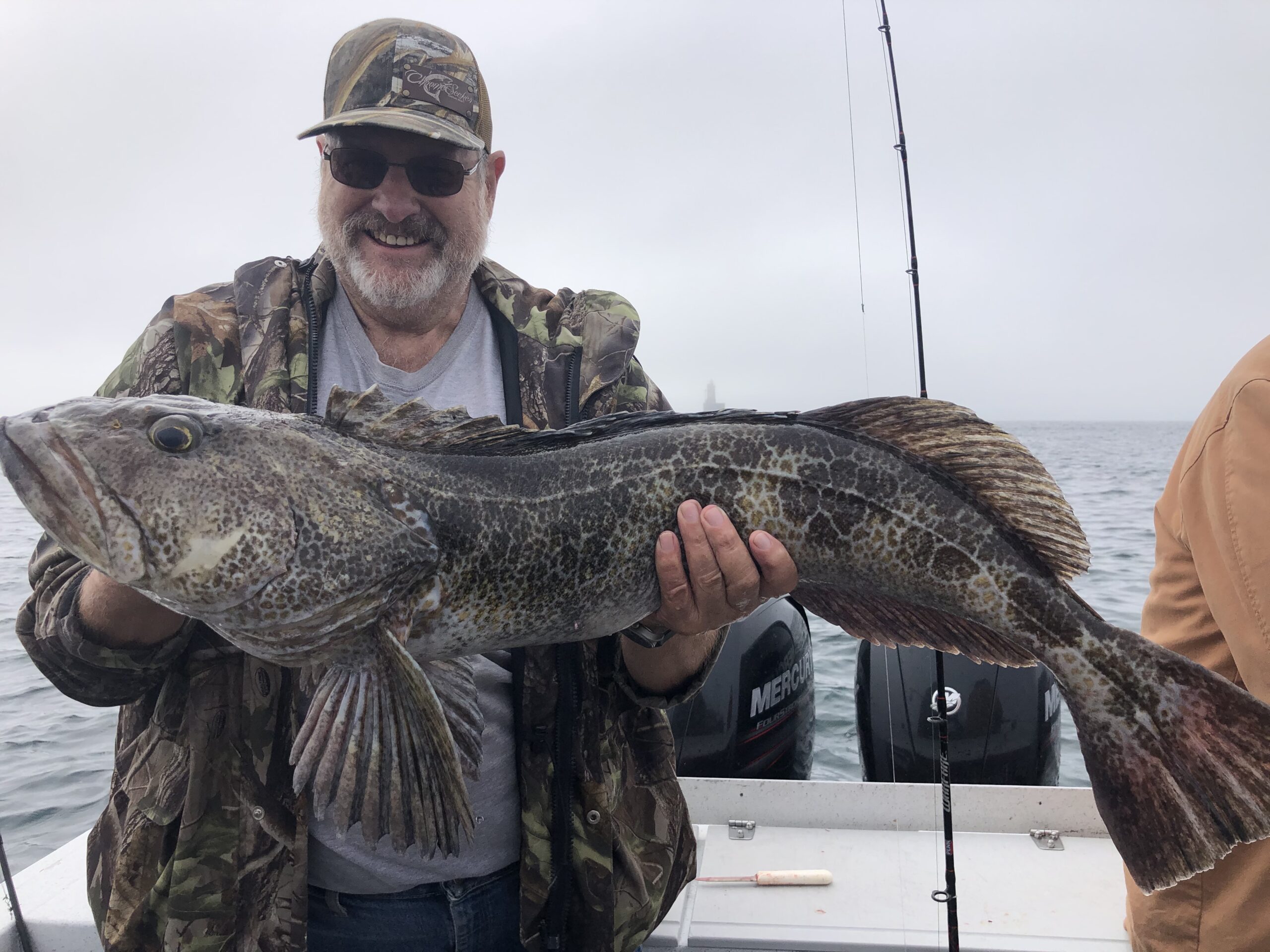
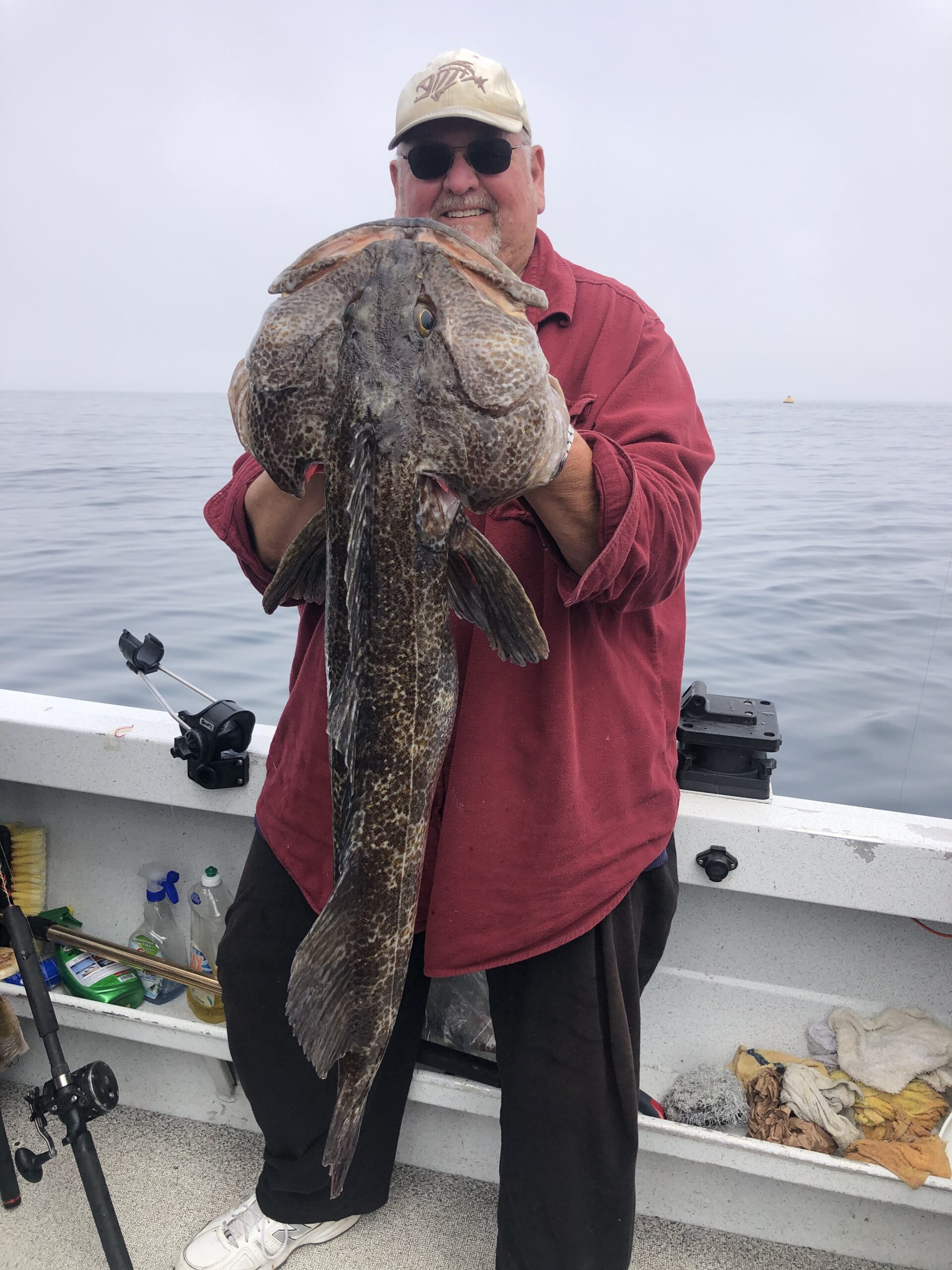
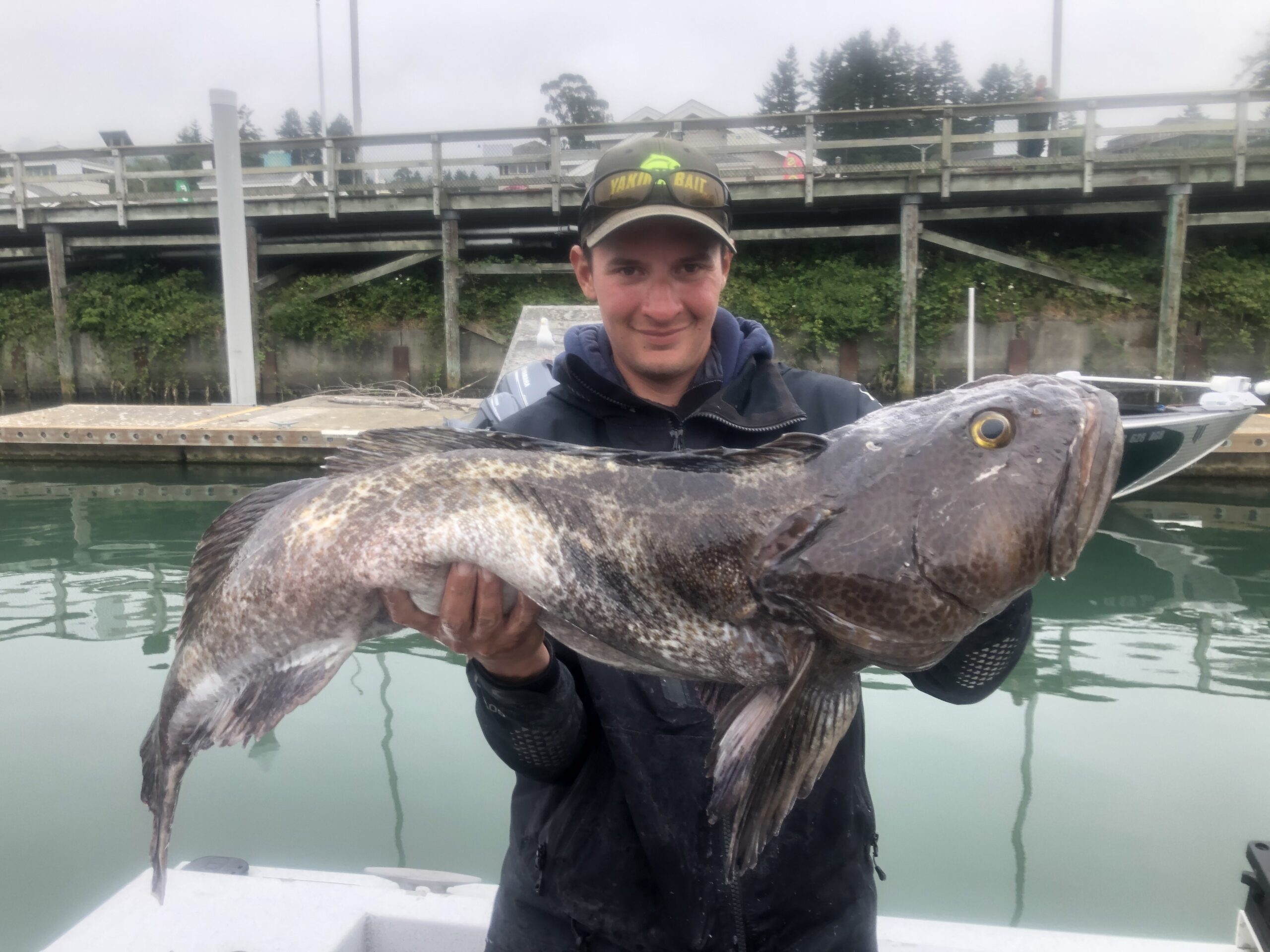
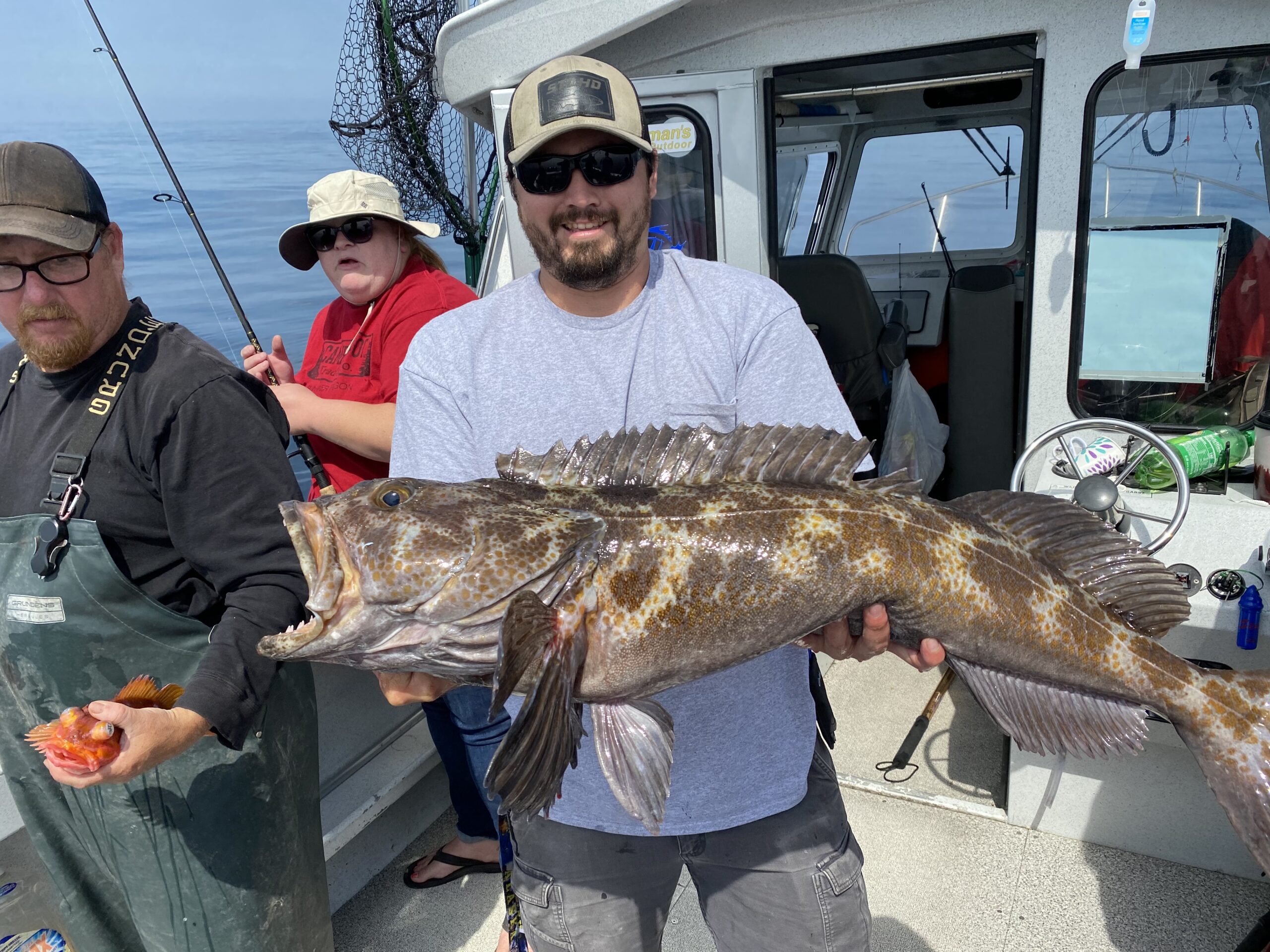
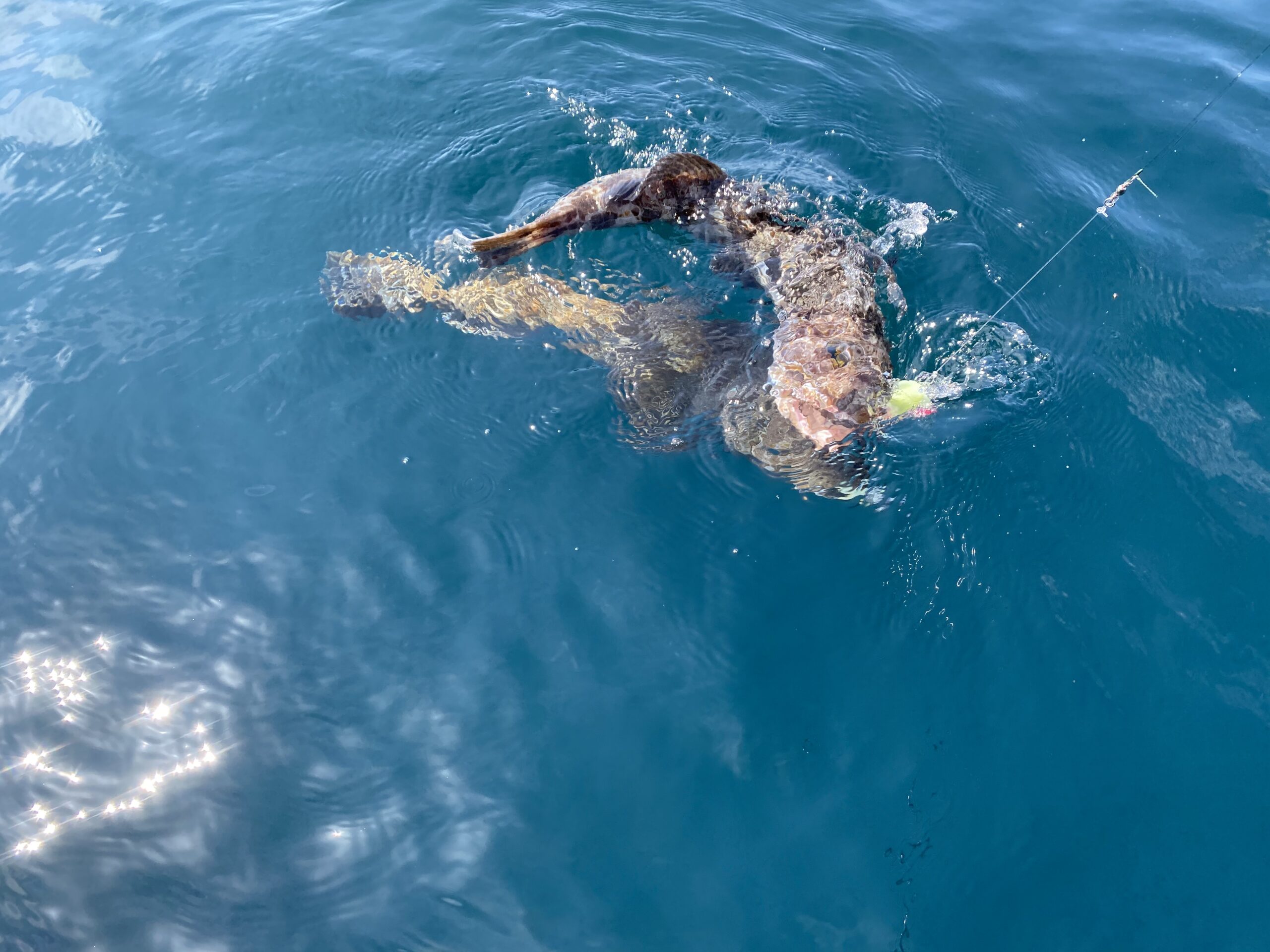
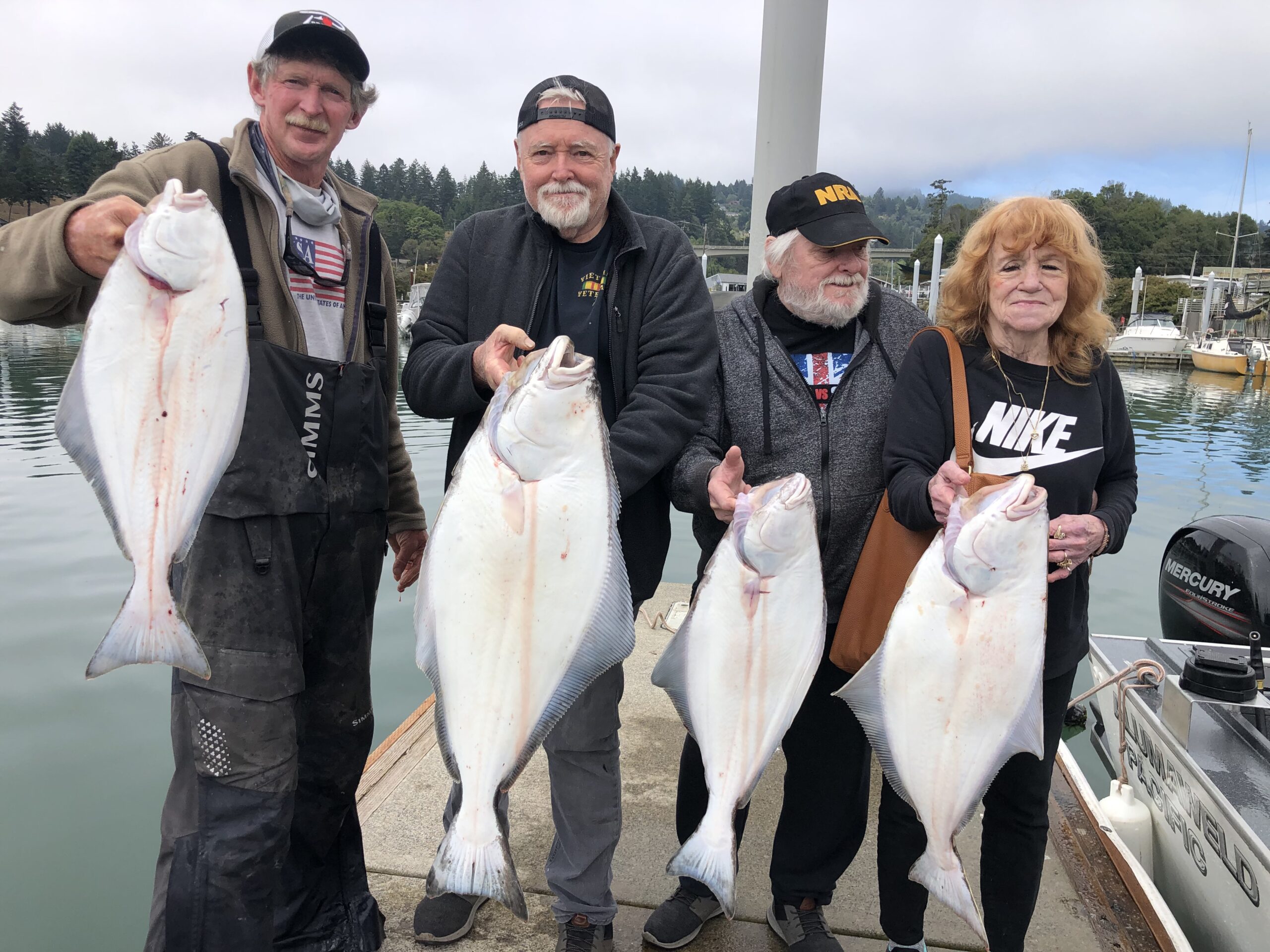
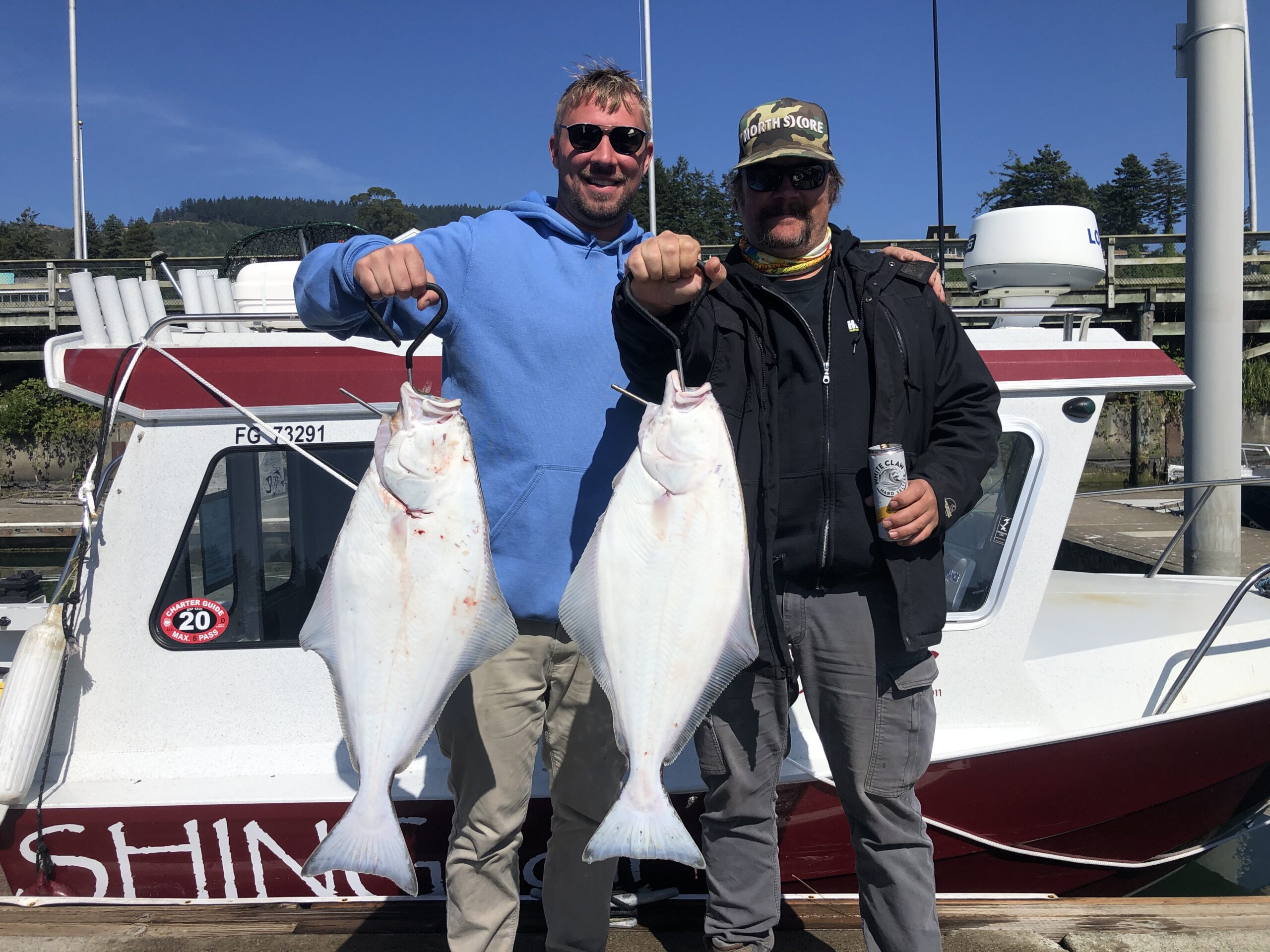
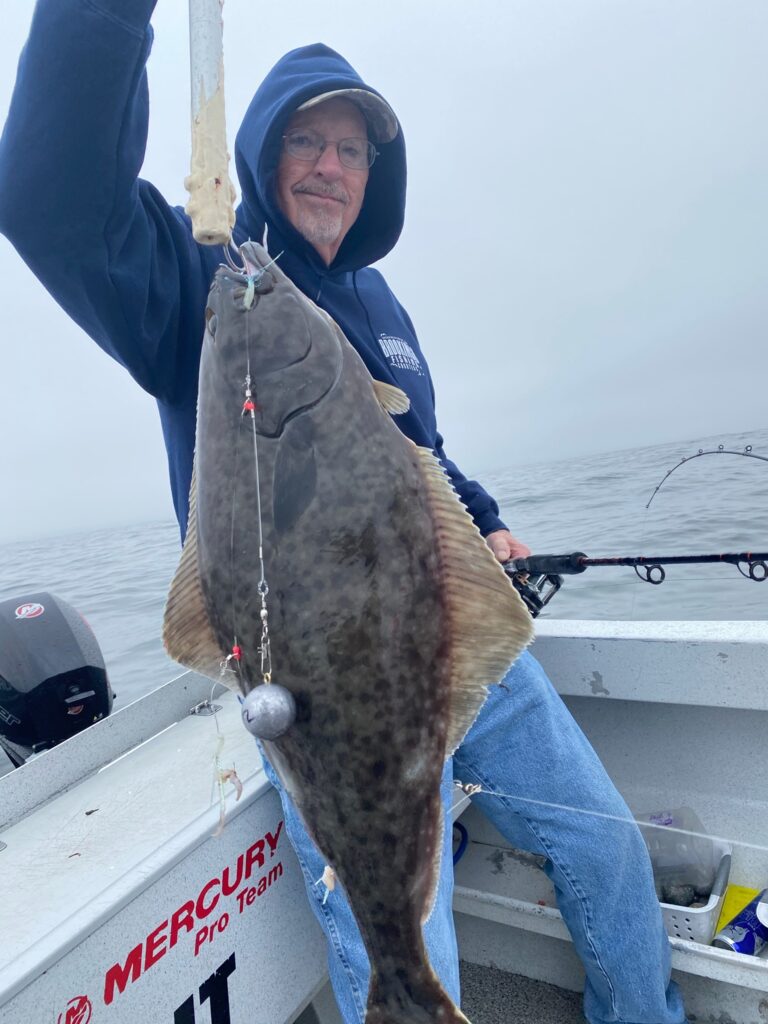
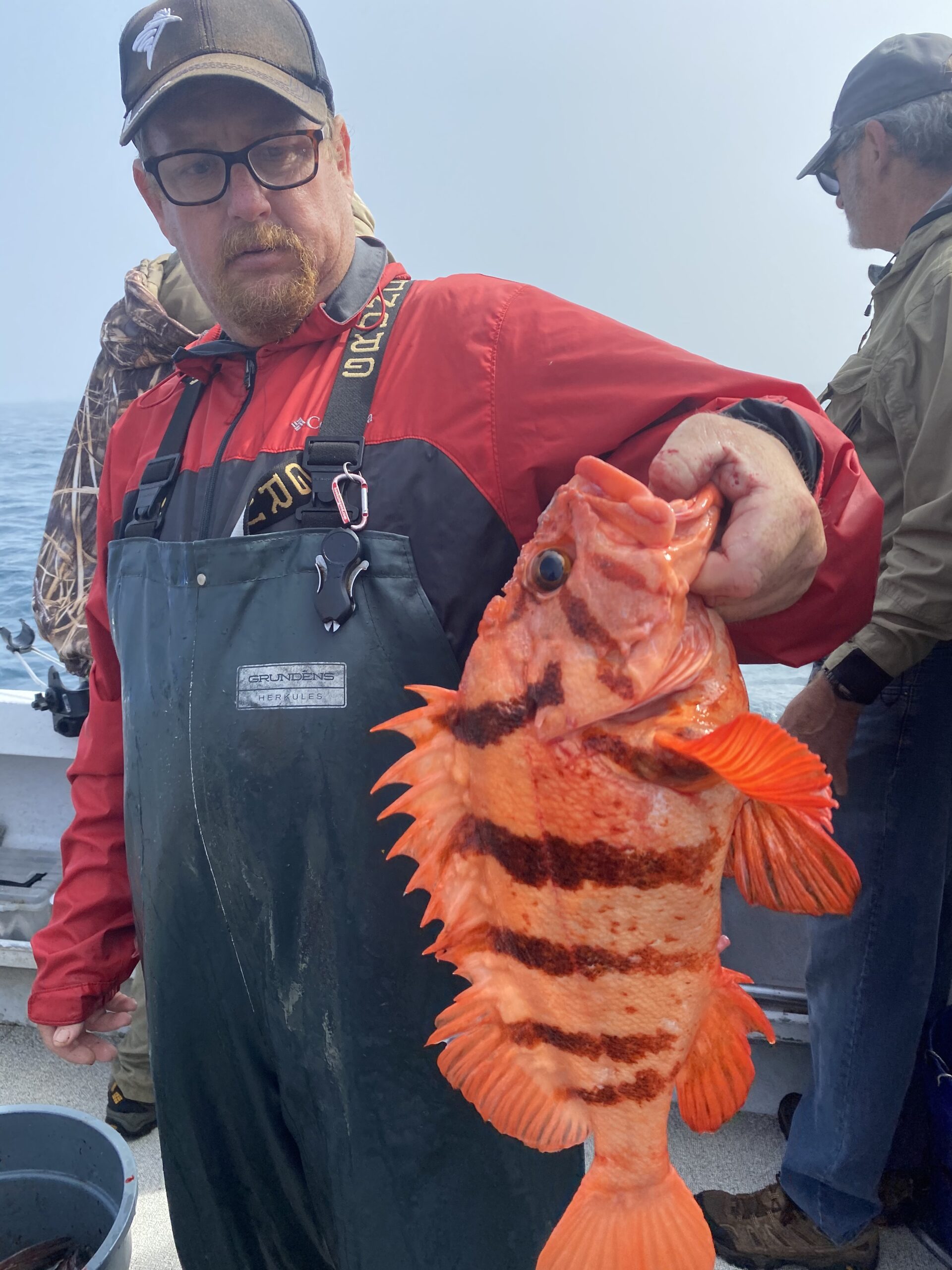
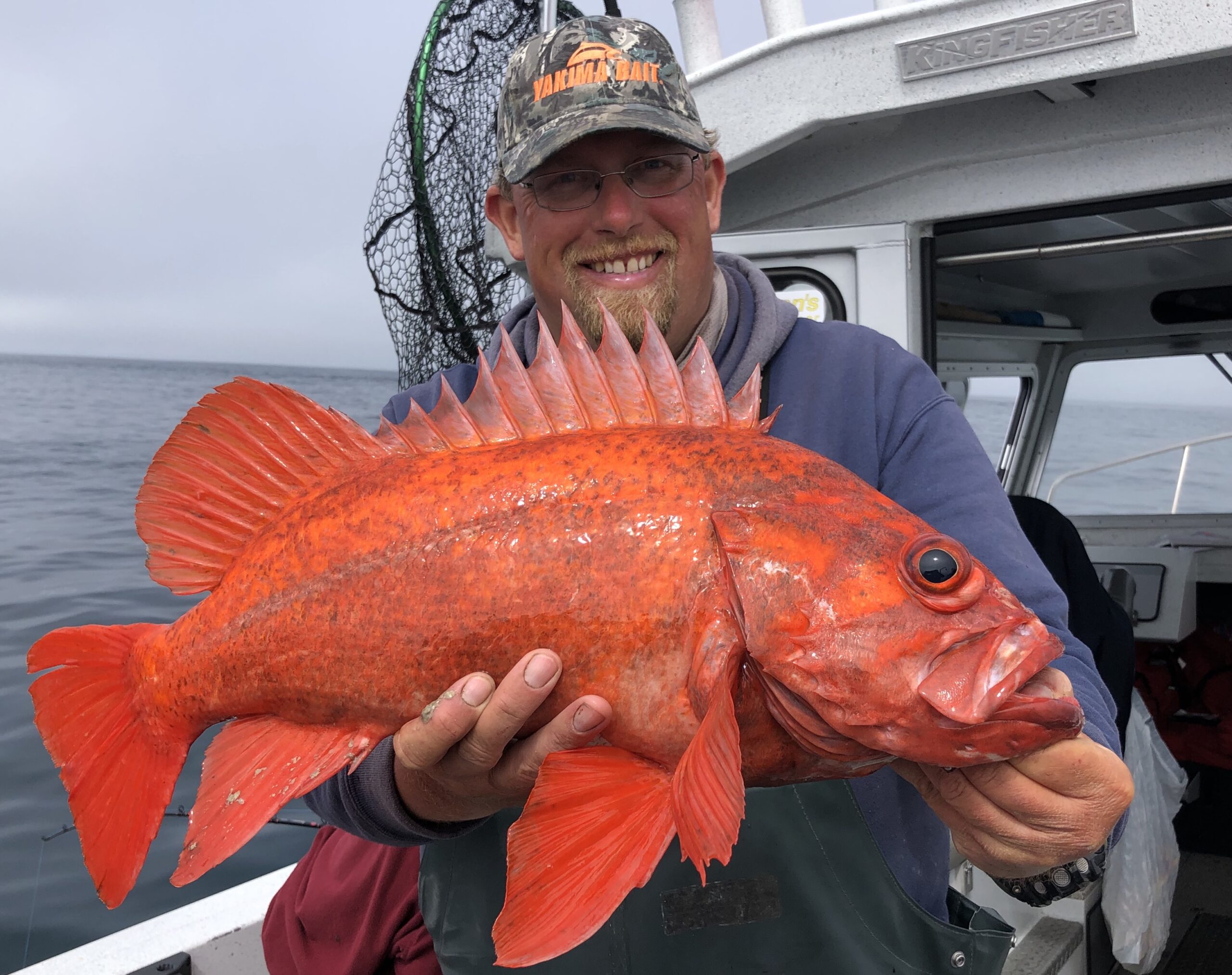
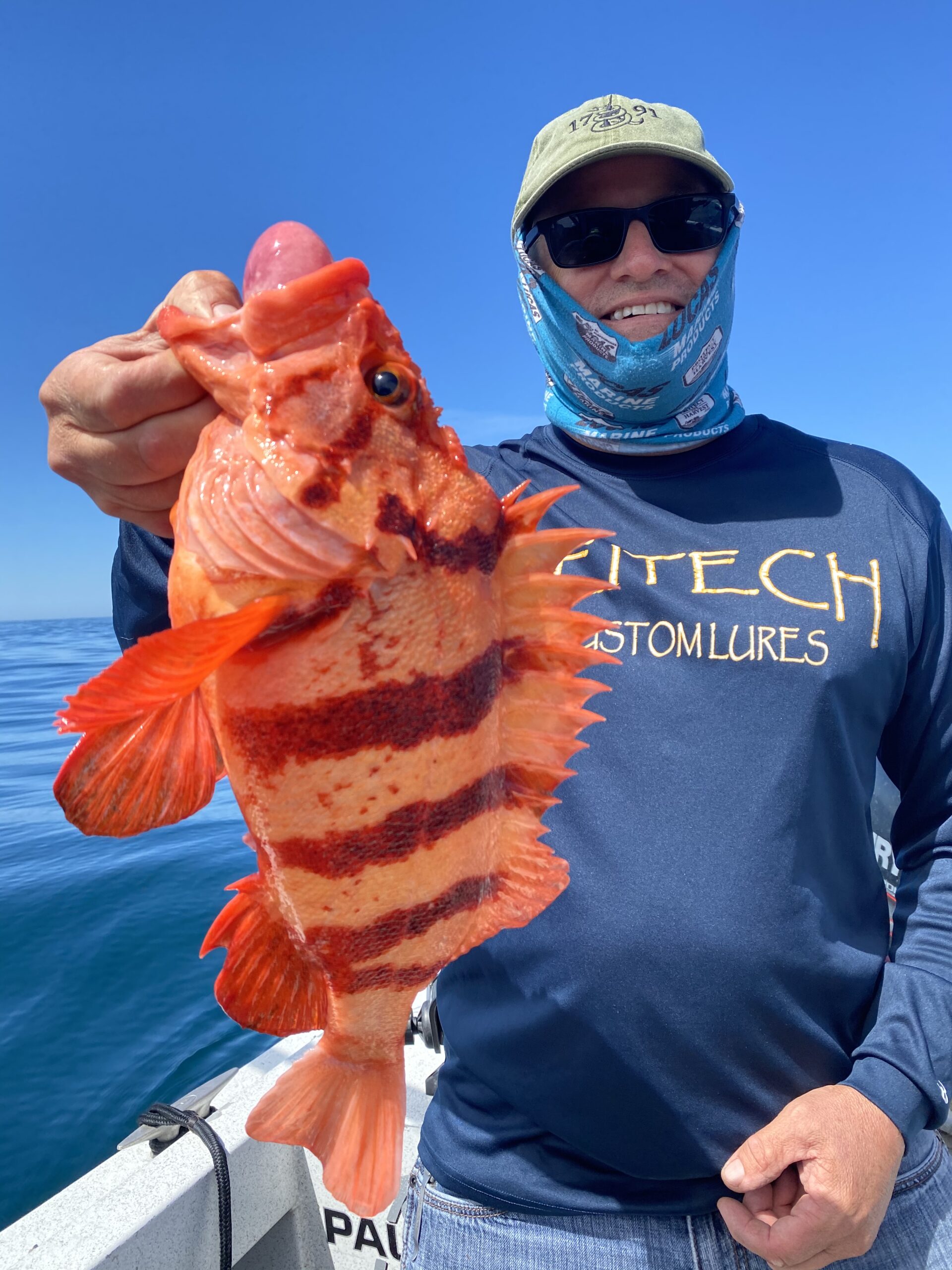
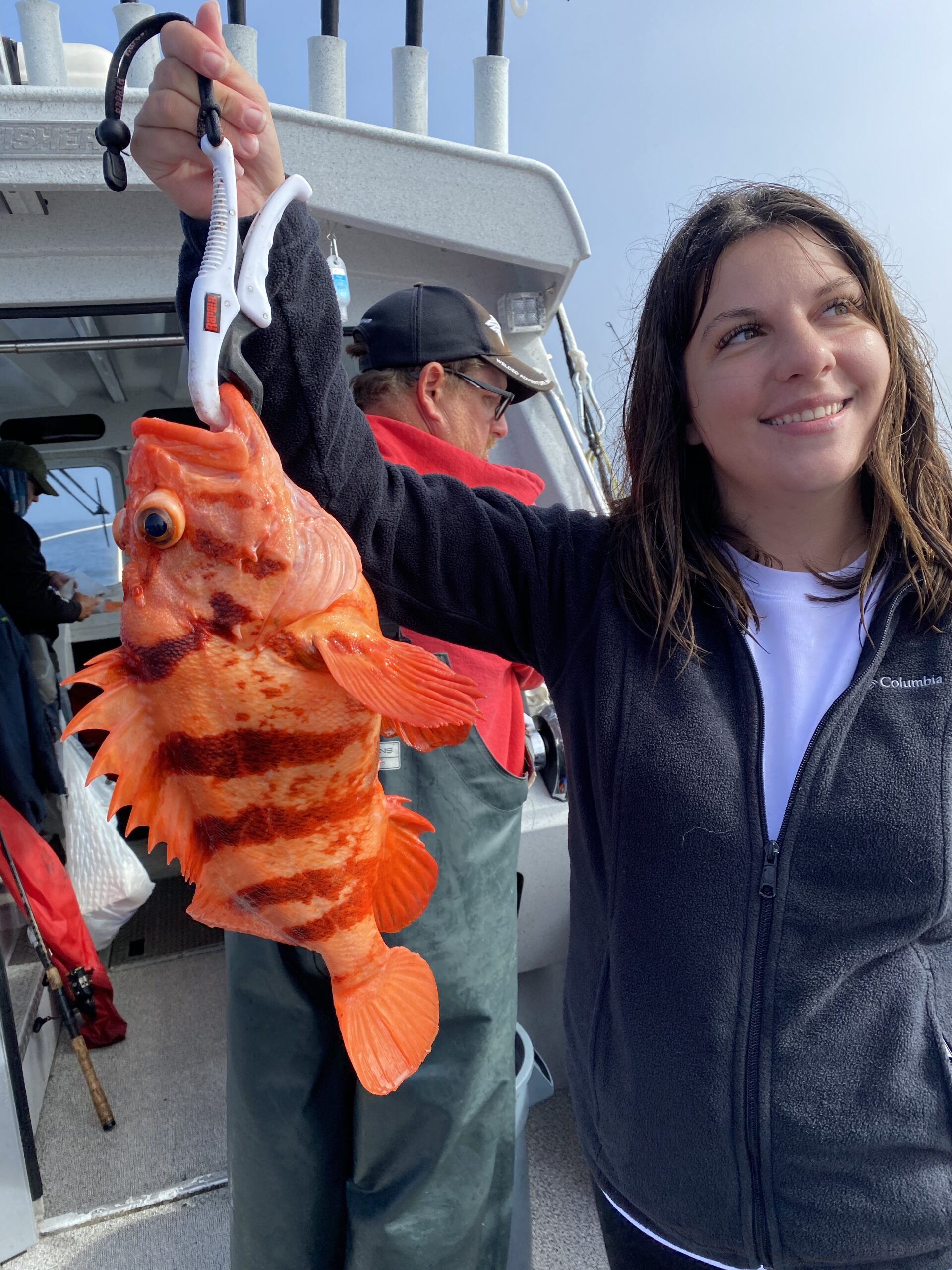
While fish tacos and fish and chips have long been a favorite way to enjoy the tasty rockfish caught aboard our fishing charters, Rockfish and Sausage Stew is a delicious meal that is great any time of the year. This recipe is easy, quick, and will leave your family or guests wanting a second helping. It also is friendly to low-carb and keto diets.
Rockfish and Sausage Stew can be prepared from fresh or frozen rockfish. Other white-fleshed fish fillets, including lingcod, halibut or Pacific cod can be used. Great on a cold, stormy winter day with fish from the freezer, or on those cool, foggy Oregon Coast summer evenings.
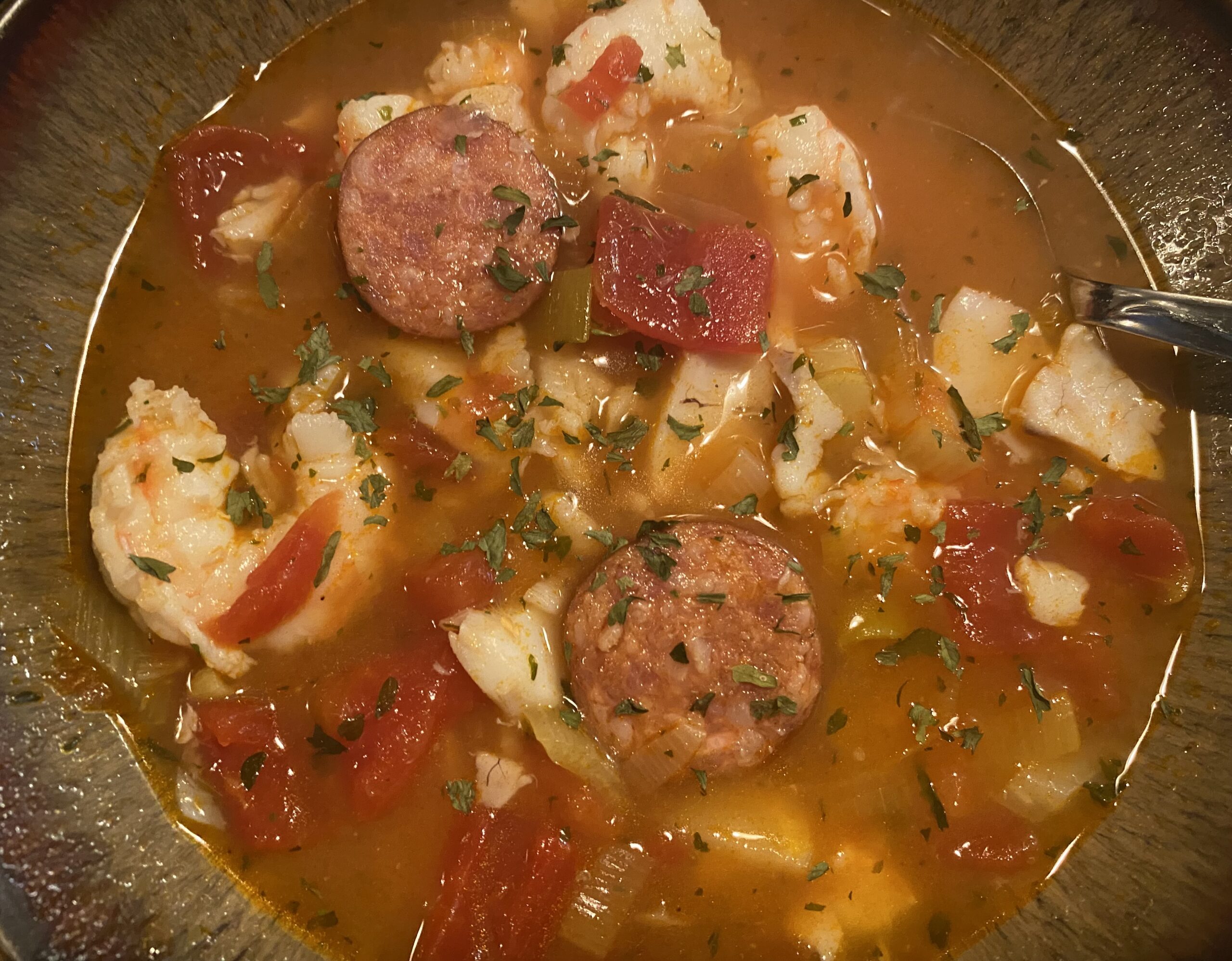
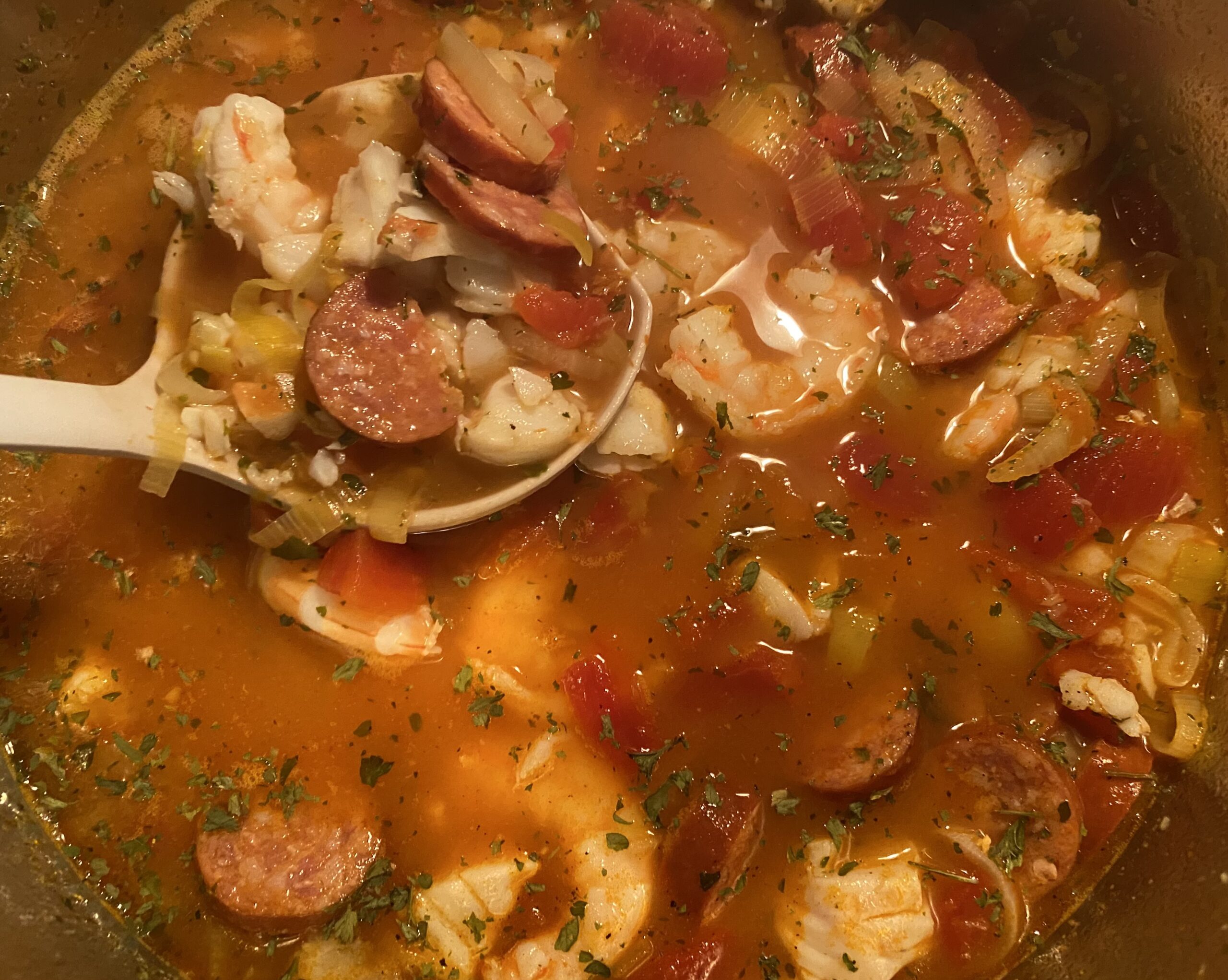
Rockfish and Sausage Stew is a delicious way to enjoy Oregon Coast rockfish.
Ingredients
2 tbsp. butter or olive oil
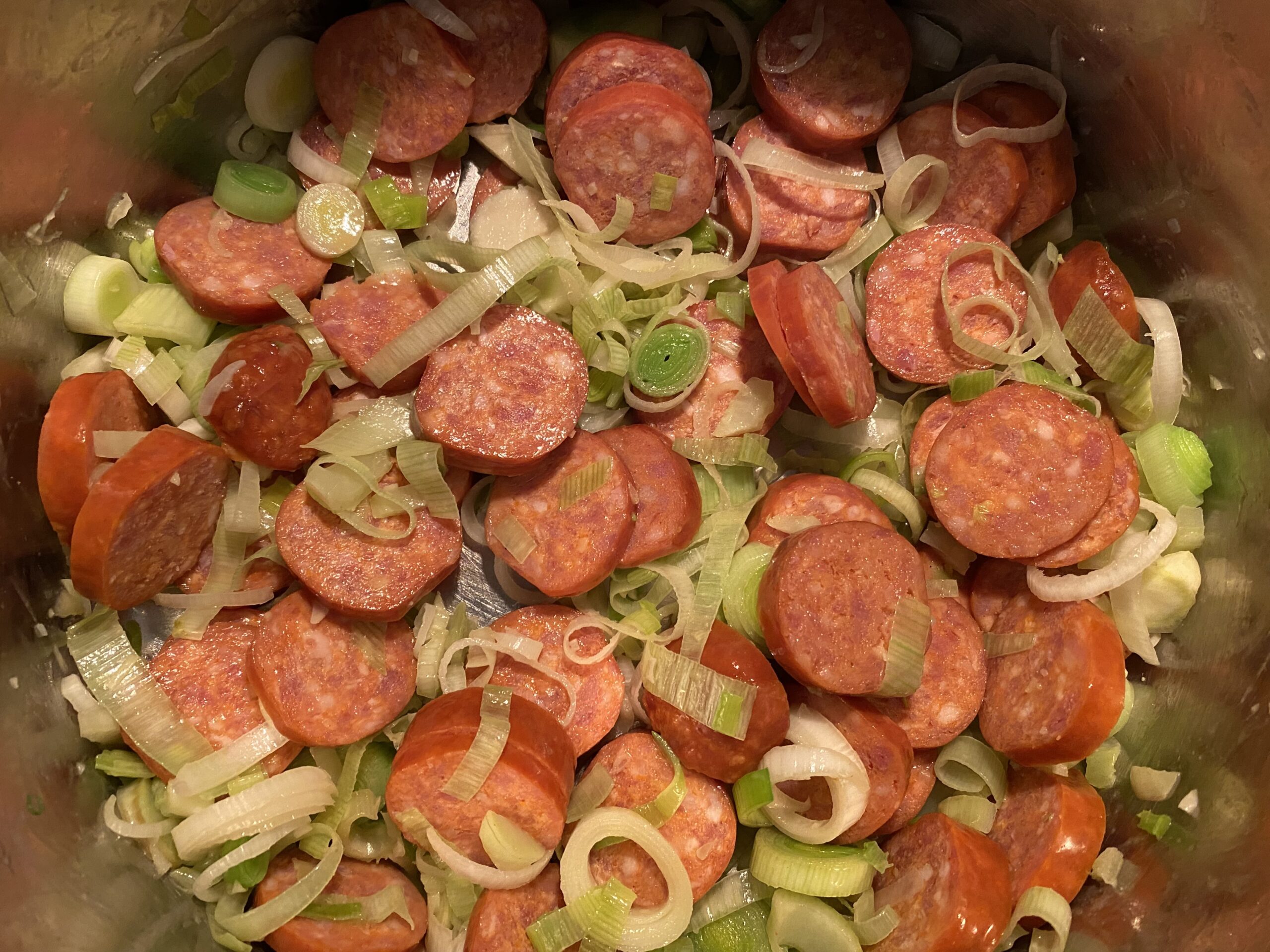
6 oz. cooked andouille sausage, sliced
2 small leeks, white and light green portions, sliced
1 fennel bulb, chopped
2 garlic cloves, chopped
2 tbsp. parsley, chopped
2 bay leaves
1/3 cup white wine
1 can (28 oz.) diced tomatoes
2 bottles (8 oz, each) clam juice
3 cups water
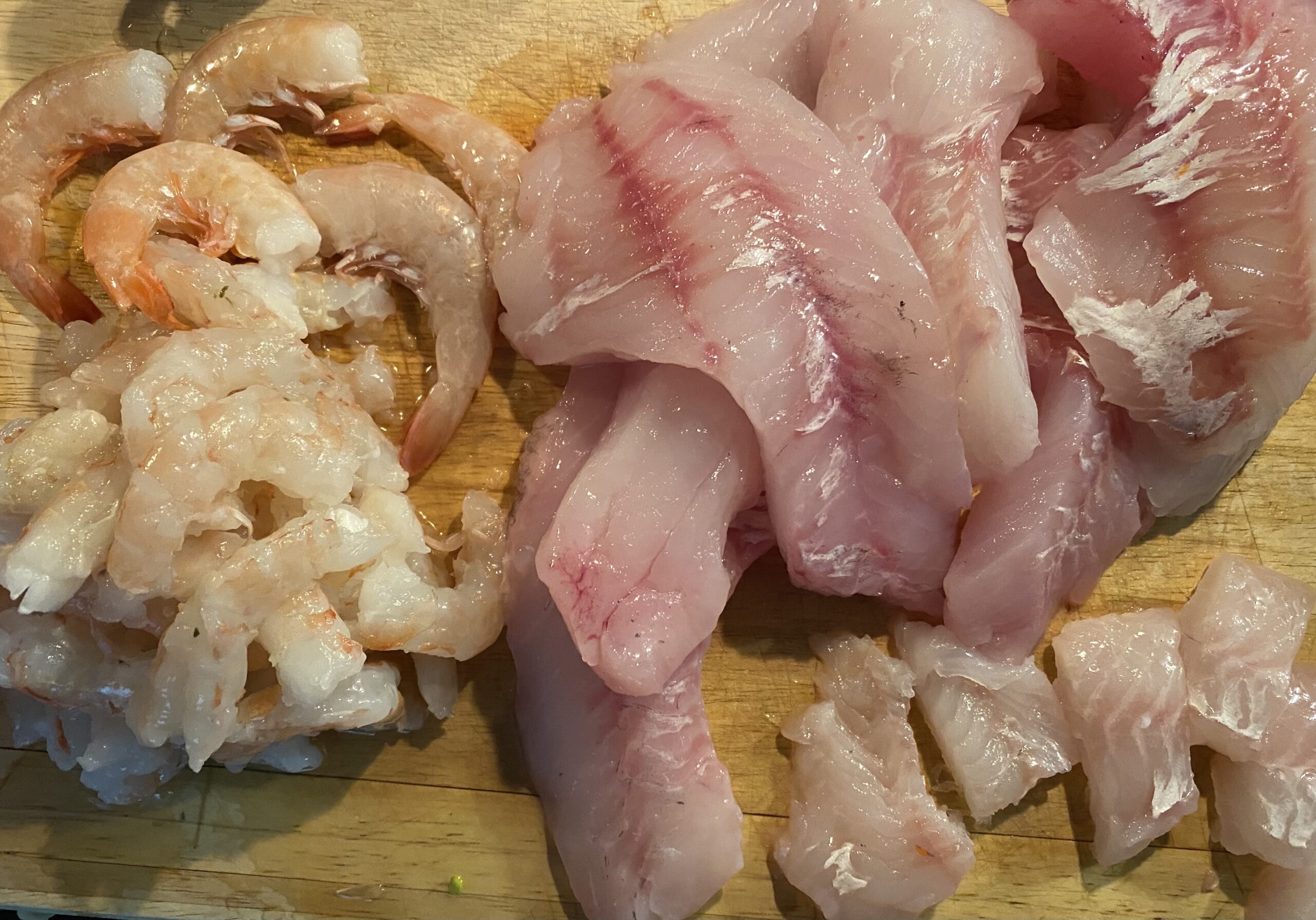
1 lb. rockfish fillets, boneless and skinless, cut into small pieces
1/2 lb. Oregon pink shrimp meat, or peeled and deveined medium shrimp
salt and pepper to taste
Cut a pound of rockfish fillets into small pieces, about 1 square inch each. The fillets of two or three rockfish is all that is needed for this recipe.
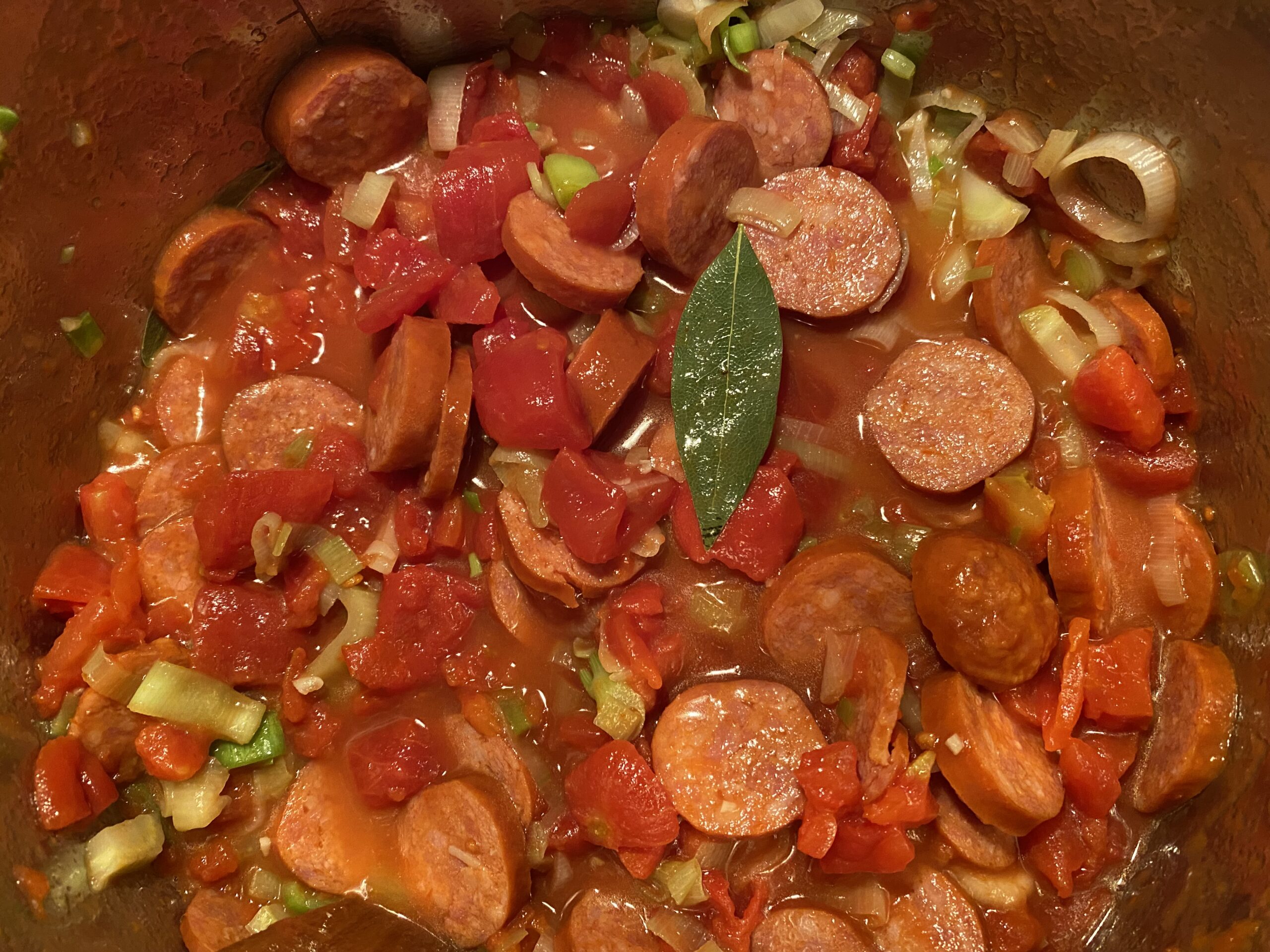
In a large pot, heat the olive oil or butter, and add sliced sausage, leeks and fennel. Cook over medium heat for 5 minutes. Add garlic and bay leaves. Add white wine and cook for 2 minutes.
Add tomatoes and increase heat to medium high. Cook, stirring occasionally, for 10 minutes. Add clam juice and 3 cups water. Bring to a boil, and add pieces of rockfish. Cook 4 minutes. Add shrimp meat.
Cook for 2 to 3 more minutes, discard bay leaf, stir in parsley, and season to taste with salt and pepper.
The finished stew will have you coming back for seconds.
To catch a limit of rockfish to make Rockfish and Sausage Stew, or any of our other great seafood recipes, book a Brookings fishing charter at www.brookingsfishing.com
The best ocean salmon fishing in more than seven years is happing in Brookings this summer, as big schools of anchovies are attracting impressive numbers of kings and coho just outside of the harbor.
The charter boats working out of the Brookings Fishing Charters office have regularly been catching limits or near limits of salmon. While some days have been slow, the overall king salmon fishing this season has been well above average. Salmon to 25 pounds are being caught.
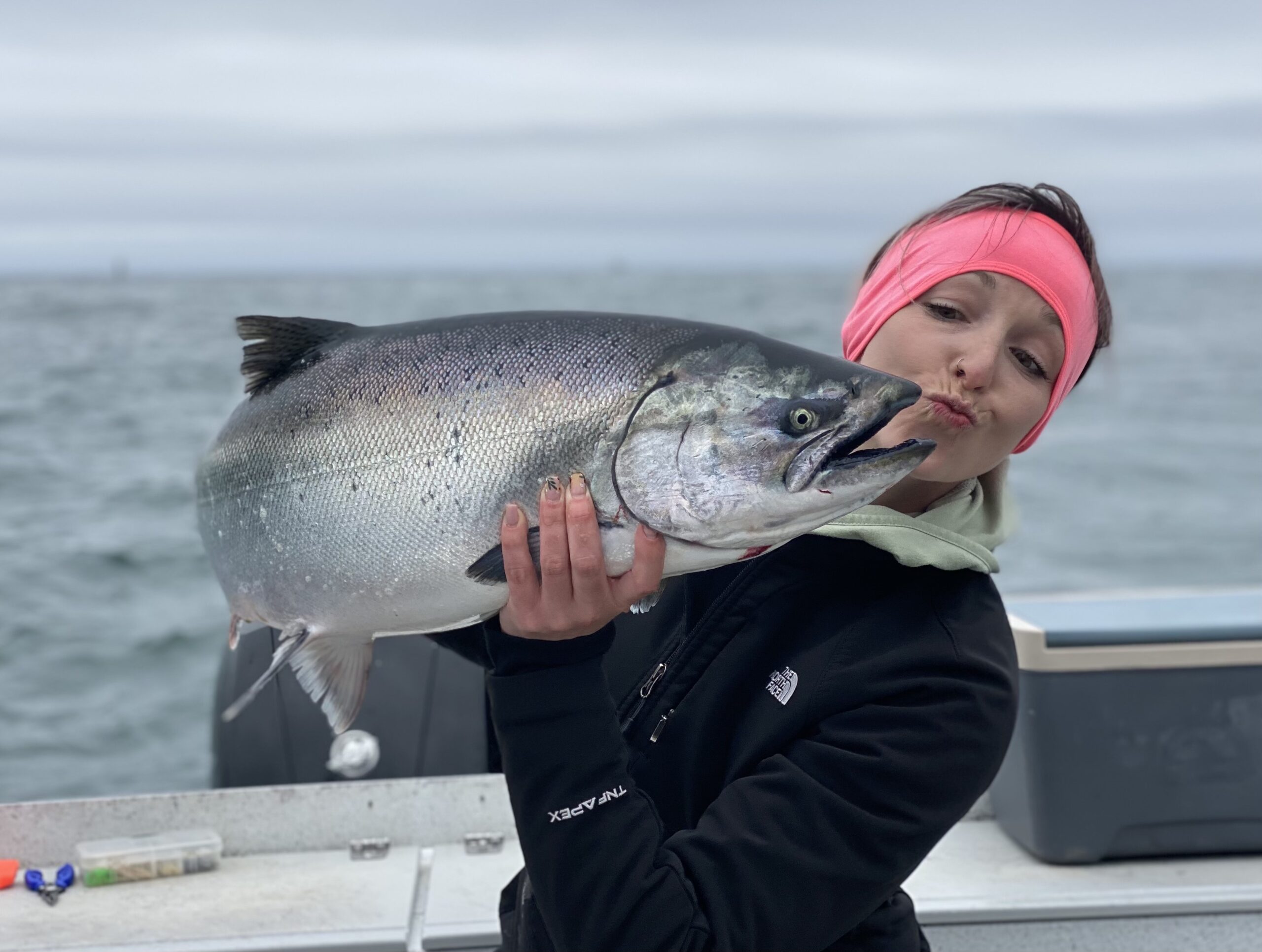
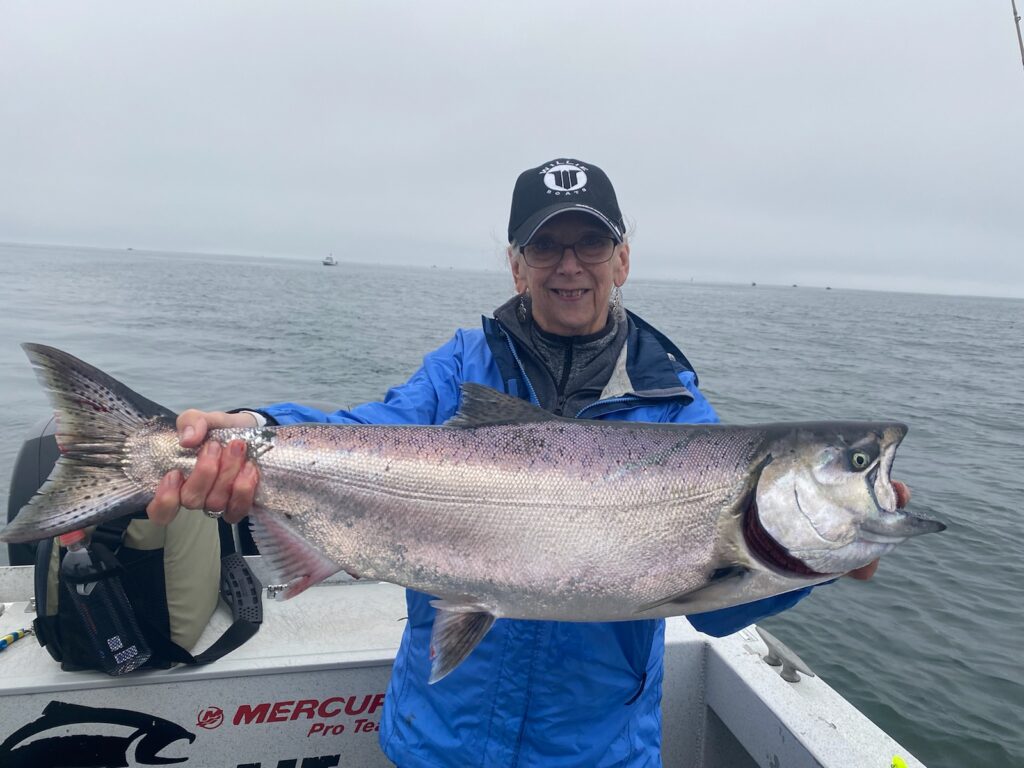
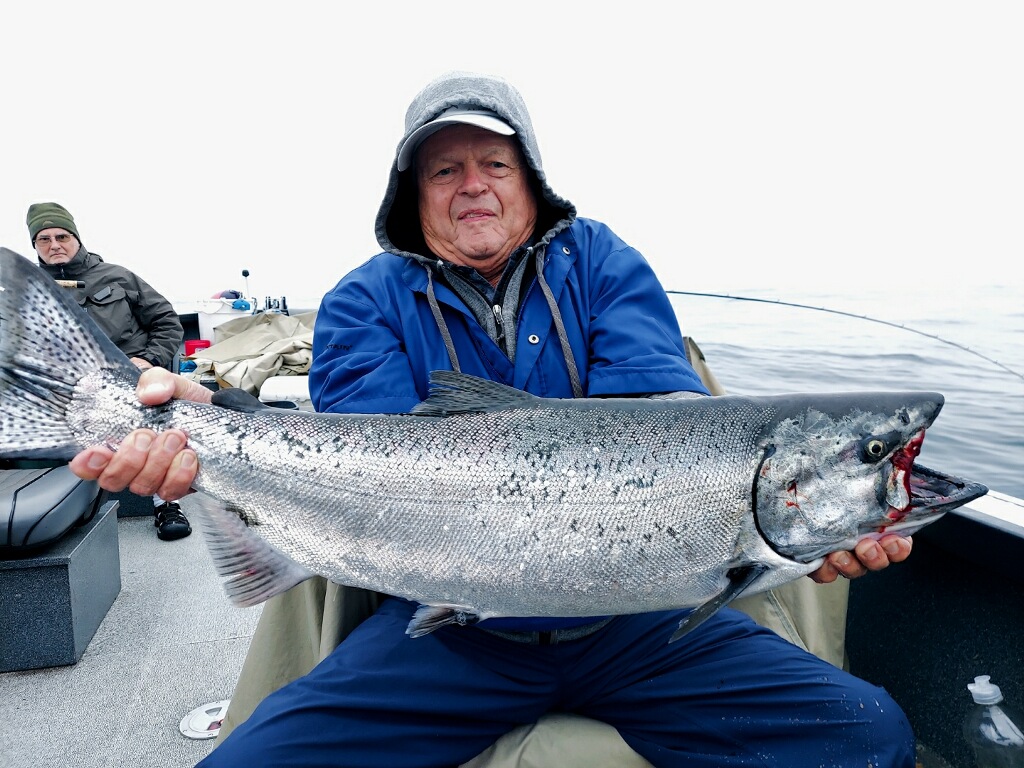
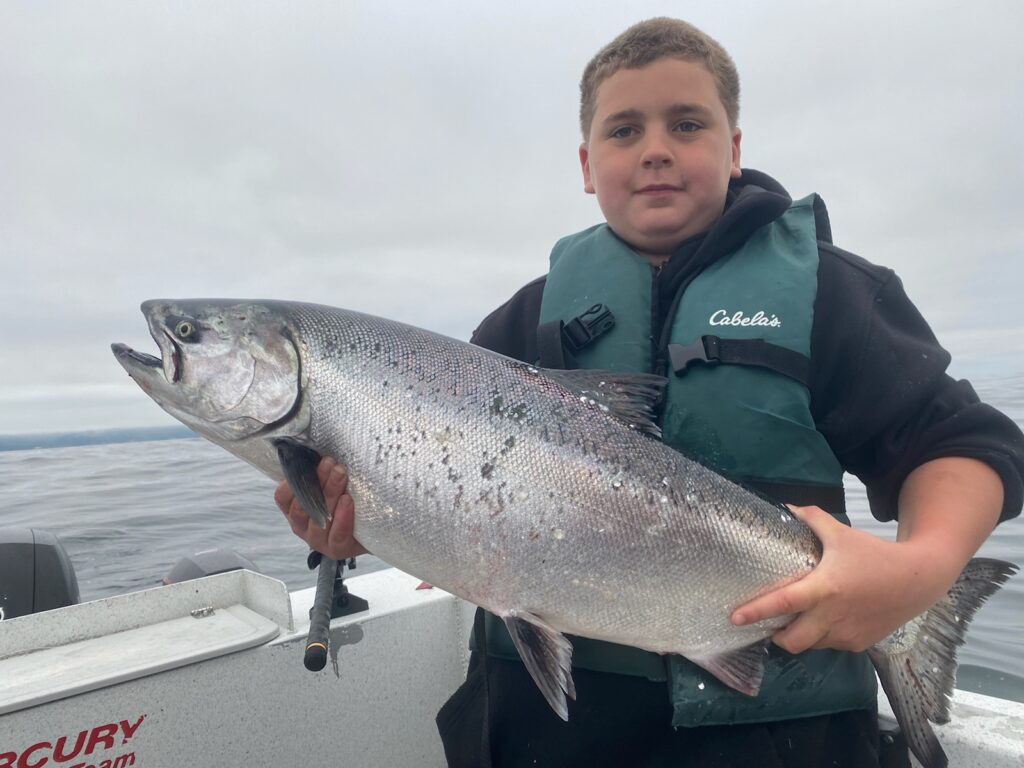
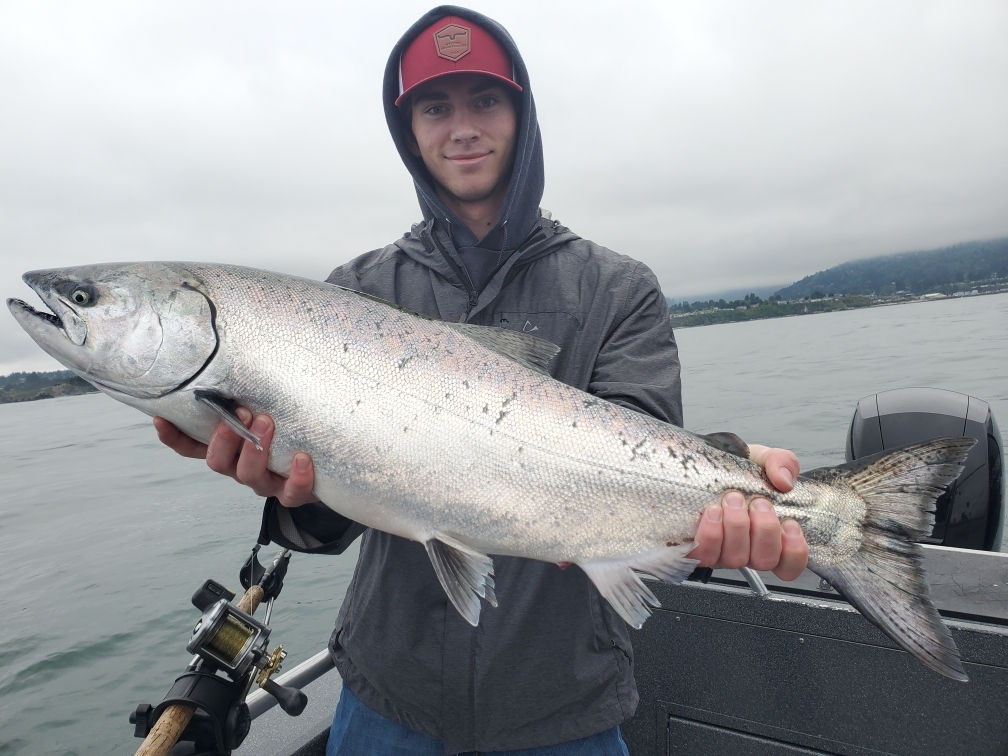
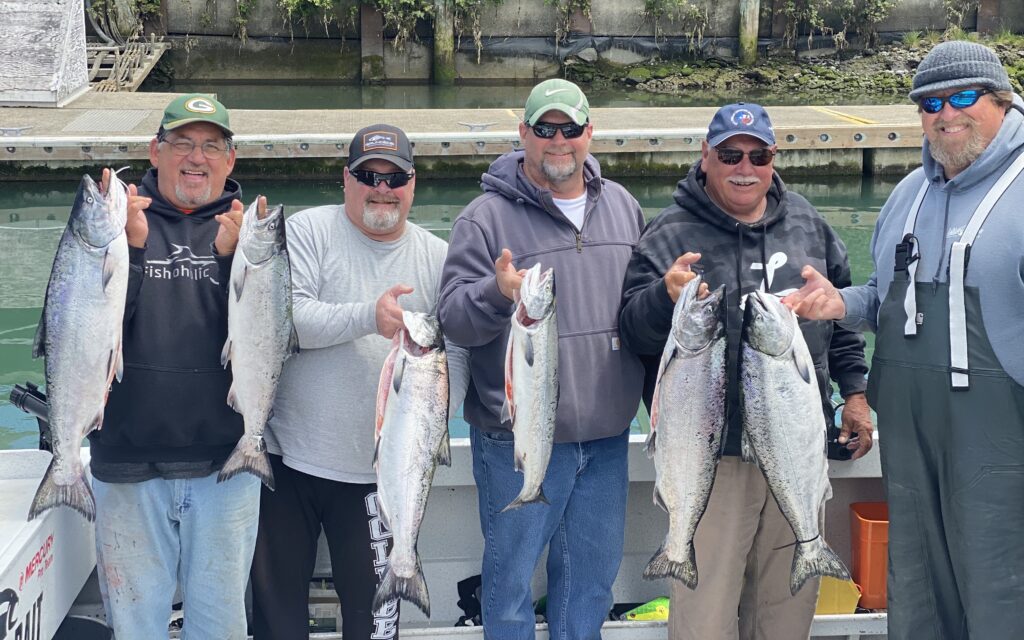
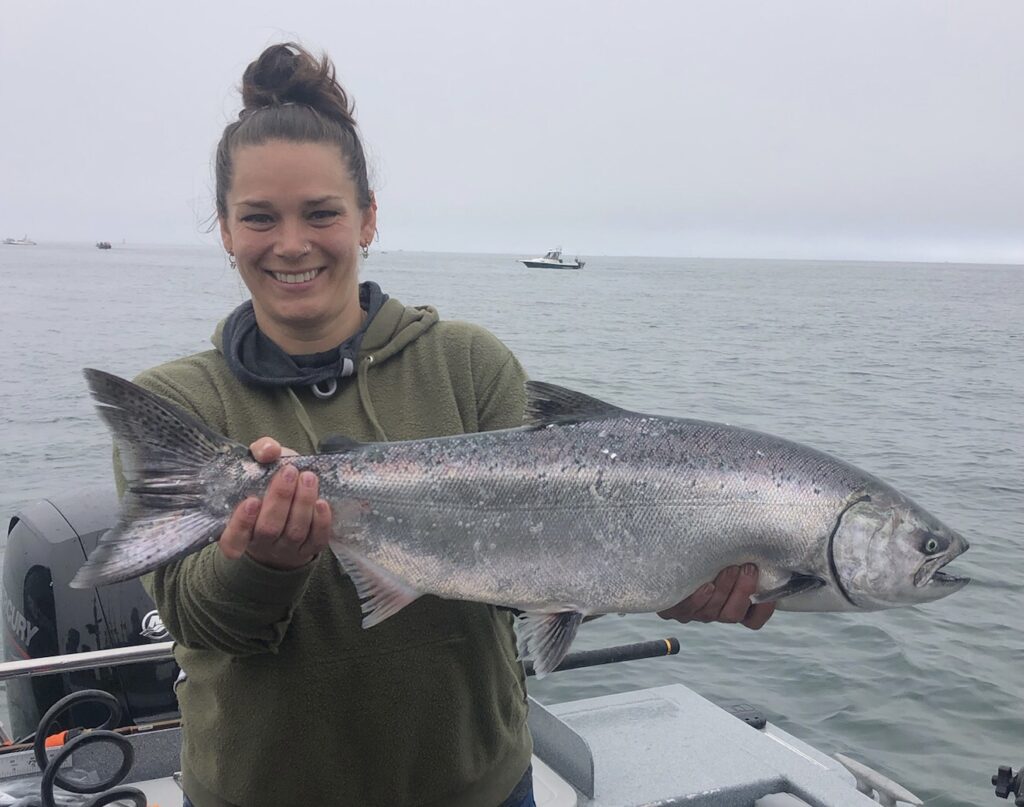
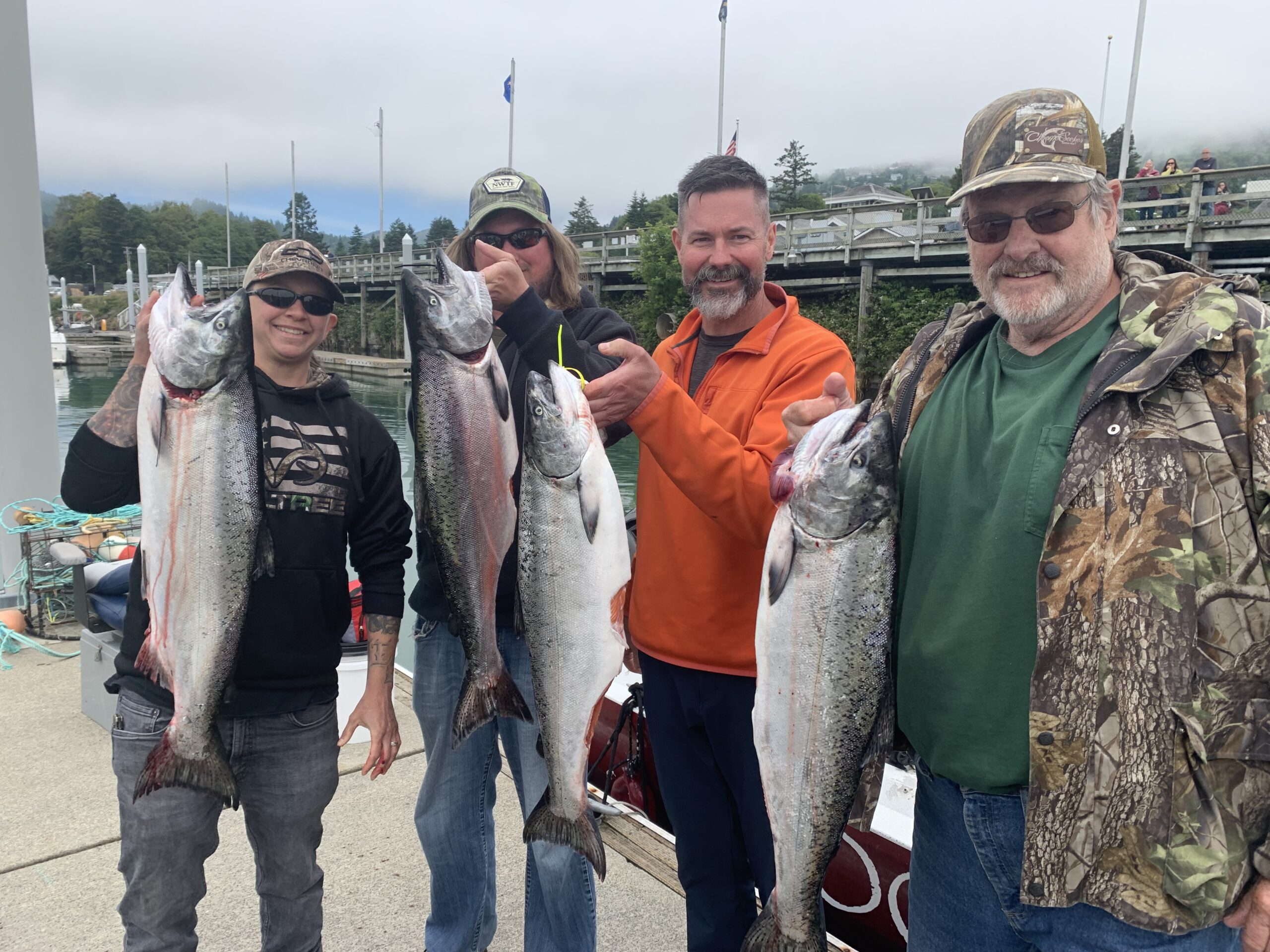
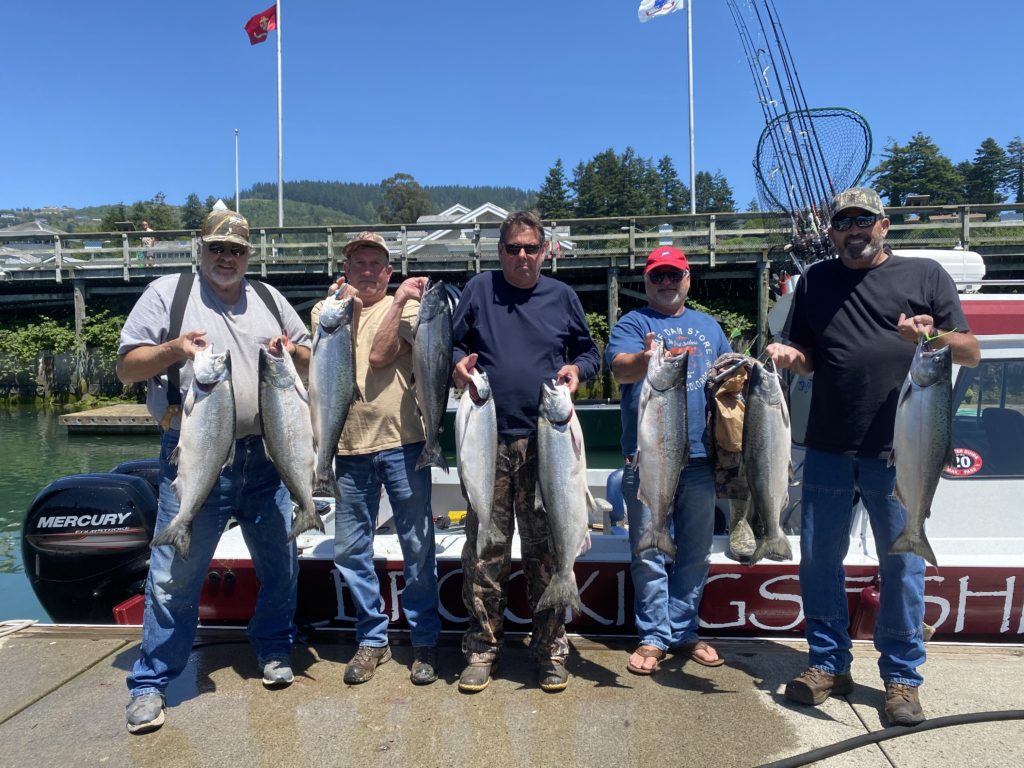
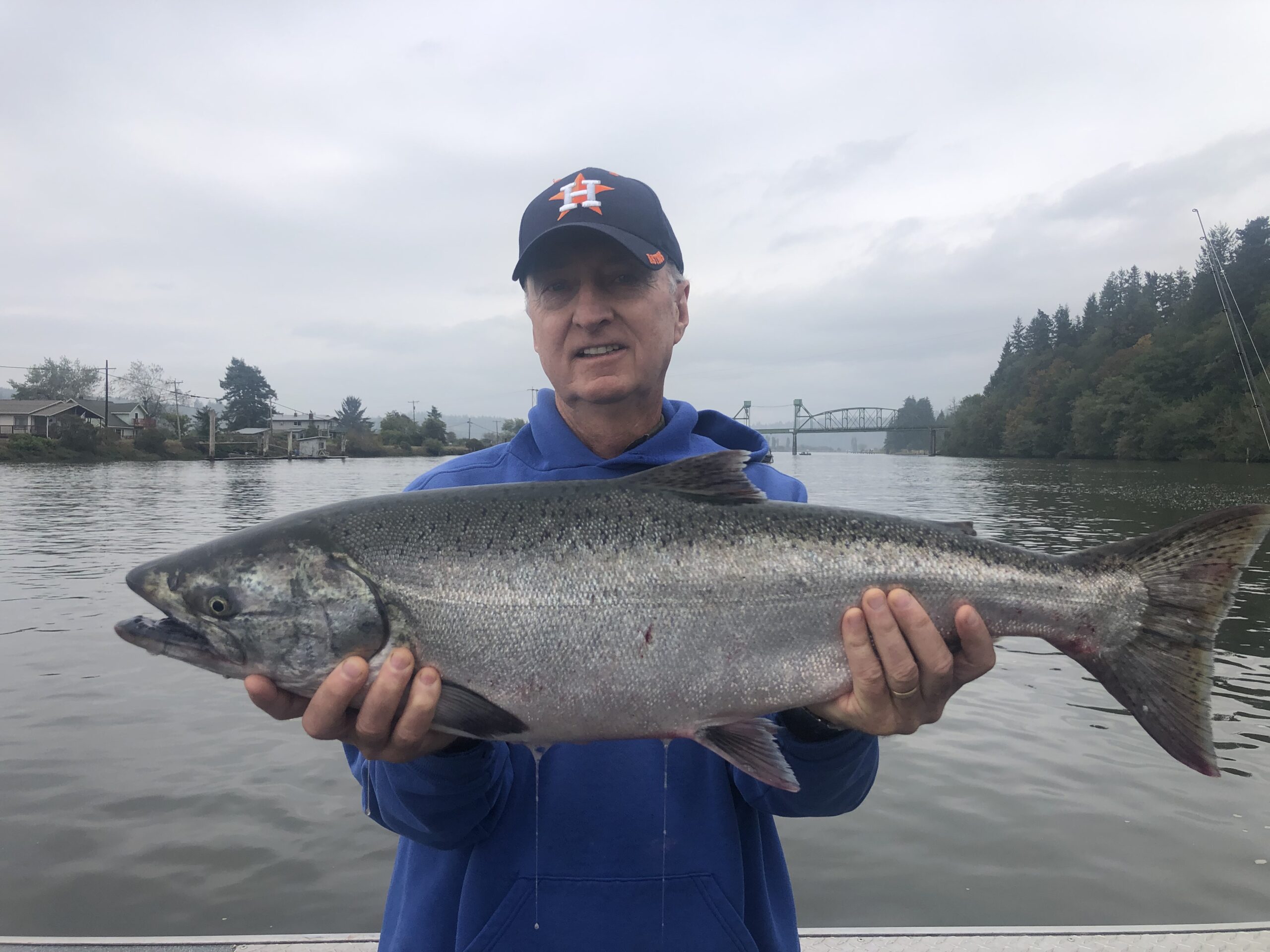
The salmon being caught out of Brookings this summer are nice-size kings.
Salmon season opened June 12 out of Brookings. Only hatchery coho salmon could be kept the first week. King season opened June 19. Both wild and hatchery kings and hatchery coho may be kept through mid August. The coho season will run through late August.
The first week of the season, fishing was wide open for silver salmon, which are also known as coho salmon. The Miss Brooke, Bout Time and Dash were getting limits nearly every day, while also releasing lots of kings. As soon as the king season opened, limits of near limits were being caught, with the salmon in close, feeding on thick schools of bait.
Limits of coho salmon caught aboard the Miss Brooke the first week of the season out of Brookings.
Windy weather has kept sport boats away from an area commonly known as “Salmon Ally.” Instead, anglers have been forced to fish closer to the buoys. Despite the wind, overall fishing has been good. Even better action is expected the second half of July as boaters can get offshore again during periods of nicer weather.
A nice catch of kings from the Miss Brooke in late June 2021.
Salmon have been biting anchovies or herring trolled close to the surface behind divers and Fish Flash flashers. Since the Brookings Fishing Charters captains are year-round fishing guides, working on the ocean charters during the spring and summer and local rivers during the fall and winter, they are all accomplished salmon anglers. Capts. Travis Sallander, Michael McGahan, Rich Singnorello, Andy Martin, Sam Stover, Mick Thomas, Rye Phillips and Mike Brouillette are among the best salmon captains on the Oregon Coast, with extensive experience fishing out of Brookings, in Alaska and off of Northern California. The six-pack boats are equipped with trolling motors to get the precise speed salmon like. They also can fish in tight quarters, as the hot bite often draws a crowd of boats (which usually follow the charters as they steadily pick away at the salmon).
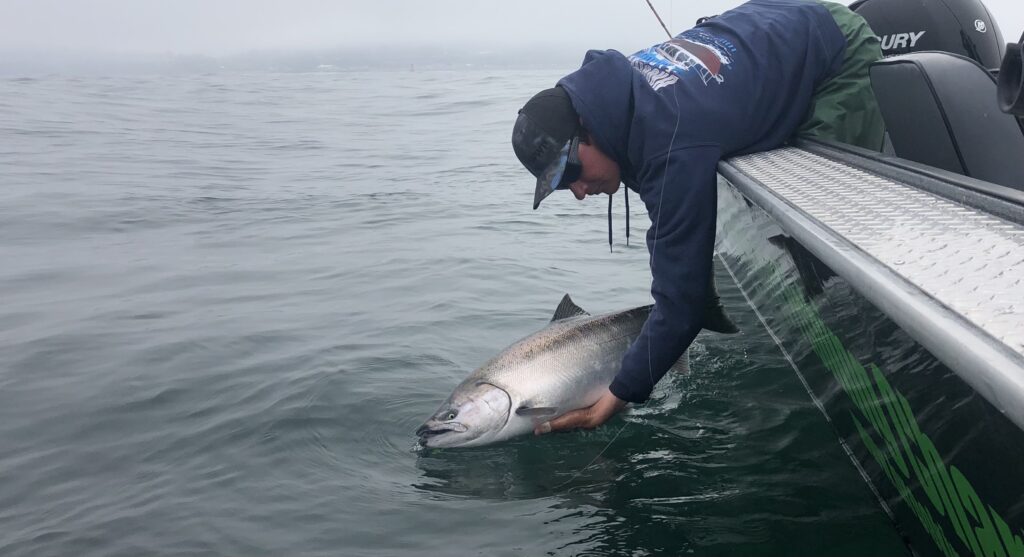
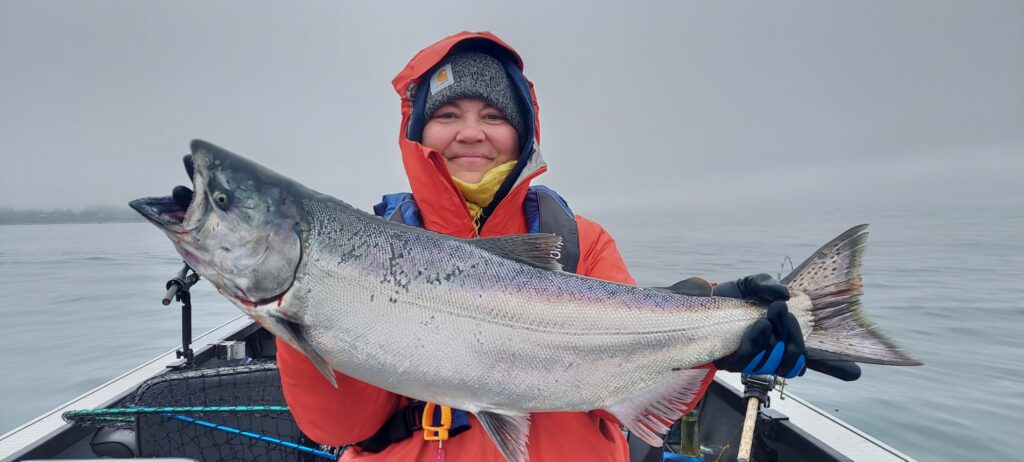
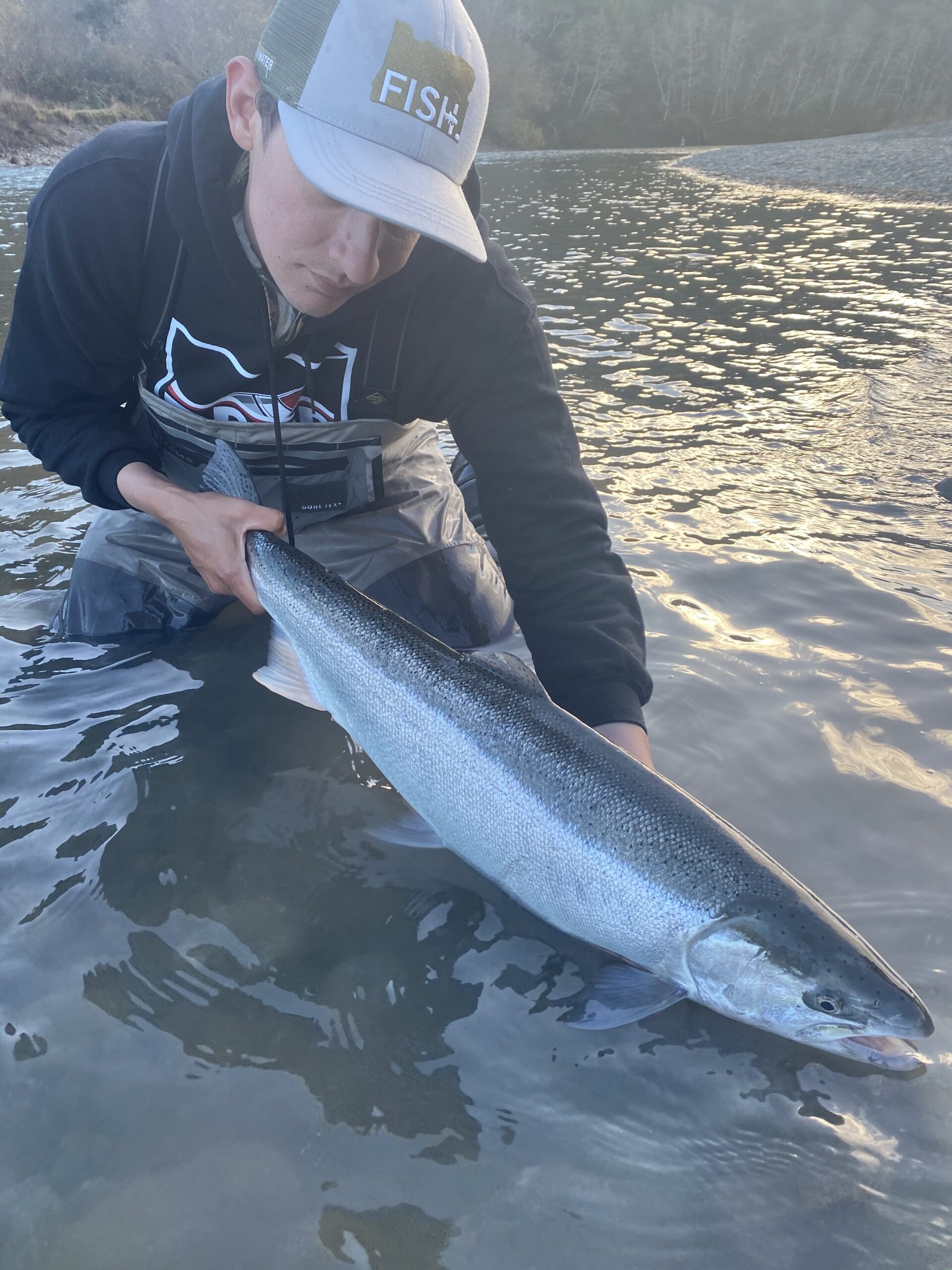
Capt. Michael shows a chrome-bright king salmon caught off of Brookings in June.
The limit is two salmon per day. Kings must be at least 24 inches. Wild coho must be released, but wild or hatchery kings, and hatchery coho, may be kept. Most of the coho are bound for the Columbia River, where a near-record return is expected this fall. The king salmon, meanwhile, are primarily Sacramento River, Feather River, American River, Klamath River, Trinity River and Rogue River fall Chinook salmon.
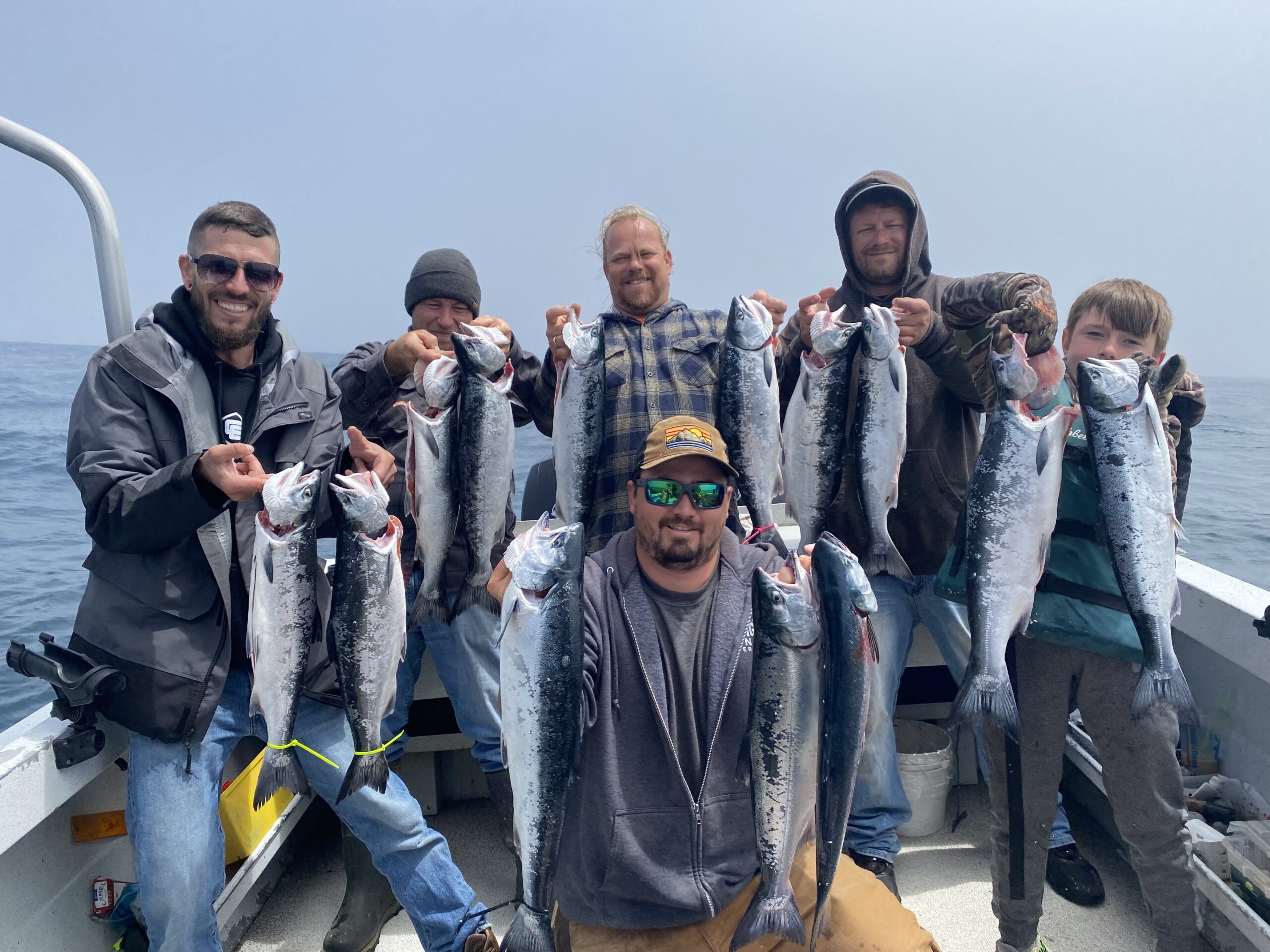
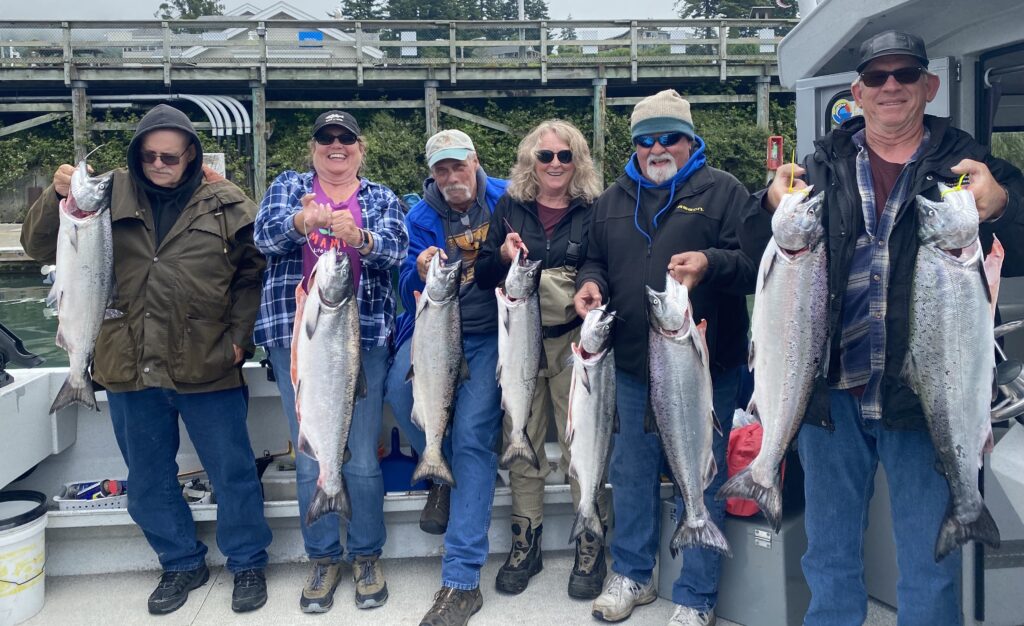
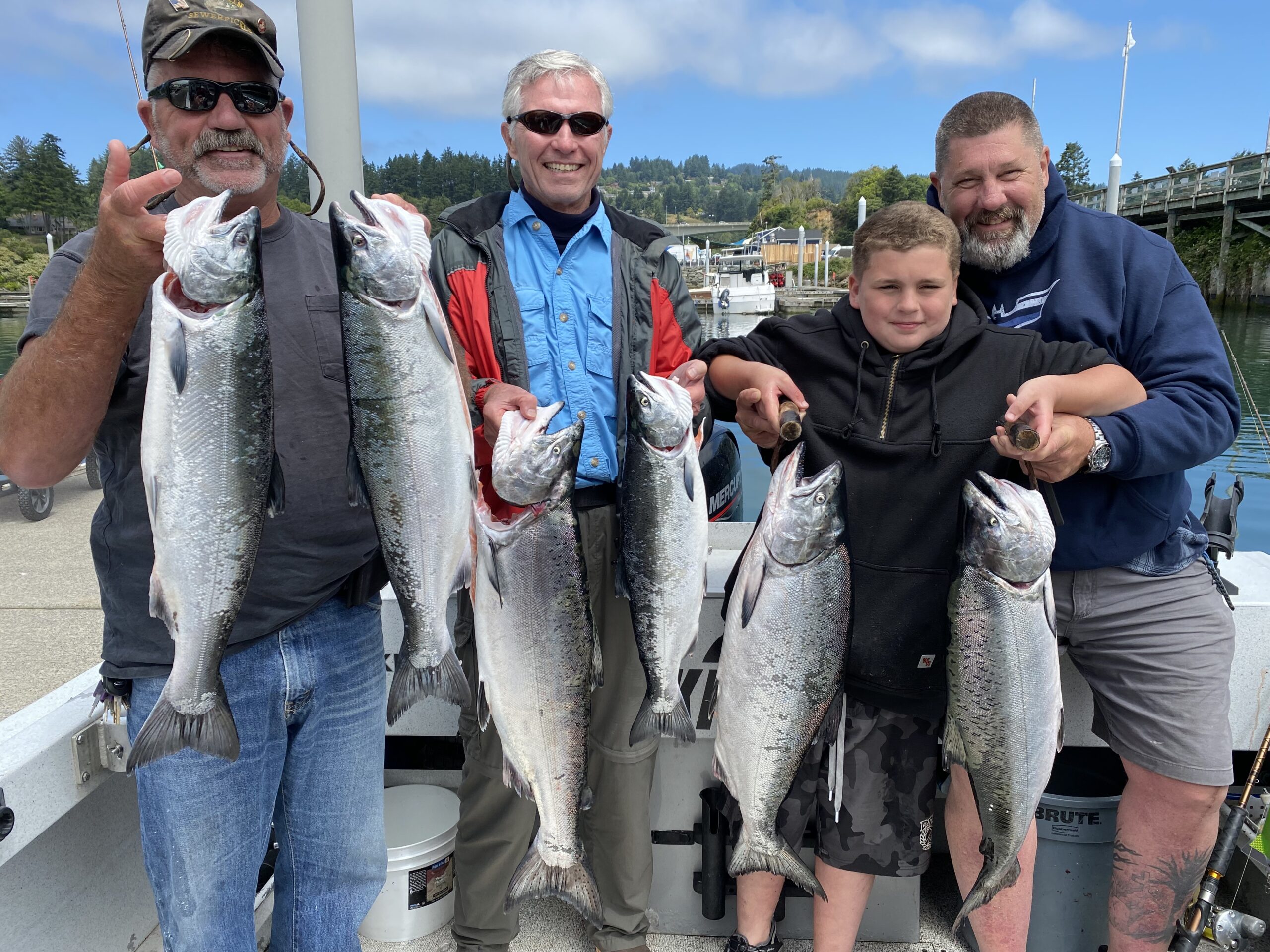
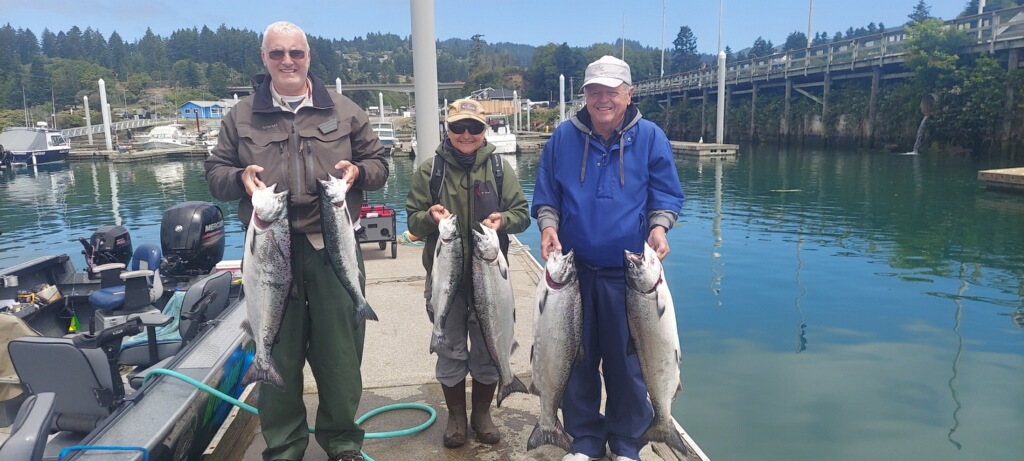
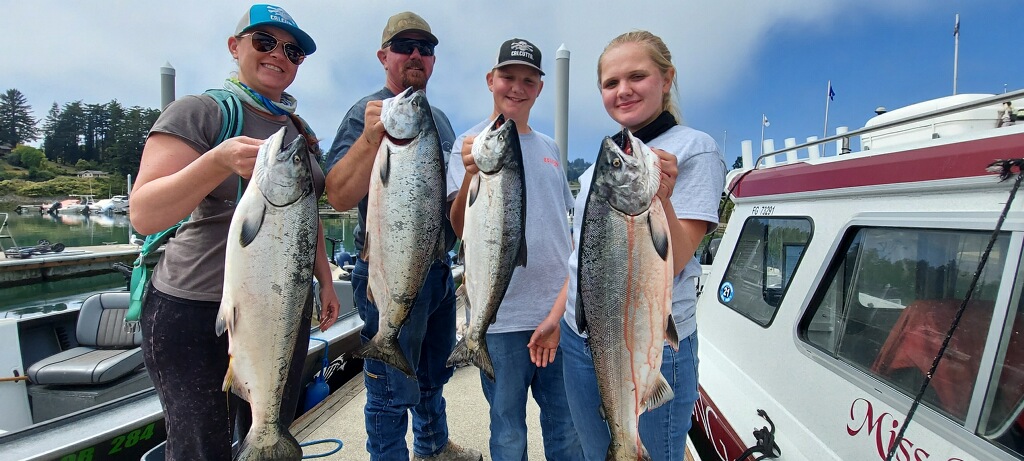
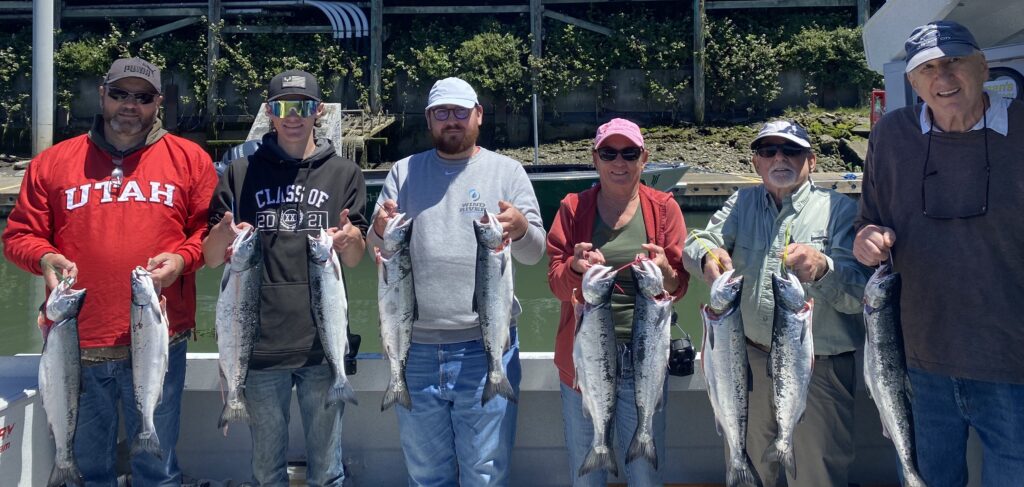
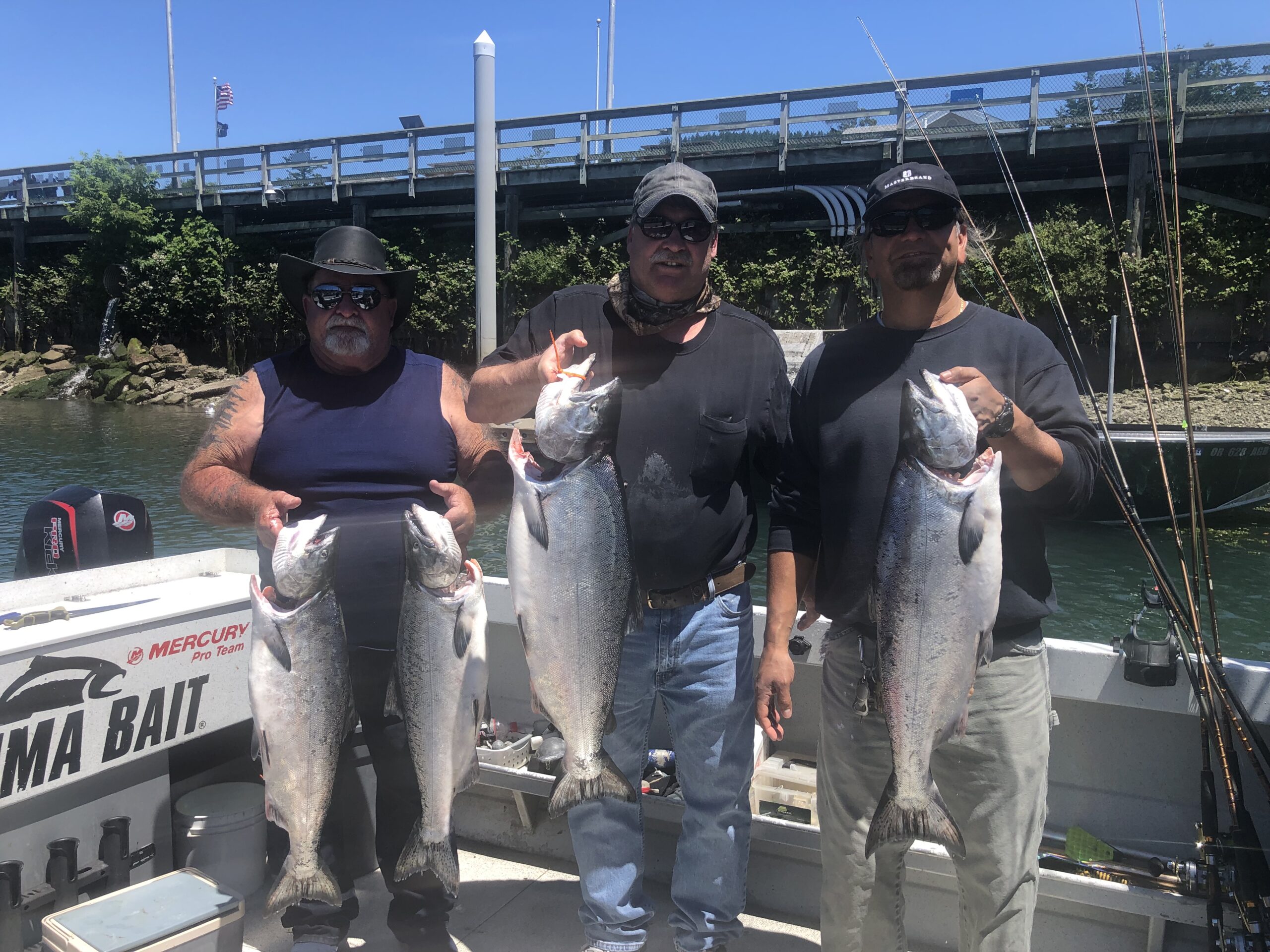
A beautiful king salmon caught out of Brookings aboard the Miss Brooke.Nice king salmon caught in July aboard the Miss Brooke.A hefty king salmon caught on the guide sled with Capt. Sam.Anglers of all ages are enjoying the great salmon fishing off of Brookings this summer.Limits of kings and coho caught aboard the guide sled with Capt. Sam.A bunch of nice kings caught on the guide sledA perfect king salmon caught aboard The Dash with Capt. Mick.A great catch of kings and coho from the Miss Brooke.A very nice king caught aboard The Dash with Capt. Mick.Salmon from the Miss Brooke in late June.The guide sled has been a hot boat this season out of Brookings.Limits of coho salmon from mid-June aboard the Miss Brooke.These are big kings for early July.
Brookings Fishing Charters offers salmon trips daily aboard its six-pack charter boats. Bottom fishing trips also are offered on the Nauti-Lady and the six-packs not booked for salmon.
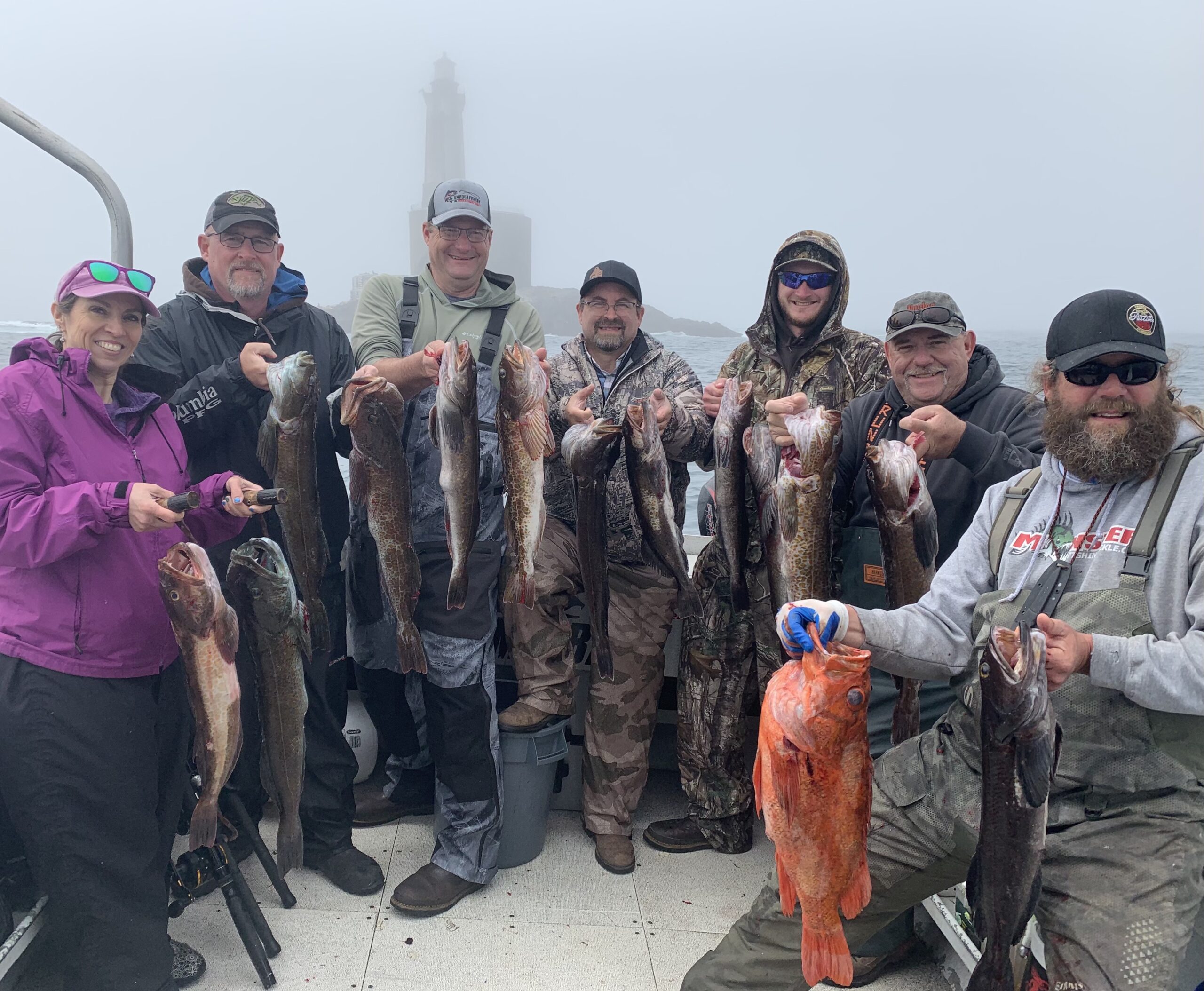
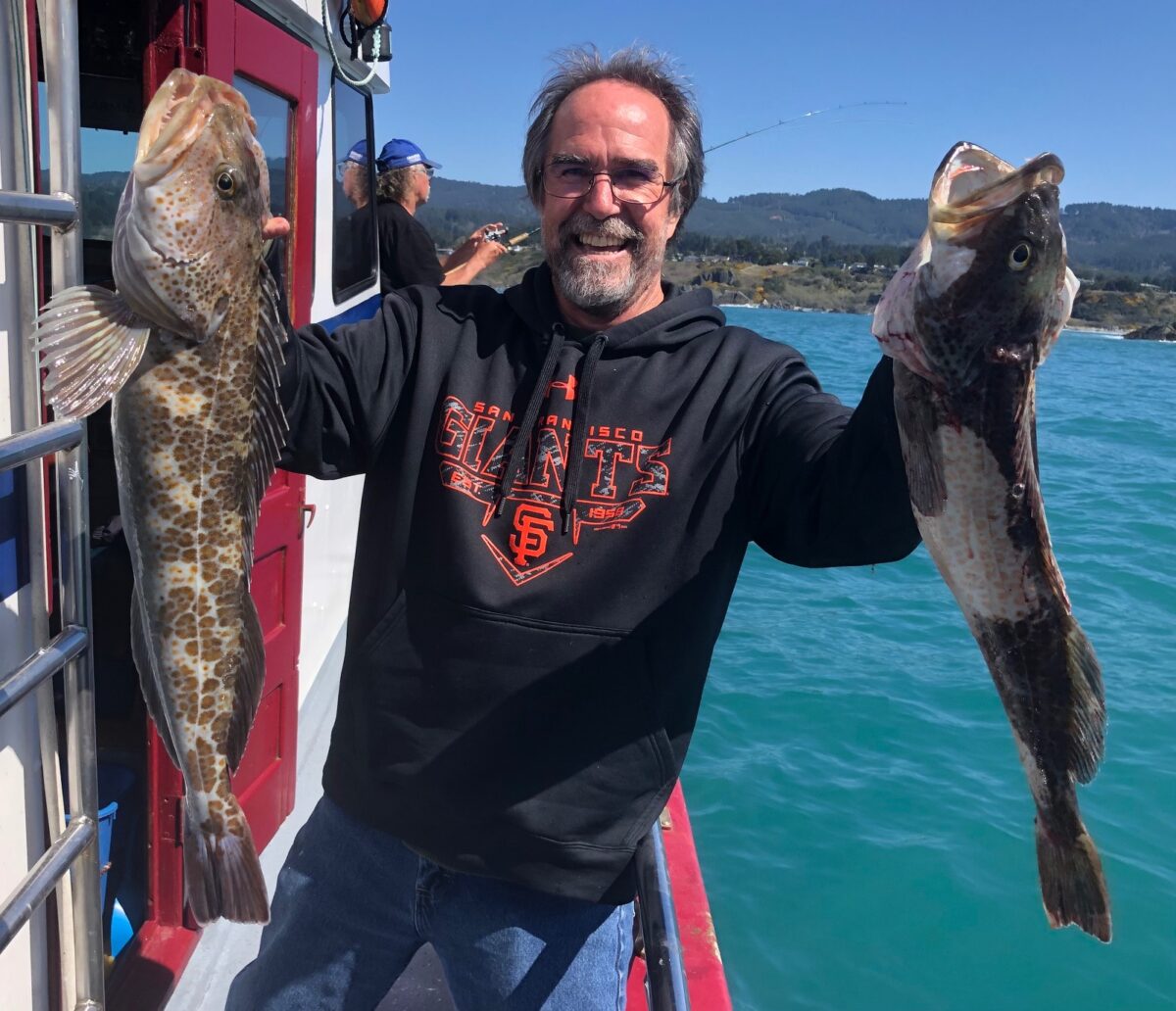
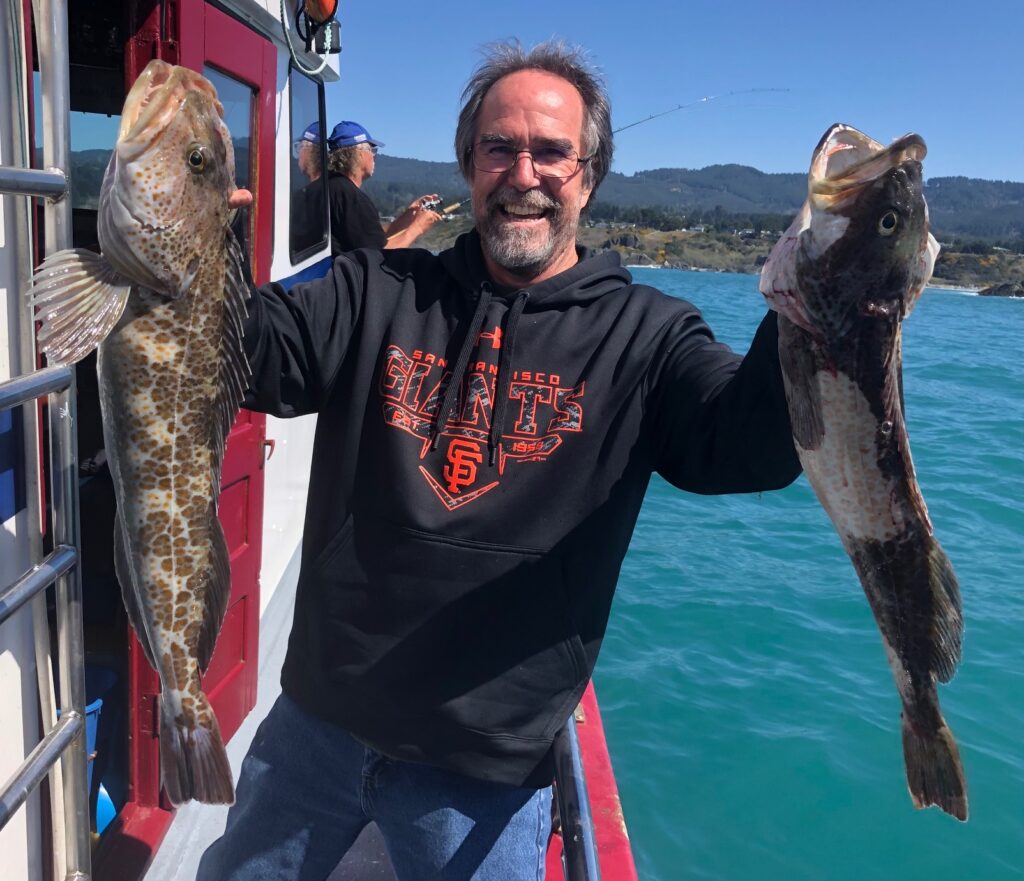
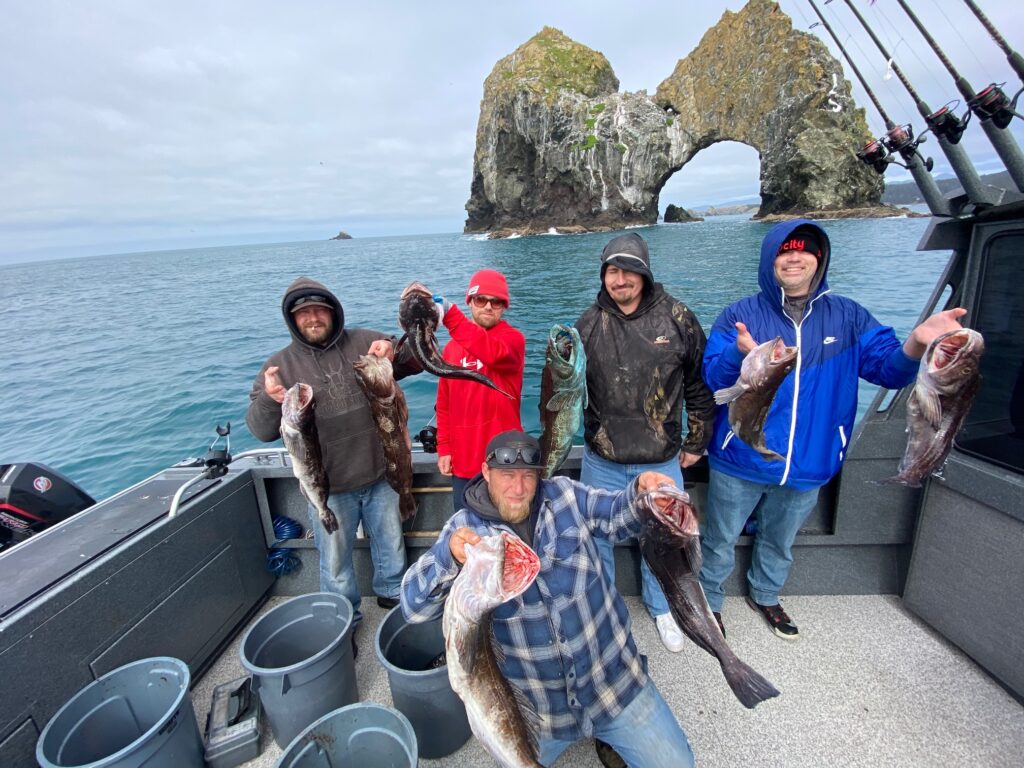
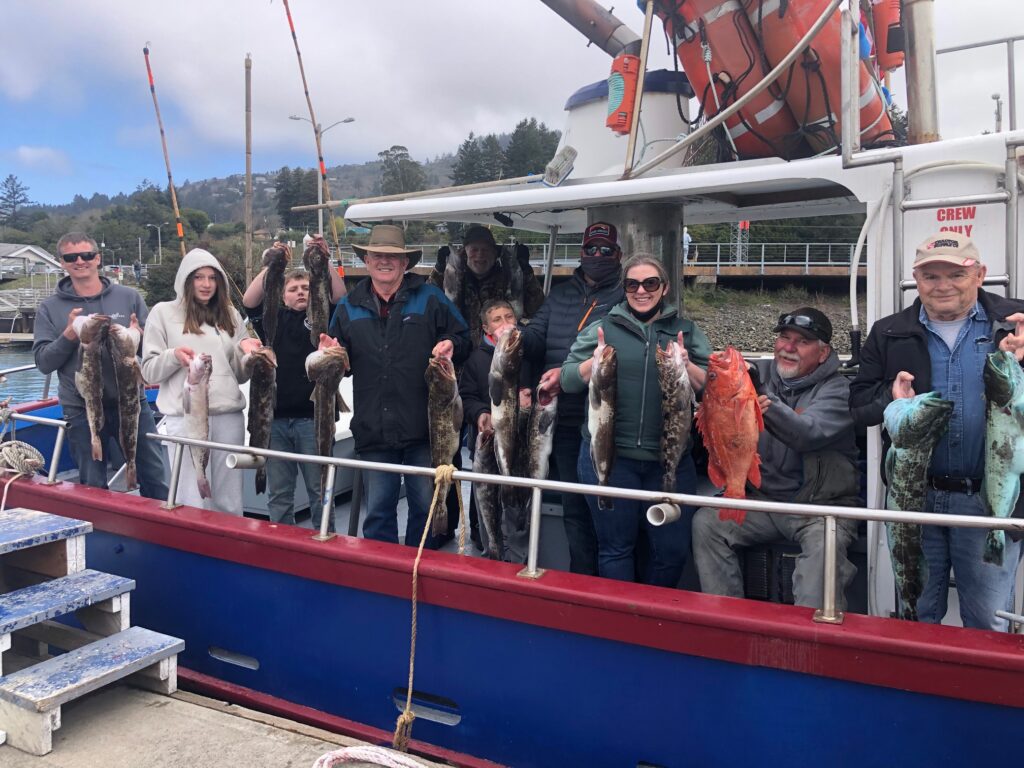
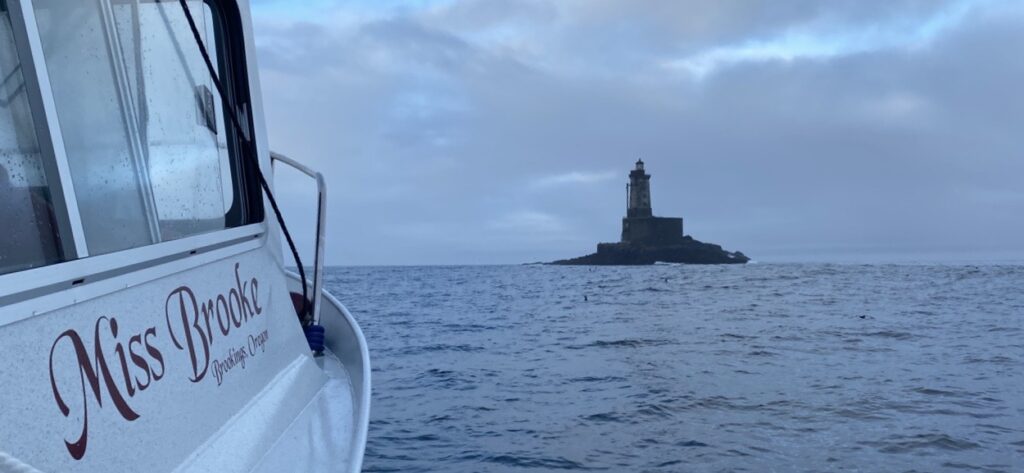
The first trips of the season to the Point St. George Reef Lighthouse by the Brookings Fishing Charters crew resulted in easy limits of lingcod and big rockfish, with lots of variety. The fishing was pretty much wide open.
The Nauti-Lady and Miss Brooke ventured to the lighthouse last week, a few days after the May 1 opener. Windy weather kept boats away from the highly productive reef the first few days of the season, but calm weather last Wednesday resulted in non-stop action for both of the Brookings charter boats that made it to the lighthouse.
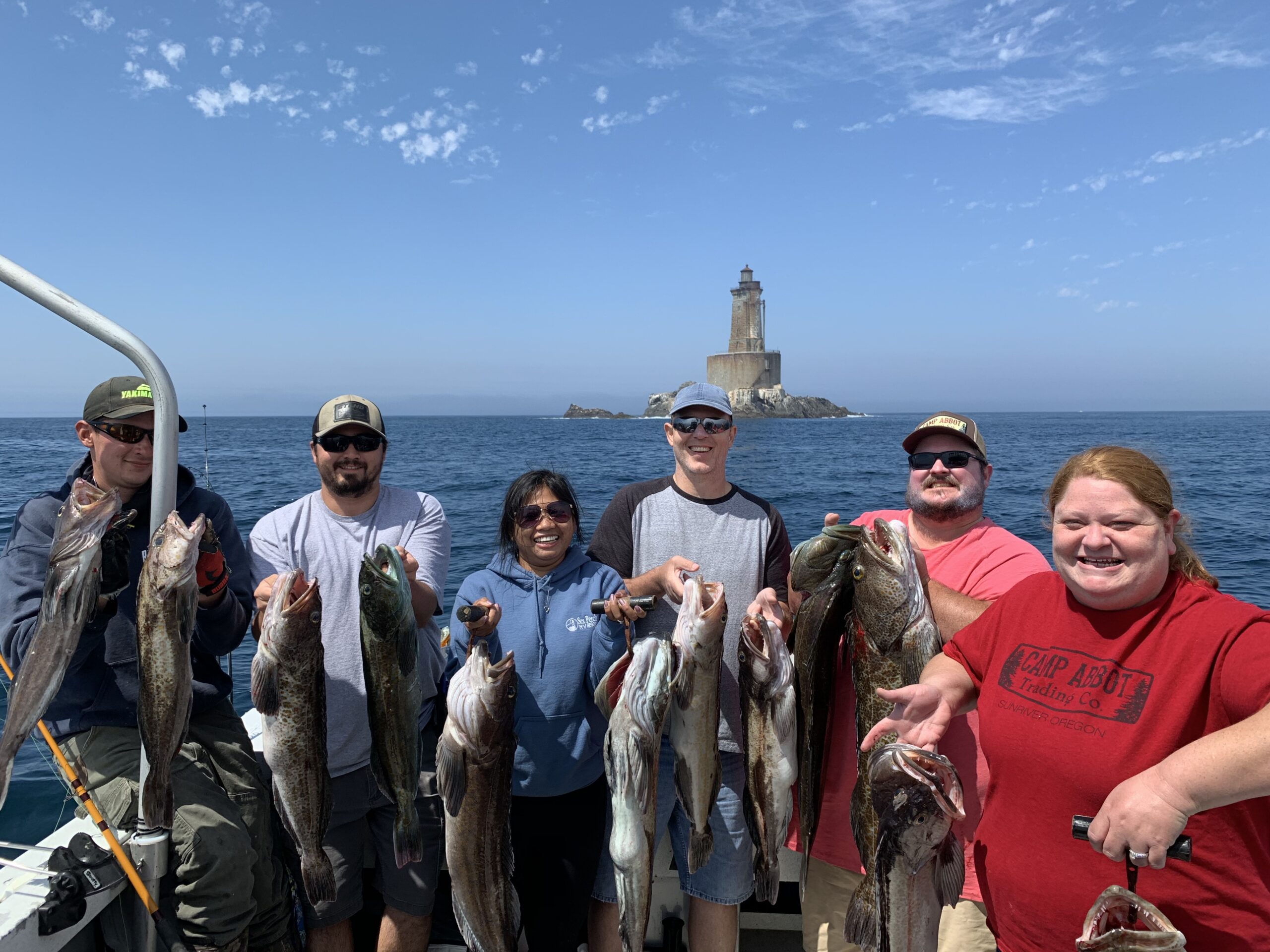
Anglers on the Miss Brooke hold limits of lingcod caught in early May at the Point St. George Reef Lighthouse.
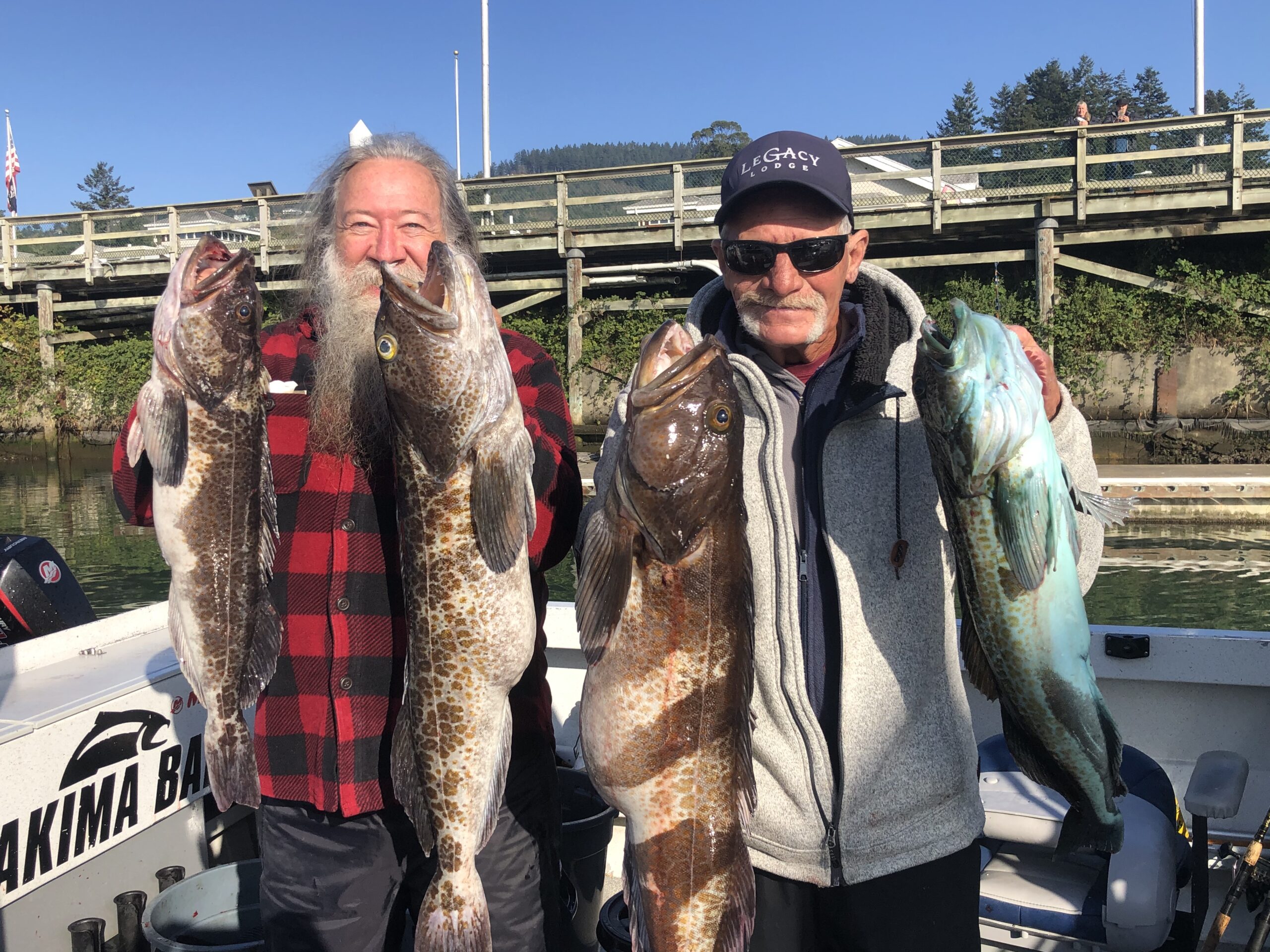
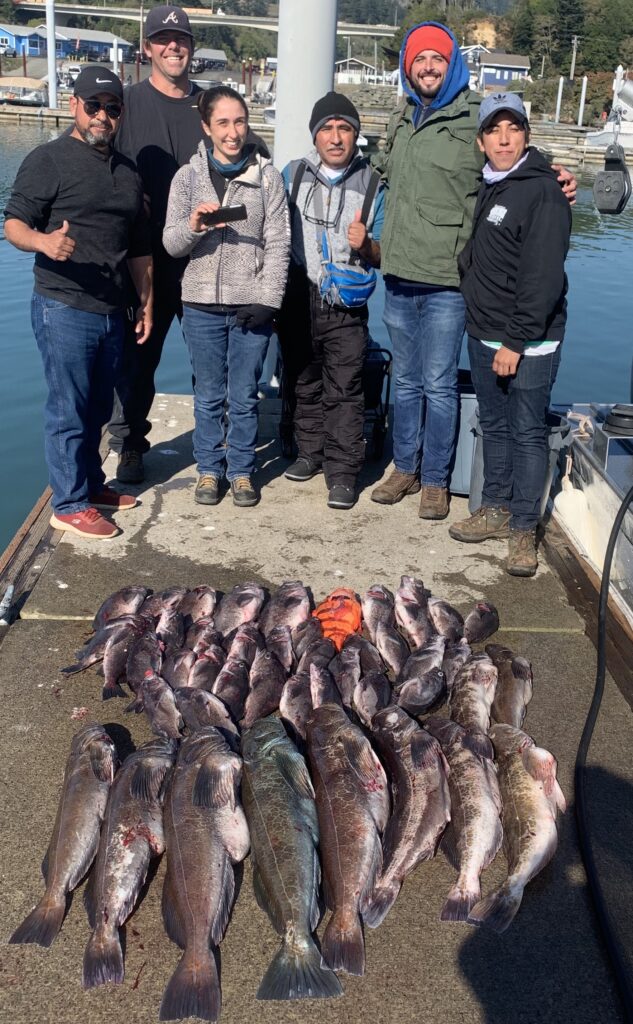
The fishing was so good that the Nauti-Lady, with 12 customers on board, caught full limits of lingcod and rockfish in just three drifts, while also releasing nearly a dozen keeper-size lingcod. The Miss Brooke had no trouble getting limits for its six anglers, with some large vermilion, canary, copper, quillback and black rockfish mixed in. The lingcod averaged 8 to 10 pounds, with a few fish in the high teens.
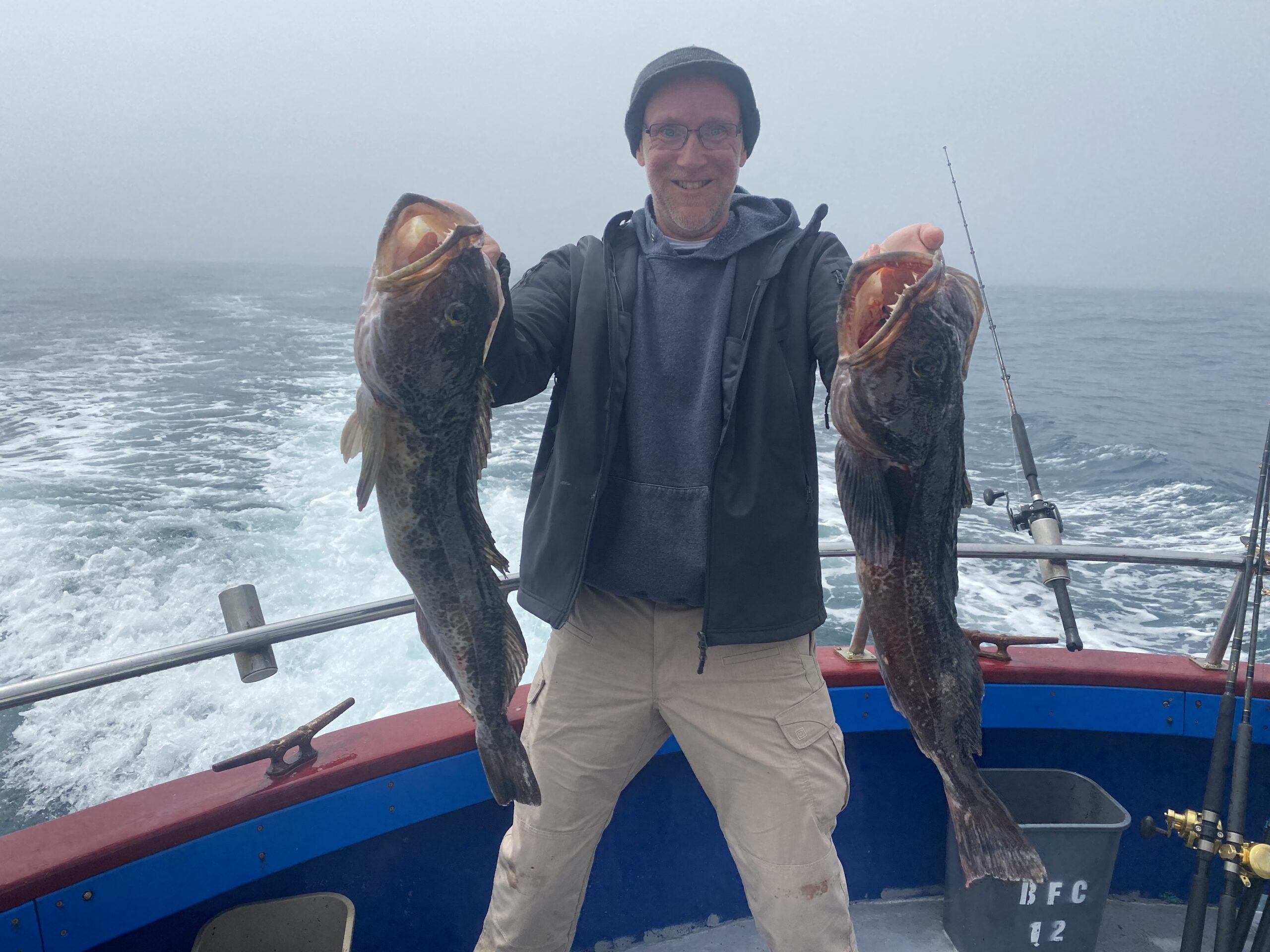
An angler on the Nauti-Lady holds his limit of lingcod from an early May trip.
The lighthouse is located in California waters approximately 11 miles straight out from the Port of Brookings. Several of the Brookings Fishing Charters boats, including the Nauti-Lady, Miss Brooke and The Dash are licensed to fish both Oregon and California waters. Only a few charter boats have both Oregon and California charter permits.
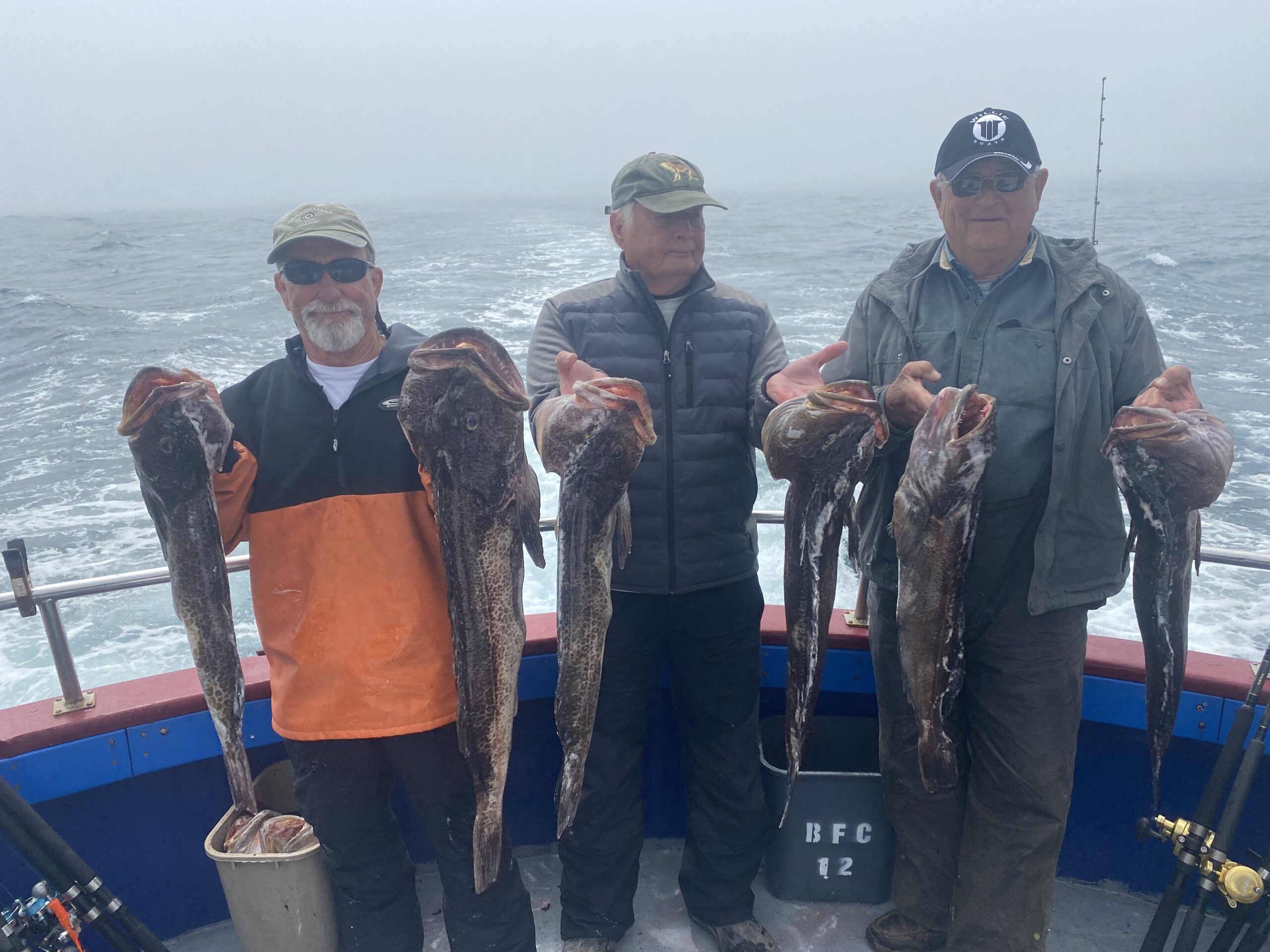
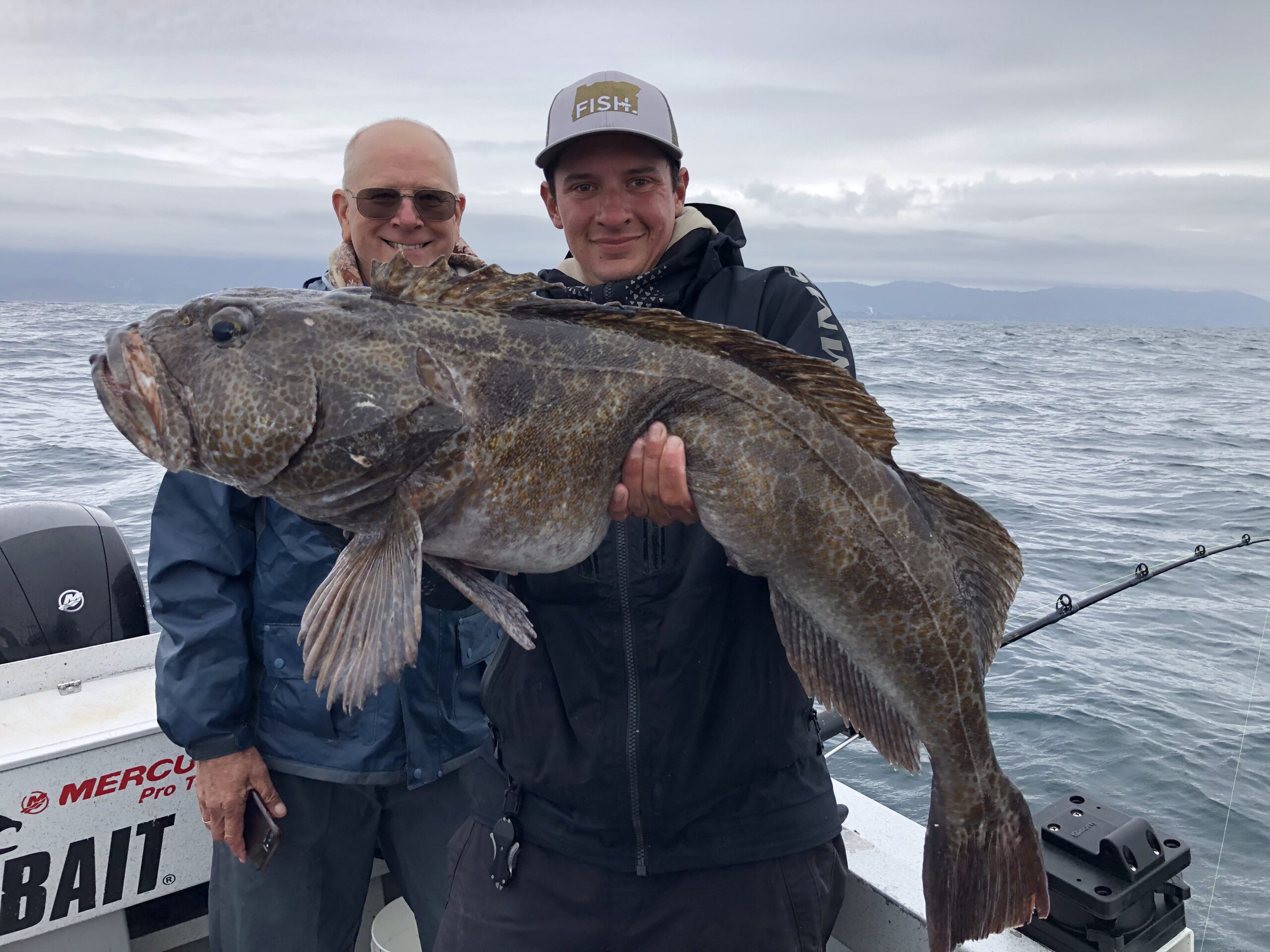
Some of the nice lingcod caught aboard the Nauti-Lady.
The lighthouse area borders a marine reserve. The area open to fishing is one of the most productive reefs on the entire West Coast for lingcod and rockfish. Big fish, and limits, are common on trips to this area. The season is open May 1-Dec. 31. Brookings Fishing Charters offers trips to the lighthouse during calm weather days. Because the area is in open water and often has strong currents and is exposed to offshore wind, the Brookings Fishing Charters crew carefully chooses the days it heads to the lighthouse.
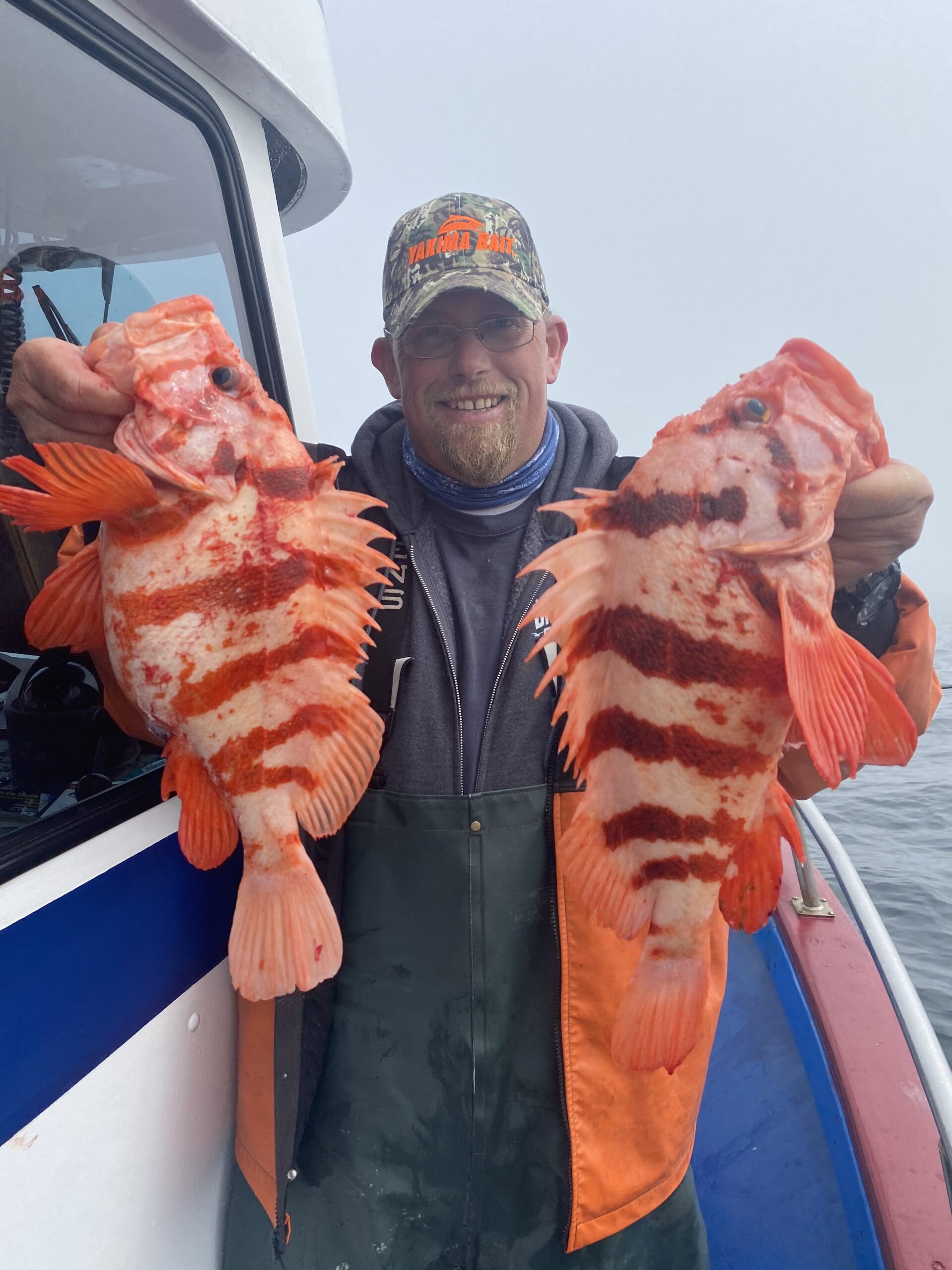
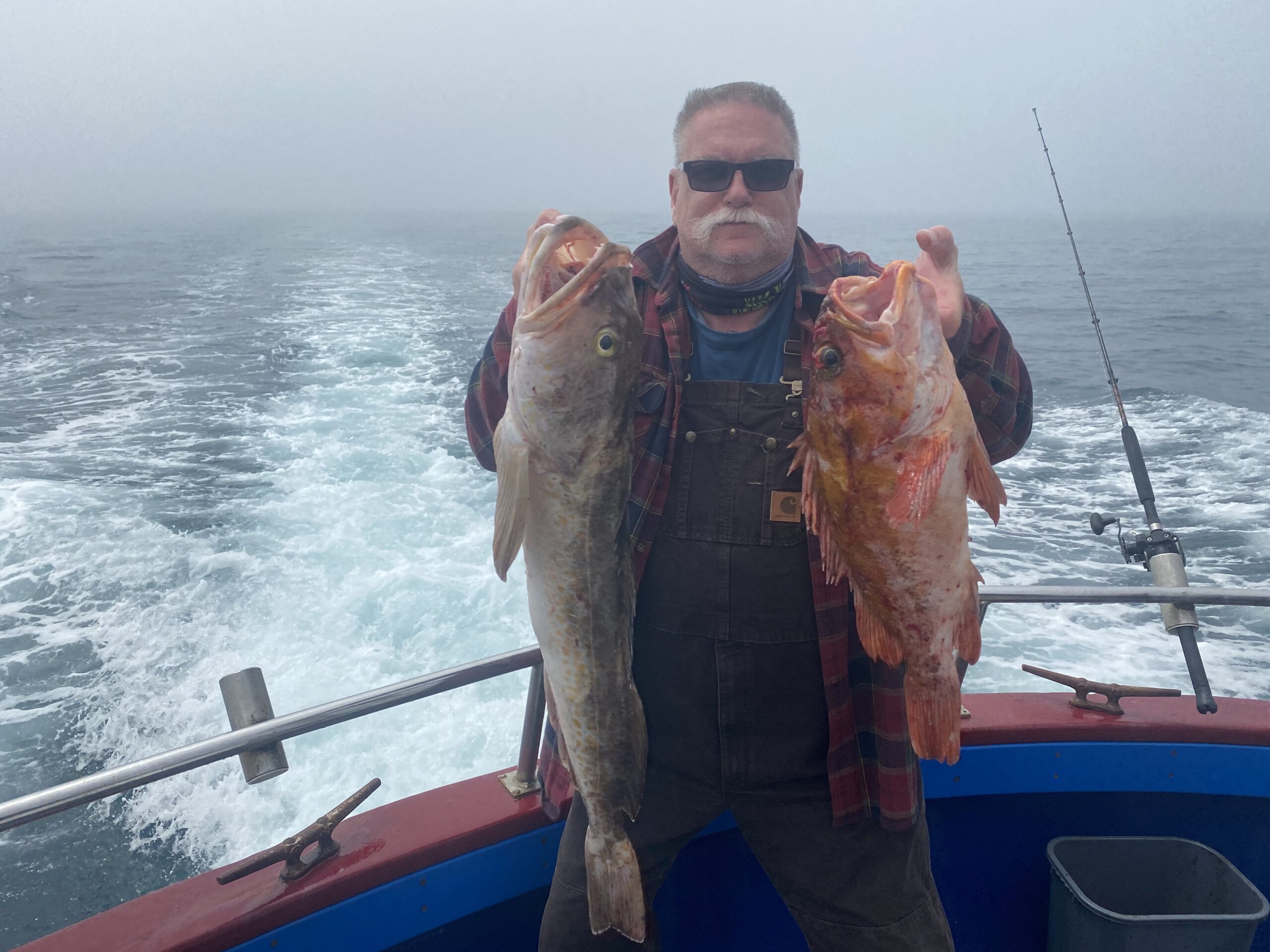
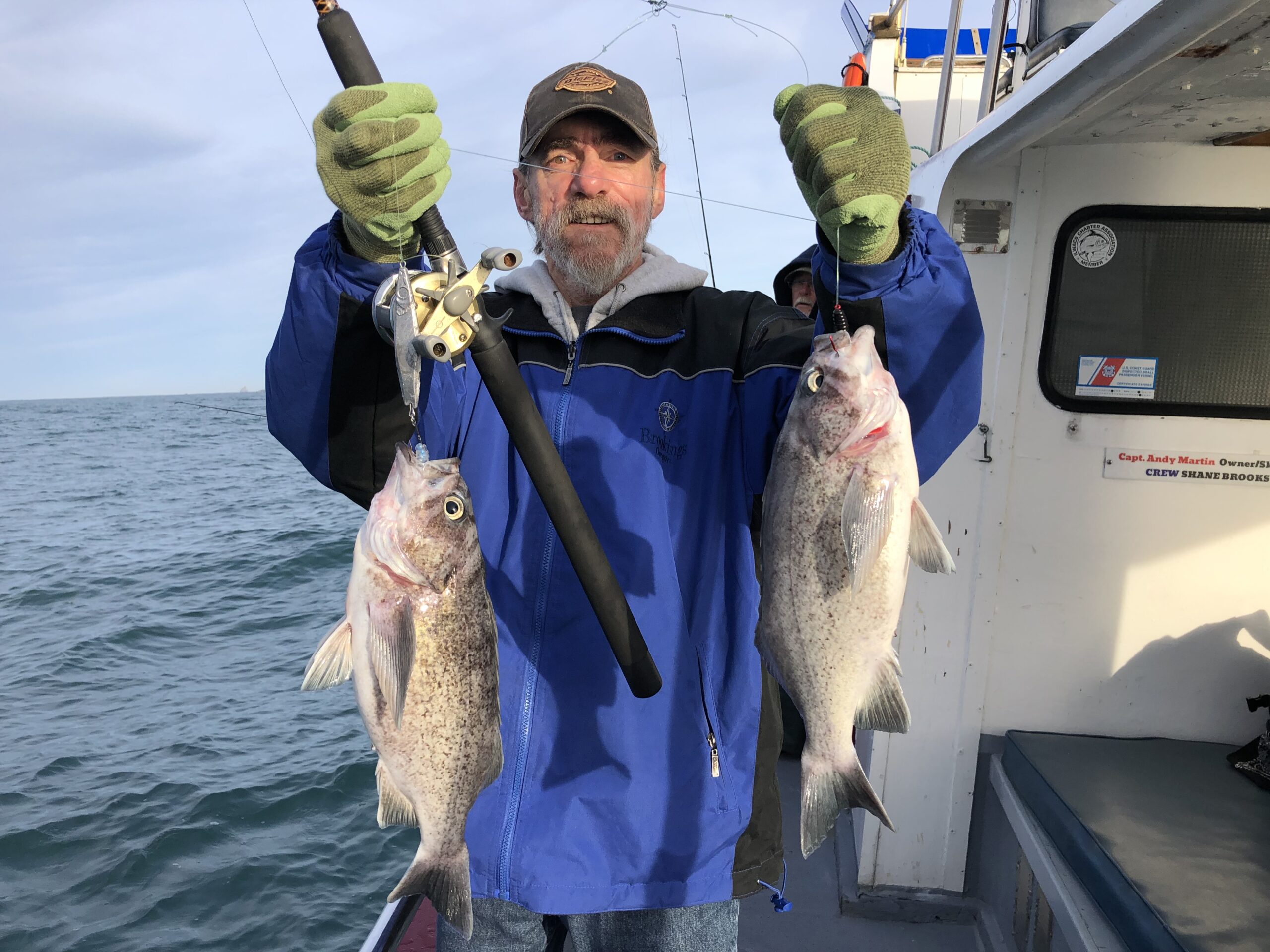
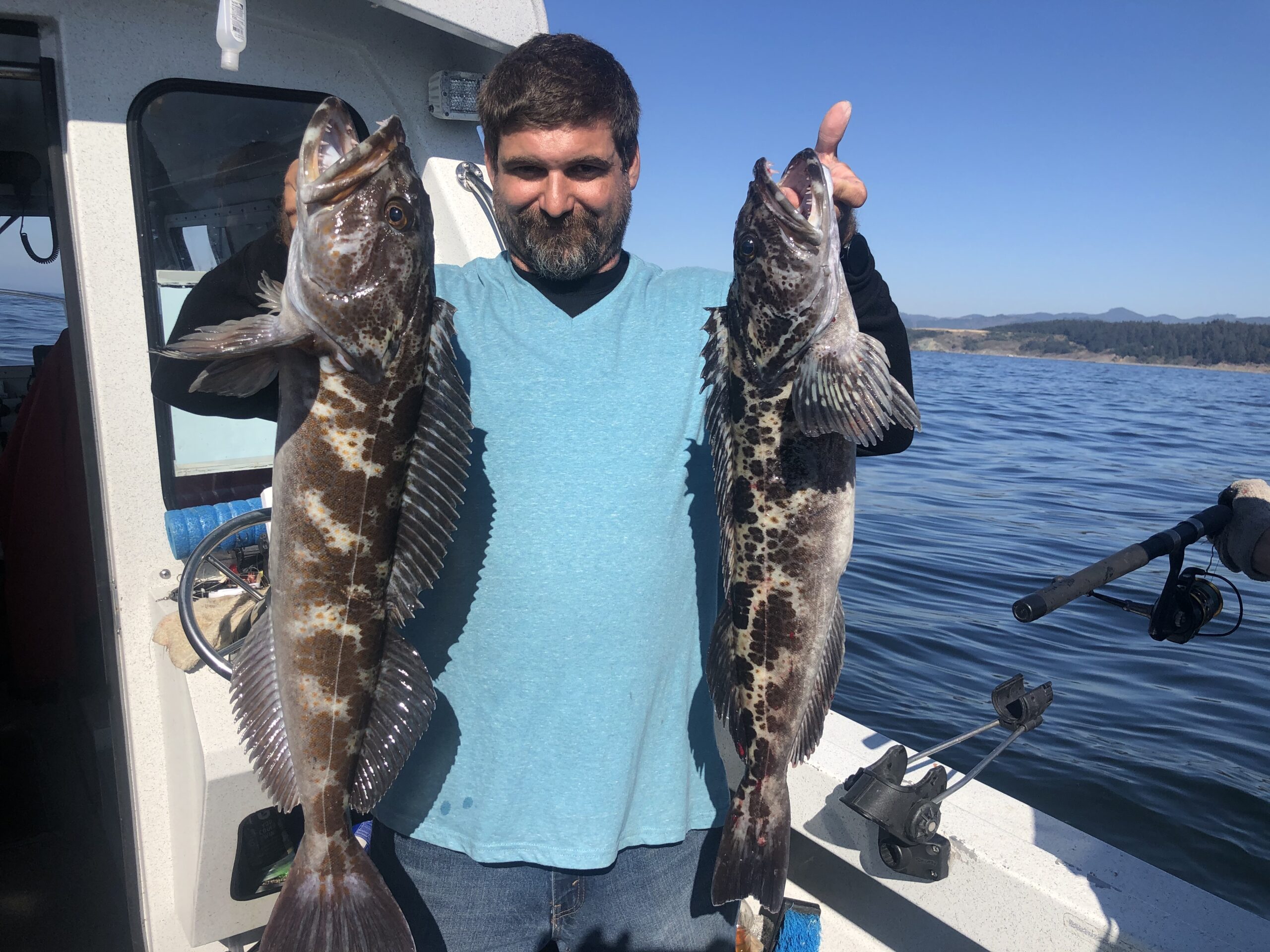
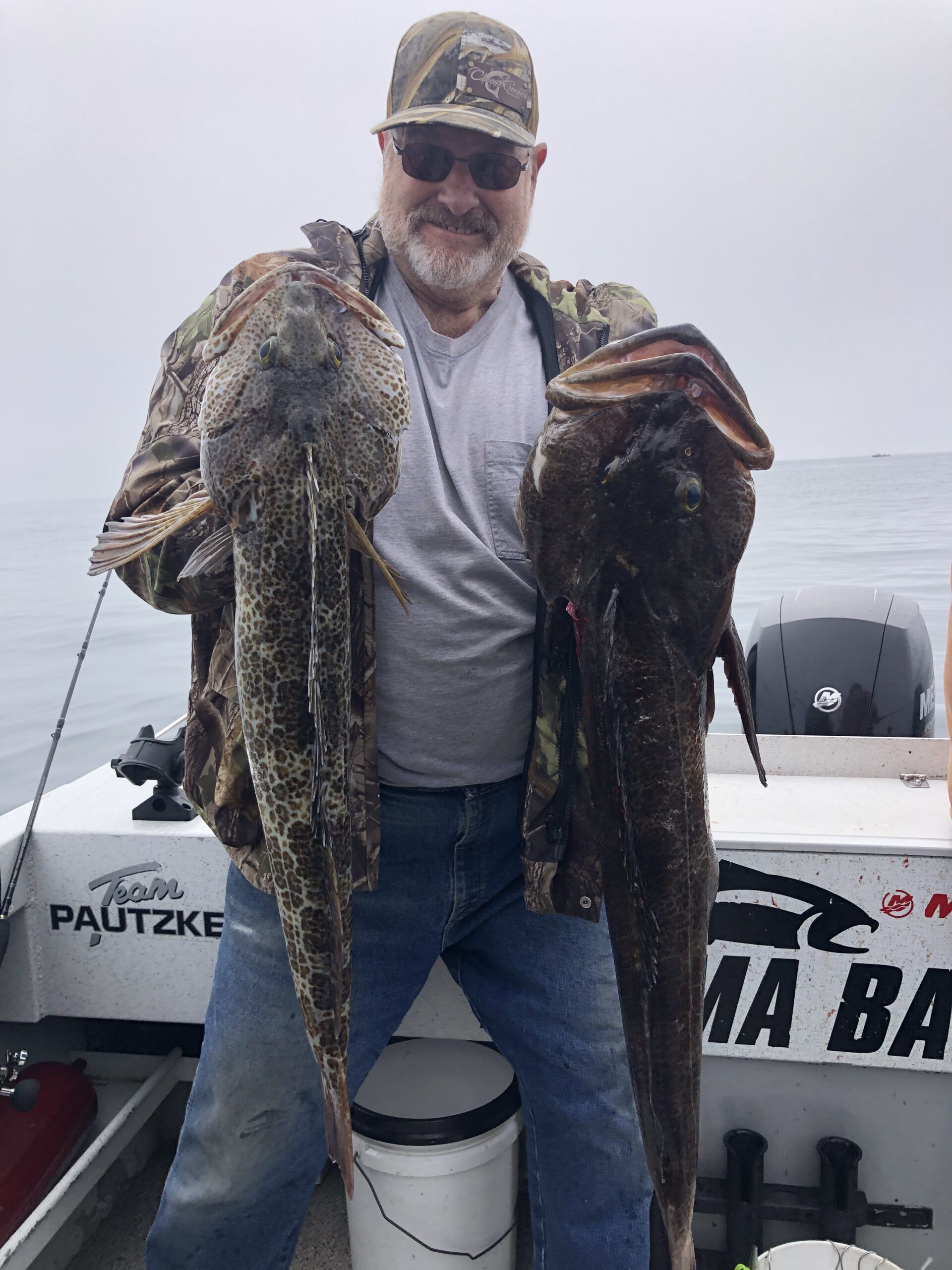
Capt. Andy Martin holds a pair of tiger rockfish caught aboard the Nauti-Lady near the Point St. George Reef Lighthouse.
The Brookings Fishing Charters crew specializes in light tackle, often using spinning rods with flutter jigs or scampies to catch the lingcod and rockfish near the lighthouse. The reefs have a wide variety of fish, with lots of colors.
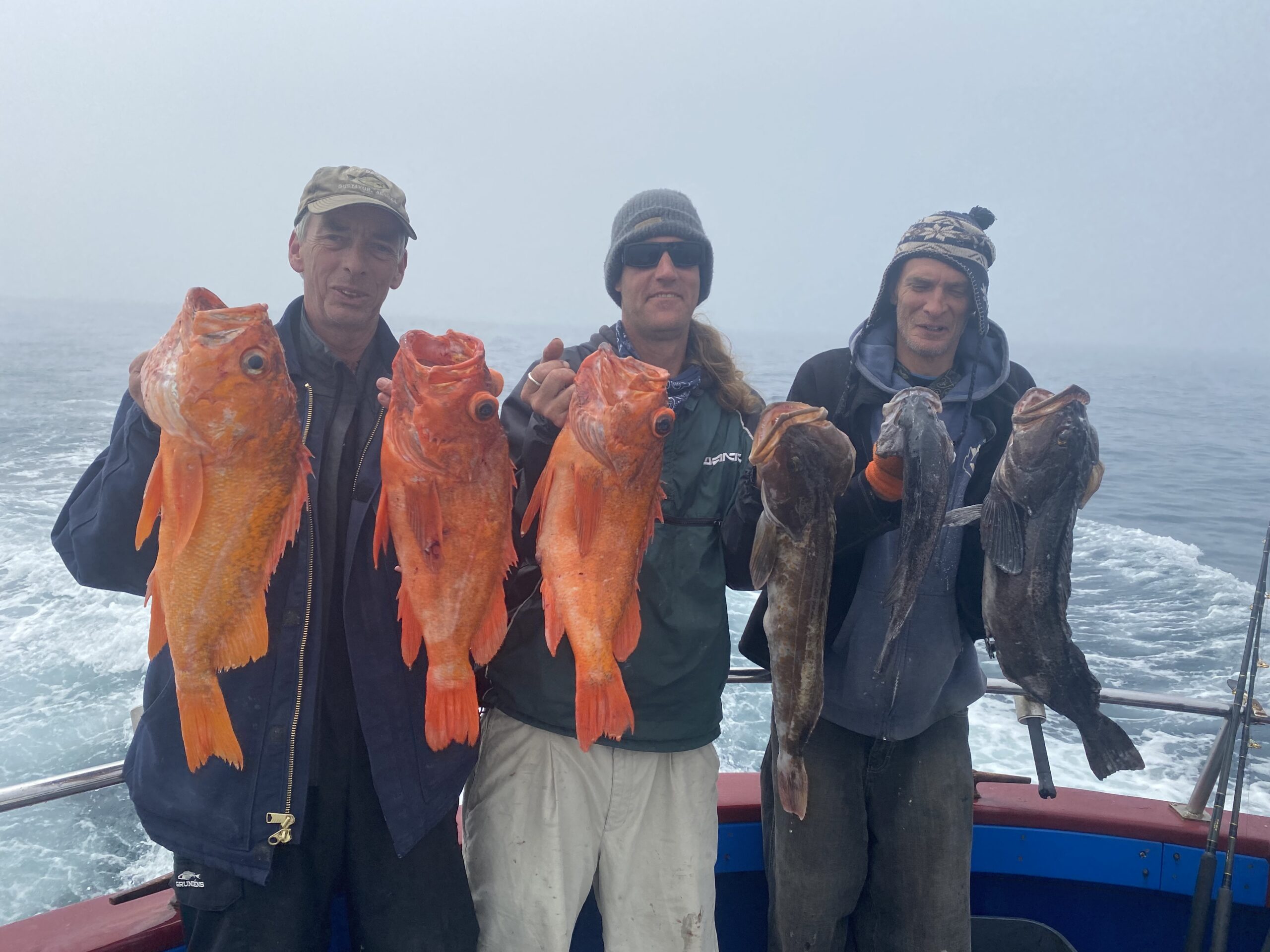
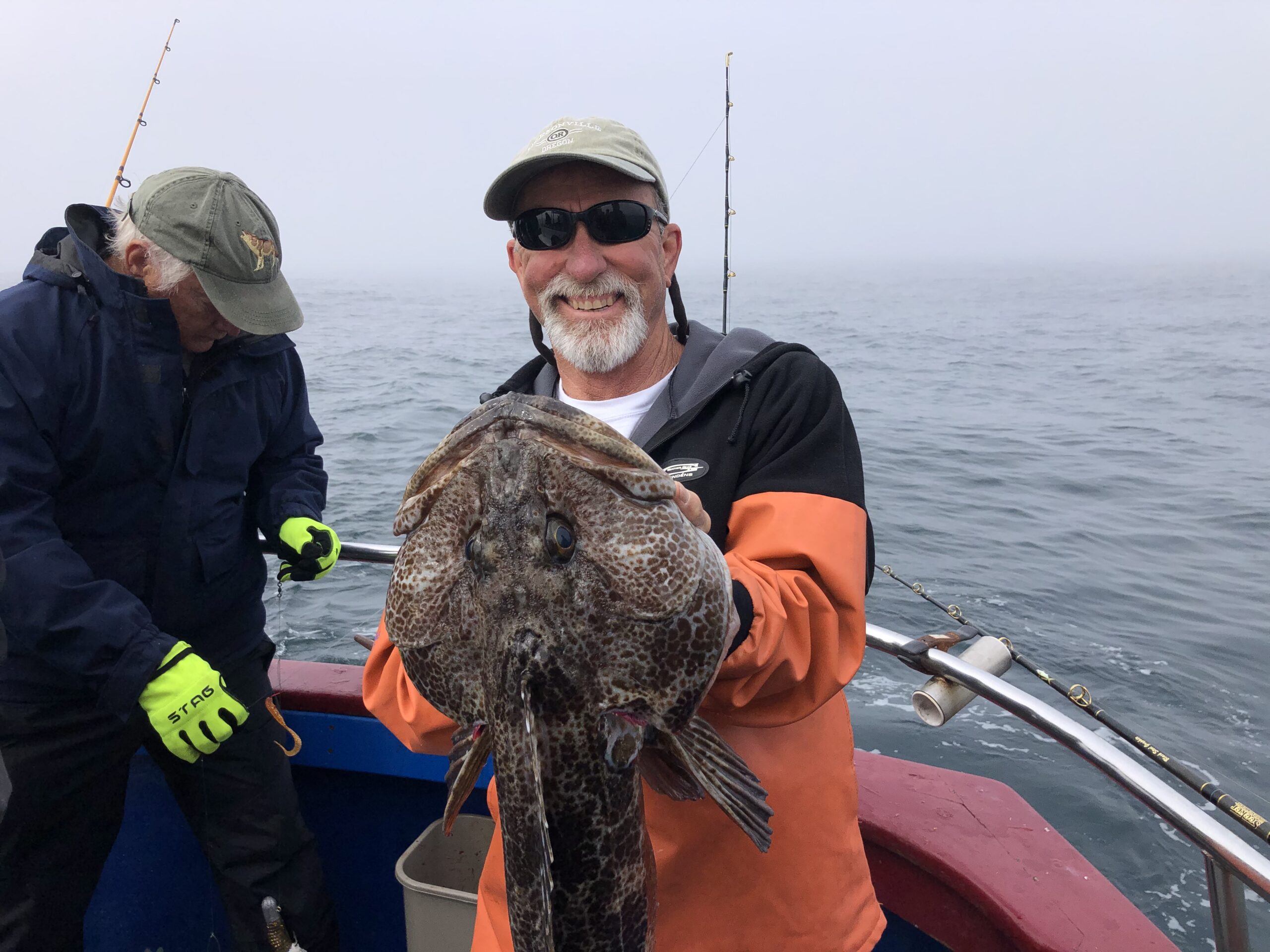
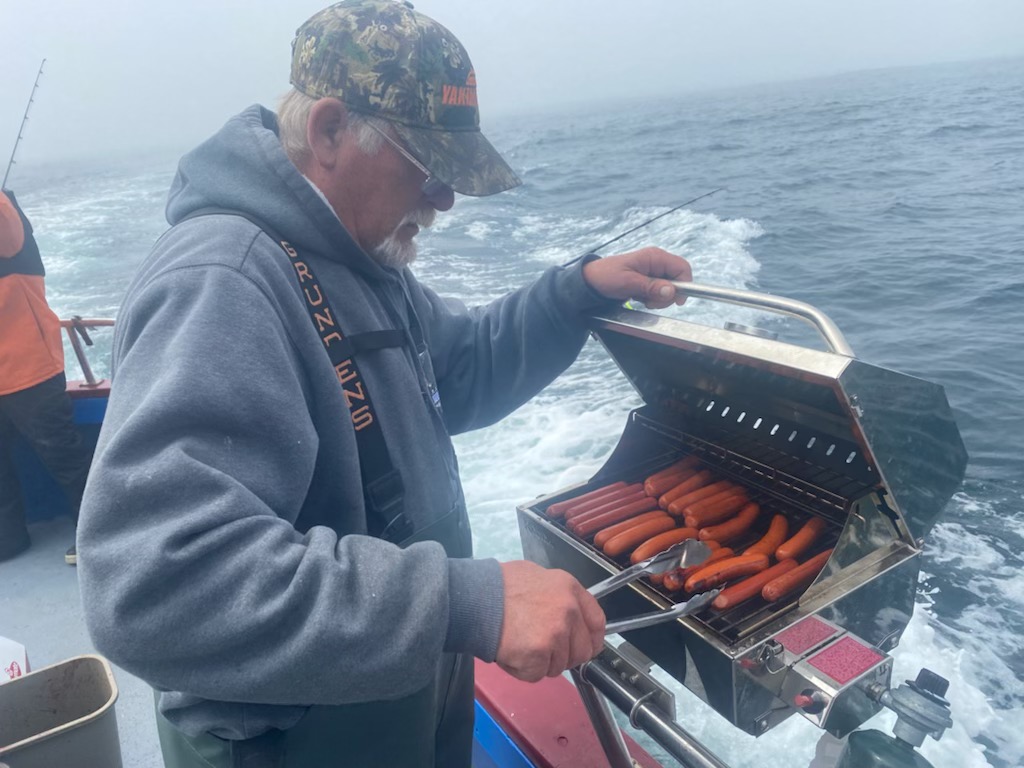
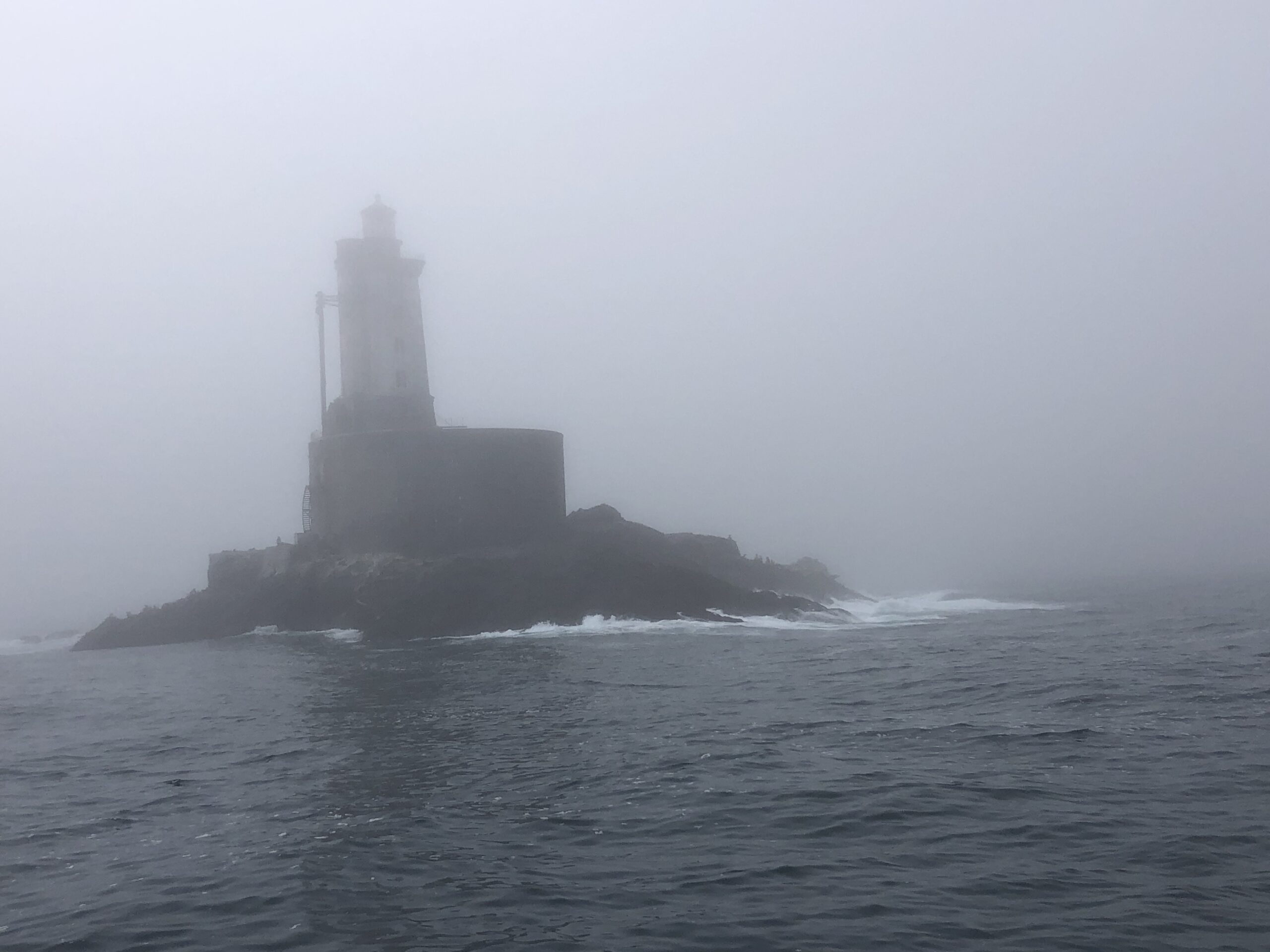
Some nice vermilion rockfish and lingcod caught aboard the Nauti-Lady.A lunker lingcod and copper rockfish caught aboard the Nauti-Lady near the lighthouse.One of the nice lingcod caught during the first trip of the season to the lighthouse on the Nauti-Lady.Capt. Mike grills hot dogs on the trip back to Brookings from the lighthouse.The historic Point St. George Reef Lighthouse is 11 miles offshore of Brookings.
To book a charter fishing trip to the lighthouse, call (541) 813-1082 or visit www.brookingsfishing.com.
Lingcod action is usually the best of the season in early spring, as the big fish come into shallow water to spawn, and this year has been nothing short of phenomenal.
Over the weekend, Brookings Fishing Charters sent four boats out, and each returned on Sunday with full limits of rockfish and lingcod. The lingcod action was so good, the six-pack boats actually released more lingcod than they kept after limiting out. They had limits of lings well before they had limits of rockfish. The Nauti-Lady, on its half-day bottom fishing trip, also limited every customer on lingcod and rockfish.
A limit of lingcod aboard the Nauti-Lady on March 31, 2021.
As a general rule, the better the weather, the better the fishing this time of year. That has been true, as we’ve been getting full limits on calm days, and limits of rockfish and some lingcod when it is rough and windy. Charters are now running daily, weather permitting.
Limits of lingcod in late March at Mack Arch.
Most of the lingcod are being caught in shallow water, from 30 to 60 feet. The lings are biting flutter jigs, shrimp flies, Farallon Feathers, small grubs and twin-tail scampies. The grade of rockfish has been good, with a nice mix of black, blue, canary, China, vermilion, copper and quill back rockfish.
We are running the 6-plus hour targeted lingcod trips on the six-pack boats, and usually fishing around House Rock or Mack Arch. The Nauti-Lady, our larger party boat, is focusing on the 4-5 hour half day bottom fishing trips, and has had good success limits on rockfish and lings when the weather cooperates.
A boat limit of lings and rockfish for the Nauti-Lady.Nice lingcod caught aboard the Miss Brooke at Mack Arch.Limits of rockfish and lingcod for the Papa B.More Mack Arch lingcod.Good lingcod action on the Miss Brooke.Catching a limit of lingcod at Mack Arch is a trip to remember.Really nice vermilion from the Nauti-Lady.A nice limit of lingcod from the Nauti-Lady.Our six-pack charter boats are the fastest charters in the fleet, and will get you to and from the fishing grounds quickly and safely. Limits of lingcod aboard the Miss Brooke.Capt. Michael gaffs a lingcod aboard the Nauti-Lady in front of Bird Island.This young angler not only caught her first lingcod aboard the Nauti-Lady, she caught her limit!Nice lingcod to start the day on the Nauti-Lady.Quality lingcod and rockfish aboard the Nauti-Lady.Nice keeper lingcod from the Nauti-Lady.Our half-day bottom fishing trips are ideal for young anglers. Lots of action, beautiful scenery, and good eats afterward.
We will be focusing on lingcod and rockfish in April. In May, there are lots of new fishing opportunities. We will begin the Point St. George Reef Lighthouse trips in May, when California waters open, and also begin Pacific halibut trips in May. The halibut season out of Brookings runs May. 1-Oct. 31. Brookings Fishing Charters had the best overall catch rate of any charter out of Brookings last year, as its captains have decades of halibut fishing experience in Oregon and Alaska. The best halibut fishing takes place in July and August, but we had success as soon as the season opened last year.
Ocean salmon season dates will be announced in mid-April. The season could open as early as the end of May, or by mid-June. Late June and July are peak season. Our captains are salmon fishing experts and have a high success rate of getting customers into nice kings. This year we also we be able to target coho, or silver salmon, increasing the likelihood of limits.
To book an ocean charter out of Brookings, visit www.brookingsfishing.com or call our booking office, (541) 813-1082.
The daily bag limit for rockfish on the Oregon Coast will increase to six fish a day in 2021, in addition to the two-fish lingcod limit. Anglers will also once again be allowed to keep a limited number of China, copper and quillback rockfish.
Anglers with limits of rockfish from the 2020 season aboard the Miss Brooke. Beginning Jan. 1, anglers may keep six rockfish and two lingcod a day on the Oregon Coast.
The Oregon Fish and Wildlife Commission approved the 2021 rockfish and lingcod limits during its December meeting. Halibut and salmon regulations will be set in the spring. The forecast for rockfish and lingcod fishing is good in 2021.
The limit for rockfish increases from five to six a day. Oregon anglers can keep any combination of black, blue, canary, yellowtail and vermilion rockfish has part of that limit, and have a sub-bag-limit of one China, copper or quillback rockfish. Anglers also can have one cabezon as part of the rockfish limiting beginning July 1.
A total of six black, blue, canary and vermillion rockfish may be kept in 2021.
Brookings Fishing Charters Capt. Andy Martin said the increase in the limit is good new for both charter customers and private boaters. In 2020, catches were lighter than expected because of COVID restrictions, so the rockfish limit was temporarily increased to seven a day in late July. In 2021, the six-fish limit will begin on Jan. 1.
Oregon anglers can once again keep copper and quillback rockfish in 2021.
“The sub bag limit for coppers and quillbacks is especially good news since we catch a lot of them during our Point St. George Reef Lighthouse trips,” Martin said. “This summer and fall, we had to throw back a lot of bigger quillback and coppers.”
The lingcod limit remains two a day off the coast of Brookings.
The lingcod limit remains two lings a day at least 22 inches long.
Unlike California, Oregon’s rockfish and lingcod season is open year round. The six-fish rockfish limit will allow anglers to enjoy the fishery 12 months a year without going over the federally approved rockfish allocations, according to ODFW.
Halibut season likely will run May 1-Oct. 31 again next year off of Brookings.
Sport halibut regulations will be adopted in April, and Oregon is once again looking at a May 1-Oct. 31 season south of Humbug Mountain, which is located between Port Orford and Gold Beach. The season likely will be open seven days a week with a one-fish daily limit for Pacific halibut.
Another good salmon season is expected off of Brookings in 2021.
Most years, salmon season runs May-early September out of Brookings. The seasons are set by the federal Pacific Fishery Management Council. Good ocean conditions and healthy ocean salmon populations could lead to a summer-long season in Oregon with a two-fish limit. Big returns of coho salmon to the Columbia River this year also have anglers optimistic about an ocean coho, or silver salmon, season off of Brookings.
Nice blue rockfish caught aboard the Nauti-Lady on a recent trip out of Brookings.
Brookings Fishing Charters runs ocean charters year round aboard the Miss Brooke, Nauti-Lady, Papa B, The Dash and Bout Time, when the weather allows. The charter boat captains are also river guides and run drift boat salmon and steelhead trips on the Chetco and Smith rivers during the fall and winter months if the ocean is too rough to fish.
Capt. Michael McGahan of Brookings Fishing Charters with a Chetco River hatchery steelhead from December 2020.
The ocean out of Brookings has been rough in recent weeks, although the Nauti-Lady was able to get one trip in before the latest series of storms arrived. Steelhead also are being caught on the Chetco River, with the peak season arriving in January and Febraury.
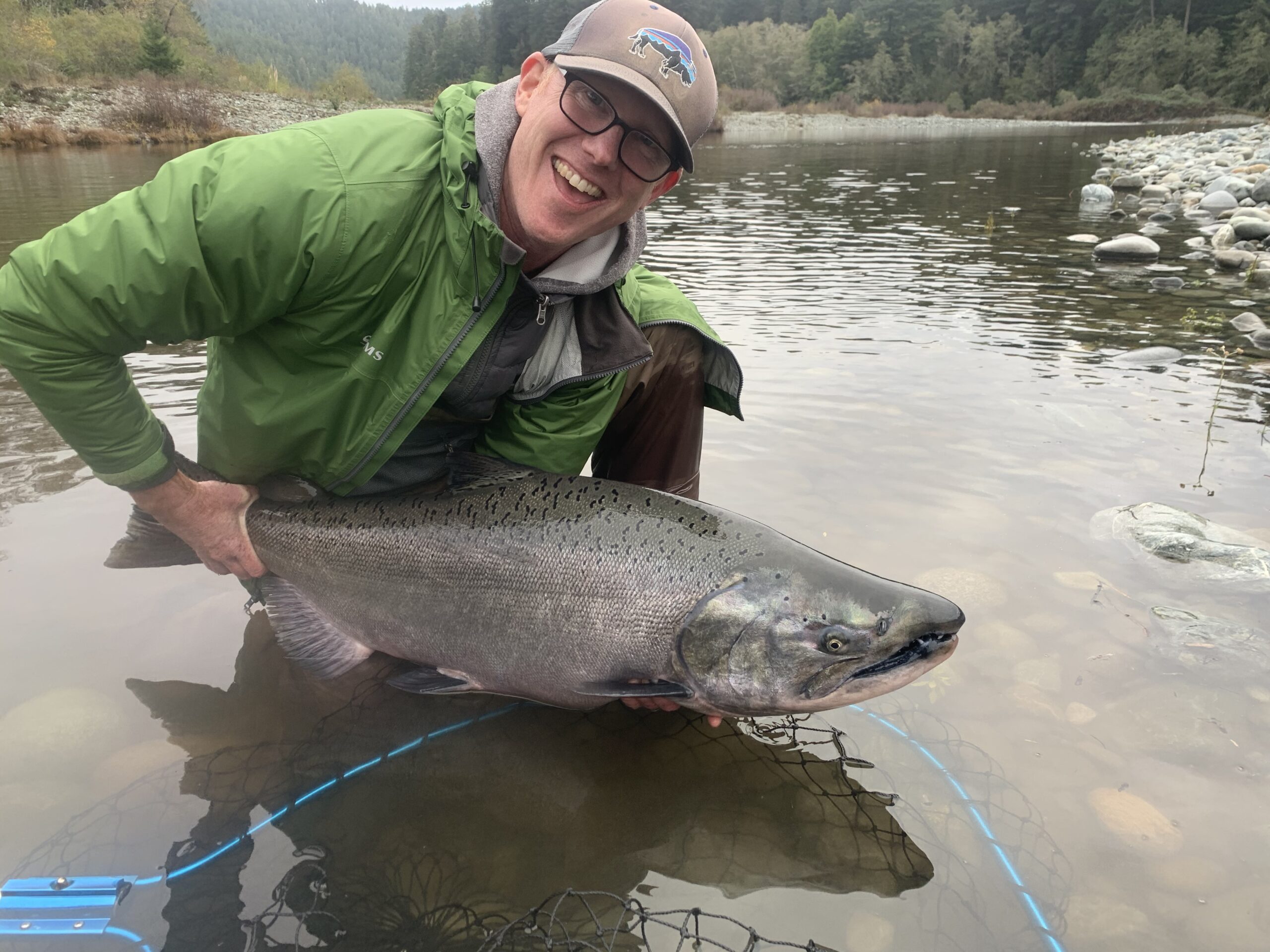
A 40-pound king salmon caught and released with Capt. Rye Phillips in November 2020.A nice king salmon caught in November 2020 with Capt. Andy Martin.
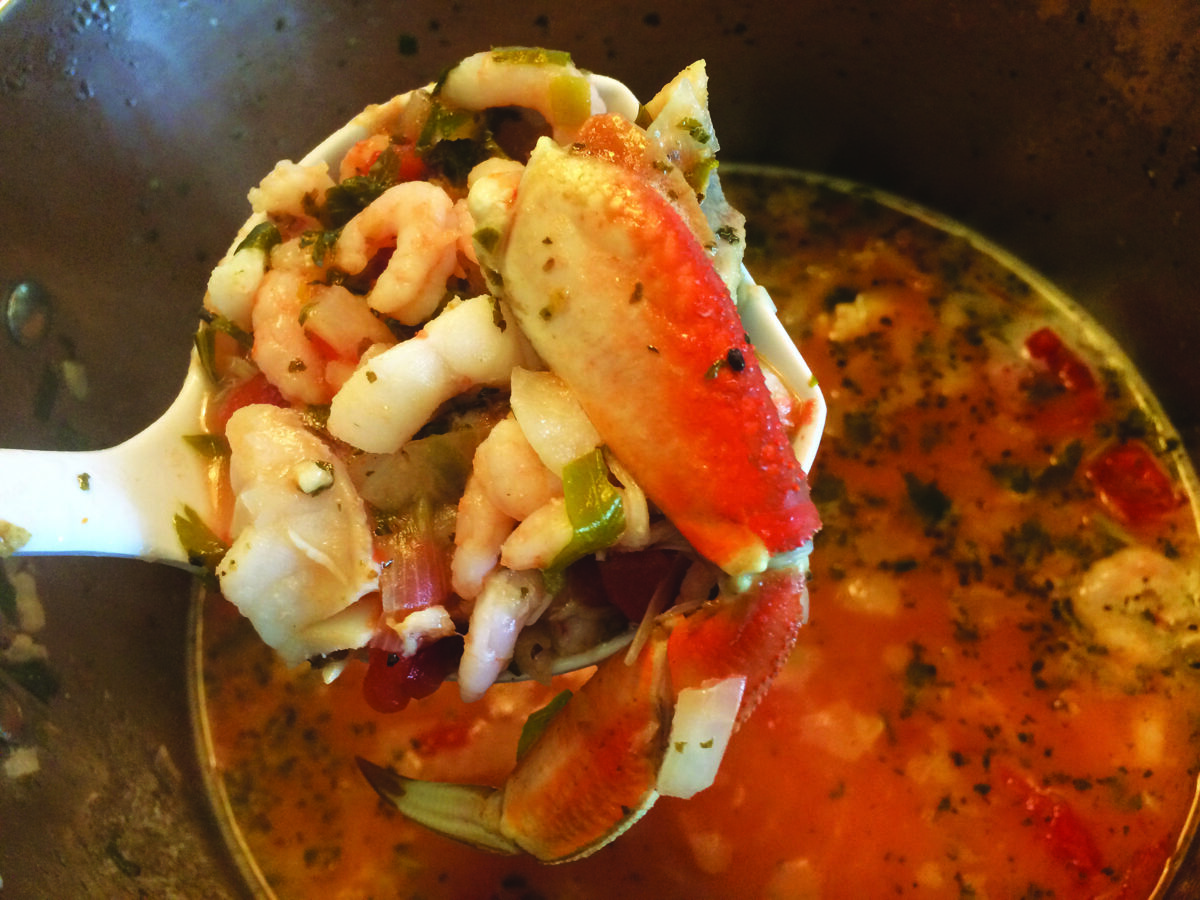
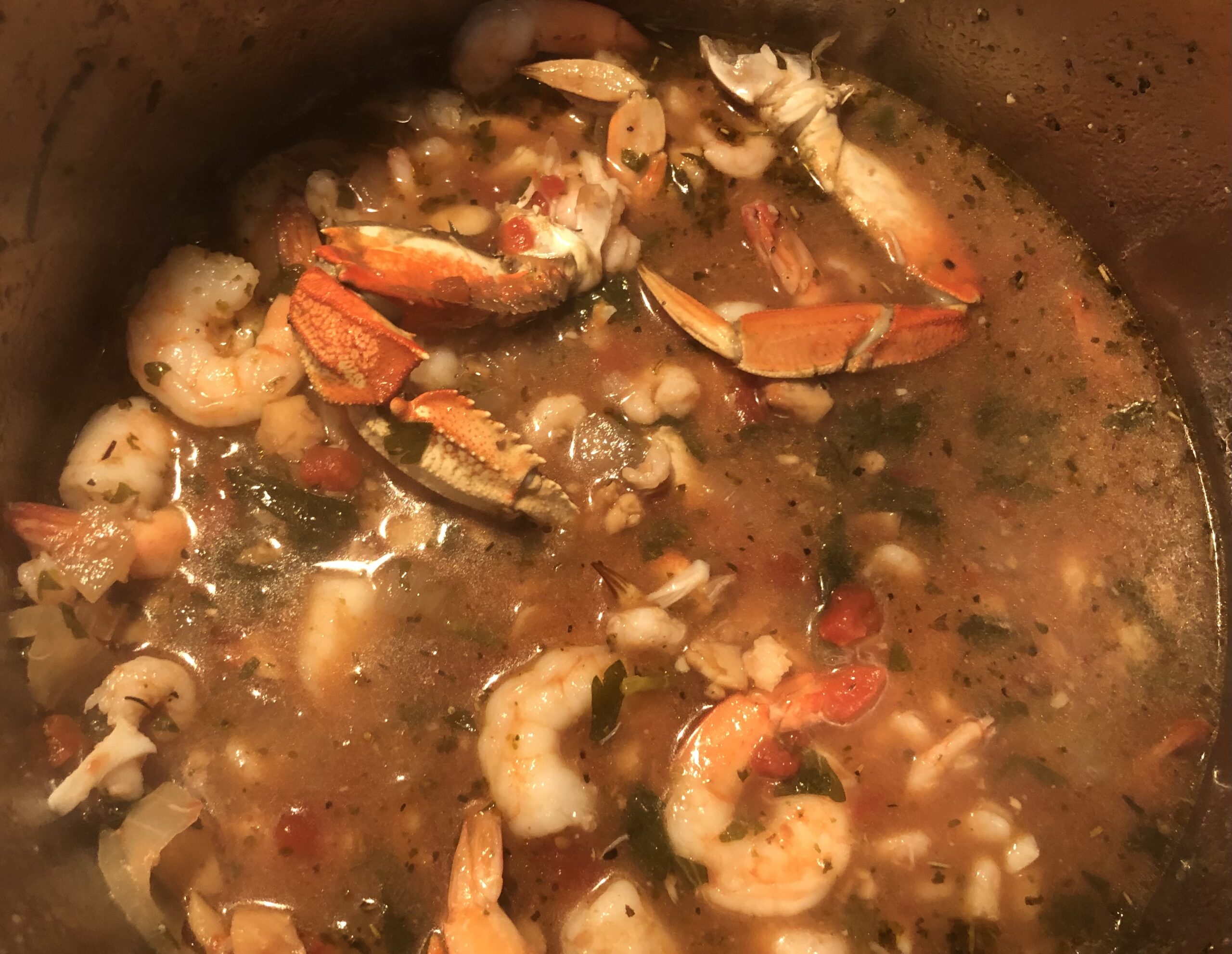
One of the most delicious ways to enjoy Oregon Coast rockfish and crab is in a bowl of cioppino, a seafood stew with a rich history on the Pacific coastline.
Cioppino originated with the Italian immigrants in the San Francisco Bay area in the late 1800s. From its humble beginnings, the tomato- and wine-based seafood stew is now one of the most popular dishes at restaurants on Fishermen’s Warf and throughout the West Coast. Traditional cioppino takes hours to prepare, first by making fish stock, and then simmering with Italian seasonings, wine, tomatoes and a variety of seafood.
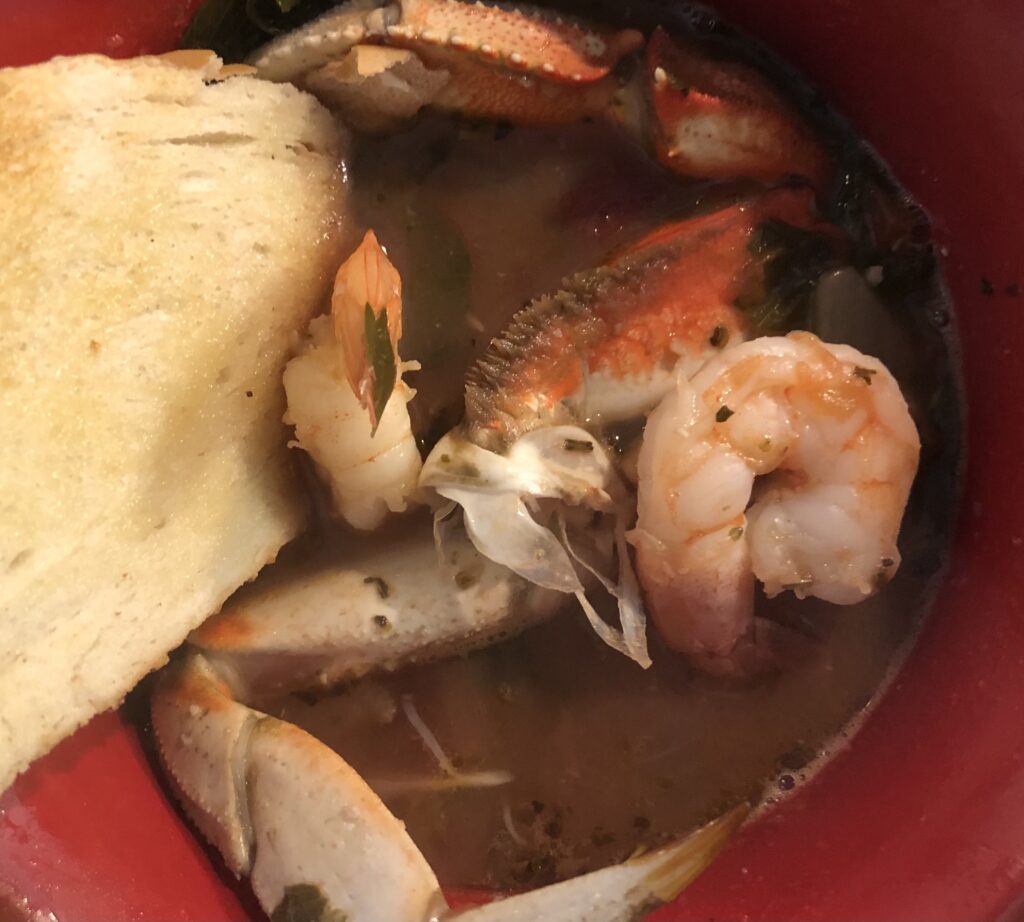
Cioppino features fish and shellfish, and is delicious when served with warm bread.
Capt. Andy of Brookings Fishing Charters uses a simple yet delicious recipe for cioppino that is great all year, from stormy winter days to warm summer evenings. It can be made with fresh or frozen seafood and shellfish and utilizes pieces of fish simmered in chicken broth and wine instead of fish stock.
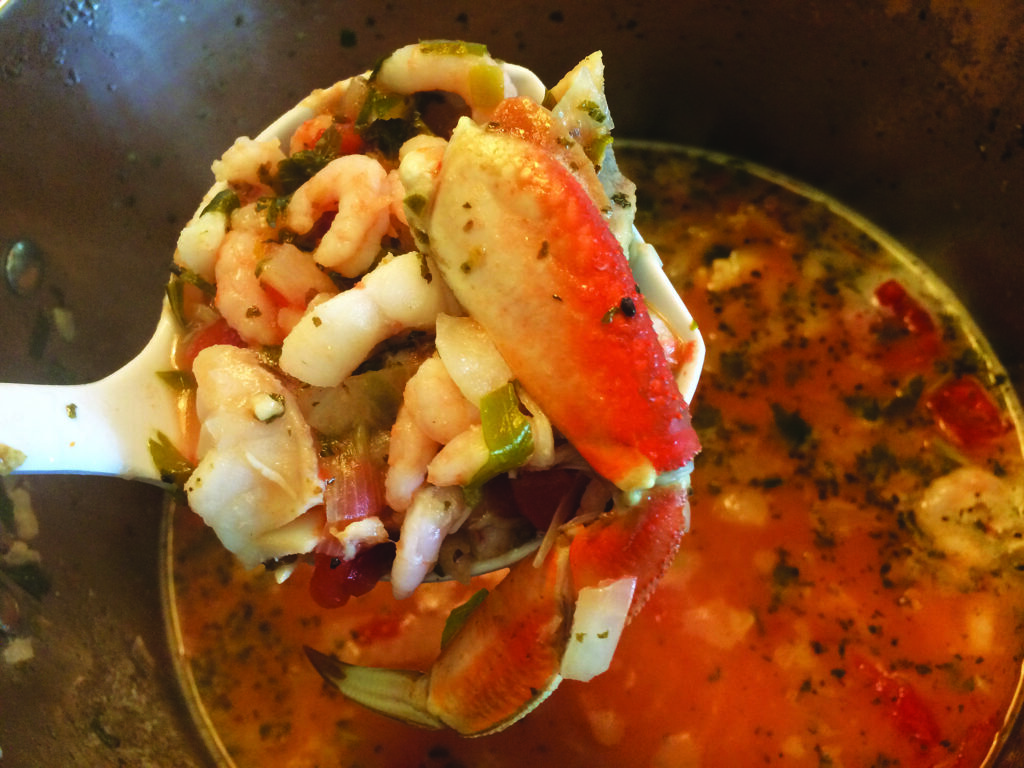
Oregon Coast crab and rockfish make cioppino even better!
Originally, cioppino was made with the catch of the day by San Francisco fishermen. When fishermen come back without catching anything, they would walk the docks with a pot, asking fellow fishers to donate whatever they could spare. A rockfish here, a few clams there, perhaps a crab or mussel. Fishermen who chipped in part of their catch knew they could count on fish in return if they came back with empty nets or lines. As the Italian immigrants perfected the seafood stew, they began selling it at restaurants in San Francisco, and then beyond, eventually making it a staple at seafood and Italian eateries on the West Coast.
Capt. Andy’s favorite cioppino recipe is a delicious combination of local crab and fish, with shrimp meat, clams and Italian seasonings.
A simple and tasty recipe for cioppino uses cut up fish fillets, canned clams, shrimp, chicken broth, onions, parsley, garlic, white wine, canned tomatoes and, if available, crab and other seafood.
1-2 onions, chopped
Minced garlic
Fresh parsley, chopped
1 cube butter
2 cans (14.5 ounces each) stewed or diced tomatoes
1-2 pounds shrimp (cocktail and/or large peeled and deveined shrimp)
1-2 cans (6.5 ounces each) chopped or diced clams
Crab meat or cooked and cleaned crab halves
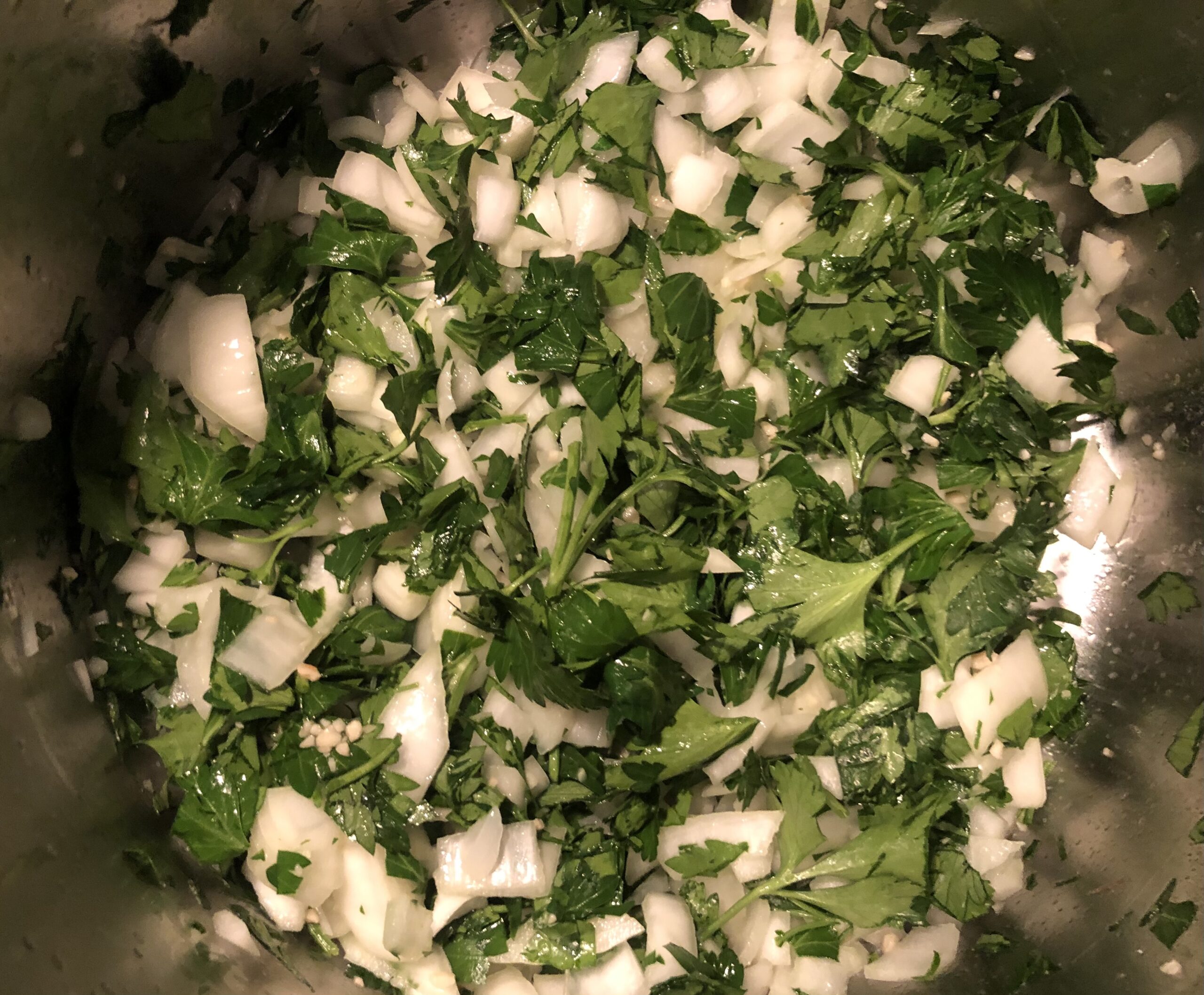
Cook onions, garlic and parsley over medium heat in a large pot.
Cook chopped onions, garlic and parsley in a large pot over medium heat with melted butter. Stir frequently, cooking until onions are soft.
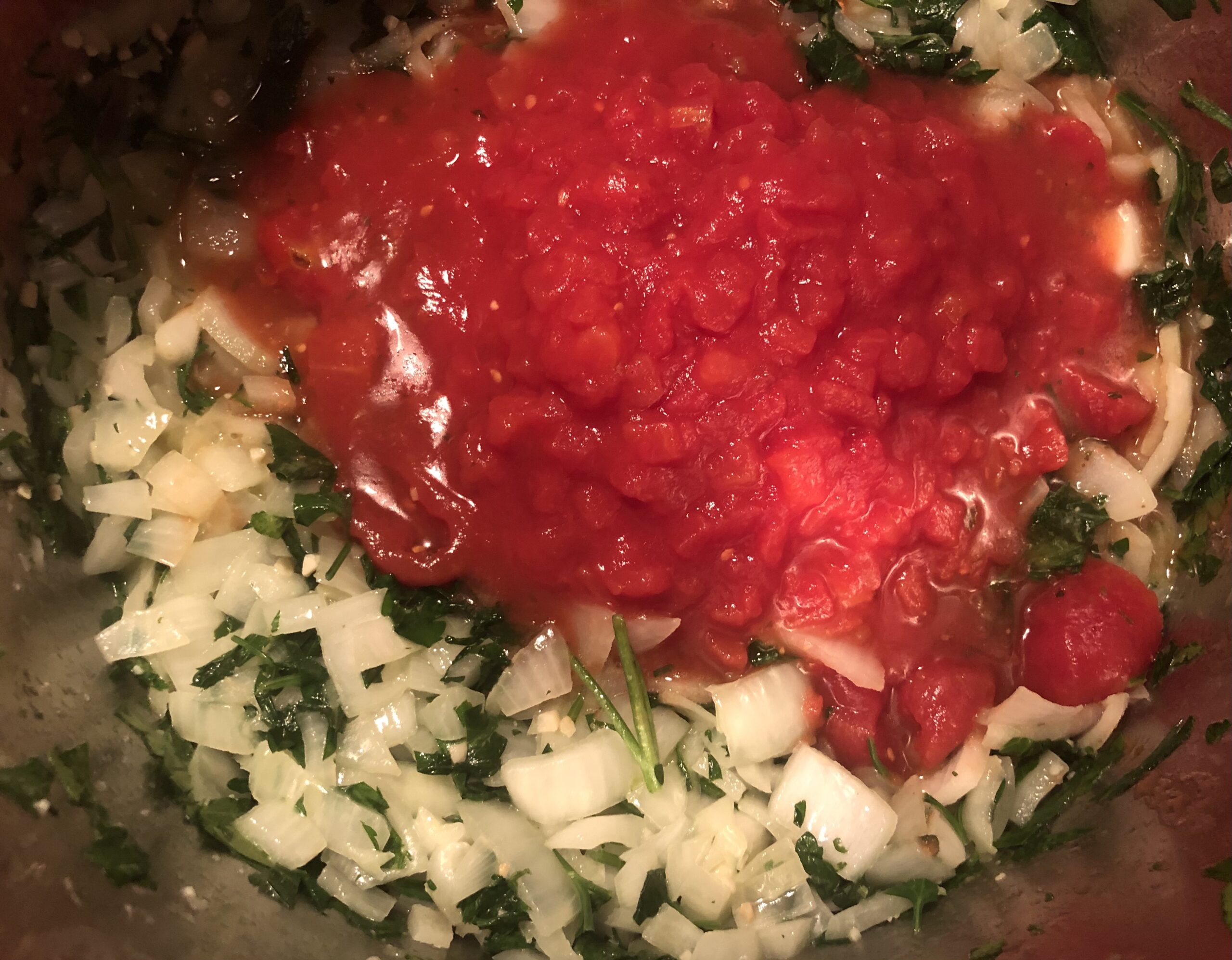
Add two cans of stewed or diced tomatoes. Add chicken broth, wine, water and Italian seasonings.
Add canned tomatoes, chicken broth, Italian seasonings, wine and water. Bring to a boil. Add salt, pepper and garlic salt to taste.
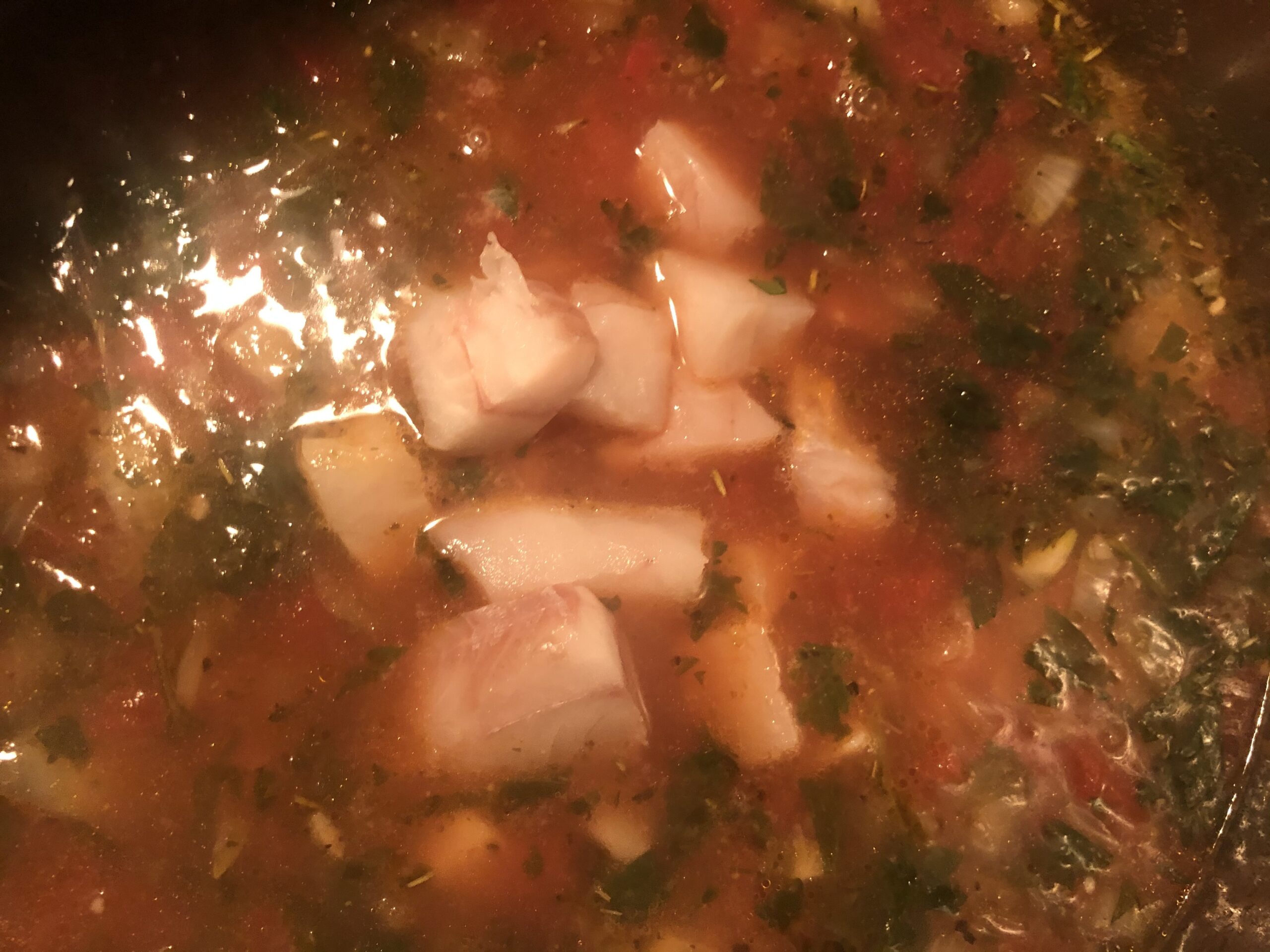
Adding cut up fish fillets and canned clams to the broth and then simmering for a couple hours gives the stew a delicious seafood flavor.
Add 1 pound of chopped fish fillets (half of the fish to be used in the stew) and cans of clams with juice. Cover and simmer for at least 30 minutes, and up to two hours. As the fish simmers, it will flake into smaller pieces, adding flavor to the stew.
Add shrimp meat and crab just before serving.
Just before serving, adding shrimp meat and crab legs and/or crab meat. Also add the remaining rockfish pieces. Cook over medium low heat until the rockfish is done, usually about five minutes. If desired, add more salt, pepper, Italian seasonings and garlic salt to taste.
Serve with warm bread.
Many cioppino recipes call for whole, raw clams and mussels, and scallops, but these can be difficult to find year round, especially away from the coast, so Capt. Andy uses the canned clams instead, but whole shellfish, if available, can be added and cooked. Warm Italian bread goes well with cioppino, especially when dipped into the stew. The stew also can be served over cooked rice.
Just a couple of rockfish are all that’s needed to make a large pot of cioppino. A limit of rockfish yields plenty of fillets for fish and chips, rockfish chowder, and a pot f cioppino.
To catch a limit of rockfish to make cioppino, fish and chips or rockfish chowder, visit www.brookingsfishing.com for information on ocean charters out of Brookings, Oregon.
Fishing for lingcod and rockfish was very good off the coast of Brookings in recent weeks until the first major storm of the fall season arrived and forced boats to stay in port. Brookings Fishing Charters reported limits of rockfish and lingcod during its Point St. George Reef Lighthouse trips, and a good rockfish bite at the inshore reefs in early November before the storms hit. Rough weather is expected through November.
Some of the nice lingcod from the end of October at the Point St. George Reef Lighthouse aboard the Miss Brooke of Brookings Fishing Charters.
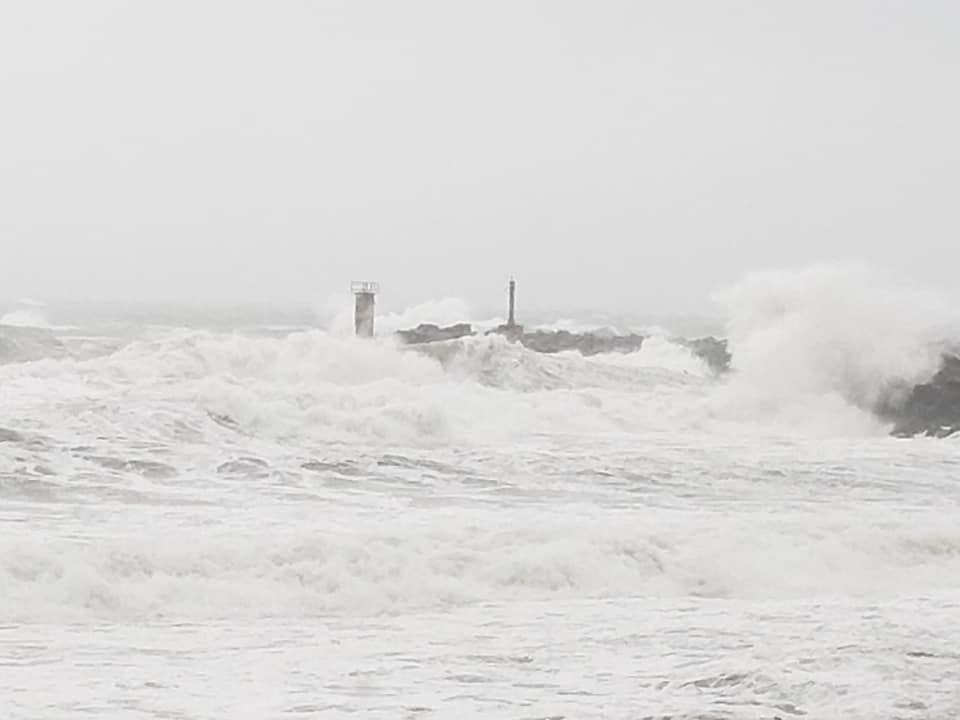
After relatively calm seas, large waves and winds to 50 mph hit the coast during the Friday the 13th storm. The Coast Guard closed the bar crossing to all recreational vessels.
Big swells and strong winds made the Chetco River bar too dangerous to cross on Nov. 13, 2020.
The first major storm arrived overnight on Nov. 13, with winds to 50 mph and waves over 15 feet high. Heavy rain also fell. A series of storms is expected over the next week.
At the Point St. George Reef lighthouse, fishing was wide open before the storms, with limits daily of large rockfish, including lunker canary and vermilion rockfish, and lingcod to 25 pounds. Lots of blue and black rockfish also were being caught.
Phil of Grass Valley holds a pair of lunker vermillion rockfish caught as part of a double hookup at the Point St. George Reef lighthouse.
Halibut season ended Oct. 31 on the Southern Oregon Coast. The Nauti-Lady and The Dash each ran successful trips at the end of the season, with halibut to 30 pounds.
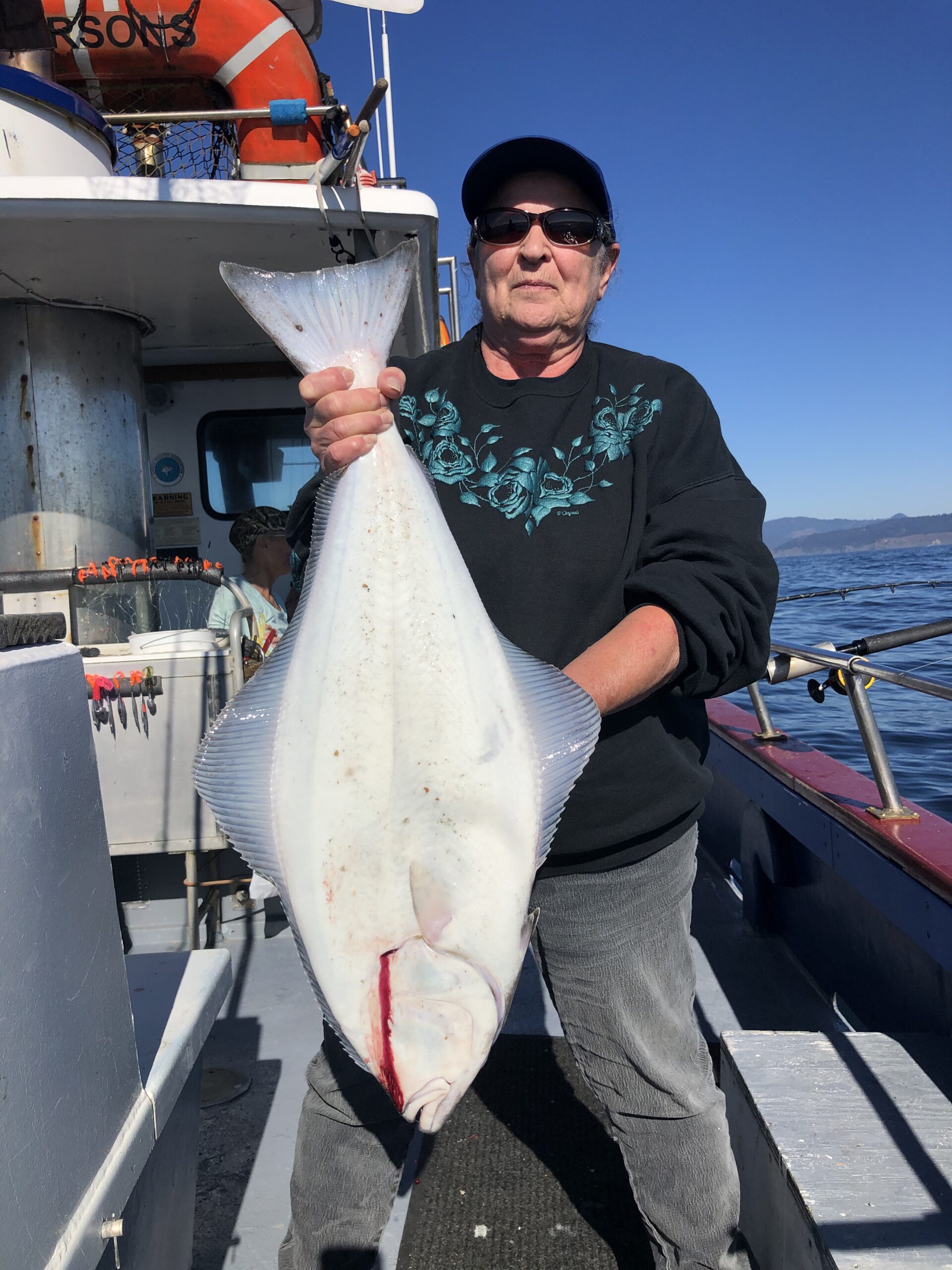
A nice Pacific halibut caught aboard the Nauti-Lady on Oct. 30.
The variety and grade of rockfish out of Brookings has been good in recent weeks. There are also plenty of smaller rockfish that have been released in the shallow water. The Brookings Fishing Charters fleet uses light spinning rods to catch rockfish in shallow water.
A nice grade a variety of rockfish and lingcod aboard the Miss Brooke.Limits of lingcod for Phil and Vince aboard the Miss Brooke.Bruce with a trophy Point St. George Reef Lighthouse lingcod.The Nauti-Lady fishing for halibut off of Brookings.Limits of lingcod and rockfish caught aboard The Dash at the Point St. George Reef lighthouse.A limit of Mack Arch lingcod aboard the Miss Brooke.A big jig tricked this big lingcod at the lighthouse.
With stormy weather, the Smith and Chetco rivers are on the rise, kicking off the drift boat salmon season for the Brookings Fishing Charters crew. Capt. Andy, Travis, Rye, Mick, Shane, Rich and Michael are also drift boat guides during the fall and winter months.
Ocean charters will resume as weather conditions allow. Lingcod and rockfish season is open year round out of Brookings, and May 1-Dec. 31 at the lighthouse and out of Crescent City.
A beautiful 41-foot fiberglass charter boat that has been an active part of the fishing scene at the mouth of the Columbia River has been added to the Brookings Fishing Charters fleet. Last week, the Nauti-Lady made the 300-mile voyage from Ilwaco, Wash., to Brookings, where she joins the Miss Brooke, Papa B, The Dash and Bout Time, the charter boats working out of the Brookings Fishing Charters office.
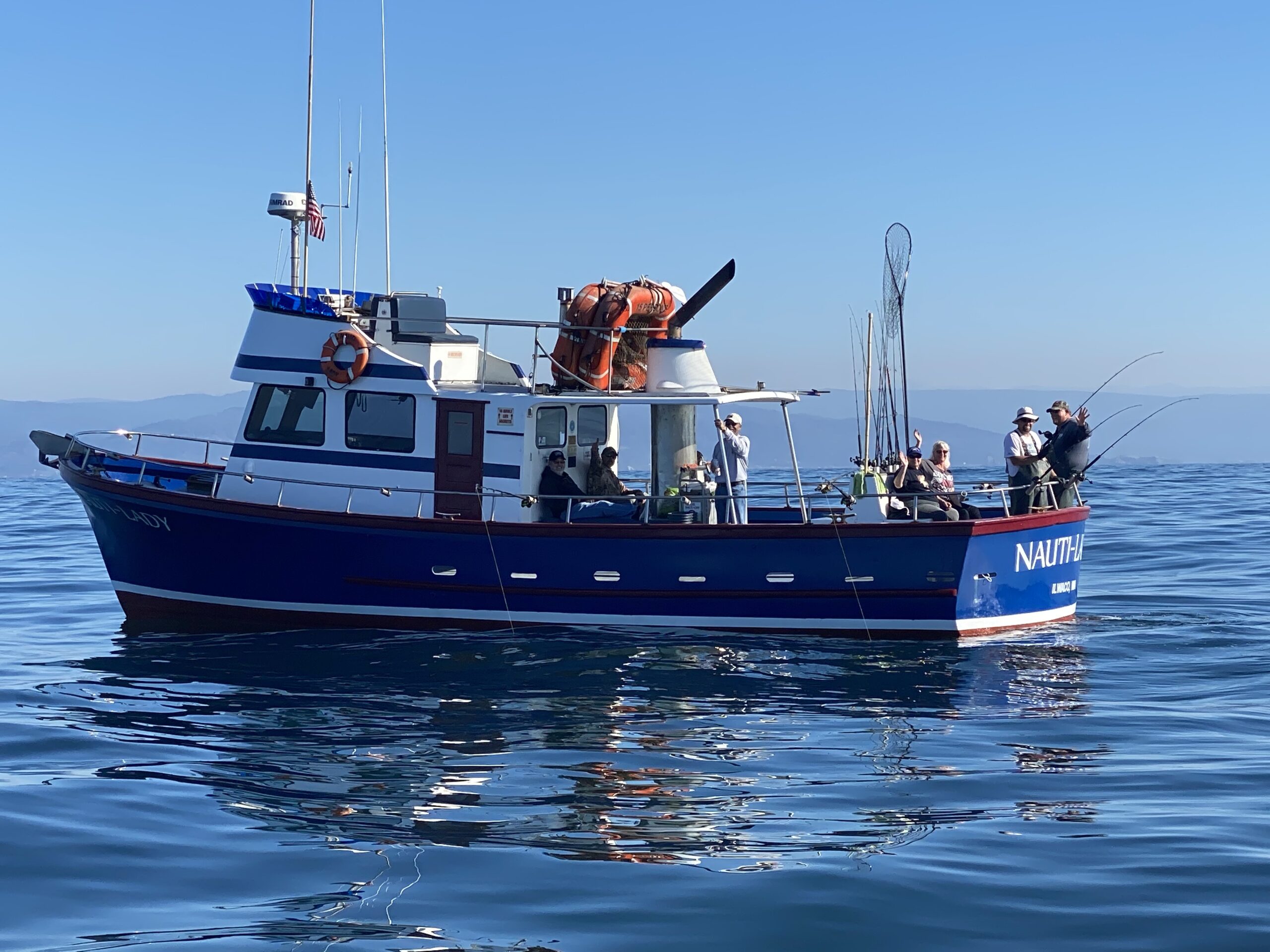
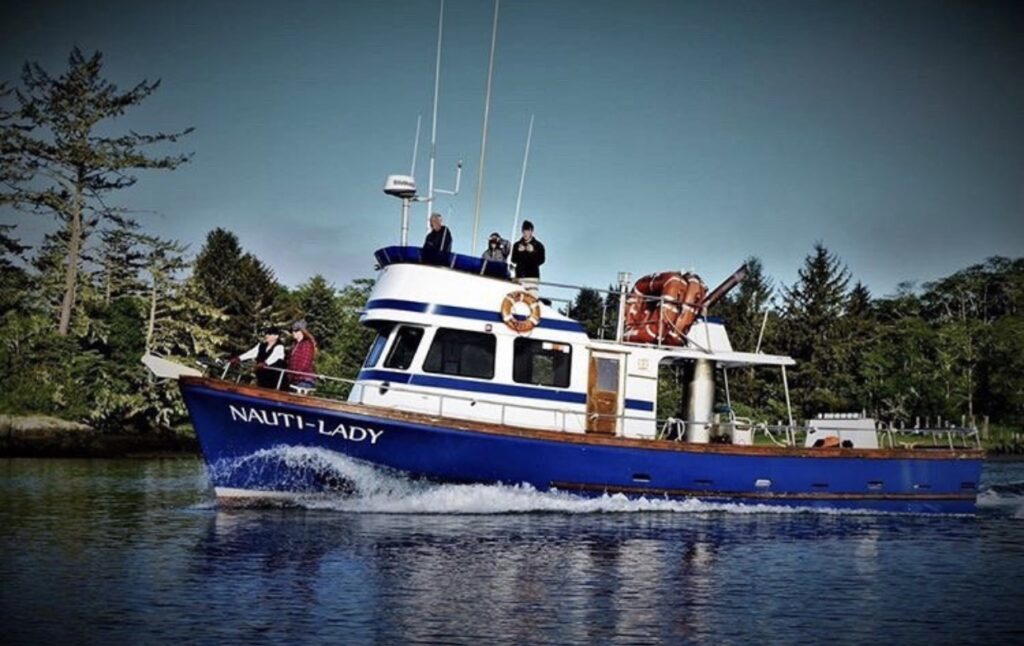
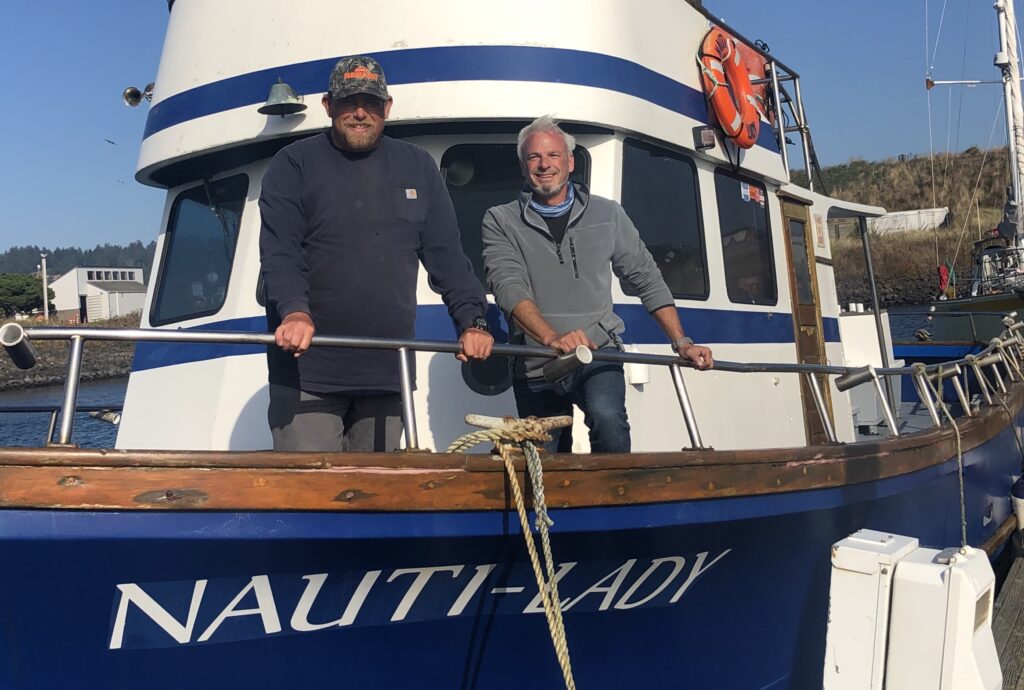
The Nauti-Lady is a 41-foot Rawson charter boat now part of the Brookings Fishing Charters fleet. She is captained by Andy Martin
The Nauti-Lady was operated by the Schenk family, owner of Sea Breeze Charters in Ilwaco. The boat was part of the famed “Charter Row” in Ilwaco, a busy sportfishing charter boat town at the mouth of the Columbia River. Four generations of the Schenks operated charter boats in Ilwaco, but with the recent retirement of one of the owners and skippers, the family had more charter boats than captains. This summer, the family agreed to sell the Nauti-Lady to Brookings Fishing Charters.
In Ilwaco, the Nauti-Lady was a prolific member of the charter fleet, running salmon, halibut, albacore tuna and bottom fishing charters in the ocean, and sturgeon and salmon trips in the lower Columbia River. Most recently, the boat was a workhorse, making frequent trips to Tillamook Head for rockfish and lingcod.
Capt. Andy takes possession of the Nauti-Lady in Newport, Ore., from Capt. Dan, the longtime owner and operator.
Last week, the Nauti-Lady was delivered from Ilwaco to Newport, where Capt. Andy took possession and then made the 200-mile voyage to Brookings, with an overnight stay in Charleston/Coos Bay. Capt. Dan and his sons and few friends made the initial run, giving them a final trip aboard a boat that had been in their family for decades. A brief weather window allowed for the trip after stormy seas and high winds in the weeks leading up to the trip south. Just before the trip south, the boat was hauled out so the bottom could be painted and the Coast Guard could perform its annual inspection.
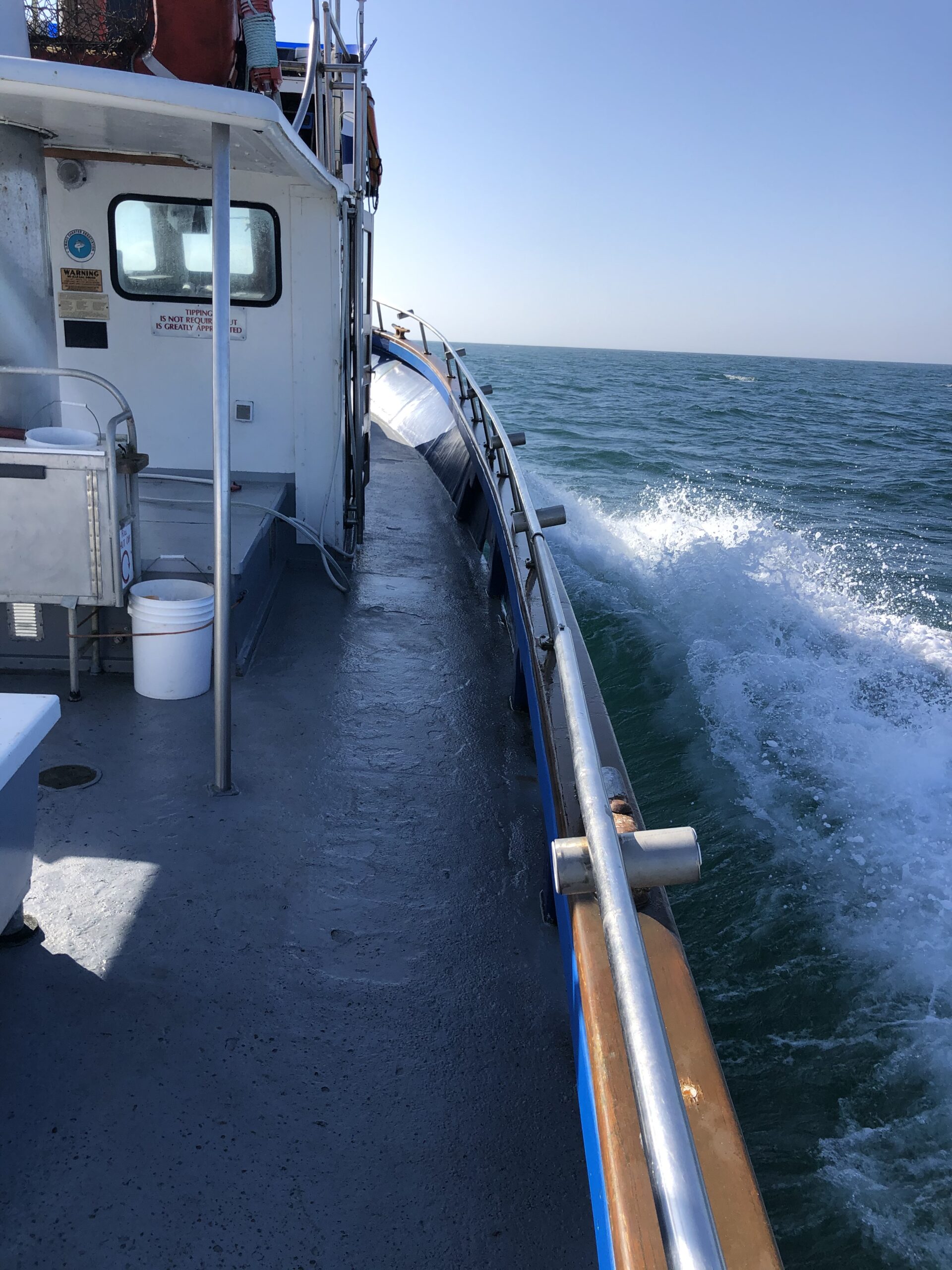
The Nauti-Lady makes her way south of Newport on her run to Brookings.
As part of the Brookings Fishing Charters fleet, the Nauti-Lady will primarily run half-day bottom fishing trips, but also will be used for Pacific halibut, tuna, salmon and lighthouse trips. With a U.S. Coast Guard Certificate of Inspection (COI) for 28 people, the Nauti-Lady has one of the largest capacities on the Southern Oregon coast. Most days, however, smaller groups, less than 14, will fish during the half-day charters.
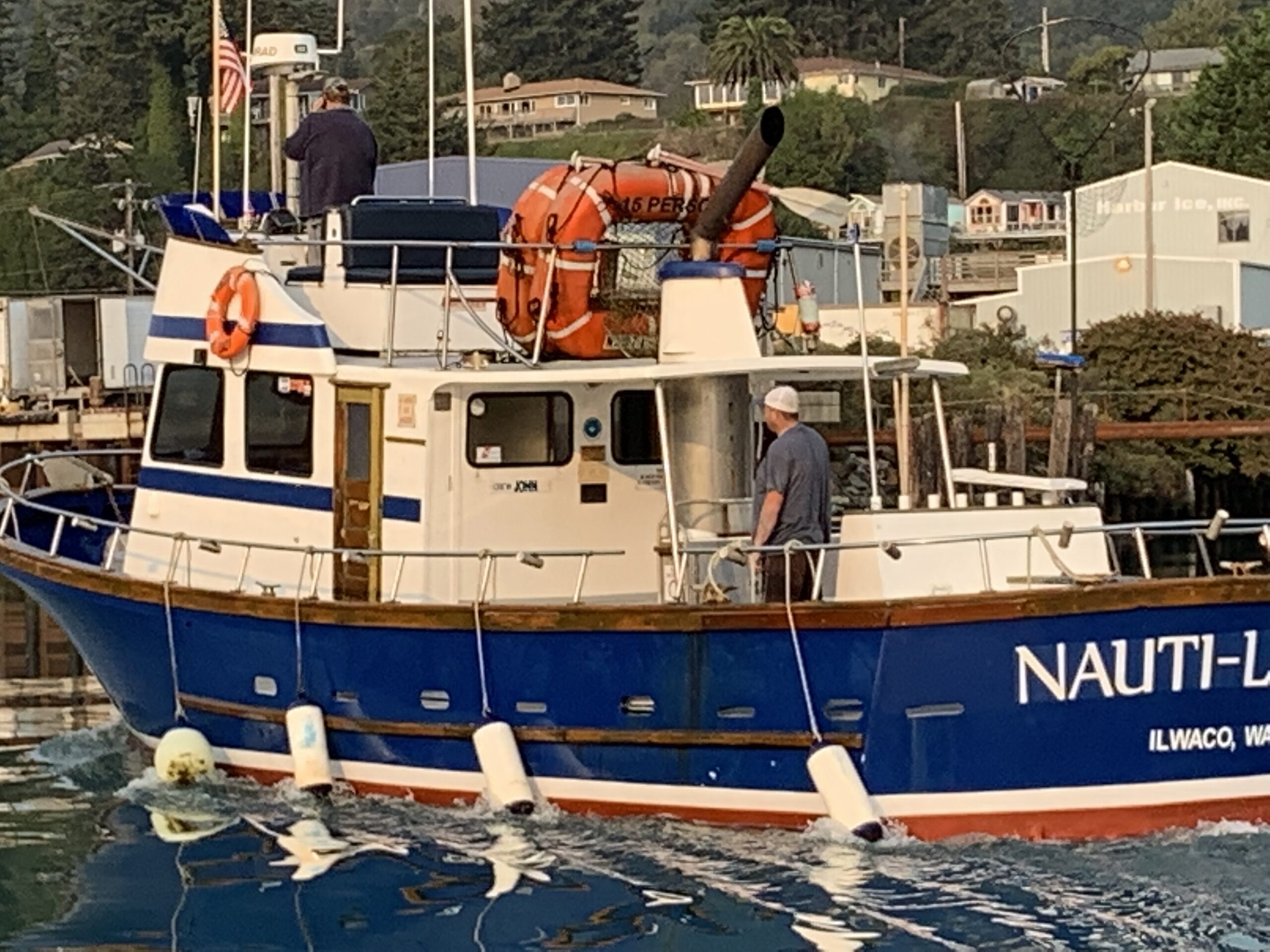
The Nauti-Lady, with Capt. Andy on the flybridge, arrives in Brookings.
The Nauti-Lady is equipped with the latest in marine electronics and safety equipment. She has more than 30 life jackets, two 15-person life rafts, an EPIRB (emergency radio beacon), five marine radios, Simard radar, Garmin chartplotters and sonars, and Lowrance chartplotters. The boat also has inside and deck seating, two marine toilets and enclosed restrooms, a freshwater sink, and full-perimeter fishing with 20 rod holders spaced around the charter boat.
Capt. Andy is no stranger to the larger inspected party boats. He spent 10 years running charters in Alaska, including the larger party boats in Seward, where he operated salmon, halibut and bottom fishing charters. Hundreds of trips in the Gulf of Alaska gave Andy experience running in rough water and operating charter boats in almost every condition and scenario possible. Fortunately, Brookings has some of the calmest ocean conditions on the Oregon Coast.
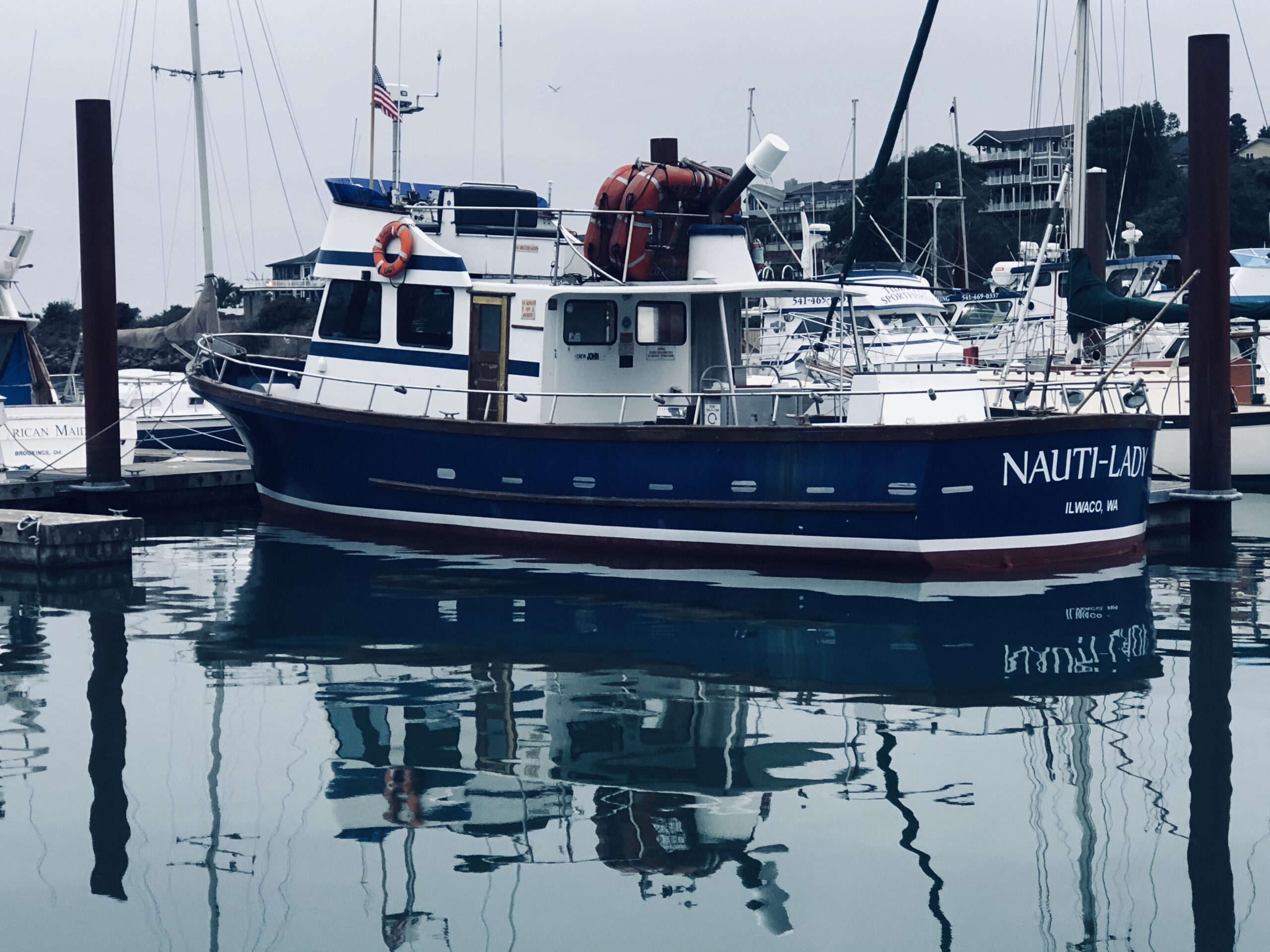
The Nauti-Lady is moored in the sport boat basin at the Port of Brookings.
The Nauti-Lady will compliment the Brookings charter fleet. There were plenty of days this past summer when the six-packs of Brookings Fishing Charters were booked and there wasn’t enough room for anglers wanting to fish. There also were numerous days when most of the seats booked were for half-day bottom fishing trips, and boats weren’t available for salmon, halibut or lighthouse trips.
The Nauti-Lady features the same light tackle that makes the Brookings Fishing Charters fleet a favorite, and provides a larger fishing platform during those days with bigger swells or chop.
Trips aboard the Nauti-Lady will soon be available.
September is off to a great start for the Brookings Fishing Charters crew, with a nice variety of fish being caught aboard our six-pack boats. Big lingcod have moved in, giving anglers a chance at a trophy ling, while the Pacific halibut bite remains good, and there have been some opportunities to chase albacore tuna. Salmon also have arrived in the Chetco River estuary, while our half-day bottom fishing trips are producing limits of nice rockfish.
Limits of Pacific halibut caught aboard the Miss Brooke in September 2020 off the coast of Brookings.
The biggest surprise of the season has been the great fishing for Pacific halibut off of Brookings. We have been getting limits on most charters of these prized fish. There are still plenty of fish remaining on the quota for the area south of Humbug Mountain, meaning the season could last through Oct. 31. Anglers may keep one Pacific halibut a day. They run 10 to 30 pounds, on average, with fish to 100 pounds caught. We have seen two fish in the upper 90-pound range caught by our friends in private boats this month.
Average-size Pacific halibut caught on our charters. These were caught on the Miss Brooke in September 2020.
Our charters are equipped with anchored and our captains are accustomed to fishing on anchor, having run charters in Alaska for several years. This gives us a big advantage when targeting halibut in 200-300 feet of water.
Nice albacore tuna caught with Capt. Rye on The Dash.
The tuna fishing has been fair this season, with albacore 20 to 50 miles off the coast of Brookings. Capt. Rye ran several trips for tuna aboard The Dash earlier this month, slamming the fish some days and scratching out just a few fish on others. We may have another window to target albacore in late September or early October before the weather turns and they head offshore and south.
Capt, Rye with some hefty albacore.
The grade of the tuna has been excellent, with albacore to 30 pounds. We are seeing a bigger overall size this season compared to the “peanuts” last year.
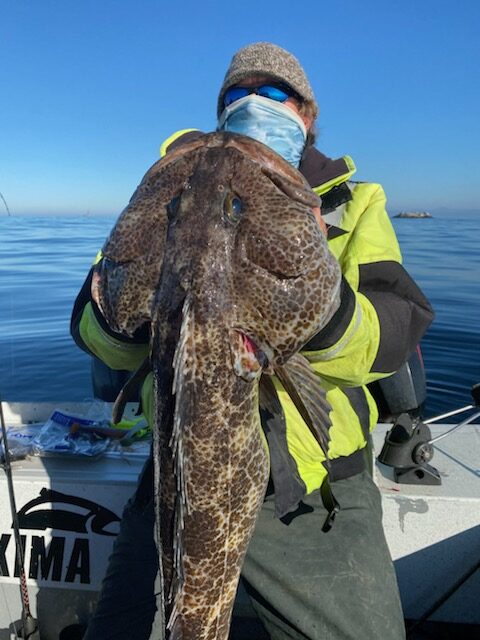
Capt. Michael holds a trophy 30-plus-pound lingcod caught aboard the Miss Brooke in mid-September 2020.
September and October are prime time for finding trophy lingcod off of Brookings. We’ve gotten customers into several fish over 20 pounds this month, and a few in the 30-pound range. We target these bigger lings with large jigs or bait. They also will hit the light tackle we use for rockfish. The big lings move into shallow water this time of year ahead of spawning. The lingcod population is healthy, and ODFW has assured us targeting some of these bigger fish won’t hurt the fishery.
Nice lingcod caught aboard the Miss Brooke with Capt. Travis in mid-September 2020.
We are running trips to Mack Arch and the Point St. George Reef Lighthouse, and both are producing big numbers of lingcod and limits of rockfish. Lots of quality lingcod are being caught during these long-range trips.
Limits of rockfish caught aboard The Dash.
Our popular 4-5 hour bottom fishing trip is yielding limits of rockfish, with an assortment of blacks, blues and canaries. Some lingcod also are being caught during the short trip. We also are getting into Dungeness crab, a nice end-of-the-day bonus.
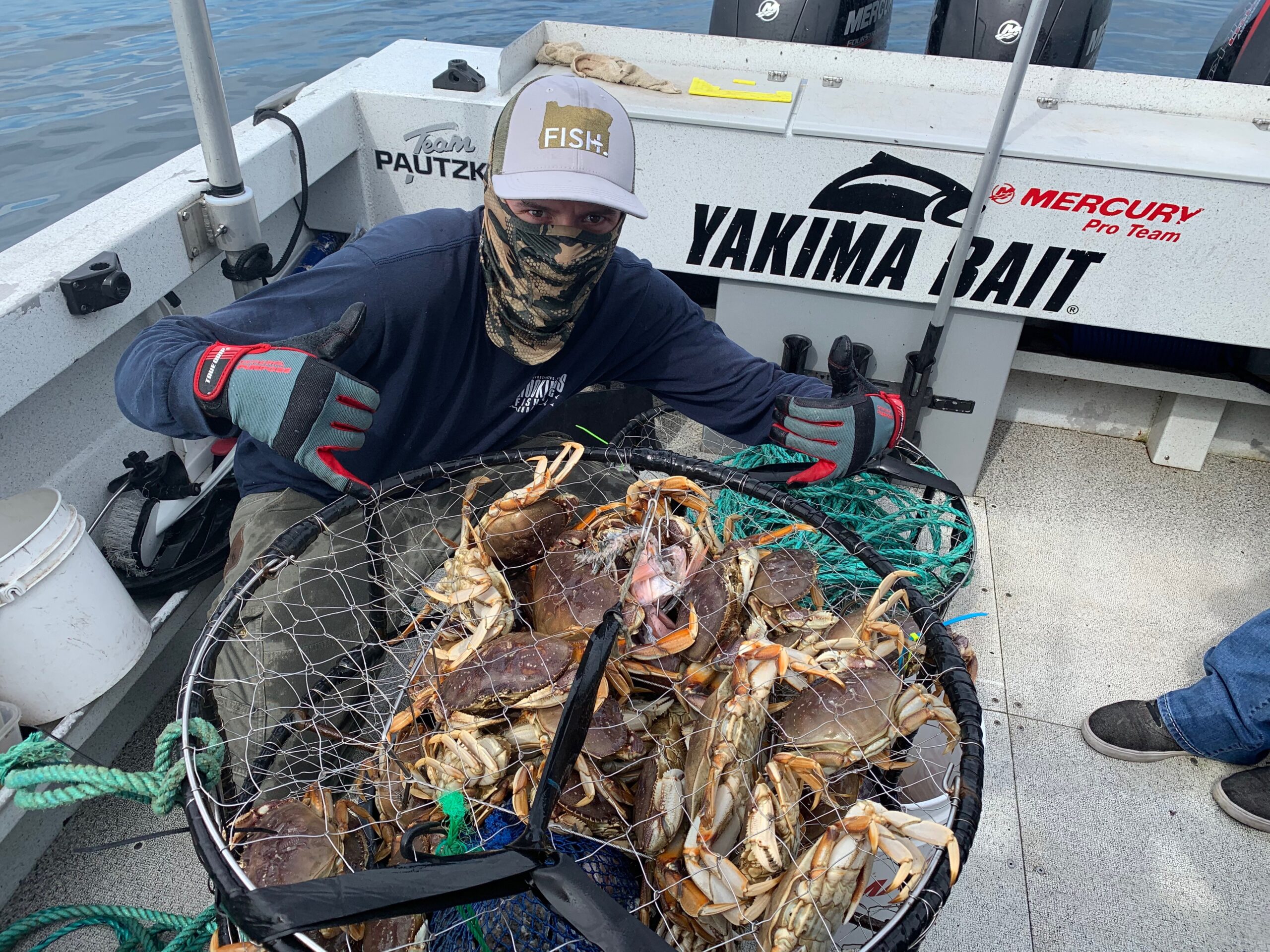
Capt. Michael shows a pot full of crab.
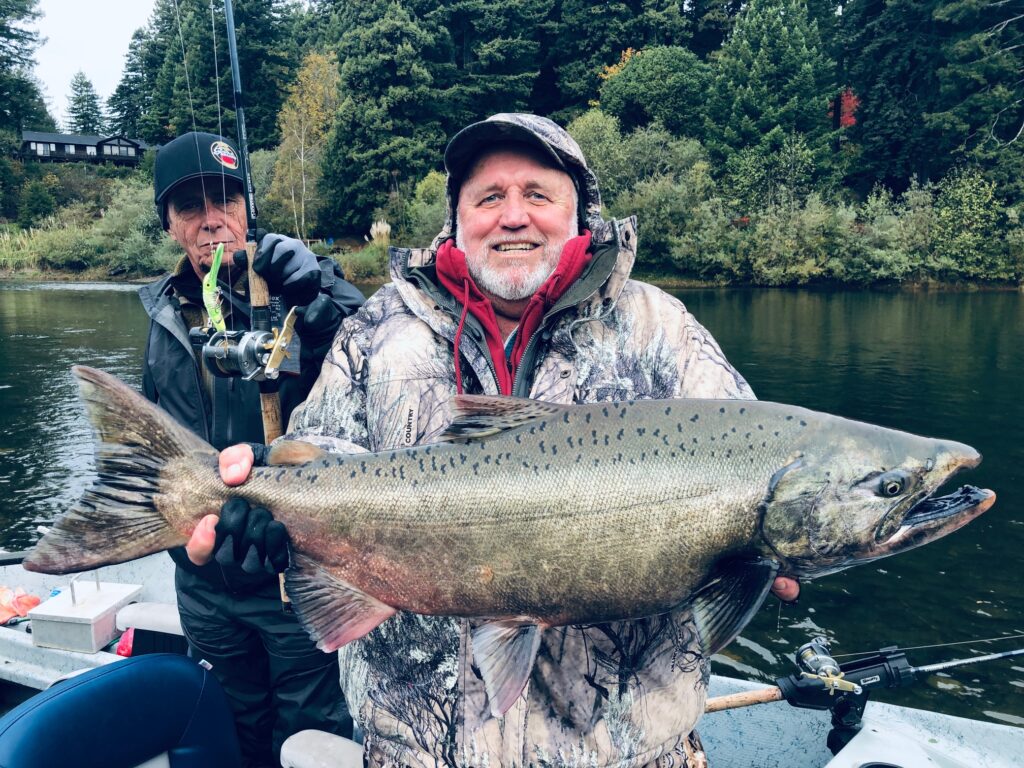
The fall salmon season is underway. We have been fishing the Coos River, with fair results. The kings are nice, but the catch rates are lower than normal. The bright spot is the early action on the Chetco River estuary. We are already seeing a lot of jacks and some nice adults. A 35-pounder was caught over the weekend. Fishing in the Chetco estuary will improve in the next few weeks, with the bigger Chetco hawgs. Capt. Andy got a customer into a 58-pounder in 2008 in the Chetco estuary and has guided anglers to several fish over 50 pounds there.
Brookings Fishing Charters’ new long-range trips to the historic Point St. George Lighthouse have been a hit with customers, who have caught trophy-size lingcod and rockfish in recent weeks while fishing at the extremely productive reef between Brookings and Crecent City.
Customers hold limits of lingcod caught aboard the Miss Brooke in mid-August 2020 near the Point St. George Reef lighthouse.
“This was one of my favorite saltwater trips ever!,” said customer Brent Foster. “Amazing fishing on a great boat with super captain and crew. Thanks Capt. Travis and Michael for a memorable day with Brookings Fishing Charters.
Capt. Michael holds a lingcod that hitchhiked to the surface on a smaller lingcod near the Point St. George Reef Lighthouse.
“That was a fabulous trip,” said Cole Tidwell. “Thank you for a great time.”
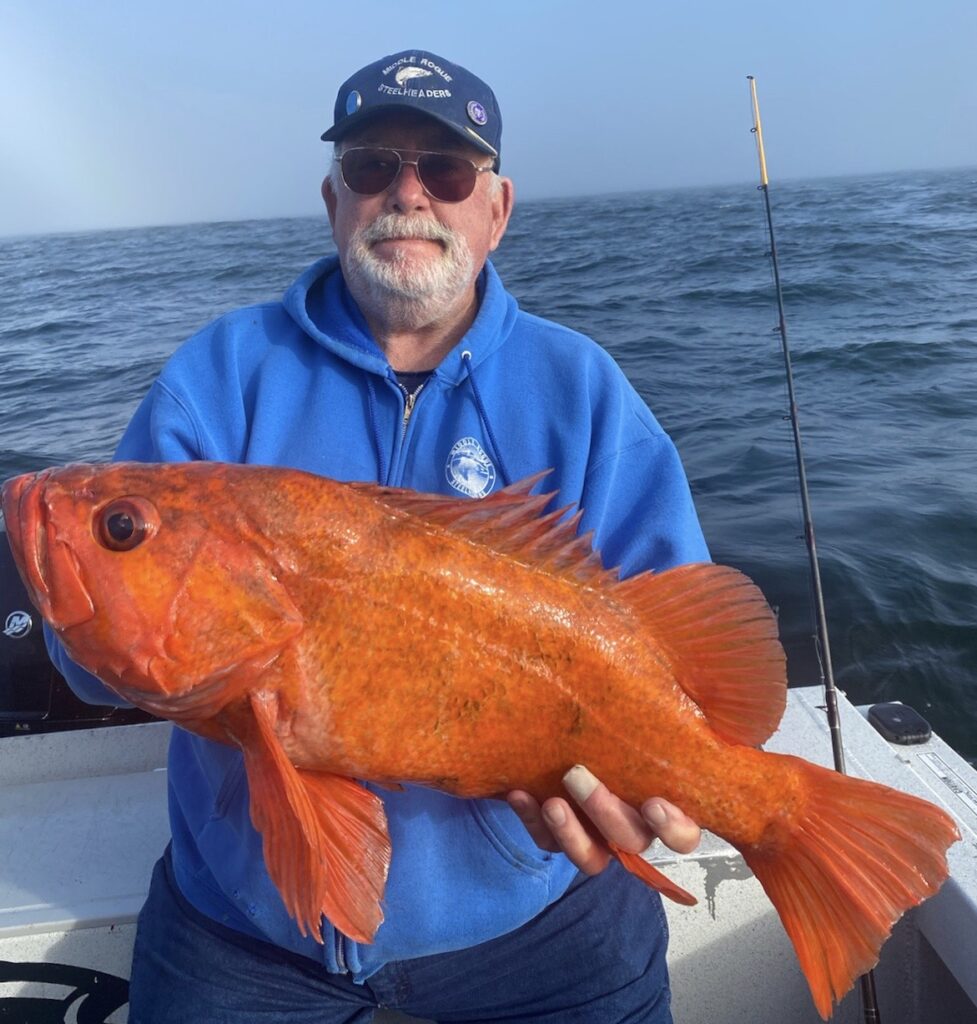
Cole Tidwell of Grants Pass, Ore., holds a trophy vermilion rockfish caught aboard the Miss Brooke.
The lighthouse is approximately 11 miles offshore of Brookings at the edge of the Point St. George Reef. The fishing there is unmatched compared to other local areas, with larger-than-average lingcod, canary rockfish, vermilion rockfish, cabezon and tiger rockfish. Lingcod to 20 pounds are common, and lings over 30 pounds are caught several times a season.
Miss Brooke customers hold limits of lingcod from the Point St. George Reef.
Brookings Fishing Charters is one of the Brookings-based charter companies licensed by the California Department of Fish and Wildlife to take customers to the reef. A pair of marine reserves border the area, but the open section has world class lingcod and rockfish action, comparable to the best Alaska has to offer. Currently, the Miss Brooke and The Dash have California permits for the lighthouse area.
One of the trophy lingcod caught in August by a Brookings Fishing Charters customer.
Trips to the lighthouse and reef originate in Brookings, but fish in California waters before returning to Oregon. Anglers must have a California and Oregon license for the trip. One-day licenses are available.
Dave Miller of Shady Cove, Ore., with a monster lighthouse lingcod.
The run to the lighthouse is fast and comfortable aboard Brookings Fishing Charters’ six-pack boats. Because only six passengers are fishing, anglers can focus on larger fish, carefully releasing smaller ones with descending devices. Brookings Fishing Charters’ crew also are experts at targeting lingcod, especially larger specimens, and consistently catch large lingcod and limits for the boat. Quality light tackle makes the trip even more exciting.
Don Williams of Brookings with his Point St. George trophy lingcod.Capt. Michael holds a trophy lighthouse lingcod.Big lingcod are common at the lighthouse.Two lingcod caught on the same rod at the lighthouse.
Aside from the lighthouse trips, Brookings Fishing Charters ran several successful halibut charters the past week, with quality fish to 40 pounds. Halibut season remains open through October out of Brookings. It is the longest season for Pacific halibut outside of Alaska.
Capt. Mick and customers from The Dash with limits of Pacific halibut.Capt. Michael holds a 40-pound Pacific halibut caught aboard the Miss Brooke.A couple of Pacific halibut caught with Brookings Fishing Charters in August 2020.Pacific halibut have been making Brookings Fishing Charters customers happy.Capt. Travis with a tiger rockfish from the Point St. George Reef.Capt. Andy with a large vermilion rockfish from the Point St. George Reef.One of many tiger rockfish caught in August aboard the Miss Brooke.Tiger rockfish are rare out of Brookings, but more abundant at the Point St. George Reef.Dave Miller with a limit of dandy lingcod from the lighthouse.The Miss Brooke arrives at the historic Point St. George Reef Lighthouse.Fish on, calm water, in front of the lighthouse. It doesn’t get any better than that!